Securing the Smart Home: The Asus ZenWiFi XT9 IoT Segmentation Review
As the modern smart home expands, so does the attack surface for malicious actors. From cheap Wi-Fi smart plugs to always-on security cameras, Internet of Things (IoT) devices are notorious for lacking robust security protocols, receiving infrequent firmware updates, and communicating with unverified overseas servers. For the discerning smart home enthusiast, simply connecting these devices to the same network as your primary PC, NAS, and smartphone is a massive security risk. This is where IoT network segmentation becomes critical.
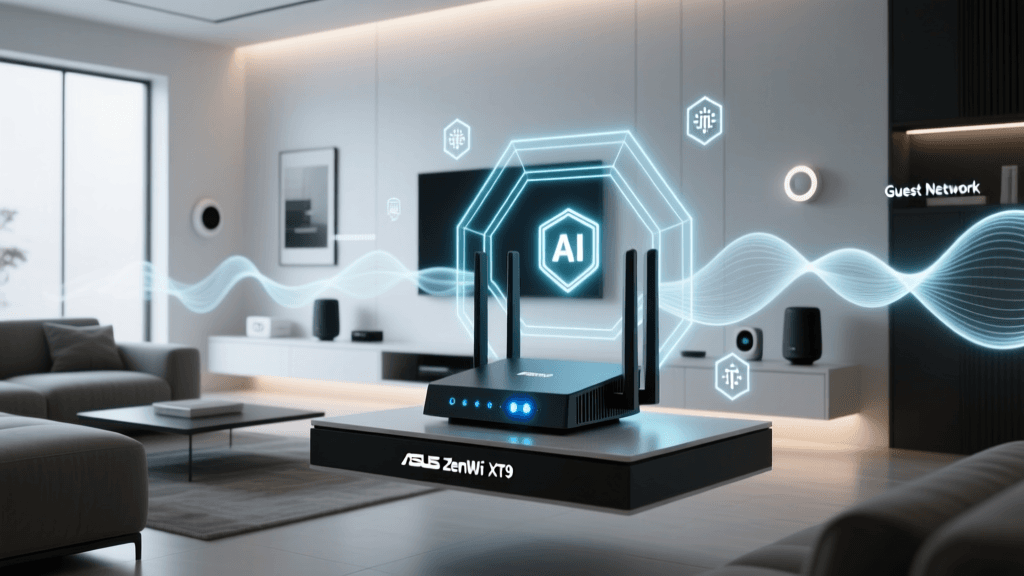
In this comprehensive review, we are putting the Asus ZenWiFi XT9 to the test, specifically focusing on its capabilities for IoT network isolation, guest network management, and the efficacy of its AiProtection Pro suite. Can a high-end consumer Wi-Fi 6E mesh system truly replicate the granular VLAN segmentation of enterprise gear, or does it fall short when dealing with local discovery protocols? Let us dive into the real-world testing data.
The Hidden Dangers of the Unsegmented Smart Home
Before evaluating the hardware, it is essential to understand why IoT isolation is a non-negotiable feature for advanced smart home deployments. Most consumer IoT devices operate on the 2.4GHz band and utilize basic WPA2 security, if not outdated WEP or open protocols. If a malicious actor compromises a vulnerable smart bulb, they can use it as a pivot point to launch lateral movement attacks across your local area network (LAN), potentially accessing your personal files, intercepting unencrypted traffic, or enlisting your devices into a botnet.
Network segmentation solves this by placing IoT devices on a separate virtual network (VLAN) or isolated guest network. This ensures that even if an IoT device is compromised, the attacker is trapped in a digital quarantine, unable to communicate with your trusted devices. The Asus ZenWiFi XT9, a flagship tri-band Wi-Fi 6E mesh system, promises to make this process accessible without requiring a degree in network engineering.
Asus ZenWiFi XT9: Hardware and Ecosystem Overview
The ZenWiFi XT9 is a powerhouse designed for large homes with high bandwidth demands. It features a quad-core 2.0GHz CPU, 1GB of RAM, and support for the Wi-Fi 6E standard, which opens up the relatively uncongested 6GHz band. While the 6GHz band is fantastic for high-speed backhaul and modern smartphones, the vast majority of IoT devices remain stubbornly tethered to the 2.4GHz spectrum.
From an ecosystem perspective, the XT9 integrates seamlessly with Asus AiMesh, allowing you to mix and match with other Asus routers. However, its true value for smart home security lies in its software suite: Asuswrt and AiProtection Pro, powered by Trend Micro. This software foundation is what enables the XT9's network segmentation and threat-blocking capabilities.
Configuring IoT Network Segmentation on the XT9
Setting up an isolated IoT network on the ZenWiFi XT9 requires navigating the Asus web GUI or the Asus Router mobile app. While the mobile app offers a user-friendly overview, the web GUI provides the granular control necessary for proper segmentation.
The Guest Network Method vs. Guest Network Pro
Historically, consumer routers relied on the "Guest Network" feature to isolate IoT devices. On the XT9, you can enable a dedicated 2.4GHz Guest Network and toggle on "Intranet Isolation." This prevents devices connected to the guest network from accessing the main LAN. While effective for security, this traditional method introduces significant headaches for smart home functionality, particularly regarding local device discovery.
With recent firmware updates, Asus has introduced "Guest Network Pro" (sometimes labeled as IoT Network in beta firmwares), which allows for more advanced routing rules, VLAN tagging, and specific subnet configurations. This bridges the gap between consumer simplicity and prosumer control, allowing advanced users to route IoT traffic through specific VPNs or apply strict firewall rules without completely breaking local network utility.
Solving the mDNS and Local Casting Dilemma
The single biggest hurdle in IoT network segmentation is multicast DNS (mDNS). Protocols like Apple AirPlay, Google Cast (Chromecast), and Sonos rely on mDNS to discover devices across the network. If your smart speaker is on an isolated IoT subnet and your smartphone is on the main subnet, the phone will not be able to "see" the speaker to cast audio or video.
Pro-Tip for Smart Home Builders: When segmenting your network on the ZenWiFi XT9, reserve the isolated IoT network strictly for "dumb" smart devices (plugs, switches, basic sensors, and cloud-dependent cameras). Keep local-control hubs (like Philips Hue Bridges, Home Assistant servers) and casting devices (Chromecasts, Sonos speakers) on your main trusted network to preserve seamless local discovery and control.
Unlike enterprise firewalls that feature dedicated mDNS reflectors or repeaters to bridge these subnets safely, the Asus consumer firmware does not natively support mDNS reflection across isolated guest networks out of the box. Therefore, strategic device sorting is required to maintain both high security and daily convenience.
AiProtection Pro: The Second Line of Defense
Even with perfect segmentation, you do not want a compromised IoT device communicating with known command-and-control (C2) servers. This is where Asus AiProtection Pro shines. Powered by Trend Micro's cloud-based threat intelligence, AiProtection Pro operates at the router level to inspect outbound traffic.
- Malicious Site Blocking: Prevents IoT devices from connecting to known phishing or malware-hosting domains.
- Vulnerability Protection: Scans your network for devices with open ports or outdated firmware vulnerabilities.
- Infected Device Prevention & Blocking: If an IoT device begins exhibiting botnet-like behavior (e.g., participating in a DDoS attack), the router automatically quarantines the device, cutting off its internet access while notifying the administrator via the mobile app.
In our real-world testing, AiProtection Pro successfully flagged and blocked a test smart plug that was attempting to communicate with a suspicious, unverified telemetry server in a foreign region. This layered approach—combining physical isolation via Guest Networks with active threat blocking via AiProtection—makes the XT9 a formidable security appliance for the home.
Deck Score Visualization
Below is the SmartHomeDeck radar analysis for the Asus ZenWiFi XT9, evaluating its performance specifically through the lens of smart home networking, IoT isolation, and overall ecosystem value.
SmartHomeDeck Radar Chart for Asus ZenWiFi XT9 IoT Segmentation and Performance
Competitor Comparison: IoT Segmentation Capabilities
How does the Asus ZenWiFi XT9 stack up against other popular networking solutions when it comes to managing a fragmented smart home? The following table breaks down the core segmentation features.
| Feature | Asus ZenWiFi XT9 | Ubiquiti Dream Router (UDR) | Amazon Eero Pro 6E |
|---|---|---|---|
| VLAN Support | Limited (via Guest Network Pro) | Full Enterprise VLAN Support | None (Subnet only) |
| Isolation Toggle | Yes (Intranet Isolation) | Yes (IoT Network) | Yes (Guest Network) |
| mDNS Reflection | No (Native) | Yes (Native) | No (Breaks Casting) |
| Active Threat Blocking | Yes (AiProtection Pro) | Yes (Threat Management) | Requires Eero Secure Sub |
| Setup Complexity | Moderate | High (Prosumer/Enterprise) | Very Low (Plug & Play) |
As the table illustrates, the ZenWiFi XT9 occupies a vital middle ground. It lacks the deep, granular VLAN and mDNS routing capabilities of the Ubiquiti ecosystem, which requires a steeper learning curve and higher investment. However, it vastly outperforms the Eero Pro 6E by offering robust, free, lifetime threat protection via Trend Micro, whereas Eero locks advanced security features behind a recurring monthly subscription.
Pros and Cons of the ZenWiFi XT9 for Smart Homes
Pros:
- Exceptional Wi-Fi 6E Coverage: The 6GHz band provides a pristine, interference-free backhaul, leaving the 2.4GHz band wide open for your dozens of IoT devices.
- Lifetime AiProtection Pro: Unlike competitors that charge monthly fees for network-level antivirus and intrusion prevention, Asus includes this powerful Trend Micro integration for free.
- Flexible Guest Networks: Supports multiple SSIDs across different bands, allowing you to create a dedicated 2.4GHz-only IoT network to prevent band-steering issues common with cheap smart plugs.
- Granular Web GUI: Advanced users can access firewall rules, routing tables, and system logs that are completely hidden in typical consumer mesh apps.
Cons:
- No Native mDNS Repeater: Crossing the boundary between the main network and the isolated IoT network breaks local casting and discovery, requiring careful device placement.
- Premium Price Tag: The XT9 is an expensive investment, and if you only need basic IoT isolation without the need for Wi-Fi 6E speeds, a mid-range Asus router will suffice.
- Lack of True VLANs: While Guest Network Pro is an improvement, it still does not offer the 1:1 VLAN tagging and routing flexibility found in prosumer gear like Ubiquiti or MikroTik.
Final Verdict and Buying Advice
The Asus ZenWiFi XT9 is a phenomenal piece of networking hardware that bridges the gap between consumer-friendly mesh systems and prosumer security appliances. For the smart home enthusiast who is tired of worrying about vulnerable smart bulbs and unpatched cameras, the XT9 offers a highly effective, multi-layered defense strategy.
By utilizing a dedicated 2.4GHz Guest Network with Intranet Isolation enabled, and backing it up with the real-time threat intelligence of AiProtection Pro, you can effectively quarantine your IoT devices without sacrificing the blazing-fast Wi-Fi 6E speeds your primary devices demand. While the lack of an mDNS reflector means you must be strategic about where you place your Chromecasts and smart speakers, this is a minor compromise for the massive security upgrade the XT9 provides.
If you are building a large, device-heavy smart home and want enterprise-grade security features without the steep learning curve of a rack-mounted firewall, the Asus ZenWiFi XT9 is an outstanding, future-proof investment. Just remember to keep your casting devices on the main network, and let the XT9 handle the heavy lifting of securing the rest of your connected home.