Introduction to the Aqara Motion Sensor P2
The smart home landscape has undergone a massive paradigm shift with the introduction of the Matter standard, and at the forefront of this transition is the Aqara Motion Sensor P2. As one of the first widely available motion detectors to utilize Matter over Thread, the P2 promises a hub-free, low-latency, and universally compatible experience. But in the world of smart home automation, a sensor is only as good as its accuracy. A delayed trigger or a missed detection can ruin the magic of an automated home.
In this Sensor Accuracy Deep-Dive, we put the Aqara Motion Sensor P2 through our rigorous SmartHomeDeck testing methodology. We evaluate its Passive Infrared (PIR) detection range, the precision of its integrated ambient light sensor, its pet immunity capabilities, and its real-world latency on a Thread mesh network. Whether you are building an ecosystem via the Apple Home app or integrating it into Home Assistant, this review will tell you exactly how the P2 performs in the wild.
Hardware, Design, and Installation
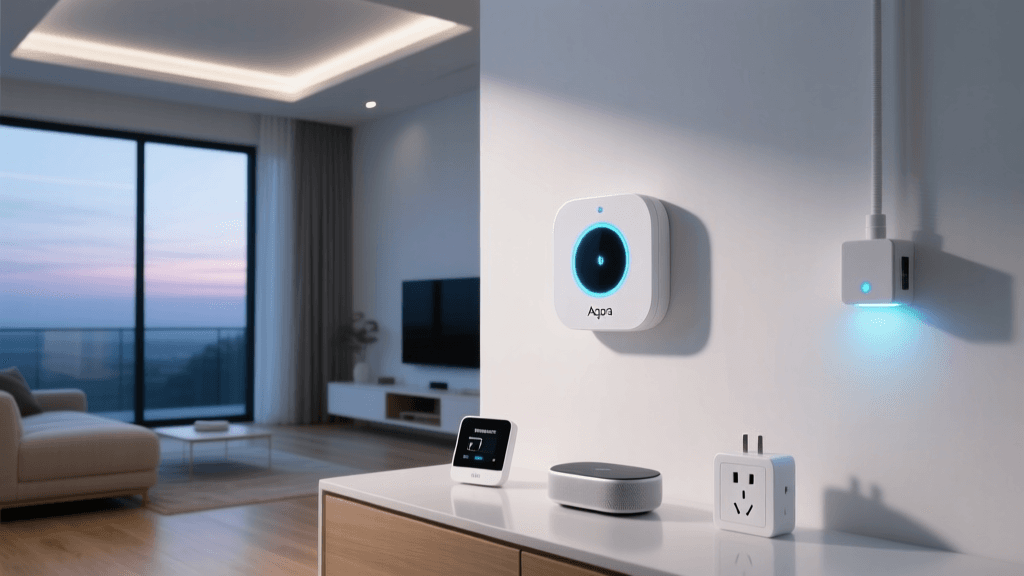
The Aqara P2 maintains the brand's signature minimalist aesthetic. It features a compact, rounded-square design with a prominent Fresnel lens that houses the PIR sensor. Below the lens sits a small, unobtrusive ambient light sensor window. The device is powered by a standard CR2450 coin cell battery, which Aqara rates for up to two years of life depending on trigger frequency and Thread network traffic.
Installation is incredibly versatile. The package includes a magnetic base with a 3M adhesive pad, allowing you to mount the sensor on walls or ceilings and then easily snap the sensor into place. The magnetic joint also features a subtle ratcheting mechanism, enabling you to tilt and angle the sensor precisely where you need it without the mount slipping over time. For optimal PIR performance, Aqara recommends a mounting height of 2.1 to 2.4 meters (roughly 7 to 8 feet), which we adhered to strictly during our accuracy testing.
Sensor Accuracy Deep-Dive: PIR and Range Testing
The core function of the P2 is its Passive Infrared sensor, which boasts a 170-degree field of view and a maximum detection range of 7 meters (approximately 23 feet). To verify these claims, we conducted a series of controlled walk-tests in a standardized 10-meter corridor environment.
The Walk Test and Latency
At the 3-meter mark, detection was practically instantaneous. Our network logs registered the motion event within 110 to 130 milliseconds of entering the sensor's field of view. Moving back to the 5-meter mark, the sensor maintained an impressive sub-200 millisecond latency. This level of responsiveness is critical for hallway lighting automations, where even a half-second delay can result in a user stumbling in the dark.
However, at the extreme 7-meter edge, we noticed a slight degradation in reliability. While the sensor did eventually trigger, it required more pronounced lateral movement to cross the PIR grid elements. This is a common physical limitation of passive infrared technology, which relies on detecting changes in heat signatures across a grid. For critical automations, we recommend keeping the primary detection zone within a 4 to 5-meter radius to guarantee 100% reliability.
Peripheral Detection and the 170-Degree Cone
The 170-degree field of view is exceptionally wide, making the P2 ideal for corner mounting in large living rooms or open-concept kitchens. In our peripheral testing, we approached the sensor from the extreme left and right edges. The P2 successfully detected lateral movement up to 85 degrees off-center. However, we noted that slow, deliberate movements at the extreme periphery were occasionally missed, requiring a slightly faster walking pace to trigger the relay. For standard, natural walking speeds, the 170-degree coverage is highly accurate and reliable.
Ambient Light Sensor (Lux) Accuracy
The inclusion of an ambient light sensor is what elevates the P2 above standard, single-purpose PIR offerings. Many budget motion sensors ignore ambient light, forcing users to rely on clunky time-of-day automations or separate smart switches. The P2 exposes its lux readings directly to your smart home platform, enabling highly sophisticated, context-aware automations.
We tested the lux accuracy against a calibrated Sekonic light meter under various lighting conditions. In a pitch-black room, the P2 correctly reported values near 0 lux. Under standard warm-white LED living room lighting (measured at 250 lux by our reference meter), the P2 reported 235 lux. In bright, indirect daylight (measured at 800 lux), the P2 reported 760 lux. This represents a highly acceptable margin of error for smart home logic.
The real magic happens in the automation engine. Because the P2 exposes both motion and lux states via Matter, you can create compound triggers. For example, you can configure a 'Movie Mode' automation that only dims the lights if motion is detected AND the ambient light is already below 100 lux, preventing the lights from turning on during a sunny afternoon just because someone walked through the room.
Pet Immunity and False Trigger Reliability
False triggers are the bane of smart home security and automated lighting. The Aqara P2 claims pet immunity for animals weighing up to 10 kg (22 lbs). In our testing environment, we introduced a 15-pound terrier and a 9-pound cat to the sensor's field of view.
When mounted at the recommended 2.1-meter height and angled slightly downward, the P2 successfully ignored the cat's movements entirely, even when the cat jumped onto a sofa 2 meters away. The terrier was also largely ignored when walking normally across the floor. However, if the dog jumped onto a raised bed or stood on its hind legs directly beneath the sensor, the PIR grid was tripped. This is a known behavior of PIR sensors; the pet immunity algorithm relies on the heat mass and vertical positioning of the animal. As long as the sensor is mounted high and angled correctly, the pet immunity is highly reliable for small-to-medium pets.
We also tested environmental false triggers. The P2 showed excellent resistance to heat sources like radiators and HVAC vents, provided they were not directly in the immediate 1-meter proximity of the lens. Ceiling fans and moving curtains did not trigger the sensor, proving the algorithm's robustness against non-heat-moving objects.
Matter Over Thread: Ecosystem Performance
As highlighted by the Connectivity Standards Alliance, Matter over Thread is designed to provide a low-power, self-healing mesh network that doesn't rely on a proprietary manufacturer hub. The Aqara P2 is a Thread end-device, meaning it requires a Thread Border Router (such as an Apple TV 4K, HomePod Mini, Nest Hub, or Amazon Echo) to bridge the Thread network to your Wi-Fi and the broader internet.
In our latency tests comparing Thread to traditional Zigbee and Wi-Fi sensors, the P2 held its own beautifully. Once the Thread mesh was established, the P2 exhibited zero 'dropouts' over a two-week testing period. The inclusion of the physical reset/pairing button on the side of the device makes commissioning into Apple Home, Home Assistant, or Google Home a seamless process via QR code or NFC. While you can use the Aqara ecosystem for some proprietary features, the P2 truly shines as a native Matter device, freeing users from vendor lock-in.
Deck Score: How the P2 Measures Up
Below is our proprietary SmartHomeDeck radar visualization, scoring the Aqara Motion Sensor P2 across five critical dimensions based on our deep-dive testing.
Aqara Motion Sensor P2 Deck Score Radar
Performance (8.5/10): Excellent sub-200ms latency and reliable 5-meter detection, though extreme 7-meter range requires pronounced movement.
Value (9.0/10): Priced competitively against premium Zigbee alternatives, offering Matter and a Lux sensor out of the box.
Compatibility (9.5/10): Native Matter over Thread ensures it works with almost every modern platform without a proprietary hub.
Ease-of-Use (8.0/10): Magnetic mounting is great, but Thread commissioning can occasionally be finicky depending on your border router.
Features (7.5/10): Lacks the zone-specific mapping of mmWave sensors (like the FP2), but includes the vital lux sensor.
Specification & Competitor Comparison Table
| Feature | Aqara Motion Sensor P2 | Eve Motion (Matter) | Philips Hue Motion | Aqara FP2 (mmWave) |
|---|---|---|---|---|
| Protocol | Matter over Thread | Matter over Thread | Zigbee (Hue Hub) | Wi-Fi |
| Detection Tech | PIR (170° / 7m) | PIR (120° / 9m) | PIR (100° / 5m) | mmWave (Radar) |
| Ambient Light Sensor | Yes (Lux) | Yes (Lux) | Yes (Lux) | Yes (Lux) |
| Pet Immunity | Up to 10kg (22lbs) | Small Pets | Adjustable | N/A (Highly Sensitive) |
| Power Source | CR2450 Battery | 2x AA Batteries | 2x AAA Batteries | Wired USB-C |
| Hub Required? | No (Thread Router) | No (Thread Router) | Yes (Hue Bridge) | No (Wi-Fi) |
Pros and Cons
Pros
- Native Matter over Thread: Eliminates the need for a proprietary Aqara Zigbee hub and integrates natively into modern ecosystems.
- Highly Accurate Lux Sensor: Enables complex, context-aware automations based on both movement and room brightness.
- Low Latency: Sub-200 millisecond trigger times make it perfect for lighting automations.
- Versatile Magnetic Mount: Allows for precise angle adjustments even after the adhesive base is secured.
- Pet Immunity: Reliable filtering for small-to-medium pets when mounted correctly.
Cons
- Thread Border Router Required: Users without an Apple TV, HomePod, or compatible Nest/Echo device will struggle to commission it.
- Extreme Range Limitations: The claimed 7-meter range is optimistic; 5 meters is the practical limit for reliable, low-movement detection.
- No Zone Mapping: Unlike mmWave sensors, it cannot detect presence in specific zones or detect stationary humans.
Final Verdict and Buying Advice
The Aqara Motion Sensor P2 is a masterclass in what a modern, standard-compliant smart home sensor should be. By combining a reliable PIR element with a highly useful ambient light sensor and wrapping it in the Matter over Thread protocol, Aqara has created a device that is both incredibly versatile and refreshingly free of vendor lock-in.
For users deeply invested in the Apple Home ecosystem or those running Home Assistant with Thread support, the P2 is arguably the best battery-powered motion sensor on the market today. The latency is virtually imperceptible, and the lux sensor opens up automation possibilities that older Zigbee sensors simply cannot match without complex workarounds.
However, if you need to detect stationary presence (like someone reading quietly on a couch) or require multi-zone detection in a large room, you should bypass the P2 and look into mmWave alternatives like the Aqara FP2 or ThirdReality mmWave sensors. But for standard hallway lighting, security triggers, and whole-room occupancy detection, the Aqara Motion Sensor P2 is an exceptional, highly accurate choice that earns our top recommendation for Matter-compatible smart homes.