Upgrading your home climate control system does not always require ripping out your existing HVAC infrastructure or hiring an expensive contractor. For millions of homeowners relying on split-system air conditioners, window units, or portable ACs, the path to a smarter home is surprisingly simple. Enter the Sensibo Sky, a compact, Wi-Fi-enabled infrared (IR) blaster designed to bridge the gap between traditional 'dumb' air conditioners and modern home automation ecosystems. In this comprehensive Sensibo Sky AC controller review, we will explore how this device transforms your cooling and heating experience, breaking down its setup process, core features, performance, and overall value.
Product Overview: What is the Sensibo Sky?
The Sensibo Sky is a smart AC controller that acts as a universal remote for your infrared-based climate devices. Unlike traditional smart thermostats that wire directly into your central HVAC system, the Sensibo Sky communicates with your AC unit exactly like your standard physical remote control—via infrared light. By connecting to your home Wi-Fi network, the device allows you to control your air conditioner, heat pump, or portable heater from anywhere in the world using the Sensibo smartphone app.
The primary appeal of the Sensibo Sky lies in its non-invasive installation and broad compatibility. Whether you have a ductless mini-split system in your bedroom, a window unit in your apartment, or a portable AC in your home office, the Sensibo Sky can likely control it. It brings advanced features like 7-day scheduling, geofencing, and voice control to appliances that were never designed for the smart home era. By retrofitting your existing equipment, you can achieve significant energy savings and enhanced comfort without the premium price tag of a full smart HVAC overhaul.
Design and Setup Experience
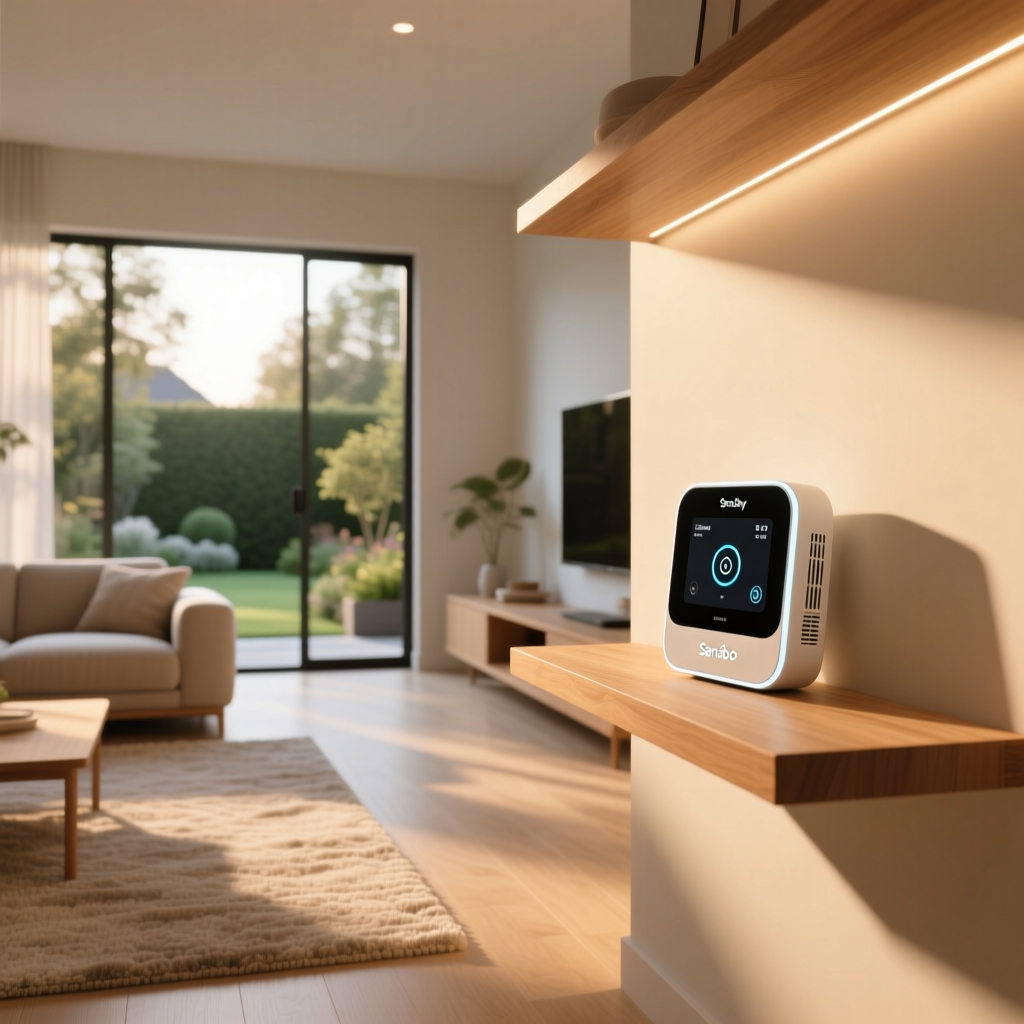
Out of the box, the Sensibo Sky (often referred to by the manufacturer as a 'POD') features a minimalist, unobtrusive design. The puck-shaped device is small enough to mount on a wall or place on a shelf, provided it has a clear line of sight to your AC unit's infrared receiver. It includes a built-in temperature and humidity sensor, allowing the app to monitor the actual ambient conditions of the room rather than relying on the AC unit's internal sensors, which are often inaccurate due to their proximity to the cold or hot air output.
The setup process is generally straightforward, though it comes with a common smart home caveat: the Sensibo Sky only supports 2.4GHz Wi-Fi networks. If you run a modern mesh router that combines 2.4GHz and 5GHz bands under a single SSID, you may need to temporarily separate the bands or use the app's WPS (Wi-Fi Protected Setup) feature to ensure a successful connection. Once powered via the included micro-USB cable and connected to your network, the onboarding process in the Sensibo app takes over.
Sensibo boasts one of the most extensive IR code databases in the smart home industry. During setup, you simply select your AC brand and model from a dropdown list. The app will then prompt you to test a series of commands (power, temperature up, temperature down, fan speed) to verify that the correct IR profile has been downloaded to the device. In the rare event that your specific model is not in the database, the app offers a manual 'learning' mode, allowing the Sensibo Sky to copy the signals directly from your physical remote control. This dual approach ensures that nearly any IR-based climate device can be brought online within minutes.
Core Features and Performance
Where the Sensibo Sky truly shines is in its software ecosystem and feature set. The companion app is intuitive, visually appealing, and packed with functionality that goes far beyond simple on/off toggling. One of the standout features is Climate React, a powerful automation engine that adjusts your AC based on real-world conditions. Climate React can use your smartphone's geofencing capabilities to turn the AC on when you are within a certain radius of your home and turn it off when you leave. Furthermore, it can integrate with local weather data to trigger cooling or heating based on outdoor temperature thresholds, ensuring your home is always comfortable the moment you walk through the door.
The 7-day scheduling feature is equally robust. You can create complex schedules with multiple time blocks per day, adjusting temperature, fan speed, and swing settings for different times of the day. This is particularly useful for optimizing energy usage during peak utility hours or ensuring the bedroom is perfectly cooled right before bedtime. The app also provides detailed energy usage estimates and historical data, giving you insight into your cooling habits and helping you identify opportunities to reduce your electricity bill.
In terms of raw performance, the IR blaster is strong and reliable. As long as the device is positioned correctly without physical obstructions, commands from the app are executed almost instantaneously. The built-in temperature and humidity sensors are highly responsive, providing accurate readings that trigger your automated routines reliably. However, because it relies on infrared technology, the Sensibo Sky cannot 'read' the current state of your AC if someone manually changes the settings using the physical remote. To maintain sync, the app relies on the assumption that it is the sole controller of the unit, which is a standard limitation of all IR-based smart blasters.
Ecosystem Compatibility and Voice Control
A smart device is only as good as its ability to integrate with your broader home automation setup. The Sensibo Sky offers excellent compatibility with the major voice assistants, including Amazon Alexa and Google Assistant. Once linked via the respective skills or actions, you can use voice commands to set specific temperatures, change modes, or turn the unit off. For example, saying 'Alexa, set the bedroom AC to 72 degrees' works seamlessly, making it a fantastic addition to your nighttime or morning routines.
For advanced users, the Sensibo Sky's integration with IFTTT (If This Then That) opens up a world of custom automation possibilities. You can create applets that trigger your AC based on external smart home sensors, calendar events, or even location tracking from other apps. This makes it a versatile tool for those building complex home automation workflows.
It is important to note, however, that the Sensibo Sky does not natively support Apple HomeKit. While Apple users can create workarounds using IFTTT or third-party bridges, those deeply entrenched in the Apple ecosystem may find this lacking. Users requiring native HomeKit support, Matter compatibility, or advanced local processing might need to look at the upgraded Sensibo Air model or explore other smart home reviews for alternatives that natively support Apple's platform. Nevertheless, for Android users, Alexa enthusiasts, and Google Home fans, the Sensibo Sky integrates flawlessly.
Pros and Cons
To summarize our findings, here is a breakdown of the primary advantages and disadvantages of the Sensibo Sky AC controller.
Pros
- Massive IR Database: Supports thousands of AC brands and models out of the box with minimal manual configuration.
- Climate React: Advanced geofencing and weather-based automations provide true 'set it and forget it' comfort.
- Non-Invasive Setup: No wiring or HVAC expertise required; simply plug it in and mount it.
- Energy Savings: Scheduling and geofencing prevent wasted electricity, allowing the device to pay for itself over time.
- Compact Design: The unobtrusive puck blends easily into most room decors.
Cons
- 2.4GHz Wi-Fi Only: Can be frustrating to pair on modern mesh networks that do not separate frequency bands.
- No Native Apple HomeKit: Lacks out-of-the-box support for Siri and Apple Home routines.
- Line-of-Sight Required: Infrared technology means the device must have a clear, unobstructed view of the AC unit.
- Micro-USB Power: Older hardware revisions use micro-USB, which is becoming outdated compared to USB-C.
The Smart Home Deck Score
Based on our comprehensive testing, the Sensibo Sky earns a highly respectable overall score. It excels in features and value, making it one of the most cost-effective ways to upgrade a dumb AC unit. The slight deductions in the ecosystem category are solely due to the lack of native Apple HomeKit support, while the design score reflects the older micro-USB port and the inherent limitations of IR line-of-sight.
Frequently Asked Questions
Does the Sensibo Sky work with Apple HomeKit?
No, the Sensibo Sky does not have native Apple HomeKit support. While you can use third-party services like IFTTT to create basic triggers, it will not appear in the Apple Home app for native Siri voice control or HomeKit automations. If Apple HomeKit integration is a strict requirement for your smart home setup, you should consider the Sensibo Air, which is the newer, premium model that includes native HomeKit and Matter support.
Can I control multiple AC units with a single Sensibo Sky?
The Sensibo Sky relies on infrared light, which cannot pass through walls or solid objects. Therefore, one Sensibo Sky can only control the AC units located in the exact same room, provided it has a direct line of sight to each unit's IR receiver. If you have multiple AC units in different rooms, you will need to purchase a separate Sensibo Sky for each room. Fortunately, the Sensibo app allows you to manage multiple PODs seamlessly from a single dashboard, grouping them by zones or floors.
How does Climate React save energy?
Climate React saves energy by ensuring your AC is only running when it is absolutely necessary. By utilizing geofencing, the system detects when the last person leaves the house and automatically powers down the AC, eliminating the common mistake of leaving the AC running all day while you are at work. Furthermore, by utilizing temperature and humidity thresholds, Climate React can prevent overcooling, maintaining a comfortable baseline without forcing the compressor to work overtime, which directly translates to lower monthly utility bills.
What happens to my AC settings if the Wi-Fi goes down?
If your home internet connection drops, the Sensibo Sky will lose its ability to receive commands from the cloud, meaning app control, voice commands, and remote geofencing will temporarily stop working. However, your AC unit itself will continue to operate based on the last command it received. You can always use the original physical remote control to adjust your settings manually during an outage. Once the Wi-Fi connection is restored, the Sensibo Sky will automatically reconnect and resume your scheduled automations.
Final Verdict
The Sensibo Sky remains one of the most effective and accessible tools for upgrading legacy climate control systems. By combining a massive IR database with an incredibly feature-rich app, it brings high-end smart thermostat capabilities to window units, portable ACs, and ductless mini-splits. While the lack of native Apple HomeKit support and the reliance on 2.4GHz Wi-Fi are minor hurdles, the sheer utility of Climate React, detailed scheduling, and voice control make it an outstanding investment. For anyone looking to improve their home comfort and reduce energy waste without replacing their existing HVAC equipment, the Sensibo Sky is a top-tier recommendation that consistently delivers on its promises.