Introduction: The Living Room Energy Challenge
The living room is the undisputed hub of the modern home. It is where we gather, entertain, relax, and consume media. However, this high-traffic space is also one of the most energy-intensive rooms in the house. Between the HVAC vents struggling to maintain comfort in large, open spaces, the array of entertainment electronics drawing phantom power, and the overhead lighting left on for hours, the living room can quietly inflate your monthly utility bills. According to the U.S. Department of Energy, heating and cooling account for nearly half of the average home's energy use, and optimizing the spaces where you spend the most time is the most effective way to reduce that footprint.
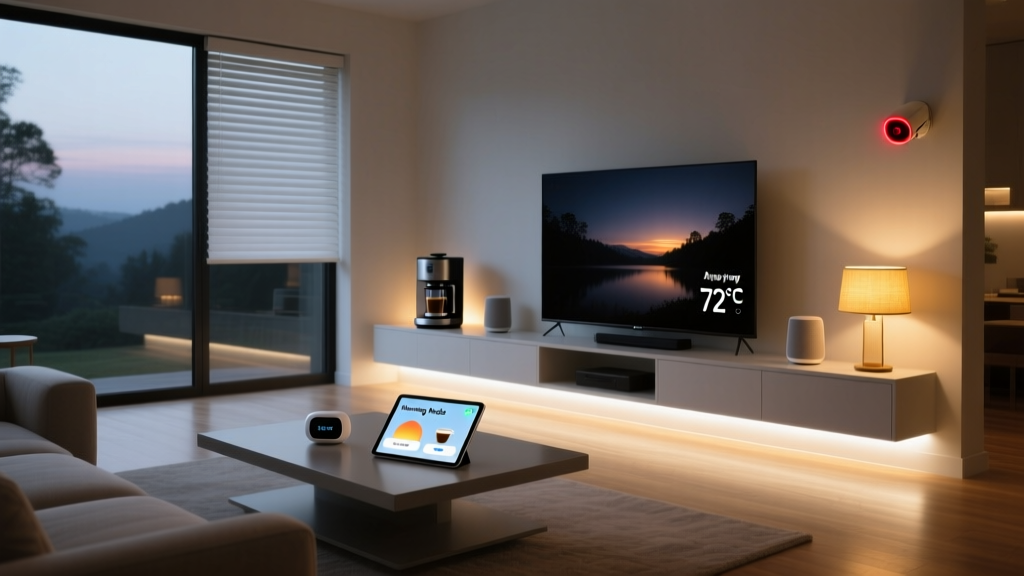
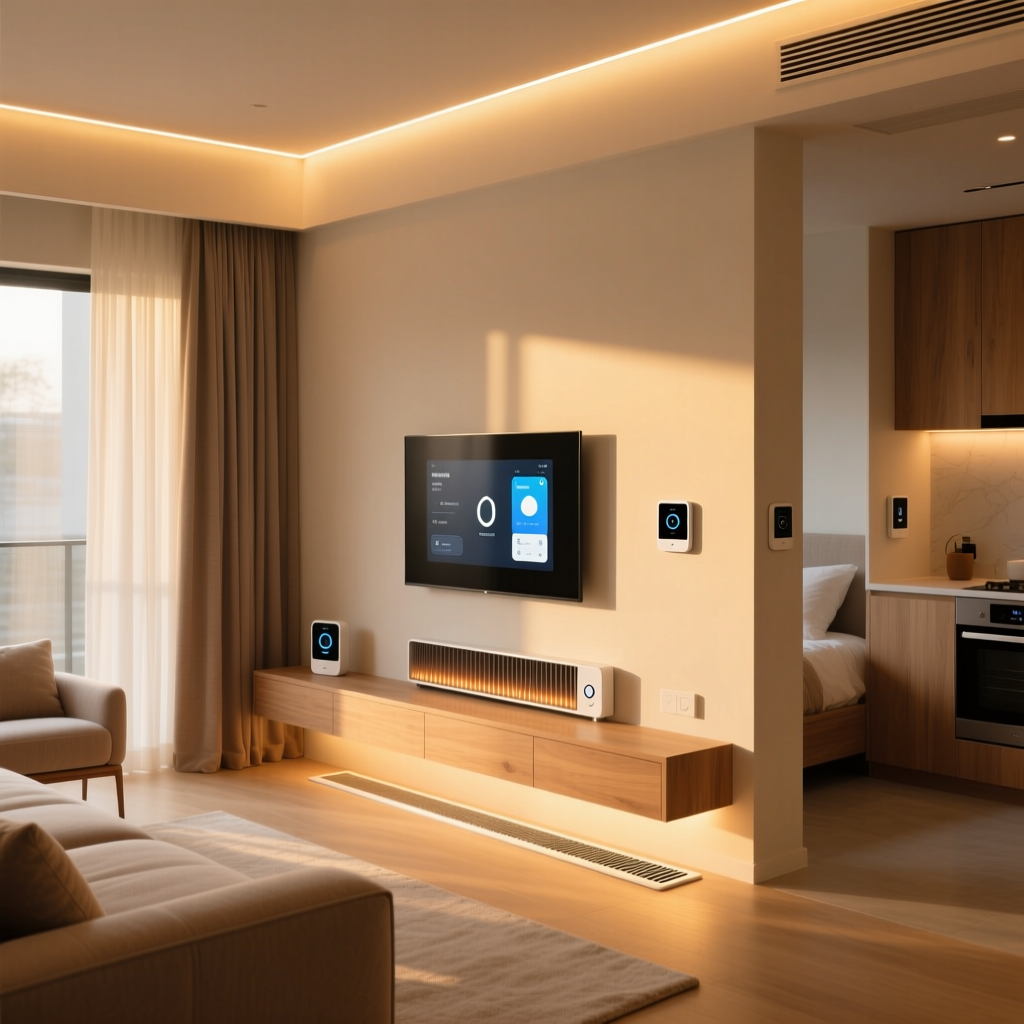
Transforming your living room into an energy-saving smart ecosystem does not mean sacrificing comfort or aesthetics. By strategically deploying smart thermostats, automated lighting, energy-monitoring smart plugs, and solar-tracking smart blinds, you can slash your energy consumption by up to 20% without ever touching a light switch. This comprehensive guide will walk you through the best devices, budget tiers, automation routines, and design considerations for building the ultimate eco-friendly smart living room.
The Four Pillars of Living Room Energy Efficiency
To build a truly efficient living room, we must address the four primary sources of energy waste:
- Climate Control Inefficiency: Heating or cooling an empty room, or overcompensating for poor airflow in large spaces.
- Lighting Waste: Leaving overhead and accent lights on at full brightness during peak daylight hours or when the room is unoccupied.
- Vampire Power: Electronics like gaming consoles, soundbars, and smart TVs drawing continuous standby power even when turned off.
- Solar Heat Gain: Unmanaged sunlight streaming through windows, forcing your air conditioning to work overtime during summer months.
Smart Thermostats and HVAC Zoning
The cornerstone of any energy-saving home is the smart thermostat. However, a standard smart thermostat placed in a hallway or a bedroom might not accurately read the temperature of your sprawling living room. This is where room sensors and smart zoning become critical.
Top Device Pick: Ecobee SmartThermostat Premium
The Ecobee SmartThermostat Premium is a powerhouse for living room efficiency. It utilizes SmartSensors that detect both temperature and occupancy. By placing a sensor behind your living room sofa, the thermostat will prioritize the comfort of the living room when you are actively watching a movie, and ignore it when the room is empty, shifting focus to occupied bedrooms or saving energy entirely. Furthermore, the Ecobee integrates seamlessly with Apple HomeKit, Amazon Alexa, and Google Home, and supports the Matter protocol for future-proofing.
By utilizing occupancy-based setbacks, smart thermostats can save homeowners an average of 10% to 15% on heating and cooling costs annually, as noted by the U.S. Department of Energy.
Smart Lighting and Daylight Harvesting
Lighting sets the mood in a living room, but traditional incandescent or even standard LED bulbs waste energy when left at 100% brightness. Smart lighting allows for 'daylight harvesting'—dimming artificial lights when natural sunlight is abundant.
Top Device Picks: Lutron Caseta Diva Smart Dimmer & Philips Hue
For hardwired overhead and recessed lighting, the Lutron Caseta Diva Smart Dimmer is unmatched. It uses Lutron's proprietary Clear Connect RF protocol, meaning it will not congest your home's Wi-Fi network, and it operates reliably even if the internet goes down. By dimming your living room bulbs by just 20%, you save nearly 20% of the lighting energy cost while extending the lifespan of the bulbs.
For accent lighting, floor lamps, and TV backlighting, Philips Hue White and Color Ambiance bulbs are the gold standard. According to EPA ENERGY STAR, smart LED bulbs use up to 90% less energy than traditional incandescent lighting. Pairing Hue bulbs with a Hue Motion Sensor ensures that accent lights in reading nooks turn off the moment you leave the room.
Smart Plugs and Vampire Power Elimination
Modern entertainment centers are notorious energy vampires. A smart TV, gaming console, AV receiver, and soundbar can draw anywhere from 20 to 50 watts of continuous standby power. Over a year, this 'phantom load' can cost you hundreds of dollars and contribute significantly to your carbon footprint, a metric you can explore further using the EPA Greenhouse Gas Equivalencies Calculator.
Top Device Pick: Eve Energy Smart Plug (Matter/Thread)
The Eve Energy Smart Plug is a game-changer for the living room media console. Built on the Thread networking protocol and fully Matter-compatible, it offers real-time energy monitoring directly in the Apple Home or Eve app. You can identify exactly how much power your AV receiver draws in standby mode. By plugging your entire entertainment center into a heavy-duty smart power strip controlled by an Eve Energy plug, you can completely sever the power supply to these devices when the living room is unoccupied, eliminating vampire power entirely.
Smart Blinds and Solar Heat Gain Management
Large living room windows are a major source of thermal transfer. In the summer, direct sunlight turns the room into a greenhouse; in the winter, bare windows radiate heat outside.
Top Device Pick: SwitchBot Blind Tilt
The SwitchBot Blind Tilt is an affordable, retrofittable smart motor that attaches to your existing horizontal blinds. By integrating it with a smart hub and a light/temperature sensor, you can automate your blinds to close during the hottest part of the afternoon, drastically reducing the load on your air conditioning system. This passive cooling technique is one of the most underrated energy-saving strategies in smart home design.
Budget Tiers: Starter, Mid, and Pro Configurations
Building an energy-efficient living room can be tailored to any budget. Below is a breakdown of three distinct tiers to help you plan your investment.
| Tier | Devices Included | Estimated Cost | Energy Savings Potential |
|---|---|---|---|
| Starter | 1 Smart Plug (Media Console), 2 Smart LED Bulbs (Floor Lamps) | $60 - $90 | Low (Eliminates standby power, basic lighting control) |
| Mid | Smart Thermostat + 1 Room Sensor, Lutron Smart Dimmer, 2 Smart Plugs | $250 - $350 | Medium (HVAC optimization, lighting dimming, phantom load reduction) |
| Pro | Premium Thermostat + 2 Sensors, Full Lutron Caseta Lighting, Smart Blinds, Thread Plugs | $600 - $900+ | High (Complete climate, solar, and power management) |
Visualizing the Savings
To understand where your investment yields the highest return, consider the estimated annual energy savings by device category. While smart thermostats provide the bulk of the financial return, smart blinds and plugs offer compounding benefits that protect your HVAC system and reduce base-load consumption.
Advanced Automation Routines for Maximum Efficiency
Hardware is only half the battle; the true magic of a smart living room lies in its automation routines. Here are three essential routines to configure in your smart home hub (Apple HomeKit, SmartThings, or Home Assistant) to guarantee energy savings.
1. The 'Solar Management' Routine
Trigger: Local weather API reports outdoor temperature > 78°F (25°C) AND time is between 1:00 PM and 5:00 PM. Action: SwitchBot Blind Tilt closes living room blinds to 80%. Philips Hue accent lights dim to 30% to compensate for lost natural light. Result: Prevents solar heat gain, reducing HVAC runtime during peak electricity rate hours.
2. The 'Entertainment Mode' Routine
Trigger: User activates 'Movie Time' scene via voice or button. Action: Lutron overhead lights turn off. Hue TV backlighting turns on to 20% brightness (reducing eye strain and saving power). Ecobee thermostat adjusts temperature by 2 degrees (cooler in summer, warmer in winter) to account for the body heat generated by a seated family. Result: Optimizes lighting for viewing while preventing the AC from overworking due to localized heat from multiple occupants.
3. The 'Phantom Load Sever' Routine
Trigger: Living room motion sensor detects no motion for 45 minutes AND time is past 11:00 PM. Action: Eve Energy smart plug cuts power to the media console strip. Result: Ensures gaming consoles and AV receivers are not drawing standby power overnight, saving up to $30 annually in pure vampire power waste.
Installation, Networking, and Aesthetic Integration
When outfitting a living room, aesthetics and network reliability are just as important as energy savings. A cluttered room with visible wires and blinking router lights defeats the purpose of a serene living space.
Networking: Thread and Matter vs. Wi-Fi
Living rooms often contain dozens of smart devices. Overloading your standard Wi-Fi router with 15 smart bulbs and 4 smart plugs will lead to network drops and delayed automations. Prioritize devices that use Thread (a low-power, mesh-networking protocol) or proprietary hubs like the Lutron Caseta Smart Bridge. Thread devices, like the Eve Energy plug and Nanoleaf Essentials bulbs, actually strengthen your network by acting as repeaters, ensuring that a device on the far side of the living room never loses connection.
Aesthetic Considerations
Smart home tech should disappear into the background. When installing smart plugs behind the media console, use flat-plug designs that sit flush against the wall, allowing you to push the console closer and hide the wiring. For smart blinds, opt for battery-powered motors with solar panel add-ons (available from brands like SwitchBot and IKEA) so you never have to run unsightly power cables up your window frames. Finally, utilize paintable cord covers for any floor lamps or accent lighting that lacks in-wall wiring, ensuring a clean, minimalist look that complements modern interior design.
Conclusion
Creating an energy-saving smart living room is a highly rewarding project that pays for itself over time. By moving beyond simple remote control and embracing occupancy sensors, daylight harvesting, solar management, and phantom load elimination, you transform the busiest room in your house into a masterclass of efficiency. Whether you start with a simple smart plug for your media center or invest in a full Pro-tier ecosystem with smart blinds and zoned HVAC, every automated step brings you closer to a greener, more sustainable, and significantly cheaper home energy footprint.