The Ultimate Room-by-Room Smart Home Automation Plan
Transforming a standard family home into a fully integrated smart ecosystem can feel overwhelming. Rather than buying disconnected gadgets, the most successful smart home deployments follow a structured, room-by-room automation plan. This approach ensures that every device serves a distinct purpose, integrates seamlessly with your central hub, and enhances your daily routines without cluttering your living space. Whether you are outfitting a new build or retrofitting a decades-old property, this comprehensive blueprint breaks down the ideal smart home setup by room, complete with budget tiers, installation tips, and aesthetic considerations.
Foundation: Network Infrastructure and Hubs
Before installing a single smart bulb, your home needs a robust foundation. A whole-home automation plan will quickly congest a standard ISP-provided router. We recommend upgrading to a mesh Wi-Fi system like the Eero Pro 6E or TP-Link Deco XE75 to ensure wall-to-wall coverage. Furthermore, to future-proof your home, invest in a hub that supports the Matter over Thread protocol, such as the Home Assistant Green or the latest Apple TV 4K. Thread creates a low-power, self-healing mesh network that keeps your sensors and switches responsive without clogging your Wi-Fi bandwidth.
The Living Room: Entertainment and Ambient Control
The living room is the central hub of family life, requiring a balance of entertainment control, ambient lighting, and climate management.
Device Recommendations by Budget
- Starter ($150 - $300): Wyze Plug Outdoor for lamps, Kasa Smart Light Switches, and a Roku Streaming Stick 4K integrated with voice control.
- Mid ($500 - $900): Philips Hue White and Color Ambiance starter kit, Sonos Beam Gen 2 soundbar, and an Ecobee SmartThermostat Premium to manage the main living area's climate.
- Pro ($1,500+): Lutron Caseta Diva smart dimmers, Samsung The Frame TV (which doubles as art), and a full Sonos surround sound system with architectural speakers.
Automation Routines
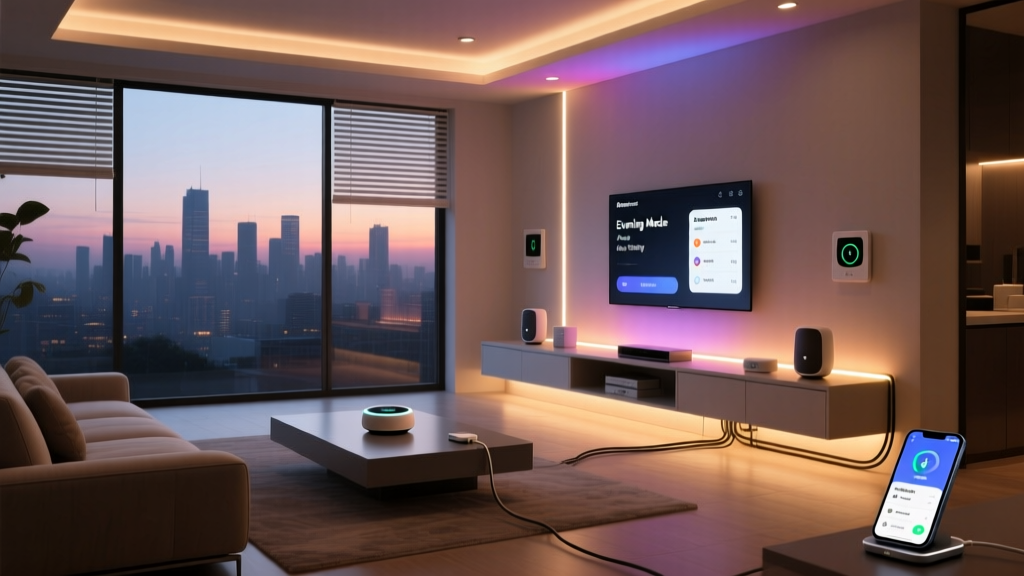
Create a 'Movie Night' routine. When triggered via voice or a wall-mounted smart button, the Philips Hue lights dim to 10% with a warm bias, the smart blinds close to eliminate glare, the thermostat drops by two degrees to compensate for body heat, and the TV powers on to your designated streaming app.
Installation and Aesthetics
Avoid the 'blinking light' syndrome in your living room. Use smart dimmers rather than smart bulbs for main overhead fixtures so family members can use physical switches without breaking the smart connection. Hide hubs and streaming sticks behind the TV using Velcro strips or recessed media boxes to maintain a clean, minimalist aesthetic.
The Kitchen: Safety, Convenience, and Monitoring
The kitchen is a high-traffic area where safety and convenience intersect. Smart home technology here should focus on preventing disasters and streamlining morning routines.
Device Recommendations by Budget
- Starter ($100 - $250): Amazon Echo Show 8 for recipe displays and timers, and a smart plug for your coffee maker.
- Mid ($400 - $700): Google Nest Protect (Smoke + CO alarm), a smart leak detector under the sink (like the YoLink Water Leak Sensor), and under-cabinet LED strip lighting.
- Pro ($1,200+): Moen Smart Faucet with Motion Control, Samsung Family Hub Refrigerator, and a dedicated smart display built flush into the cabinetry.
Safety and Authoritative Insights
Kitchen fires are a leading cause of home emergencies. According to the National Fire Protection Association (NFPA), cooking equipment is the leading cause of home fires and home fire injuries. Integrating smart smoke detectors like the Nest Protect allows you to receive immediate smartphone alerts and silence false alarms (like burnt toast) via an app, reducing the temptation to remove batteries from nuisance alarms. Furthermore, placing smart water leak sensors under the dishwasher and sink can prevent catastrophic water damage by alerting you the moment moisture is detected.
Automation Routines
Set up a 'Morning Prep' routine. At 6:30 AM, the under-cabinet lights fade on to 50% brightness, the smart plug turns on the coffee maker, and your smart display begins reading the day's weather and family calendar events.
The Primary Bedroom: Sleep Optimization and Comfort
Your bedroom should be a sanctuary optimized for circadian rhythms and uninterrupted sleep. Automation here should be silent, subtle, and focused on environmental control.
Device Recommendations by Budget
- Starter ($100 - $200): Govee Smart Table Lamps with color temperature control, and a smart plug for a white noise machine or fan.
- Mid ($400 - $800): SwitchBot Curtain Rod 2 for automated blackout drapes, Philips Hue White Ambiance bedside lamps, and a Withings Sleep Tracking Pad under the mattress.
- Pro ($1,500+): Lutron Serena Honeycomb Shades, Eight Sleep Pod 4 for dual-zone climate-controlled sleep tracking, and a ceiling fan with integrated smart control (like the Hunter Symphony).
Automation Routines
The 'Wind Down' routine is critical for sleep hygiene. Triggered by your phone's location or a set schedule, the lights shift to a dim, amber hue (eliminating blue light), the smart thermostat drops to the optimal sleep temperature (around 65°F/18°C), and the smart curtains slowly close. In the morning, the 'Sunrise Wake' routine gradually opens the blinds and shifts the lights to a cool, bright white to naturally halt melatonin production.
Installation and Aesthetics
Ensure all smart devices in the bedroom have 'dark mode' or LED-off settings. A glowing router or bright LED on a smart plug can disrupt sleep. Use blackout tape or configure device settings to extinguish status lights at night.
The Bathroom: Leak Detection and Moisture Management
Bathrooms are often overlooked in smart home plans, yet they are the primary source of costly water damage and high humidity issues.
Device Recommendations by Budget
- Starter ($50 - $150): Motion-sensor nightlights for the vanity and toilet area, and a basic Wi-Fi humidity sensor.
- Mid ($300 - $600): Phyn Smart Water Sensor + Auto Shutoff, and a smart exhaust fan switch that triggers based on humidity levels.
- Pro ($1,000+): Kohler Konnect smart shower system with personalized temperature presets, and a smart mirror with integrated anti-fog and lighting controls.
Water Conservation and Damage Prevention
The EPA's WaterSense program highlights that household leaks can waste nearly 90,000 gallons of water annually across the US. Smart water monitors like the Phyn or Moen Flo not only detect micro-leaks behind toilets and under vanities but can automatically shut off the main water supply if a catastrophic pipe burst is detected, saving homeowners tens of thousands of dollars in remediation costs.
Automation Routines
Create a 'Ventilation' routine. When the humidity sensor detects a spike above 70% (indicating a shower is in use), it automatically triggers the smart exhaust fan. The fan remains on for 20 minutes after the humidity drops back to baseline, preventing mold growth without requiring manual intervention.
The Garage and Entryway: Security and Access
The entry points of your home are your first line of defense. Smart security here focuses on access control, surveillance, and package management.
Device Recommendations by Budget
- Starter ($150 - $300): Wyze Cam v4 for garage monitoring, and a Ring Video Doorbell (wired or battery).
- Mid ($500 - $800): Yale Assure Lock 2 (Touchscreen), Chamberlain MyQ Smart Garage Control, and a Ring Alarm base station with contact sensors.
- Pro ($1,500+): UniFi Protect G4 Doorbell Pro, Schlage Encode Plus (HomeKey compatible), and a smart EV charger like the ChargePoint Home Flex integrated with solar production data.
Automation Routines
The 'Departure' routine triggers when the last family member's phone leaves the geofence. The garage door automatically closes if left open, the security system arms to 'Away', the thermostat shifts to eco-mode, and exterior cameras switch to high-sensitivity motion recording.
Budgeting Your Whole-Home Transformation
Planning a whole-home automation setup requires careful financial pacing. Below is a breakdown of estimated costs per room based on the tiers outlined above. This table helps families prioritize which rooms to tackle first based on immediate needs and ROI.
| Room / Area | Starter Tier (Est. Cost) | Mid Tier (Est. Cost) | Pro Tier (Est. Cost) | Primary Benefit |
|---|---|---|---|---|
| Living Room | $150 - $300 | $500 - $900 | $1,500+ | Entertainment & Ambiance |
| Kitchen | $100 - $250 | $400 - $700 | $1,200+ | Safety & Convenience |
| Primary Bedroom | $100 - $200 | $400 - $800 | $1,500+ | Sleep Optimization |
| Bathroom | $50 - $150 | $300 - $600 | $1,000+ | Leak Prevention |
| Garage / Entry | $150 - $300 | $500 - $800 | $1,500+ | Security & Access |
Energy Savings and Long-Term ROI
While the upfront costs of smart home devices can be significant, the long-term return on investment—particularly regarding energy and water conservation—is substantial. According to the U.S. Department of Energy, properly programming and utilizing smart thermostats can save households up to 10% a year on heating and 15% on cooling costs. When combined with automated lighting and smart water management, the cumulative savings begin to offset the initial hardware investments within the first few years.
Note: Leak detection savings represent the amortized avoidance of catastrophic water damage claims, which average over $10,000 per incident according to insurance industry data, rather than monthly utility bill reductions.
Final Thoughts on Whole-Home Integration
Executing a room-by-room automation plan prevents the common pitfall of ending up with a fragmented 'app jungle.' By standardizing your ecosystem—whether you lean toward Apple HomeKit, Google Home, Amazon Alexa, or the open-source Home Assistant—you ensure that a motion sensor in the hallway can seamlessly trigger the lights in the kitchen. Start with the foundation (network and hubs), prioritize high-impact areas like security and climate control, and gradually expand into ambient and convenience features. With careful planning, your family home will not only be smarter but significantly more efficient, secure, and comfortable for years to come.