The Living Room: Your Home's Seasonal Command Center
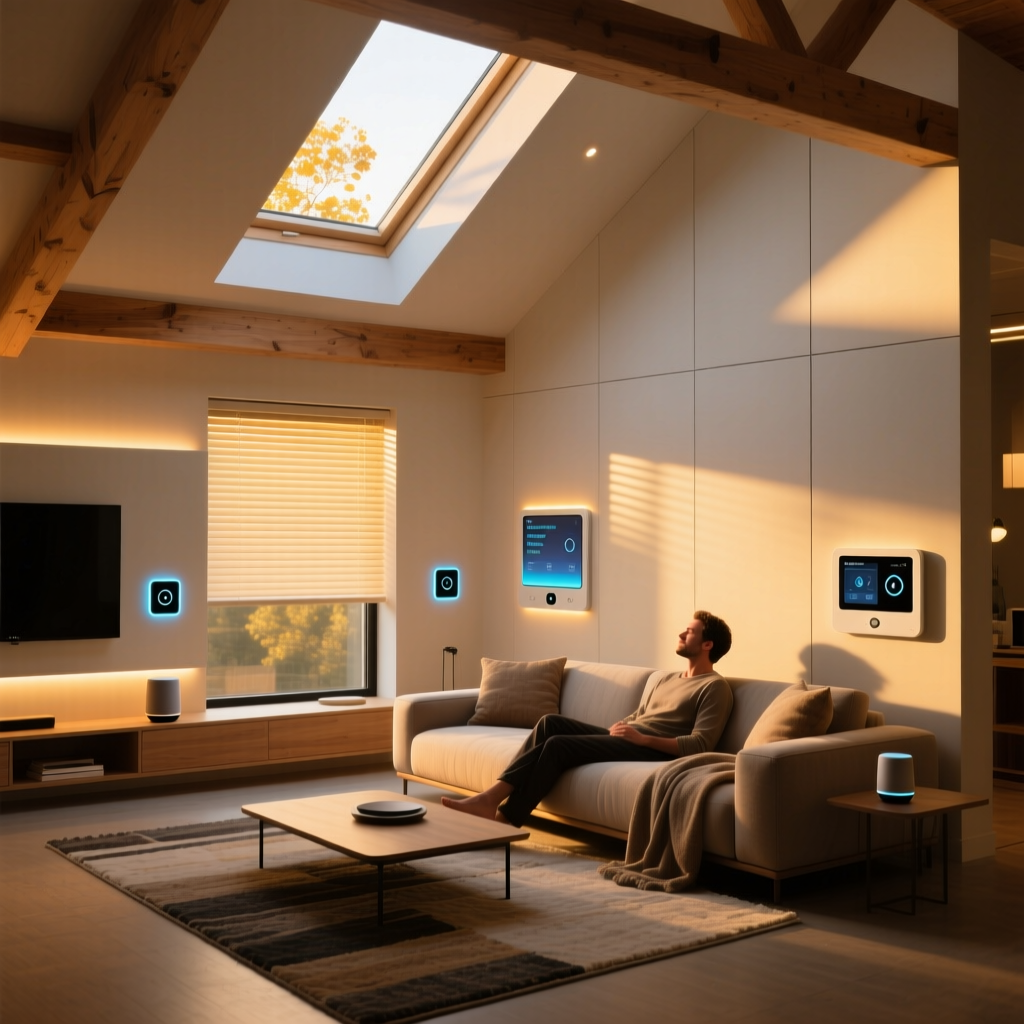
The living room is the heart of the home, serving as a gathering space for family, a hub for entertainment, and often the largest single zone in your house. Because of its size and frequent use, the living room typically demands the highest heating, ventilation, and air conditioning (HVAC) load. As the seasons shift from the sweltering heat of summer to the biting chill of winter, maintaining comfort while managing energy costs becomes a complex balancing act. Fortunately, modern smart home technology allows you to automate these seasonal transitions seamlessly.
According to the U.S. Department of Energy, heating and cooling account for nearly half of a typical home's utility bills. By deploying a strategic combination of smart thermostats, automated window treatments, and dynamic lighting, you can transform your living room into an adaptive environment that responds to the sun's angle, outdoor temperatures, and your daily routines. This comprehensive guide explores how to configure your living room for peak performance in both summer and winter, complete with product recommendations, budget tiers, and advanced automation logic.
Summer Mode: Beating the Heat with Smart Shading and Cooling
During the summer months, the primary enemy of living room comfort is solar heat gain. Large windows, while great for natural light, act as magnifying glasses that can raise indoor temperatures by several degrees, forcing your air conditioning to work overtime. The first line of defense is automated shading.
Automated Blinds and Solar Tracking
For a budget-friendly retrofit, the SwitchBot Blind Tilt (approx. $50 per unit) is an exceptional choice. It clamps directly onto your existing horizontal blinds and uses a built-in light sensor to track the sun's movement. By pairing it with the SwitchBot Hub 2, you gain Matter over Thread compatibility, allowing you to create routines that tilt the slats to exactly 45 degrees during peak afternoon hours (1:00 PM to 5:00 PM). This blocks direct UV rays while still allowing ambient light to filter into the room. For a premium, built-in solution, Lutron Serena Honeycomb Shades (starting at $600 per window) offer superior insulation and whisper-quiet motors that integrate flawlessly with Lutron's Caseta ecosystem.
Intelligent Climate Control
The Ecobee Smart Thermostat Premium (approx. $250) is the undisputed champion of living room climate control. Unlike traditional thermostats that read the temperature in a hallway, the Ecobee utilizes a SmartSensor placed directly in the living room. This sensor uses Passive Infrared (PIR) technology with a 140-degree field of view and a 45-foot range to detect occupancy. If your family is watching a movie on a hot July afternoon, the Ecobee prioritizes the living room's temperature over the rest of the house, ensuring you stay cool without wasting energy on empty bedrooms.
Supplemental Cooling via Smart Plugs
For homes without central air, or for those looking to create a localized breeze, the Kasa EP25 Smart Plug (approx. $20) features built-in energy monitoring. You can plug in a high-velocity oscillating tower fan and set a hard wattage limit or an automated schedule. The EP25 supports 15A/1800W, making it safe for most portable AC units and heavy-duty fans, provided you check your appliance's amperage draw to prevent circuit overloads.
Winter Mode: Retaining Warmth and Enhancing Coziness
When winter arrives, the goal shifts from blocking heat to trapping it, while simultaneously combating the psychological effects of shorter, darker days. The living room must become a warm, inviting sanctuary.
Thermal Insulation via Window Treatments
The DOE's guide on energy-efficient window attachments highlights that honeycomb (cellular) shades can reduce heat loss through windows by up to 40%. If you have automated cellular shades, program them to open fully at sunrise to allow passive solar heating, and close tightly 15 minutes before sunset to trap the accumulated heat inside. The trapped air within the cellular pockets acts as a robust thermal barrier against freezing outdoor temperatures.
Circadian Lighting and Ambiance
Winter evenings are long, and harsh, cool-toned lighting can disrupt your circadian rhythm and make the room feel sterile. Upgrading to Philips Hue White Ambiance bulbs (approx. $35 per bulb) allows you to tune the color temperature from a crisp 6500K (daylight) in the morning to a deeply warm 2200K (candlelight) in the evening. Pair these with a Hue Dimmer Switch mounted on the side table for instant, tactile control over the room's mood without needing to pull out a smartphone.
Smart Radiator Valves
If your living room relies on hydronic radiators, the Eve Thermo Smart Radiator Valve (approx. $80) is a game-changer. Utilizing the low-latency Thread protocol, Eve Thermo replaces your manual radiator knob and allows for precise, room-specific temperature scheduling. Furthermore, by pairing it with an Eve Door & Window sensor, you can create an automation that instantly shuts off the radiator valve if a window is opened to air out the room, preventing massive heat waste.
Budget Tiers for Seasonal Living Room Upgrades
Transforming your living room doesn't require an unlimited budget. Below is a structured breakdown of three distinct tiers to help you plan your seasonal smart home investments.
| Tier | Core Devices | Estimated Cost | Best For |
|---|---|---|---|
| Starter | Kasa EP25 Smart Plug, Wyze Smart Thermostat, Manual Blinds | $120 - $180 | Renters, apartments, and budget-conscious users seeking basic scheduling. |
| Mid-Tier | Ecobee Smart Thermostat + Sensor, SwitchBot Blind Tilt (x2), Philips Hue White | $400 - $600 | Homeowners wanting automated routines, occupancy sensing, and solar tracking. |
| Pro | Lutron Serena Cellular Shades, Ecobee Premium, Full Philips Hue Ambiance, Eve Thread Sensors | $1,500+ | Luxury integration, maximum energy savings, and premium architectural aesthetics. |
Crafting the Perfect Seasonal Automation Routines
Hardware is only half the equation; the true magic of a smart home lies in its automation logic. Whether you use Apple HomeKit, Google Home, Amazon Alexa, or Home Assistant, setting up seasonal routines will ensure your living room adapts effortlessly.
The Summer Routine: 'Beat the Heat'
- Morning (7:00 AM): Blinds tilt to 100% open to let in morning light. Thermostat adjusts from nighttime eco-mode (78°F) to active cooling (74°F) if the living room sensor detects motion.
- Afternoon (1:00 PM - 5:00 PM): Blinds automatically tilt to 20% closed on south and west-facing windows to block peak solar radiation. Tower fan plugged into Kasa EP25 turns on to oscillate, creating a wind-chill effect that allows the thermostat to be set 2 degrees higher without sacrificing comfort.
- Evening (8:00 PM): Blinds close completely for privacy. Lighting shifts to a neutral 4000K for reading or watching TV.
The Winter Routine: 'Cozy Sanctuary'
- Morning (7:30 AM): Blinds open fully to maximize passive solar heat gain. Radiator valve opens to 80% to warm the room for the day. Lighting turns on at 3500K to simulate a bright winter morning.
- Afternoon (4:30 PM): As the sun sets early, blinds close automatically to trap the day's heat. Lighting transitions smoothly to 2700K.
- Evening (7:00 PM): Lighting dims to 40% brightness and shifts to a warm 2200K. If the living room sensor detects no motion for 45 minutes, the thermostat drops to 65°F and the radiator valve closes to conserve energy.
Energy Savings and ROI: The Data
Investing in seasonal smart home technology yields measurable financial returns. According to ENERGY STAR, certified smart thermostats can save homeowners an average of 8% on heating and 10% on cooling bills annually. When combined with automated window treatments that manage solar heat gain and thermal insulation, the savings compound significantly.
As illustrated in the chart above, the smart thermostat provides the highest baseline savings in both seasons, but automated blinds play a crucial secondary role. In the summer, blinds reduce the HVAC load by blocking infrared radiation. In the winter, cellular shades act as an insulative barrier, keeping the heat generated by your furnace inside the living room rather than letting it escape through single-pane or older double-pane glass.
Design and Aesthetic Considerations
When integrating smart technology into the living room, preserving the aesthetic integrity of the space is paramount. Visible wires and bulky plastic hubs can detract from your interior design. For smart blinds, opt for battery-powered motors like the SwitchBot or Lutron's hidden drive systems to avoid the need for hardwiring and drywall repair. Battery life on modern smart blind motors typically lasts between 6 to 12 months before requiring a USB-C recharge.
For sensors, placement is key. The Ecobee SmartSensor should be mounted at chest height (about 4 to 5 feet off the ground) away from direct sunlight, drafts, or the immediate vicinity of HVAC vents to ensure accurate temperature readings. Many modern sensors, like the Eve Room (which also monitors indoor air quality and VOCs), feature sleek, minimalist designs that blend seamlessly onto a bookshelf or side table.
Ecosystem Compatibility and Future-Proofing
Before purchasing devices, verify their compatibility with your chosen smart home ecosystem. The living room is a high-traffic area, and you want devices that respond instantly without cloud latency. This is where the Matter and Thread protocols shine.
Thread is a low-power, mesh-networking protocol that ensures devices like smart blinds and sensors communicate reliably without clogging up your home's Wi-Fi bandwidth. If you are an Apple user, ensure devices like the Eve Thermo or Nanoleaf Essentials bulbs support Thread, requiring a Thread Border Router (such as an Apple TV 4K or HomePod mini). For cross-platform homes, look for the 'Built on Matter' logo, which guarantees that devices like the SwitchBot Hub 2 and Ecobee thermostats will work seamlessly across Apple HomeKit, Google Home, and Amazon Alexa simultaneously, ensuring your seasonal automations survive ecosystem changes or family preferences.
Conclusion
Transitioning your living room from a summer cooling zone to a winter sanctuary doesn't require constant manual adjustments or exorbitant energy bills. By strategically layering smart thermostats, automated shading, and circadian lighting, you create a responsive environment that anticipates the changing seasons. Whether you start with a simple smart plug and a standalone sensor or invest in a fully integrated Thread-based ecosystem, the result is a living room that remains the perfect, comfortable heart of your home all year round.