The Science of Sleep: Why Lighting and Temperature Matter
Transforming your bedroom into a smart sanctuary is not just about convenience; it is a biological necessity for achieving deep, restorative sleep. The human circadian rhythm is intricately tied to environmental cues, primarily light exposure and ambient temperature. According to the Centers for Disease Control and Prevention (CDC), maintaining a consistent sleep environment and practicing good sleep hygiene are foundational to preventing sleep deprivation and its associated health risks. Furthermore, the Sleep Foundation notes that the body's core temperature naturally drops to initiate sleep, making a cool room—typically between 60°F and 67°F (15°C to 19°C)—ideal for maximizing REM and deep sleep cycles.
By integrating smart lighting and climate control, you can automate these biological triggers. Smart bulbs can mimic the setting sun by eliminating blue light and shifting to warm amber tones, stimulating natural melatonin production. Simultaneously, smart thermostats and AC controllers can pre-cool the room right before bedtime, ensuring your environment is perfectly calibrated for sleep onset. In this comprehensive guide, we will explore the best devices, budget tiers, automation routines, and design considerations to build the ultimate smart bedroom for sleep optimization.
Smart Lighting Solutions for Circadian Alignment
Standard LED bulbs often emit harsh blue light that suppresses melatonin, tricking your brain into thinking it is still daytime. Smart lighting solves this by offering tunable white and full-color spectrums. When selecting bedroom lighting, you must pay attention to the Kelvin (K) scale and Color Rendering Index (CRI).
Top Device Recommendations
- Philips Hue White and Color Ambiance (Mid/Pro Tier): The gold standard for smart lighting. These bulbs offer a massive color gamut and incredibly smooth transitions. For sleep, you can tune them down to a candlelight-like 2000K. They require the Hue Bridge (Zigbee), which ensures they do not clog your Wi-Fi network and respond instantly to automation routines.
- LIFX Mini Color (Mid Tier): LIFX bulbs are renowned for their brightness and deep color saturation. They connect directly to Wi-Fi, eliminating the need for a hub. Their 'Day & Dusk' feature automatically adjusts the color temperature throughout the day, though you can manually override this for specific sleep routines.
- Govee Lyra Corner Lamp or RGBIC Strip Lights (Starter/Budget Tier): If you want to avoid overhead lighting entirely, indirect lighting is best for sleep. Govee offers affordable, Wi-Fi-enabled ambient lighting that bounces off walls and ceilings, providing a soft, diffused glow that is perfect for winding down without causing eye strain.
Installation and Protocol Considerations
When outfitting a bedroom, consider the wireless protocol. Wi-Fi bulbs are easy to set up but can strain your router if you have dozens of devices. Zigbee (via Philips Hue or Amazon Echo hubs) and the newer Matter/Thread protocols offer superior reliability and lower latency. For overhead fixtures, consider installing a smart switch (like the Lutron Caseta) paired with dimmable, high-CRI dumb bulbs. This gives you physical control at the wall while retaining smart scheduling and voice control, ensuring your partner or guests can easily operate the lights without opening an app.
Smart Climate Control for Optimal Rest
Temperature fluctuations are a leading cause of sleep fragmentation. As you enter deep sleep, your body's thermoregulation relaxes, meaning you are more susceptible to waking up if the room gets too hot or too cold. The U.S. Department of Energy highlights that smart thermostats not only improve comfort but also significantly reduce energy waste by learning your schedule and adjusting accordingly.
Top Device Recommendations
- Ecobee SmartThermostat Premium (Pro Tier): Ecobee's standout feature for the bedroom is its SmartSensor technology. While a central thermostat measures the temperature in a hallway, the Ecobee SmartSensor can be placed on your nightstand. The system will prioritize the temperature of the room that is currently occupied, ensuring your bedroom is exactly 65°F while you sleep, even if the rest of the house is warmer.
- Google Nest Learning Thermostat (Mid/Pro Tier): The Nest excels at learning your manual adjustments and creating an automated schedule. Its 'Home/Away Assist' and 'Sleep' temperature presets make it incredibly easy to set a nightly temperature drop without programming complex routines.
- Sensibo Sky or Air (Starter/Mid Tier for Split ACs): If your bedroom uses a ductless mini-split or a window AC unit rather than central air, Sensibo is the perfect solution. It uses infrared to mimic your AC remote, allowing you to integrate your split system into Apple HomeKit, Alexa, or Google Home. You can set geofencing triggers to turn the AC on 15 minutes before you arrive home or schedule a nightly temperature curve.
Budget Tiers: Starter, Mid, and Pro Setups
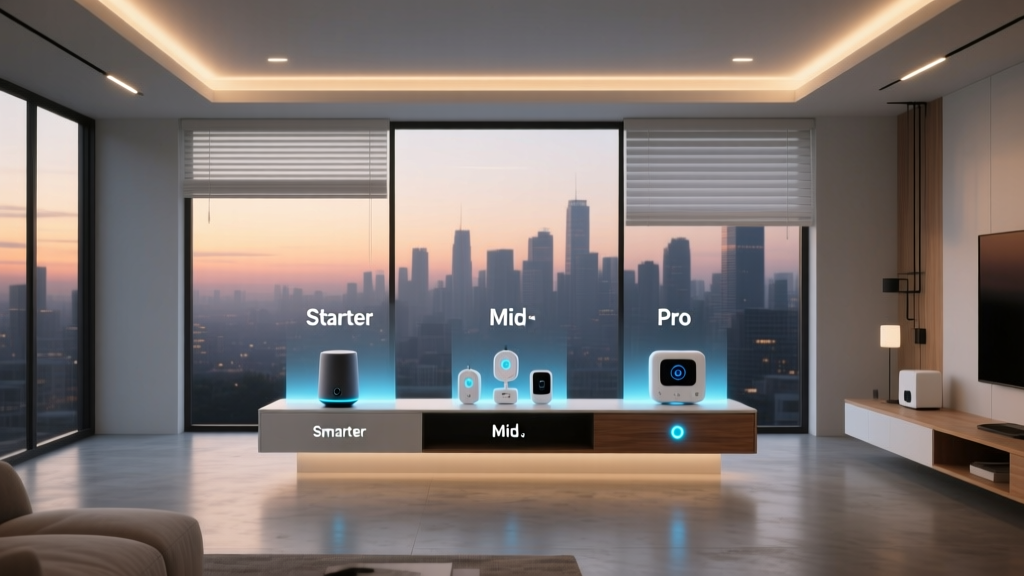
Building a smart bedroom ecosystem can be tailored to fit almost any budget. Below is a structured breakdown of what you can achieve at different price points.
| Tier | Lighting Setup | Climate Setup | Hub / Controller | Estimated Cost |
|---|---|---|---|---|
| Starter | 2x Govee Smart Bulbs + LED Strip | Sensibo Sky (for Split AC) or Smart Plug for Fan | Wi-Fi Router | $120 - $180 |
| Mid-Tier | Philips Hue Starter Kit (Bridge + 3 Bulbs) | Amazon Smart Thermostat or Wyze Thermostat | Hue Bridge + Echo Dot | $350 - $500 |
| Pro | Lutron Caseta Switches + Hue Accent Lamps | Ecobee Premium + 2x SmartSensors + Smart Blinds | HomePod / Hubitat / Caseta Bridge | $850 - $1,200+ |
Automation Routines for the Perfect Wind-Down
The true magic of a smart bedroom lies in automation. By linking your lighting and climate devices, you can create seamless routines that require zero daily interaction. Here are three essential routines to program in your smart home app (Apple Home, Google Home, or Alexa).
1. The 'Sunset Wind-Down' Routine
Trigger: 9:00 PM daily (or 30 minutes before your local sunset time).
Actions:
- Overhead lights turn off.
- Bedside lamps and indirect accent lights turn on to 30% brightness.
- Color temperature shifts to a warm 2200K (amber/orange) to eliminate blue light.
- Smart thermostat drops the target temperature by 3 degrees to initiate the cooling process.
2. The 'Deep Sleep' Trigger
Trigger: Voice command ('Goodnight' or 'I am going to sleep') or a bedside smart button press.
Actions:
- All lights fade out over 60 seconds and turn off completely.
- Smart blinds or curtains close fully.
- Thermostat sets to the optimal sleep temperature (e.g., 65°F / 18°C).
- Smart plug turns on a white noise machine or air purifier.
- Doors/Smart locks secure the home, and security cameras arm.
3. The 'Morning Sunrise' Wake-Up
Trigger: 6:30 AM on weekdays.
Actions:
- Smart blinds open slowly to 50% to let in natural light.
- Bedside lamps turn on at 1% brightness with a cool 4500K color temperature.
- Over the next 20 minutes, brightness gradually increases to 100%, mimicking a natural sunrise to gently halt melatonin production and spike cortisol for morning alertness.
- Thermostat adjusts to a comfortable daytime temperature (e.g., 70°F / 21°C).
Pro Tip: If you share a bed, utilize motion sensors or geofencing to ensure the 'Deep Sleep' routine only triggers when both you and your partner's phones are detected inside the bedroom zone, preventing the lights from turning off while one person is still reading in the living room.
Design and Aesthetic Considerations
When designing a smart bedroom, the technology should enhance the space without becoming a visual distraction. Sleep environments must be dark and tranquil, which means managing device aesthetics and status LEDs is crucial.
Eliminating LED Glare
Many smart plugs, air purifiers, and even some smart thermostats feature bright status LEDs that can pierce through the darkness of a bedroom. When selecting devices, look for those with 'ambient light sensors' that automatically turn off their own status LEDs when the room goes dark. For devices that lack this feature, use light-dimming stickers or strategically place them behind nightstands or inside drawers with adequate ventilation.
Diffused and Indirect Lighting
Never point bare smart bulbs directly at the bed. The human eye is highly sensitive to point-source glare, especially when winding down. Instead, use smart LED strips behind the headboard, under the bed frame, or inside crown molding. This indirect lighting bounces off surfaces, creating a soft, luxurious glow that feels like a high-end boutique hotel. If you must use lamps, ensure they have thick, opaque shades that direct light upward or downward rather than outward.
Sensor Placement
For climate control and motion-triggered automations, sensor placement is key. Do not place temperature sensors near windows, exterior walls, or direct sunlight, as this will skew the readings and cause your HVAC system to overwork. Place the sensor on a nightstand or dresser at torso height, which accurately reflects the ambient air temperature you experience while lying in bed. Similarly, if using a motion sensor to turn off lights when the room is empty, ensure it has a clear line of sight to the door but is shielded from detecting motion in the hallway through a cracked door.
Conclusion
Upgrading your bedroom with smart lighting and climate control is one of the most impactful investments you can make for your long-term health and daily productivity. By aligning your environment with your natural circadian rhythm—using warm, dim light in the evening and cool, dark air for deep sleep—you can drastically reduce sleep latency and nighttime awakenings. Whether you start with a budget-friendly Govee and Sensibo setup or invest in a premium Lutron and Ecobee ecosystem, the key to success lies in thoughtful automation and mindful design. Take control of your sleep environment, and let your smart home do the heavy lifting while you rest.