Why Sleep Lighting and Climate Matter More Than You Think
Your bedroom isn’t just where you sleep — it’s the biological command center for your circadian rhythm. According to the Sleep Foundation, exposure to inappropriate light at night suppresses melatonin by up to 50%, delaying sleep onset and fragmenting deep sleep stages. Likewise, the National Sleep Foundation notes that optimal bedroom temperature for sleep falls between 60–67°F (15.6–19.4°C), with deviations of just 3°F significantly reducing REM duration and increasing nighttime awakenings.
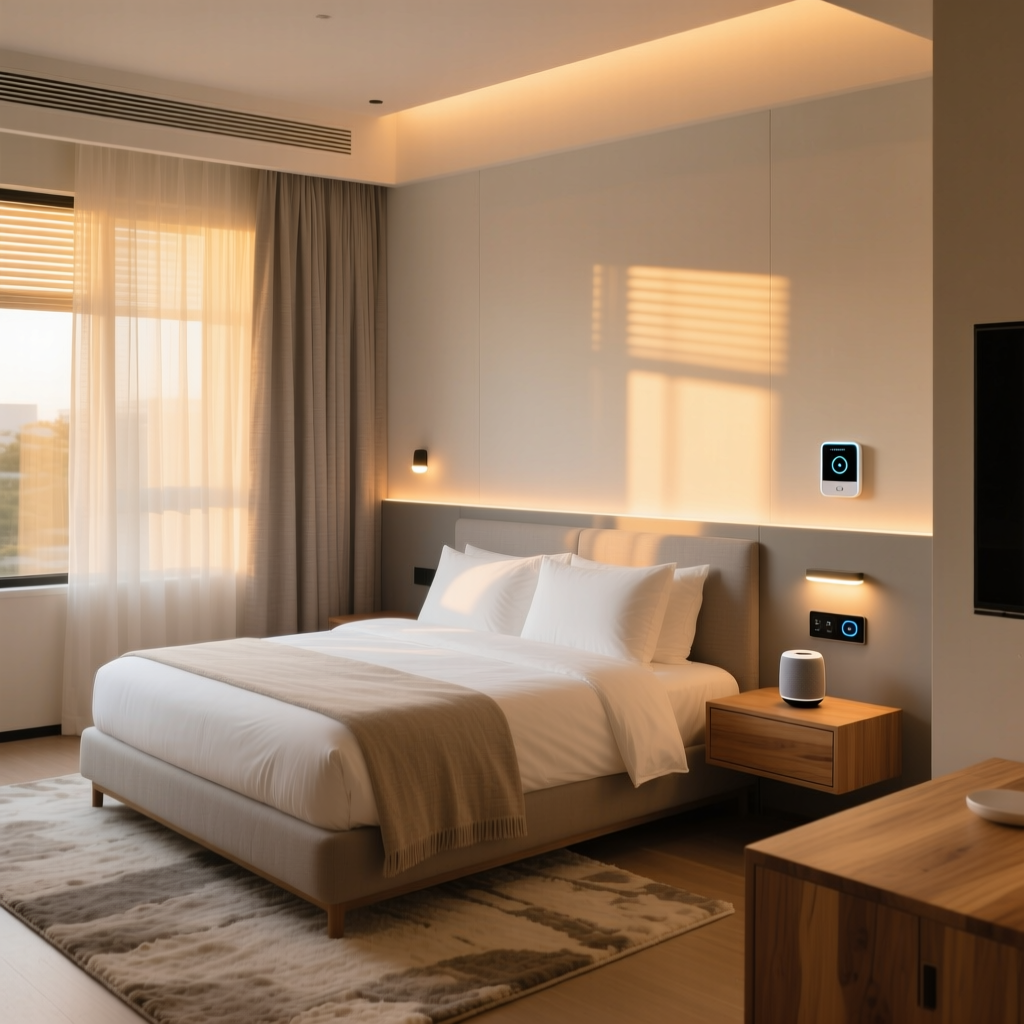
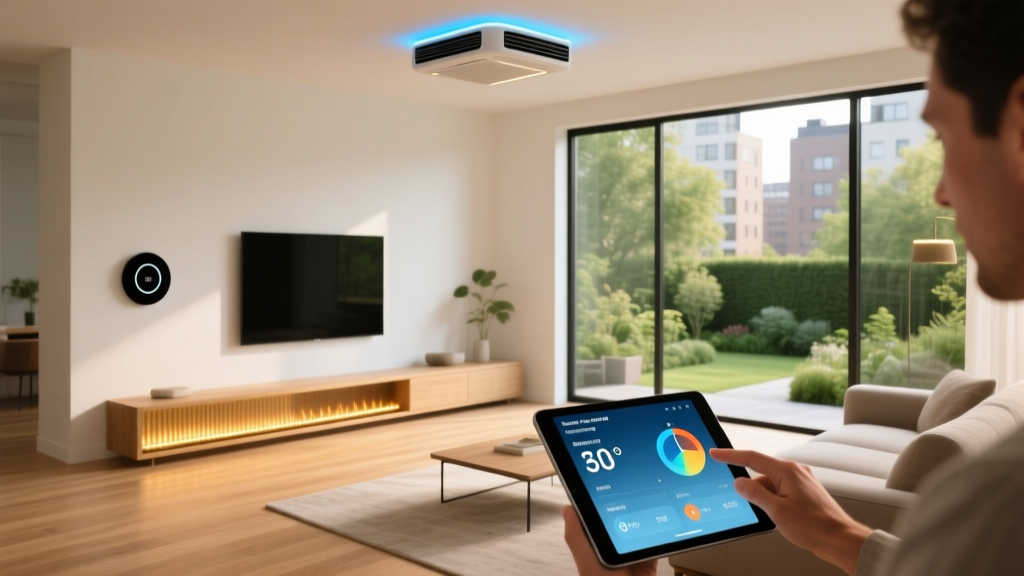
Modern smart home technology now allows precise, automated control over both lighting spectra and thermal environments — not just for convenience, but for measurable physiological benefit. This guide focuses exclusively on the smart bedroom, delivering actionable, hardware-specific strategies to align your lighting and climate systems with human chronobiology.
Circadian Lighting: Beyond Dimmable Bulbs
Standard dimmable LEDs only reduce intensity — they don’t shift color temperature. True circadian lighting dynamically adjusts correlated color temperature (CCT) from warm (~1800K) at night to cool (~6500K) at dawn, mimicking natural sunlight progression. Research published in PNAS (2020) found participants exposed to dynamic CCT lighting fell asleep 17 minutes faster and reported 22% higher subjective sleep quality over four weeks compared to static-warm lighting controls.
Top 3 Circadian-Compatible Lighting Systems
| Product | Key Features | CCT Range | Smart Hub Required? | Price (per fixture) | Notable Limitations |
|---|---|---|---|---|---|
| Philips Hue White and Color Ambiance | App-controlled scheduling, third-party IFTTT/Apple HomeKit support, built-in sunrise/sunset routines | 2000K–6500K | Yes (Hue Bridge $69.99) | $49.99 (A19 bulb), $129.99 (Lightstrip Plus) | No native circadian algorithm; requires manual or third-party automation (e.g., homebridge-hue) |
| LIFX Z LED Strip + LIFX App | Zoned color control, built-in sunrise/sunset timers, no hub needed (Wi-Fi direct) | 2500K–9000K | No | $119.99 (2m strip) | Requires stable 2.4 GHz Wi-Fi; limited integration with Matter 1.2 (as of April 2026) |
| nanoleaf Shapes + Circadian Sync (via nanoleaf app v5.1+) | Panel-based ambient lighting, AI-powered sunrise simulation, auto-adjusts based on local sunrise/sunset | 1800K–6500K | No (Wi-Fi) | $249.99 (7-panel starter kit) | Premium price; best suited for wall-mounted ambient zones, not primary task lighting |
For true hands-off circadian operation, we recommend pairing LIFX Z strips with the free Sleep as Android app. Its "Smart Lights" module syncs lamp behavior directly with your sleep stage data (via wearables or phone mic), dimming and warming lights 60 minutes before bedtime and simulating sunrise 30 minutes before wake time — all without requiring a hub or developer account.
Climate Control That Breathes With Your Sleep Cycle
While most thermostats target steady temperatures, sleep physiology demands variation. Core body temperature naturally drops ~1–2°F during NREM sleep onset and reaches its nadir near 4–5 AM. A thermostat that cools gradually through the first half of the night — then holds or slightly warms before morning — supports this process.
The U.S. Department of Energy’s 2022 Smart Thermostat Field Study confirmed that households using adaptive, occupancy-aware cooling schedules saved an average of 12% on HVAC energy use — with the highest savings occurring in bedrooms where setpoints were adjusted nightly (not just daily).
Smart Thermostats Designed for Sleep Physiology
- Emerson Sensi Touch (2nd Gen): Offers “Sleep Mode” — lowers temperature by 2°F between 10 PM–5 AM, then returns to daytime setpoint. Works natively with Apple Home and Alexa. Price: $129.99. Requires C-wire; no built-in occupancy sensing.
- Ecobee SmartThermostat Enhanced: Includes room sensors (up to 32) and “Follow Me” mode. Set bedroom sensor as priority zone, then enable “Sleep Schedule” to automatically lower temp by 3°F from midnight–5 AM. Integrates with Hue and LIFX for coordinated light/climate scenes. Price: $249.99 (includes 1 remote sensor).
- Nest Learning Thermostat (2026): Uses “Time-of-Use Scheduling” and learns user patterns over 10 days. While it lacks explicit “sleep mode,” its “Early-On” feature pre-cools/pre-heats rooms *before* scheduled sleep times — critical for heat-retaining bedrooms. Price: $249.00. Requires professional installation for multi-stage HVAC compatibility.
Strategic Placement Matters
A thermostat placed near a drafty window or above a radiator will misread ambient conditions. For bedroom accuracy:
- Mount 5 ft above floor, away from direct sunlight or HVAC vents
- Use a remote sensor (e.g., Ecobee Room Sensor or Sensibo Sky) placed on the nightstand or headboard — within 3 ft of pillow level
- Calibrate against a certified digital thermometer (e.g., ThermoWorks DOT Thermometer, ±0.1°F accuracy)
Putting It Together: A Real-World Sleep Automation Routine
Here’s a proven, interoperable routine using Matter-over-Thread devices (ensuring local control and privacy) — deployable in under 20 minutes:
- Trigger: iPhone “Sleep Focus” activates at 9:30 PM (iOS 16+)
- Action 1: LIFX Z strip dims to 10% brightness and shifts to 2200K (amber-red spectrum)
- Action 2: Ecobee bedroom sensor triggers HVAC to begin gradual cooling — 64°F by 10:30 PM
- Action 3: At 11:00 PM, Philips Hue bedside lamps fade to 5% and lock at 1900K
- Wake Sequence: At 6:00 AM, LIFX simulates sunrise (0→100% brightness, 1900K→5500K over 30 min); Ecobee warms to 68°F by 6:45 AM
This routine avoids blue-rich light after 9 PM while supporting core temperature decline — directly addressing two dominant drivers of insomnia per the American Academy of Sleep Medicine’s 2026 Clinical Practice Guideline.
Energy & Cost Impact: What You’ll Actually Save
Running circadian lighting and adaptive climate doesn’t increase bills — it optimizes them. The table below compares annual operating costs for three lighting + climate configurations in a standard 12×14 ft bedroom (U.S. national avg. electricity: $0.16/kWh; gas heating: $1.25/therm).
Annual Energy Cost Comparison for Smart Bedroom Configurations
Note: The “Matter-Integrated Sleep System” includes Thread-enabled Nanoleaf bulbs, Ecobee with room sensor, and a smart vent (e.g., Keen Vent) to isolate bedroom airflow — resulting in the lowest HVAC cost due to zoned precision. All lighting estimates assume 4 hrs/night usage at rated wattage (LIFX Z: 14W/m; Nanoleaf Essentials: 8.5W).
Design & Aesthetic Integration Tips
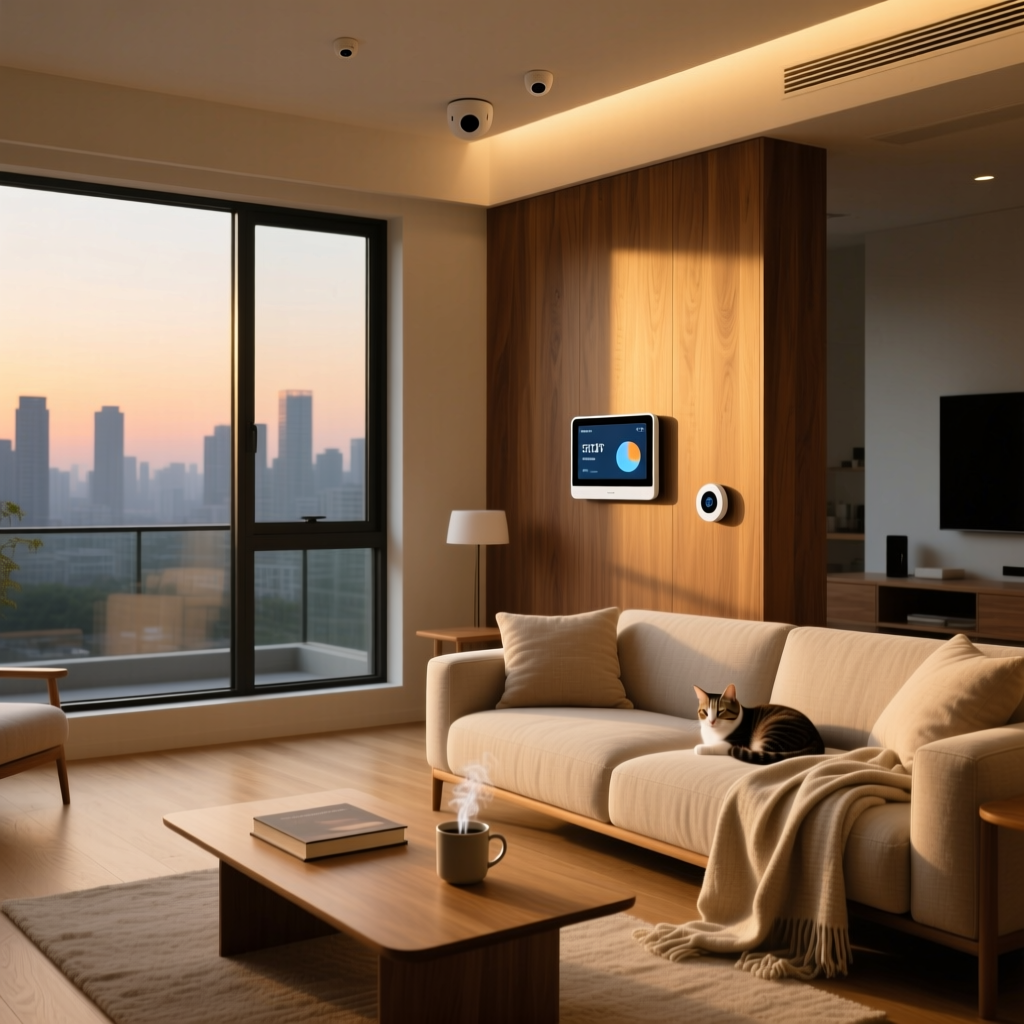
Smart lighting and climate shouldn’t look like tech clutter. Prioritize:
- Concealment: Mount LIFX Z behind bed frame trim or under floating nightstands (2–3 cm gap recommended for heat dissipation)
- Material Harmony: Choose matte-finish fixtures (e.g., Nanoleaf Canvas panels in linen white) over glossy plastic to avoid glare and match bedding textures
- Minimalist Controls: Use a single Lutron Caséta Pico Remote programmed for “Sleep Mode” (one tap = lights warm + temp drops 3°F) — no app hunting at 2 AM
Troubleshooting Common Pitfalls
Problem: Lights stay cool-white despite “bedtime” schedule.
Solution: Verify your smart bulb firmware is updated (e.g., Hue bulbs require firmware ≥1939143000). Older versions ignore color temperature commands in certain automations.
Problem: Thermostat overshoots target temperature during sleep cycle.
Solution: Enable “Adaptive Recovery” (Ecobee) or “Early Start” (Nest) — these calculate thermal inertia and begin adjustments earlier than scheduled.
Problem: Motion sensors trigger lights during deep sleep.
Solution: Disable motion-triggered lighting entirely in bedrooms. Use presence detection only for wake-up sequences — never for nighttime navigation (which should rely on ultra-low-level, red-spectrum path lighting).
The Bottom Line: Sleep Is a System — Not a Setting
Optimizing bedroom lighting and climate isn’t about installing gadgets — it’s about designing a physiological environment. By anchoring decisions in peer-reviewed chronobiology and real-world interoperability, you move beyond novelty to measurable restoration. Start with one layer: install LIFX Z strips and configure Sleep as Android’s sunrise/sunset sync. In under a week, you’ll likely notice faster sleep onset and fewer 3 a.m. wake-ups. Then layer in Ecobee’s bedroom sensor — and watch sleep efficiency climb.
As neuroscientist Dr. Matthew Walker writes in Why We Sleep: “The bedroom should be a cave — cool, dark, and quiet.” Today, “dark” means spectrally intelligent light; “cool” means dynamically responsive climate. Equip yours accordingly.