The Smart Thermostat Dilemma: Budget vs. Premium
The smart home market has matured significantly over the last decade, and nowhere is this more evident than in the climate control category. Gone are the days when upgrading to a smart thermostat meant dropping $300 on a single, monolithic device. Today, consumers are faced with a fragmented market offering everything from bare-bones, budget-friendly models to ultra-premium, sensor-laden climate hubs. For homeowners looking to upgrade, the ultimate question is no longer just 'which brand is best?' but rather 'how much do I actually need to spend to get real value?'
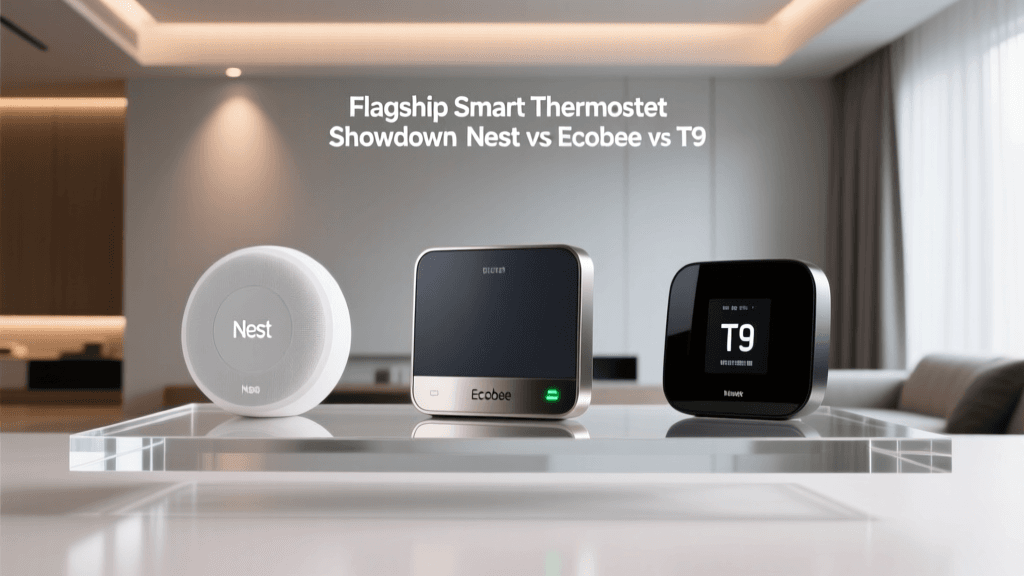
In this value analysis, we are pitting the ultimate budget pick—the Amazon Smart Thermostat—against the undisputed heavyweight champion of the premium tier, the Ecobee SmartThermostat Premium. The price gap between these two devices is staggering, often hovering around $170 to $190 depending on seasonal sales. But does the Ecobee justify its premium price tag with tangible energy savings and superior comfort? Or is the Amazon Smart Thermostat the unsung hero of the smart home, delivering 90% of the benefits for a fraction of the cost?
Below, we break down the hardware, ecosystem compatibility, installation nuances, and long-term return on investment (ROI) to help you decide which device truly offers the best value for your specific home.
Meet the Contenders
Amazon Smart Thermostat (The Budget Pick)
Priced aggressively around the $60 to $80 mark, the Amazon Smart Thermostat is essentially a rebranded and slightly streamlined version of the Honeywell Home T-series. Amazon partnered with Resideo (Honeywell's parent company) to create a reliable, no-frills device that integrates seamlessly into the Alexa ecosystem. It features a clean, minimalist glass-front design with capacitive touch controls, but it intentionally strips away advanced features like remote room sensors, built-in microphones, and complex learning algorithms. It is designed for the pragmatic homeowner who wants app-based scheduling and geofencing without breaking the bank.
Ecobee SmartThermostat Premium (The Premium Pick)
Retailing for approximately $249, the Ecobee SmartThermostat Premium is a comprehensive home management hub disguised as a climate control device. Beyond adjusting the HVAC, it features a built-in smart speaker with Alexa and Siri support, an air quality monitor (tracking VOCs and CO2), and support for remote SmartSensors. It boasts a vibrant, full-color glass touchscreen and acts as a bridge for various smart home protocols, making it a cornerstone device for advanced smart home enthusiasts.
Head-to-Head Specification Showdown
To understand the value proposition, we must first look at the raw specifications. The table below highlights the core differences between the budget and premium offerings.
| Feature | Amazon Smart Thermostat | Ecobee SmartThermostat Premium |
|---|---|---|
| Typical Price | $60 - $80 | $249 |
| Display | Basic LCD, touch-sensitive side buttons | Full-color glass touchscreen |
| Room Sensors | Not supported | Includes 1 SmartSensor (supports up to 32) |
| Voice Assistant | Alexa (via external devices/app) | Built-in Alexa & Apple Siri |
| Smart Home Protocols | Wi-Fi, Zigbee (internal) | Wi-Fi, Bluetooth, Thread, Matter |
| Air Quality Monitor | No | Yes (VOC, CO2, humidity) |
| HVAC Health Alerts | No | Yes (filter & maintenance reminders) |
| HomeKit / Matter | No | Yes |
Installation, Hardware, and the C-Wire Conundrum
One of the most critical aspects of thermostat value is the installation process. Both the Amazon and Ecobee thermostats require a C-wire (common wire) to provide continuous power to the device. However, their approaches to homes lacking a C-wire differ wildly, which can impact your total cost of ownership.
The Amazon Smart Thermostat occasionally ships with a C-wire adapter in specific bundles, but it is notoriously finicky. Many users report compatibility issues with older HVAC control boards, leading to blown fuses or short-cycling AC units. If your home lacks a C-wire, installing the Amazon thermostat may require hiring an HVAC technician to run a new wire, instantly adding $150 to $200 to your 'budget' upgrade.
Ecobee, on the other hand, includes its legendary Power Extender Kit (PEK) in the box. The PEK wires directly into your HVAC control board and uses existing wires to multiplex a C-wire signal back to the thermostat. It is incredibly reliable, well-documented, and saves homeowners hundreds of dollars in electrical work. When factoring in the potential cost of professional C-wire installation, the $170 price gap between the two thermostats narrows significantly for older homes.
Ecosystem Compatibility and Smart Home Integration
Value is also dictated by how well a device plays with your existing smart home ecosystem. The Amazon Smart Thermostat is unapologetically tied to Amazon's walled garden. It requires the Alexa app for setup and scheduling, and it does not support Apple HomeKit, Google Home, or the new Matter smart home standard. If you are an iPhone user who relies on Apple Home, or a Google Nest devotee, the Amazon thermostat is essentially a dumb thermostat with Wi-Fi capabilities. Its geofencing features rely entirely on the location services of Alexa-enabled devices or the Alexa app on your phone.
The Ecobee Premium is a chameleon. It natively supports Apple HomeKit, Google Assistant, Samsung SmartThings, and IFTTT. Furthermore, Ecobee has been a pioneer in adopting the Connectivity Standards Alliance's Matter protocol, ensuring that the device will remain compatible with future smart home architectures. For households with mixed ecosystems—where one partner uses an iPhone and the other uses an Android device—the Ecobee's agnostic approach provides vastly superior daily value.
Energy Savings, Room Sensors, and Long-Term ROI
The primary selling point of any smart thermostat is energy conservation. According to the U.S. Department of Energy, properly programming and utilizing a smart thermostat can save homeowners between 8% and 15% on their annual heating and cooling bills. But does the premium Ecobee save you more money than the budget Amazon model?
The answer lies in remote room sensors. Most homes have their thermostat located in a central hallway. The Amazon Smart Thermostat only reads the temperature in that hallway. If your hallway is 72°F, but your upstairs bedroom is 65°F, the Amazon thermostat will tell your HVAC system to turn off, leaving you freezing in bed. The Ecobee Premium includes a SmartSensor that you can place in your bedroom. The Ecobee will prioritize the occupied bedroom's temperature, ensuring comfort while utilizing advanced algorithms to minimize HVAC runtime.
Let's look at the financial breakdown over a three-year period.
As visualized above, the Amazon Smart Thermostat pays for itself in roughly 1.5 years based on standard ENERGY STAR certified savings estimates. However, the Ecobee's ability to target specific rooms and its advanced eco+ software (which adjusts for local weather patterns and utility time-of-use rates) often yields higher absolute dollar savings over time, paying for its premium price tag by year three while providing vastly superior comfort.
Advanced Features: Air Quality and HVAC Health
Where the Ecobee truly separates itself from the budget tier is in home health and preventative maintenance. The Premium model features a built-in air quality monitor that tracks Volatile Organic Compounds (VOCs) and Carbon Dioxide (CO2). If you are cooking, painting, or simply have a crowded house, the Ecobee can detect poor air quality and automatically trigger your HVAC fan or an integrated smart air purifier to cycle the air.
Additionally, the Ecobee monitors your HVAC system's performance. By tracking how long it takes your home to reach the target temperature, the Ecobee can alert you if your system is underperforming, often catching issues like a failing capacitor or a clogged filter before a catastrophic breakdown occurs. The Amazon thermostat offers none of these diagnostic or health features; it simply turns the heat on and off based on your schedule.
The Final Verdict: Which Offers Better Value?
Defining 'value' depends entirely on your home's layout, your existing smart home ecosystem, and your budget flexibility.
Choose the Amazon Smart Thermostat if:
- You live in a smaller home or apartment where single-zone temperature readings are accurate enough.
- You are heavily invested in the Alexa ecosystem and do not care about Apple HomeKit or Google Home.
- Your home already has a C-wire, or you are comfortable doing basic electrical troubleshooting.
- Your primary goal is simple scheduling and geofencing to ensure you aren't paying to heat an empty house.
For these users, the Amazon Smart Thermostat is an unbeatable value. It delivers the core promise of a smart thermostat—remote access and automated scheduling—at a price point that makes it an impulse buy.
Choose the Ecobee SmartThermostat Premium if:
- You have a multi-story home or rooms with uneven heating/cooling. The remote SmartSensors are not a luxury; they are a necessity for actual comfort.
- You use Apple HomeKit, Google Home, or want Matter support. Ecobee's platform agnosticism ensures you won't be locked out of your preferred ecosystem.
- You care about indoor air quality and want proactive alerts regarding VOCs and CO2 levels.
- You lack a C-wire and want to utilize the included Power Extender Kit rather than hiring an electrician.
While the upfront cost is steep, the Ecobee SmartThermostat Premium is ultimately the better long-term investment for most homeowners. The combination of room sensors, multi-platform compatibility, and HVAC health monitoring transforms it from a simple temperature dial into a vital home management system. You are paying more on day one, but the dividends in comfort, air quality, and energy optimization make it the undisputed champion of premium value.