The Smart Thermostat Dilemma: Budget vs. Premium
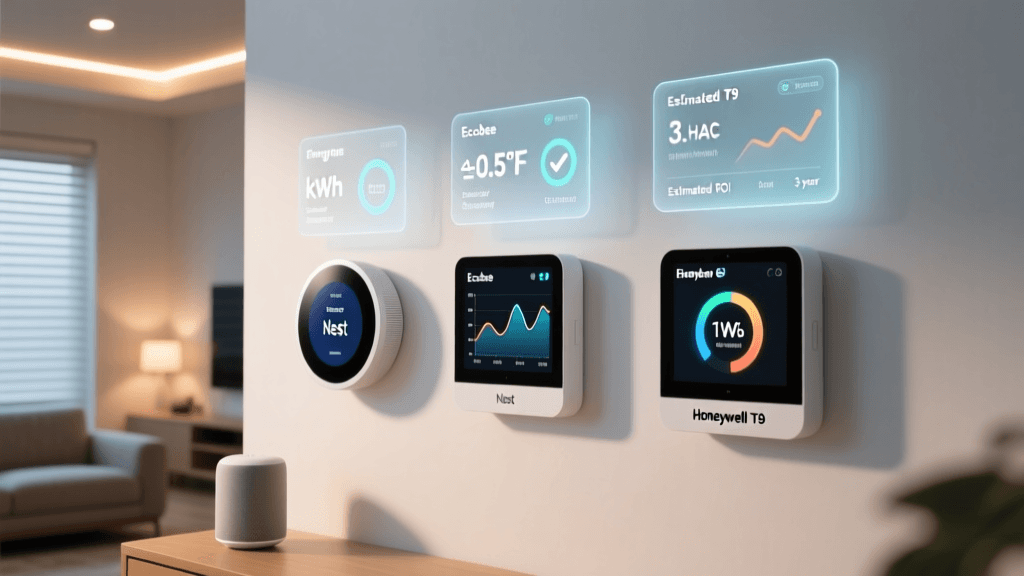
When outfitting a home with smart climate control, consumers are typically faced with two distinct paths: the ultra-affordable entry-level models that promise basic connectivity, and the premium flagship devices that boast built-in voice assistants, remote sensors, and advanced environmental monitoring. In the modern smart home landscape, no two devices represent this divide more clearly than the Amazon Smart Thermostat and the Ecobee SmartThermostat Premium.
At first glance, the value proposition seems straightforward. The Amazon Smart Thermostat frequently retails for under $80, making it an impulse buy for anyone looking to dip their toes into automated climate control. On the other end of the spectrum, the Ecobee SmartThermostat Premium commands a price tag of around $249. But does a 400% increase in price yield a proportional increase in energy savings, convenience, and smart home integration? In this comprehensive value analysis, we break down the hardware, the software ecosystems, the installation nuances, and the long-term return on investment to help you decide which thermostat truly deserves a spot on your wall.
Contender 1: Amazon Smart Thermostat (The Budget Pick)
Amazon disrupted the smart thermostat market by partnering with Honeywell Home—a legacy giant in HVAC controls—to create a no-frills, highly effective, and aggressively priced smart thermostat. Priced typically between $60 and $80, the Amazon Smart Thermostat strips away the bells and whistles to focus on the core promise of smart climate control: automated scheduling and remote access.
From a hardware perspective, the Amazon thermostat is unassuming. It features a clean, minimalist glass interface with capacitive touch controls, but it notably lacks a built-in microphone or speaker. This means you cannot speak to Alexa directly from the wall unit; instead, it relies entirely on your existing Echo devices or the Alexa app on your smartphone. It supports basic geofencing (adjusting the temperature when you leave or arrive home based on your phone's location) and allows for rigid weekly scheduling.
However, its budget nature reveals itself in its limitations. It does not support remote room sensors, meaning it can only measure the temperature of the hallway or room where it is installed. It also lacks advanced HVAC monitoring features, such as filter change reminders or furnace anomaly detection. For a single-story apartment or a small home with an open floor plan, these omissions are barely noticeable. But for larger, multi-story homes, the inability to balance temperatures across different zones can be a frustrating bottleneck.
Contender 2: Ecobee SmartThermostat Premium (The Premium Pick)
Ecobee has long been the darling of smart home enthusiasts, and the SmartThermostat Premium is the culmination of years of iterative hardware and software refinement. At $249, it is positioned as a luxury smart home hub that happens to control your HVAC system. The most striking feature of the Premium model is its built-in Alexa speaker and microphone, effectively turning your thermostat into a fully functional Echo Dot on the wall. It also natively supports Apple Siri and HomeKit, a rare feat in the thermostat space.
Beyond voice control, the Ecobee Premium justifies its price tag with its inclusion of a SmartSensor. This small, battery-operated puck can be placed in a bedroom or living room to monitor both temperature and occupancy. If the sensor detects that you are working in your home office, the Ecobee will prioritize that room's temperature over the empty hallway where the main thermostat is mounted. This solves the notorious 'hallway thermostat' problem that plagues multi-story homes.
Furthermore, the Premium model includes an integrated air quality monitor that tracks volatile organic compounds (VOCs), carbon dioxide (CO2), humidity, and temperature. It pairs this with advanced HVAC health monitoring, which tracks your furnace and AC runtimes, alerts you to potential system failures before they happen, and provides automated filter change reminders based on actual system usage rather than an arbitrary calendar date.
Head-to-Head Specifications
To understand the raw differences between these two devices, let us look at the hardware and software specifications side-by-side.
| Feature | Amazon Smart Thermostat | Ecobee SmartThermostat Premium |
|---|---|---|
| Typical Retail Price | $60 - $80 | $249 |
| Built-in Voice Assistant | No (Requires Echo device) | Yes (Alexa & Siri built-in) |
| Remote Room Sensors | Not Supported | Yes (1 SmartSensor included) |
| Smart Home Ecosystems | Amazon Alexa | Alexa, Apple HomeKit, Google, IFTTT |
| Air Quality Monitoring | No | Yes (VOCs, CO2, Temp, Humidity) |
| HVAC Health Monitoring | Basic (System on/off) | Advanced (Anomaly detection, filter life) |
| C-Wire Requirement | Required (Adapter sold separately) | Required (Power Extender Kit included) |
| Energy Star Certification | Yes | Yes |
Ecosystem Compatibility and Voice Control
One of the most critical factors in choosing a smart home device is ecosystem compatibility. The Amazon Smart Thermostat is, unsurprisingly, a walled garden. It is designed exclusively for the Amazon Alexa ecosystem. If your home runs on Apple HomeKit or Google Home, the Amazon thermostat will be entirely incompatible with your automated routines. Even within the Alexa ecosystem, its functionality is somewhat restricted compared to native Alexa devices; it relies heavily on the 'Hunches' feature and basic geofencing via the Alexa app.
Conversely, the Ecobee Premium is remarkably ecosystem-agnostic. It is one of the few thermostats on the market that natively supports Apple HomeKit, Amazon Alexa, and Google Assistant simultaneously. Furthermore, its integration with IFTTT (If This Then That) allows power users to create complex, cross-platform automations. For example, you can set up a routine where your Ecobee automatically adjusts the temperature when your smart lock is engaged, or triggers your smart blinds to close if the thermostat's UV and temperature sensors detect intense afternoon heat.
The voice control experience also differs wildly. Because the Ecobee Premium has a built-in speaker and far-field microphones, you can ask for the weather, set timers, or control other smart home devices directly from the hallway wall. The Amazon thermostat requires you to either pull out your phone or yell at a nearby Echo Dot to make adjustments, which defeats the purpose of a seamless smart home experience.
Energy Savings, ROI, and the True Cost of Ownership
The primary justification for buying any smart thermostat is the promise of reduced utility bills. According to the U.S. Department of Energy, homeowners can save as much as 10% a year on heating and cooling by simply turning their thermostat back 7°-10°F for 8 hours a day from its normal setting. Smart thermostats automate this process, ensuring you are never paying to heat or cool an empty house.
Furthermore, the ENERGY STAR program notes that certified smart thermostats typically save users around 8% on their HVAC bills annually. But how does this translate to the budget vs. premium debate? Let us look at the math. Assuming an average annual HVAC spend of $1,200, an 8% savings equates to roughly $96 per year. However, premium features like Ecobee's SmartSensor and advanced eco-algorithms can push these savings closer to 10-12% ($120-$144 annually) by preventing the system from overworking to compensate for poorly insulated rooms or localized heat sources.
Upfront Cost vs Cumulative Energy Savings
As the data visualization above illustrates, the Amazon Smart Thermostat achieves a positive return on investment (ROI) almost immediately, often paying for itself within the first 8 to 10 months of use. The Ecobee Premium, due to its higher upfront cost, takes roughly 20 to 24 months to break even. However, over a 5-year lifespan, the Ecobee's superior optimization and sensor-driven efficiency result in higher cumulative gross savings, ultimately narrowing the gap in net profitability while providing a vastly superior user experience.
Installation, Hardware, and the C-Wire Conundrum
No smart thermostat comparison is complete without addressing the dreaded 'C-wire' (common wire). Modern smart thermostats require a continuous 24V power supply to keep their Wi-Fi radios and screens active. Older homes often lack this wire, relying instead on the HVAC system's control wires to 'steal' power, which can cause Wi-Fi drops or even damage to the furnace control board.
Amazon handles this by offering a C-wire adapter kit, but it is often sold separately, adding $15 to $20 to the total cost of the budget thermostat. If you do not have a C-wire, you must install this adapter at your furnace, which requires opening the HVAC panel and wiring it directly to the control board—a daunting task for novice DIYers.
Ecobee, recognizing this pain point, includes a Power Extender Kit (PEK) in the box with the Premium model. The PEK is a brilliantly engineered piece of hardware that multiplexes the existing wires to deliver continuous power without requiring a dedicated C-wire. While it still requires wiring at the furnace, Ecobee's app provides step-by-step, color-coded photographic guides that make the process significantly less intimidating. Additionally, the physical build quality of the Ecobee Premium is noticeably superior, featuring a heavy glass faceplate, a premium metal backplate, and a satisfying magnetic click when attaching the unit to the wall.
Privacy and Data Considerations
In an era where data privacy is paramount, it is worth noting the differences in how these companies handle your household data. Amazon's business model is inherently tied to data collection and ecosystem lock-in. While they state that thermostat data is used primarily to improve the Alexa experience and provide energy reports, privacy advocates often caution against bringing more Amazon hardware into the home.
Ecobee, on the other hand, has built its brand on privacy and security. They offer end-to-end encryption, do not sell user data to third-party marketers, and provide granular controls within their app allowing users to opt-out of data sharing for product improvement. For privacy-conscious consumers, particularly those utilizing the built-in microphones in the Ecobee Premium, this transparency is a significant value-add that helps justify the premium price tag.
Final Verdict: Which Value Proposition Wins?
Declaring a definitive 'winner' between a $70 device and a $250 device is impossible without context, as the true value depends entirely on your home's layout and your smart home ambitions.
Who Should Buy the Amazon Smart Thermostat?
The Amazon Smart Thermostat is the undisputed king of budget value. It is the perfect choice for renters, apartment dwellers, or homeowners with single-story, open-concept layouts where a single temperature sensor is sufficient. If you are already deeply invested in the Amazon Alexa ecosystem, do not care about air quality monitoring, and simply want to set up a weekly schedule and control your heat from your phone, the Amazon thermostat delivers 90% of the core utility for a fraction of the price. Its rapid ROI makes it a financial no-brainer for budget-conscious upgraders.
Who Should Buy the Ecobee SmartThermostat Premium?
The Ecobee SmartThermostat Premium is an investment in comfort, convenience, and home infrastructure. It is highly recommended for multi-story homes, houses with poorly insulated rooms, or families that spend time in specific zones (like a home office or a nursery) that the hallway thermostat cannot accurately read. The inclusion of the SmartSensor alone solves temperature imbalances that the Amazon model simply cannot address. Furthermore, if you use Apple HomeKit, require advanced HVAC health monitoring to protect an aging furnace, or want a built-in voice assistant on your wall, the Ecobee Premium is worth every penny of its premium price tag.
Ultimately, while the Amazon Smart Thermostat wins on pure financial ROI, the Ecobee Premium wins on holistic home value, offering a suite of features that elevate it from a simple remote control to an intelligent environmental management system.