The Great Thermostat Debate: Budget vs. Premium
When upgrading to a smart home, the thermostat is often the first device homeowners replace. It promises convenience, automated scheduling, and most importantly, lower utility bills. But the market is sharply divided between ultra-affordable entry-level models and feature-packed premium devices. In this value analysis, we are putting the budget-friendly Amazon Smart Thermostat (typically priced around $60) head-to-head against the flagship Ecobee SmartThermostat Premium (priced around $250).
At first glance, the price gap seems insurmountable. The Ecobee costs more than four times as much as the Amazon model. But does it deliver four times the value? To answer this, we must look beyond the sticker price and evaluate long-term energy savings, ecosystem compatibility, hardware longevity, and advanced HVAC monitoring. Whether you are outfitting a small apartment or a multi-zone family home, this comprehensive breakdown will help you decide which smart thermostat truly deserves a spot on your wall.
The Contenders at a Glance
Amazon Smart Thermostat (The Budget Pick)
Developed in partnership with Honeywell Home, the Amazon Smart Thermostat is a no-frills, highly affordable entry point into smart climate control. It relies heavily on the Alexa ecosystem for its smart features, eschewing a built-in microphone or speaker on the device itself. It is designed for users who want basic scheduling, geofencing, and remote control via their smartphone without breaking the bank.
Ecobee SmartThermostat Premium (The Premium Pick)
The Ecobee SmartThermostat Premium is a powerhouse. It features a sleek glass finish, a built-in smart speaker with native Alexa and Siri support, an air quality monitor, and support for up to 32 remote room sensors. It is designed for tech enthusiasts, large households, and users who demand deep integration across multiple smart home platforms, including Apple HomeKit, Google Home, and Samsung SmartThings.
Design, Display, and Hardware Quality
The physical hardware of these two devices reflects their respective price points. The Amazon Smart Thermostat utilizes a utilitarian plastic build with a dot-matrix LED display hidden behind a mirrored finish. It is controlled via a touch-sensitive ring and physical buttons on the side. While it looks clean and modern from a distance, the lack of a high-resolution screen means you are limited to basic temperature readouts and simple icons.
In contrast, the Ecobee Premium boasts a stunning 3.5-inch full-color LCD touchscreen encased in a premium glass and metal chassis. The display is vibrant, responsive, and provides detailed weather forecasts, HVAC runtime graphs, and air quality metrics right on the wall. Furthermore, the Ecobee Premium doubles as a high-quality smart speaker, featuring a far-field microphone array and a surprisingly robust speaker for playing music or broadcasting intercom messages. From a purely aesthetic and hardware standpoint, the Ecobee justifies a significant portion of its premium price tag.
Ecosystem Compatibility and Smart Features
This is where the value proposition shifts dramatically depending on your current smart home setup. The Amazon Smart Thermostat is, unsurprisingly, locked into the Amazon Alexa ecosystem. It does not support Apple HomeKit, Google Home, or Samsung SmartThings. If you are an iPhone user who relies on the Apple Home app, or a Google Nest user, the Amazon thermostat will be a frustrating, isolated island in your home.
The Ecobee Premium, however, is universally compatible. It natively supports Apple HomeKit (including HomeKit Secure Video if you pair it with compatible cameras), Google Assistant, Samsung SmartThings, and IFTTT. This agnostic approach ensures that no matter how your smart home evolves, the Ecobee will integrate seamlessly.
According to testing methodologies highlighted by Consumer Reports, ecosystem flexibility is one of the highest predictors of long-term user satisfaction with smart home devices, as it prevents consumers from being locked into a single proprietary walled garden.
The Power of Room Sensors and Zoning
One of the most critical limitations of the budget Amazon Smart Thermostat is its reliance on a single temperature sensor located inside the wall unit. If your thermostat is in a central hallway, it will base your entire home's heating and cooling on the temperature of that hallway, often leaving bedrooms too hot or too cold.
The Ecobee Premium includes one SmartSensor in the box and supports up to 32 additional sensors. These remote sensors monitor both temperature and occupancy. If you are working in your home office, the Ecobee will prioritize the temperature in that specific room, ignoring the empty living room. For large homes or multi-story houses, this localized zoning capability is a massive value-add that the Amazon thermostat simply cannot provide.
Energy Savings and HVAC Monitoring
Both thermostats aim to reduce your carbon footprint and lower your utility bills. The U.S. Department of Energy notes that you can save up to 10% a year on heating and cooling by simply turning your thermostat back 7° to 10°F for eight hours a day from its normal setting. Smart thermostats automate this process using geofencing and smart scheduling.
According to the U.S. Department of Energy, programmable and smart thermostats are highly effective at eliminating energy waste caused by human forgetfulness. Furthermore, the EPA's Energy Star program certifies smart thermostats that consistently deliver verifiable energy savings based on real-world usage data. Both the Amazon and Ecobee models carry the Energy Star certification, meaning both will fundamentally lower your energy consumption compared to a legacy manual thermostat.
However, the Ecobee Premium offers advanced HVAC monitoring. It tracks the runtime of your furnace and air conditioner, alerting you via the app if your system is running unusually long, which could indicate a failing blower motor, a refrigerant leak, or a dirty filter. The Amazon thermostat lacks this deep diagnostic layer, functioning purely as a climate controller rather than a system health monitor.
Specification Comparison Table
| Feature | Amazon Smart Thermostat | Ecobee SmartThermostat Premium |
|---|---|---|
| Retail Price | ~$60 | ~$250 |
| Display | Mirrored LED Dot Matrix | 3.5" Full Color Touchscreen |
| Voice Assistant | Requires external Alexa device | Built-in Alexa & Siri |
| Ecosystem Support | Alexa Only | HomeKit, Google, Alexa, SmartThings |
| Remote Sensors | Not Supported | Supports up to 32 (1 included) |
| Air Quality Monitor | No | Yes (VOC, CO2, Temp, Humidity) |
| C-Wire Required | Yes | Yes (PEK adapter included) |
Cost vs. Long-Term Value Visualization
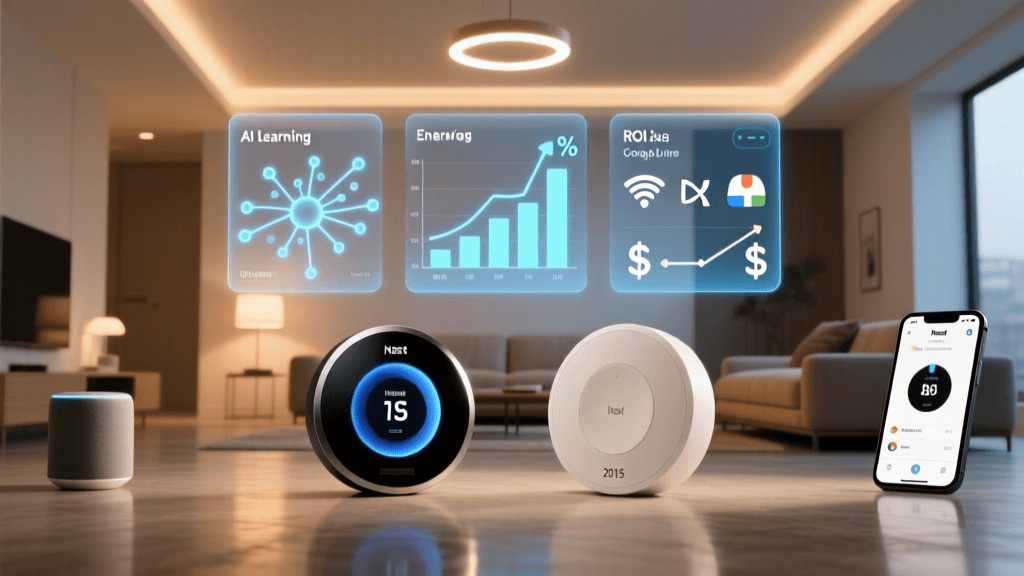
While the upfront cost of the Ecobee is significantly higher, the inclusion of room sensors, advanced scheduling, and HVAC monitoring can lead to slightly higher energy savings over time, particularly in larger homes. The chart below illustrates the upfront cost versus the estimated 5-year energy savings for an average 2,000 sq ft home.
Installation and Wiring Requirements
Both thermostats require a C-wire (common wire) to provide continuous power to the device. If your home lacks a C-wire, the Amazon Smart Thermostat will require you to purchase a separate adapter or hire an electrician to run a new wire. The Ecobee Premium, however, includes a Power Extender Kit (PEK) in the box. The PEK allows you to repurpose existing wires at your HVAC control board to create a stable power connection without running new wiring. This inclusion alone saves users the $30 to $50 they might spend on a third-party C-wire adapter kit, slightly narrowing the value gap.
Privacy and Data Security
In an era where data privacy is paramount, it is worth noting how these companies handle your usage data. Amazon's business model heavily relies on ecosystem integration and data utilization to improve its services and target advertising. Ecobee, on the other hand, has a strict privacy policy stating that they do not sell personal data to third parties and offer robust opt-out options for data sharing. For privacy-conscious consumers, the Ecobee Premium offers greater peace of mind.
The Final Verdict: Which Offers Better Value?
Defining 'value' depends entirely on your household's specific needs, technical setup, and budget.
Who Should Buy the Amazon Smart Thermostat?
The Amazon Smart Thermostat is the undisputed king of budget value. If you live in a smaller home or apartment, already own an Echo smart speaker, are deeply embedded in the Alexa ecosystem, and simply want to automate your heating and cooling schedules to save money, this device is a no-brainer. At $60, it pays for itself in energy savings in less than a year. It strips away the bells and whistles and delivers reliable, app-based climate control.
Who Should Buy the Ecobee SmartThermostat Premium?
The Ecobee Premium is the ultimate value pick for large households, Apple HomeKit users, and smart home enthusiasts. If you have a multi-story home with hot and cold spots, the ability to deploy remote room sensors is not just a luxury; it is a necessity for comfort. Furthermore, if you use Apple devices, the Amazon thermostat is entirely off the table due to its lack of HomeKit support. The Ecobee's built-in air quality monitor, smart speaker, and HVAC diagnostic tools elevate it from a simple thermostat to a comprehensive home health hub.
Summary
Ultimately, the Amazon Smart Thermostat offers the best financial ROI for budget-conscious users, while the Ecobee Premium offers the best feature ROI for those willing to invest in long-term comfort, ecosystem flexibility, and advanced home monitoring. Choose the Amazon model to save money today; choose the Ecobee to upgrade your home's intelligence for the next decade.