The Smart Bathroom Revolution: Beyond Simple Reflections
The modern smart home has expanded far beyond the living room and kitchen. Today, the bathroom is emerging as a critical frontier for connected technology, and the smart mirror is at the absolute center of this transformation. No longer just a piece of glass for checking your appearance, premium smart mirrors now serve as centralized information hubs, advanced lighting systems, and audio entertainment centers. But as the market expands, consumers are faced with a critical decision: do you choose a tech-forward, app-heavy ecosystem, or do you invest in architectural-grade luxury with embedded proprietary systems?
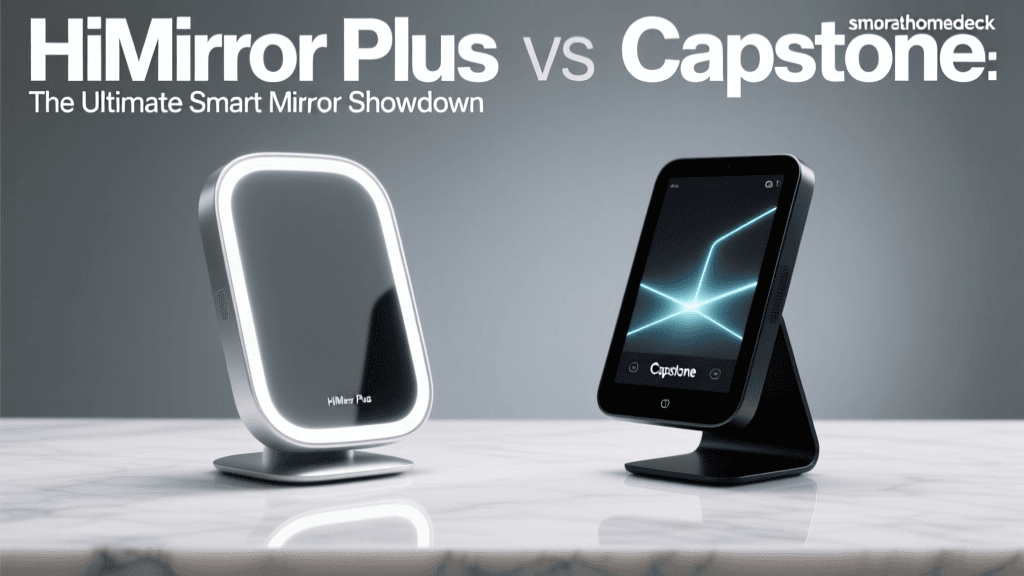
In this comprehensive showdown, we are putting two of the most prominent names in the smart mirror industry head-to-head: Capstone Connected Home and Electric Mirror (specifically their Lumina and Premier smart series). Both brands offer compelling visions of the future, but they cater to vastly different user profiles, budgets, and installation requirements. Whether you are a DIY smart home enthusiast looking to sideload your favorite morning routine apps, or a luxury homeowner working with an interior designer to create a bespoke spa experience, this comparison will guide your investment.
Contender Profiles: Capstone vs. Electric Mirror
Capstone Connected Home: The Accessible Tech Hub
Capstone Connected Home has made a name for itself by bringing smart mirror technology to the masses, often partnering with major retail home improvement stores. Their flagship smart mirrors are essentially Android-based tablets hidden behind two-way mirror glass. They focus heavily on software versatility, offering touch-screen interfaces, Wi-Fi connectivity, Bluetooth audio, and integration with popular smart home ecosystems. Capstone is designed for the tech-savvy user who wants their mirror to display real-time weather, calendar appointments, news feeds, and even control other smart devices in the home.
Electric Mirror: The Architectural Luxury Standard
Electric Mirror approaches the smart mirror from a completely different angle: architectural lighting and luxury design. Known for their high-end LED mirrors and TV mirrors, their smart offerings prioritize flawless illumination, premium build quality, and seamless integration into high-end bathroom designs. While they do offer smart features like Bluetooth audio, defoggers, and ambient lighting control, their software ecosystem is proprietary and curated. Electric Mirror is the go-to brand for custom home builders, interior designers, and luxury hotels where reliability, aesthetic perfection, and high Color Rendering Index (CRI) lighting are paramount.
Head-to-Head Specification Comparison
Before diving into the nuanced differences in user experience, let us look at the raw specifications that define these two competing philosophies.
| Feature | Capstone Connected Home | Electric Mirror (Lumina Series) |
|---|---|---|
| Operating System | Custom Android-based OS | Proprietary Embedded Firmware |
| Display / Interface | Interactive Touchscreen (Behind Glass) | Capacitive Touch Buttons / Smart Sensors |
| Lighting CRI | 80 - 90 CRI | 90 - 95+ CRI |
| Kelvin Adjustability | Fixed or Limited Presets | Continuous Dimming & Kelvin Tuning (2700K-6000K) |
| Audio System | Standard Internal Speakers | Waterproof Audio Transducers / Premium Drivers |
| IP Rating | IP44 (Splash Resistant) | IP44 to IP65 (Depending on Model) |
| Price Range | $600 - $1,500 | $2,000 - $5,000+ |
Design, Build Quality, and Aesthetics
When investing in a permanent bathroom fixture, build quality is non-negotiable. The bathroom is a harsh environment characterized by extreme humidity, temperature fluctuations, and constant exposure to water vapor.
Capstone mirrors generally feature a sleek, modern, frameless design with an edge-lit LED halo. The build quality is robust and suitable for standard residential bathrooms. However, because they house complex Android motherboards and active cooling systems to prevent the internal touchscreen from overheating, the chassis can be slightly deeper than a standard LED mirror. They are typically rated at IP44, meaning they are safe for bathroom 'Zone 2' areas (outside the immediate splash zone of a shower or tub) but require careful placement.
Electric Mirror excels in architectural integration. Their mirrors are often customizable in size, shape, and framing options. The glass used is typically low-iron, ultra-clear glass, which eliminates the slight green tint found in standard mirrors and provides a truer reflection. Electric Mirror utilizes advanced edge-bonding and sealed chassis designs that not only look incredibly premium but also offer superior resistance to moisture ingress. For luxury master baths or wet rooms, their higher IP-rated models provide peace of mind that standard tech mirrors simply cannot match.
Smart Features and Operating Systems
This is where the two brands diverge most dramatically. Your preference here will largely dictate which mirror you should purchase.
Capstone’s Android-based approach is a double-edged sword. On the positive side, it offers a vibrant, full-color display that can render web pages, YouTube videos, and complex smart home dashboards. You can sync your Google Calendar, check local traffic via mapping apps, and view multiple security camera feeds simultaneously. However, Android-based smart mirrors are susceptible to the same issues as budget smart TVs: software bloat, occasional lag, and the looming threat of 'abandonware' if the manufacturer stops pushing OS updates. Furthermore, touching a mirror with wet hands to navigate a complex Android UI can be a frustrating user experience.
Electric Mirror takes a 'less is more' approach. Their smart features are controlled via elegant, backlit capacitive touch icons etched directly into the glass. There is no full-screen digital dashboard. Instead, the 'smart' aspect is focused on automation and sensor integration: motion-activated night lights, memory settings for preferred lighting temperatures, and seamless Bluetooth pairing. This proprietary firmware is incredibly stable, boots instantly, and will never suffer from app compatibility issues. It is a mirror first, and a smart device second.
Lighting Performance: The Core Function
A smart mirror that fails at its primary job—illuminating your face accurately—is a poor investment, regardless of its Wi-Fi capabilities. Lighting in a bathroom requires specific attention to the Color Rendering Index (CRI) and Kelvin temperature.
Capstone provides excellent ambient lighting and generally hovers around the 85-90 CRI mark. This is sufficient for general grooming, brushing teeth, and basic skincare routines. The lighting is uniform and provides a modern, bright aesthetic to the room.
Electric Mirror is an industry leader in lighting physics. Their premium models boast a CRI of 95+, which is critical for tasks like applying makeup, shaving, or color-matching outfits. A high CRI ensures that reds and skin tones are rendered accurately, preventing the 'washed out' look that cheap LEDs produce. Furthermore, Electric Mirror offers true Kelvin tuning, allowing you to shift the light from a warm, relaxing 2700K for an evening bath to a crisp, daylight-balanced 6000K for morning alertness and precise grooming. The light diffusion on Electric Mirror products is also superior, utilizing specialized frosted etching to eliminate LED hot-spotting.
Ecosystem Integration and Audio
Both mirrors offer Bluetooth audio, allowing you to stream podcasts or music while getting ready. However, the acoustic engineering differs vastly. Capstone uses traditional internal speakers. While adequate for a news broadcast or a morning playlist, the sound can become muffled by the glass and the acoustics of a tiled bathroom.
Electric Mirror frequently employs audio transducers that turn the glass itself or the wall behind the mirror into a soundboard, or they use marine-grade, waterproof speakers hidden behind acoustic grilles. The result is a richer, more immersive soundstage that competes with dedicated bathroom audio systems.
Regarding smart home ecosystems, Capstone integrates well with voice assistants (often featuring built-in microphones for Alexa or Google Assistant), allowing you to control your thermostat or lights via voice commands. Electric Mirror generally avoids built-in microphones due to privacy concerns, preferring to integrate with broader home automation systems (like Control4 or Crestron) via hardwired RS-232 or IP control protocols, making it a favorite among custom AV installers.
Security, Privacy, and Network Considerations
Placing a connected device in a private space like a bathroom raises valid security and privacy concerns. According to the Cybersecurity and Infrastructure Security Agency (CISA), securing IoT devices requires careful network management and an understanding of device sensors. Neither Capstone nor Electric Mirror includes built-in cameras, which immediately eliminates the most severe privacy risks associated with smart home tech in private rooms.
However, Capstone’s Android OS and microphone array require a secure Wi-Fi network. It is highly recommended to place the Capstone mirror on a dedicated IoT guest network to prevent potential vulnerabilities from exposing your primary home network. Electric Mirror’s Bluetooth-only or hardwired control approach inherently reduces the cyber attack surface, making it the preferred choice for privacy-conscious users or high-profile residences.
Market Adoption and Future Proofing
The smart home market is expanding rapidly, with bathrooms becoming a key growth area for luxury retrofits. According to market data from Statista's Smart Home Market Outlook, consumer demand for connected home devices continues to rise, driven by energy management and convenience. However, the trend in luxury spaces is moving toward 'invisible tech'—technology that enhances the space without dominating it visually.
This trend heavily favors Electric Mirror’s philosophy. While Capstone’s glowing touchscreen is impressive to guests, the long-term desire for digital screens in relaxing spaces like bathrooms is waning in favor of ambient, voice, or sensor-driven automation.
Capstone vs Electric Mirror Performance Scores
Installation, Maintenance, and Cost
Installation: Both mirrors require hardwired 120V electrical connections. This is not a plug-and-play DIY project unless you already have an electrical junction box perfectly centered behind the mirror location. Capstone requires careful measurement to ensure the internal motherboard housing doesn't conflict with the junction box. Electric Mirror often provides specialized mounting brackets and off-set junction box guides, making the electrician's job easier, but their sheer size and weight often require two professionals for safe mounting.
Maintenance: Capstone’s touchscreen requires frequent cleaning to remove fingerprints and water spots, which can temporarily obscure the digital display. Electric Mirror’s capacitive touch icons only require standard glass cleaning. Furthermore, Electric Mirror’s LEDs are typically rated for 50,000+ hours and are sometimes replaceable by a technician, whereas a failed LED strip on a budget mirror might require replacing the entire unit.
Cost: Capstone is the clear winner for budget-conscious tech enthusiasts. You can outfit a guest bathroom with a fully functional smart mirror for under $1,000. Electric Mirror is a premium investment, with large-format Lumina smart mirrors easily exceeding $3,000 to $5,000 once custom sizing, shipping, and professional installation are factored in.
The Verdict: Which Smart Mirror Wins?
There is no single 'best' smart mirror; there is only the right mirror for your specific lifestyle, budget, and design goals. The showdown between Capstone and Electric Mirror highlights the divide between consumer electronics and architectural fixtures.
Choose Capstone Connected Home If:
- You are a tech enthusiast who wants a visual dashboard for your calendar, weather, and smart home controls.
- You enjoy the ability to stream video content or follow along with makeup tutorials directly on the mirror.
- You are working within a standard residential budget and want maximum smart features for your dollar.
- You are comfortable managing IoT network security and occasional software updates.
Choose Electric Mirror If:
- You are building a luxury home, remodeling a high-end master bath, or working with an interior designer.
- Flawless, high-CRI lighting for precise grooming and makeup application is your top priority.
- You prefer 'invisible technology' that enhances the room without the distraction of a glowing digital screen.
- You value long-term reliability, premium audio, and architectural-grade build quality over app ecosystems.
Final Thought: The bathroom is ultimately a sanctuary for personal care and relaxation. If your ideal morning routine involves catching up on global news and managing your smart thermostat via a touchscreen, Capstone delivers that connected experience brilliantly. But if your sanctuary is defined by spa-like ambiance, perfect lighting, and seamless, distraction-free automation, Electric Mirror remains the undisputed champion of luxury bathroom design.