The Flagship Contenders: Defining the Modern Smart Home Hub
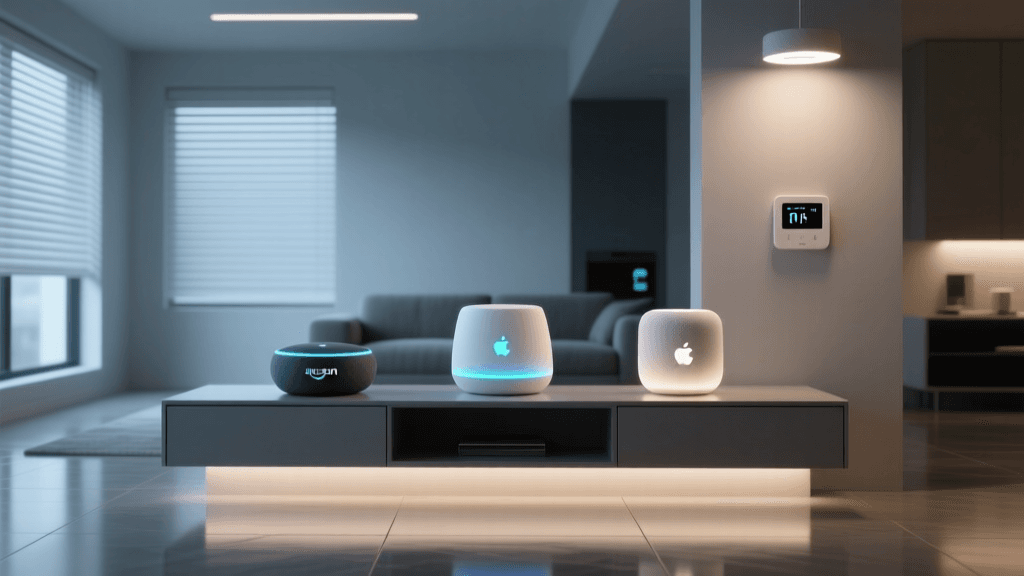
The smart speaker market has matured far beyond simple novelty gadgets that play music and set kitchen timers. Today, the flagship offerings from Amazon, Google, and Apple serve as the central nervous system of the connected home. They process complex automation routines, act as local hubs for smart home protocols, and deliver high-fidelity audio. But when pitting the Amazon Echo (4th Gen) against the Google Nest Audio and the Apple HomePod (2nd Gen), the 'best' choice is entirely dependent on your existing ecosystem, your privacy preferences, and your smart home ambitions.
In this comprehensive SmartHomeDeck comparison, we break down the hardware specifications, smart home integration capabilities, voice assistant intelligence, and privacy architectures of the big three. Whether you are a DIY smart home tinkerer or an audiophile seeking seamless multi-room audio, this guide will help you crown the ultimate smart speaker for your home.
Hardware and Audio Performance: Acoustic Engineering Compared
Before evaluating the software ecosystems, we must address the primary function of these devices: producing sound. Amazon, Google, and Apple have taken distinctly different approaches to acoustic engineering, resulting in varied listening experiences.
Amazon Echo (4th Gen)
Amazon completely redesigned the Echo with a spherical footprint, housing a 3.0-inch neodymium woofer and dual 0.8-inch tweeters. The result is a surprisingly robust, room-filling sound with a distinct emphasis on bass response. While it lacks the spatial audio trickery of its competitors, the Echo delivers warm, punchy audio that excels in genres like hip-hop, EDM, and pop. Its Dolby Atmos support is limited compared to Apple, but for a sub-$100 device, the audio output is exceptional.
Google Nest Audio
Google opted for a sleek, fabric-wrapped rectangular design that hides a 75mm woofer and a 19mm tweeter. The Nest Audio uses environmental EQ to automatically adjust the sound profile based on room acoustics. It produces incredibly clear vocals and mid-tones, making it the superior choice for podcasts, acoustic tracks, and classical music. However, audiophiles may find the low-end bass response slightly lacking compared to the Echo and HomePod.
Apple HomePod (2nd Gen)
Apple's second-generation HomePod is an acoustic powerhouse driven by computational audio. Featuring a custom-engineered 4-inch high-excursion woofer and an array of five beamforming tweeters, the HomePod uses room-sensing technology to adapt its sound profile in real-time. It is the only device in this lineup to offer true Spatial Audio with Dolby Atmos. The soundstage is wide, the instrument separation is pristine, and the bass is remarkably tight. It is, without question, the best-sounding standalone smart speaker on the market.
| Feature | Amazon Echo (4th Gen) | Google Nest Audio | Apple HomePod (2nd Gen) |
|---|---|---|---|
| MSRP | $99.99 | $99.99 | $299.00 |
| Woofer | 3.0-inch | 75mm (approx. 3.0-inch) | 4-inch high-excursion |
| Tweeters | Dual 0.8-inch | 19mm (0.75-inch) | Five beamforming |
| Spatial Audio | No (Dolby Atmos via Fire TV) | No | Yes (Dolby Atmos) |
| Microphones | 4-mic array | 3-mic array | 4-mic array (Siri) |
| Temperature/Humidity Sensor | Yes | No | Yes |
Smart Home Integration: Matter, Thread, and Zigbee
A smart speaker is only as good as the devices it can control. The landscape of smart home protocols is shifting rapidly with the introduction of Matter, but legacy protocols like Zigbee and Thread remain vital for local, low-latency control.
The Amazon Echo: The Zigbee and Matter Powerhouse
The 4th Gen Echo is unique in this lineup because it includes a built-in Zigbee hub. This is a massive advantage for users with legacy smart home devices like Philips Hue bulbs, Aqara sensors, or Yale smart locks. You can pair these devices directly to the Echo without needing a third-party bridge. Furthermore, Amazon has rolled out Matter support via over-the-air updates, allowing the Echo to act as a Matter controller. According to the Amazon Alexa Smart Home developer portal, Amazon is aggressively pushing for local processing of Matter devices, reducing latency and cloud reliance for modern smart home setups.
Apple HomePod: The Thread Border Router
Apple has fully embraced the Connectivity Standards Alliance's Matter protocol. The HomePod (2nd Gen) acts as a premier Matter controller and a Thread Border Router. Thread is a low-power, mesh-networking protocol that is becoming the gold standard for battery-operated sensors and smart locks. As detailed on the official Apple HomePod specifications page, the device also includes a built-in temperature and humidity sensor, allowing for complex climate-based automations directly within the Apple Home app. If you are building a modern, Thread-based smart home, the HomePod is an essential anchor device.
Google Nest Audio: The Ecosystem Agnostic
Like the HomePod, the Nest Audio supports Matter and functions as a Thread Border Router. However, it lacks the built-in Zigbee radio found in the Echo. Google's approach relies heavily on Wi-Fi-based devices and cloud-to-cloud integrations. While the Google Home app has been completely redesigned to support Matter natively, users with older Zigbee devices will still need to purchase separate hubs (like a Hue Bridge) and link them to Google Assistant via the cloud.
Voice Assistant Intelligence: Alexa vs. Google Assistant vs. Siri
When you strip away the audio and the hubs, you are left with the AI. The conversational capabilities, routine automation depth, and natural language processing vary wildly between the three assistants.
Amazon Alexa: The Automation King
Alexa remains the undisputed champion of complex smart home routines. The Alexa app allows for granular 'If This, Then That' style logic. You can create routines based on specific voice phrases, time of day, device states, or even 'Alexa Hunches' (where Alexa proactively turns off lights if it senses you are asleep). Alexa's 'Guard' feature (now part of Alexa Together) can listen for the sound of breaking glass or smoke alarms and send you an alert. For power users who want to script their home's behavior down to the minute detail, Alexa is unmatched.
Google Assistant: The Conversational Genius
Google Assistant leverages Google's vast Knowledge Graph, making it vastly superior for general knowledge queries, contextual follow-up questions, and natural language processing. If you ask, 'Who directed the movie Inception?' and follow up with 'How tall is he?', Google understands the context perfectly. However, Google's smart home routine builder, while improved, still feels slightly less robust and more prone to cloud-latency hiccups than Alexa's local-processing routines.
Apple Siri: The Secure Ecosystem Synergist
Siri has historically lagged behind in general knowledge and third-party skills, but Apple has refocused Siri on on-device processing and deep ecosystem integration. Siri's 'Intercom' feature allows you to broadcast voice messages to other HomePods and Apple devices seamlessly. Furthermore, Siri's integration with Apple TV and HomeKit Secure Video means you can say, 'Show me the front door camera,' and the feed will instantly picture-in-picture on your TV. Siri is less about being a 'know-it-all' AI and more about being a secure, privacy-first remote control for the Apple ecosystem.
Privacy and Data Security Architectures
Privacy is a major concern for consumers placing always-listening microphones in their bedrooms and kitchens. The three companies handle voice data very differently.
- Apple: Apple processes a significant amount of Siri requests on-device, thanks to the powerful neural engines in their silicon. Voice recordings are not tied to your Apple ID but rather to a randomized, rotating device identifier. Apple's business model is hardware-centric, meaning they have less financial incentive to mine your voice data for advertising profiles.
- Amazon: Alexa processes voice requests in the cloud. While Amazon employs robust encryption and offers physical microphone mute buttons, they do use anonymized voice snippets to train their AI models unless you explicitly opt-out in the Alexa Privacy settings.
- Google: Similar to Amazon, Google Assistant relies on cloud processing and leverages data to improve its machine learning models. Google provides a comprehensive privacy dashboard where users can set up auto-delete timers for their voice history, but the data collection is inherently tied to Google's broader advertising and data ecosystem.
Multi-Room Audio and Ecosystem Lock-In
If you plan to fill your home with sound, the multi-room audio experience is critical.
Apple utilizes AirPlay 2, which is widely considered the gold standard for lossless, synchronized multi-room audio. It allows you to group HomePods with third-party AirPlay 2-compatible speakers from brands like Sonos, Bose, and Denon. The synchronization is flawless, with zero perceptible latency.
Amazon uses Alexa Multi-Room Music (MRM). It works exceptionally well when grouping Echo devices together, allowing for seamless stereo pairing and whole-home audio. However, integrating third-party Wi-Fi speakers into an Alexa MRM group is often clunky or unsupported compared to AirPlay 2.
Google relies on Chromecast built-in and Google Cast groups. While it supports a massive array of third-party speakers, the setup process via the Google Home app can sometimes be finicky, and audio dropouts between mixed-brand speaker groups are more common than on Apple's AirPlay 2 network.
The Final Verdict: Which Ecosystem Should You Choose?
There is no single 'winner' in the Echo vs. Nest vs. HomePod showdown; rather, there is a right choice for your specific lifestyle and technical requirements.
Choose the Amazon Echo (4th Gen) if:
You are a Smart Home Tinkerer. The inclusion of a Zigbee hub, combined with Alexa's unmatched routine logic and affordable price point, makes the Echo the most versatile command center for mixed-device smart homes. If you have a drawer full of older Zigbee sensors and want to build complex, multi-step automations without spending a fortune, the Echo is your best bet.
Choose the Google Nest Audio if:
You are an Information Seeker and Android User. If your primary use case involves asking complex questions, managing Google Calendar appointments, utilizing Google Maps for commute times, and casting audio from a diverse range of third-party apps, the Nest Audio's AI superiority and Chromecast integration make it the ideal companion.
Choose the Apple HomePod (2nd Gen) if:
You are an Apple Purist and Audiophile. If you live entirely within the Apple ecosystem (iPhone, Mac, Apple TV), the HomePod's seamless Handoff features, AirPlay 2 multi-room superiority, and HomeKit Secure Video integration are unbeatable. Furthermore, if audio fidelity is your top priority and you are willing to pay the $299 premium, the HomePod's computational audio and Spatial Audio capabilities outclass the competition entirely.
Ultimately, as the Matter protocol continues to mature, the walls between these walled gardens are slowly coming down. But until true cross-platform parity is achieved, your choice of flagship smart speaker will dictate the boundaries of your smart home experience for years to come.