The Battle for the Center of Your Smart Home
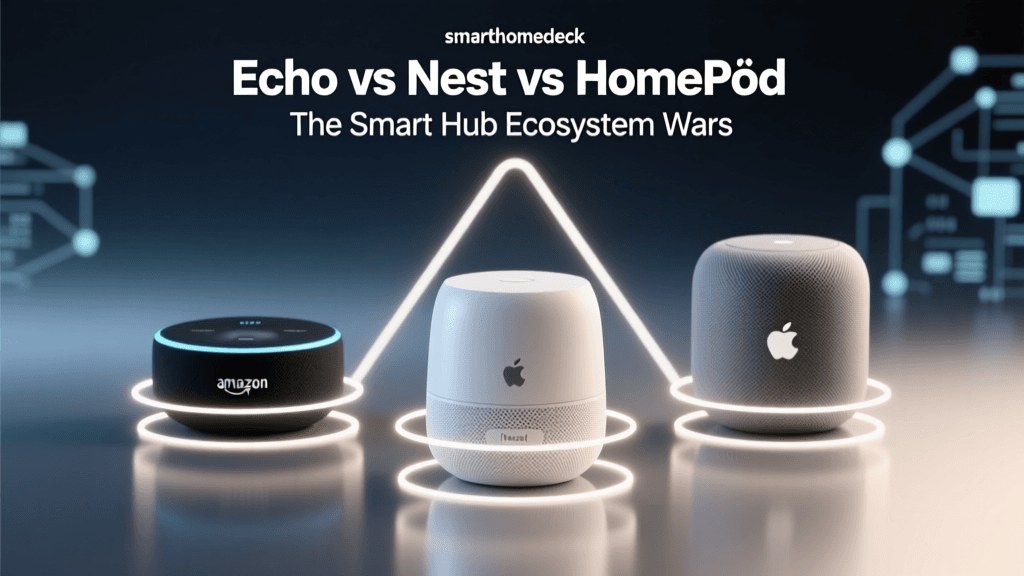
The smart speaker market has evolved far beyond simple Bluetooth audio and basic timer functions. Today, devices like the Amazon Echo, Google Nest, and Apple HomePod serve as the central nervous system for modern connected homes. They control our lighting, manage our security cameras, curate our music, and answer our most obscure trivia questions. But with three distinct ecosystems—Alexa, Google Assistant, and Siri—choosing the right platform is a decision that will impact your daily digital life for years to come.
In this comprehensive comparison, we are putting the flagship offerings from Amazon, Google, and Apple head-to-head. We will evaluate their acoustic engineering, artificial intelligence capabilities, smart home protocols, and privacy frameworks to help you determine which voice assistant ecosystem truly deserves a spot on your countertop.
Hardware Lineup and Audio Quality
While each brand offers a range of entry-level devices (like the Echo Dot, Nest Mini, and HomePod mini), the true capabilities of these ecosystems are best represented by their premium and mid-tier flagship speakers: the Amazon Echo Studio, the Google Nest Audio, and the Apple HomePod (2nd Generation).
Amazon Echo Studio: The Spatial Audio Powerhouse
The Echo Studio is Amazon's answer to high-fidelity audio. It features a five-speaker setup, including a downward-firing woofer and three mid-range tweeters, designed to project sound in multiple directions. Its standout feature is support for 3D spatial audio formats like Dolby Atmos and Sony 360 Reality Audio. Furthermore, the Studio includes a built-in Zigbee hub and a temperature sensor, making it a dual-purpose device for both audiophiles and smart home tinkerers.
Google Nest Audio: Minimalist and Room-Filling
Google took a different approach with the Nest Audio, prioritizing a clean, fabric-wrapped aesthetic that blends into home decor. Inside, it houses a 75mm woofer and a 19mm tweeter. While it lacks the spatial audio trickery of the Echo Studio, Google's Ambient IQ technology dynamically adjusts the EQ based on the room's acoustics and the type of media playing, ensuring podcasts sound crisp and music sounds rich.
Apple HomePod (2nd Gen): Computational Audiophile
Apple's HomePod is a marvel of computational audio. It uses a high-excursion woofer and five beamforming tweeters to create a massive soundstage. The device uses its U1 chip and internal microphones to sense room boundaries and automatically calibrate its audio output in real-time. It also supports Spatial Audio with Dolby Atmos and lossless audio via Apple Music, making it the undisputed champion of raw acoustic quality in this trio.
| Feature | Amazon Echo Studio | Google Nest Audio | Apple HomePod (2nd Gen) |
|---|---|---|---|
| Approximate Price | $230 | $100 | $299 |
| Driver Configuration | 1 Woofer, 3 Mid, 1 Tweeter | 1 Woofer, 1 Tweeter | 1 Woofer, 5 Beamforming Tweeters |
| Spatial Audio | Yes (Dolby Atmos, 360 RA) | No | Yes (Dolby Atmos, Apple Spatial) |
| Built-in Hub | Zigbee, Matter | None (Wi-Fi only) | Thread Border Router, Matter |
| Room Calibration | Manual/Auto via App | Ambient IQ (Continuous) | Automatic (Continuous) |
Voice Assistant Intelligence: Alexa vs. Google vs. Siri
Hardware is only half the equation; the brain inside the speaker dictates how seamlessly it integrates into your life.
Amazon Alexa: The Routine Master
Alexa remains the most versatile assistant for smart home automation. Its "Routines" feature is incredibly robust, allowing users to chain together complex sequences of events based on time, voice commands, or sensor triggers. Alexa also boasts the largest library of third-party "Skills," functioning almost like an app store for your voice. However, Alexa's conversational AI can sometimes feel rigid, struggling with complex, multi-part questions that require web synthesis.
Google Assistant: The Conversational Genius
Powered by Google's vast Knowledge Graph and advanced natural language processing (NLP), Google Assistant is the smartest of the three. It excels at context retention; you can ask, "Who is the president of France?" and follow up with, "How tall is he?" without repeating the subject. Google Assistant also integrates flawlessly with Google Workspace, allowing you to check your Calendar, manage Gmail tasks, and pull up Google Maps commutes using just your voice.
Apple Siri: The Ecosystem Gatekeeper
Siri is often criticized for being less knowledgeable than its rivals when it comes to general web queries. However, within the Apple ecosystem, it is unmatched. Siri handles messaging, phone calls, and FaceTime audio effortlessly. With the introduction of Siri Shortcuts and App Intents, power users can create deeply customized voice commands that interact with third-party iOS apps. Siri is less about being a know-it-all search engine and more about being a personal concierge for your digital life.
Smart Home Protocols: Zigbee, Thread, and Matter
The future of the smart home relies on interoperability, and the three tech giants are taking different paths to get there. The introduction of the Matter protocol by the Connectivity Standards Alliance has fundamentally shifted the landscape, promising a unified standard that allows devices from different brands to communicate locally without relying on cloud servers.
- Amazon Echo: Amazon has heavily integrated Matter support across its modern Echo lineup. The Echo Studio and 4th Gen Echo also feature built-in Zigbee hubs, making them incredibly valuable for users with legacy smart home devices like older Philips Hue bulbs or Amazon Smart Plugs. This dual-radio approach ensures backward compatibility while embracing the Matter future.
- Google Nest: Google's approach relies heavily on Wi-Fi and the newer Thread protocol. While the Nest Audio speaker itself does not contain a Thread radio, Google's ecosystem utilizes Nest Wifi routers and the Nest Hub (2nd Gen) as Thread border routers. Google Home app's interface for managing Matter devices is clean, though it currently lacks some of the granular automation depth found in the Alexa app.
- Apple HomePod: Apple has bet big on Thread. The HomePod (2nd Gen) and HomePod mini act as Thread border routers, creating a low-latency, mesh network for smart home accessories. Apple's HomeKit platform was historically notorious for its strict (and expensive) hardware certification requirements, but Matter support has blown the doors open, allowing HomePod users to control a vastly expanded library of third-party devices securely.
Smart Speaker Ecosystem Comparison Scores
Privacy and Security Frameworks
Because these devices feature always-on microphones, privacy is a paramount concern for consumers. The three companies have vastly different business models, which directly impacts how they handle your voice data.
Apple: On-Device Processing and Anonymity
Apple's business model is rooted in hardware sales, not targeted advertising. As detailed in their comprehensive Apple Privacy guidelines, the HomePod processes many basic Siri requests entirely on-device using its S-series chip. When data must be sent to the cloud, it is associated with a random, rotating identifier rather than your Apple ID. Furthermore, HomeKit Secure Video encrypts camera feeds end-to-end, meaning not even Apple can view your security footage.
Amazon and Google: Cloud Reliance and User Controls
Both Amazon and Google rely on cloud-based processing for the vast majority of voice queries, which allows them to offer more complex AI features and continuous improvements. However, this means your voice snippets are stored on their servers. Both companies have introduced robust privacy dashboards, physical microphone mute buttons, and auto-delete features for voice history. While they have made significant strides in user transparency, the fundamental reality is that their ecosystems are built on data collection to fuel their broader advertising and retail empires.
Multi-Room Audio and Media Casting
A single smart speaker is rarely enough. How each ecosystem handles multi-room audio and media casting is a critical differentiator.
- Amazon Alexa: Uses "Speaker Groups" to sync audio across Echo devices. It supports Spotify Connect, Amazon Music, and Apple Music. However, syncing audio with non-Amazon Bluetooth speakers or third-party Wi-Fi speakers can be cumbersome or impossible.
- Google Nest: Google's casting ecosystem is arguably the most versatile. Using Google Cast (Chromecast built-in), you can group Nest speakers with almost any third-party Wi-Fi speaker that supports the protocol. It also integrates seamlessly with YouTube Music and Spotify.
- Apple HomePod: Apple relies on AirPlay 2. This protocol is incredibly reliable, offers lossless sync, and allows you to beam audio from any Apple device to the HomePod. Furthermore, the HomePod supports stereo pairing (using two identical HomePods for dedicated left/right channels), a feature that creates a breathtaking listening experience that neither Amazon nor Google currently offers on their standard smart speakers.
Pricing and Value Proposition
When evaluating cost, it is essential to look at the entire ecosystem ladder.
Entry-Level ($30 - $50): The Amazon Echo Dot and Google Nest Mini frequently go on sale for under $30, making them impulse buys perfect for bedrooms or kitchens. The Apple HomePod mini sits at a fixed $99 price point, which is steep for a secondary room speaker, but it includes a Thread radio and premium build quality.
Mid-Tier ($100 - $150): The standard Amazon Echo ($100) includes a Zigbee hub and temperature sensor, offering immense smart home value. The Google Nest Audio ($100) provides the best budget audiophile experience. Apple does not currently compete in this specific mid-tier bracket.
Premium ($200 - $300): The Echo Studio ($230) offers Dolby Atmos and a Zigbee hub, making it a great living room centerpiece. The HomePod ($299) is the most expensive, but its computational audio, U1 spatial awareness, and Thread routing capabilities justify the cost for Apple purists and audiophiles.
Final Verdict: Which Ecosystem Should You Choose?
There is no single "best" smart speaker; there is only the best smart speaker for your specific lifestyle.
Choose Amazon Echo (Alexa) If:
You are a smart home tinkerer who wants maximum device compatibility. If your home is filled with a mishmash of Zigbee, Wi-Fi, and Matter devices, the Echo's built-in hubs and unparalleled third-party support make it the most versatile command center. It is also the best choice for budget-conscious buyers looking to outfit an entire home with voice assistants.
Choose Google Nest (Assistant) If:
You live in the Google Workspace ecosystem. If your life revolves around Google Calendar, Gmail, and YouTube, the Nest Audio and Google Assistant will feel like a natural extension of your digital life. Its conversational AI is the most natural, making it the best choice for families with children who ask endless, complex questions.
Choose Apple HomePod (Siri) If:
You are deeply invested in the Apple ecosystem and prioritize privacy and audio fidelity. If you use Apple Music, iMessage, and HomeKit Secure Video, the HomePod's seamless integration is unmatched. The addition of Thread and Matter support has also transformed it from a closed-off luxury item into a legitimate, future-proof smart home hub for the modern connected residence.