The Premium Smart Speaker Landscape
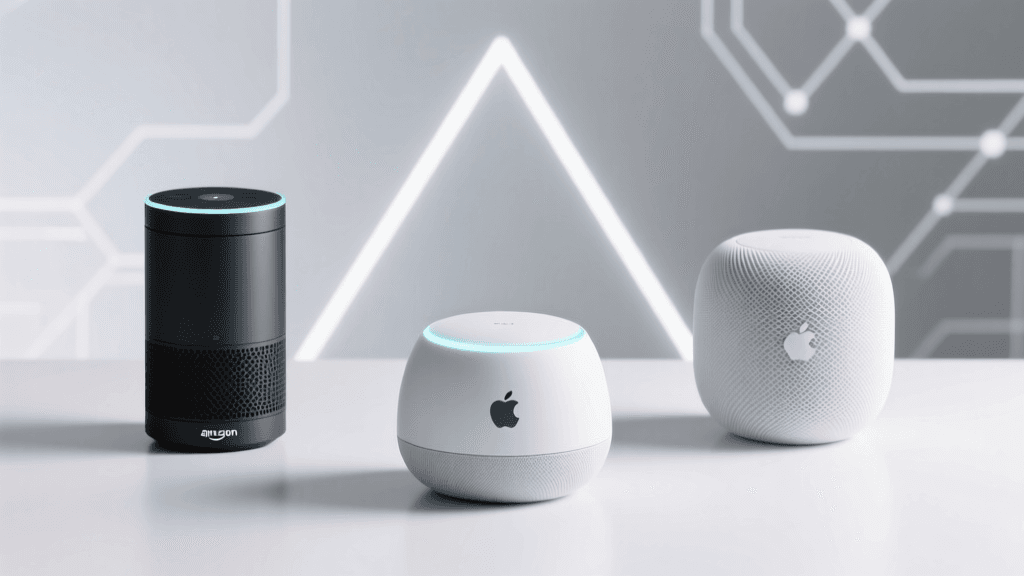
The era of smart speakers functioning solely as novelty timers and basic music broadcasters is long gone. Today, flagship smart speakers serve as the acoustic and computational nerve centers of the modern connected home. For smart home enthusiasts and audiophiles alike, the decision is no longer just about which voice assistant answers trivia the fastest; it is about acoustic engineering, local processing capabilities, smart home protocol support, and ecosystem lock-in. In this comprehensive showdown, we pit the heavyweights of the premium smart speaker market against one another: the Amazon Echo Studio, the Apple HomePod (2nd Generation), and the Google Nest Audio.
Each of these devices represents a distinct philosophy regarding how a smart speaker should integrate into your living space. Amazon prioritizes immersive 3D audio and broad smart home compatibility via built-in hubs. Apple focuses on computational audio, privacy, and seamless integration within its walled garden. Google aims to deliver balanced, room-filling sound paired with the most natural language processing available. But when you strip away the marketing and look at the hardware, software, and smart home benchmarks, which flagship truly deserves a spot on your shelf?
Hardware and Audio Performance
Audio quality is the primary differentiator in the premium tier. While budget speakers compress sound and struggle with bass response, these flagships are engineered to compete with dedicated bookshelf speakers and high-end soundbars.
Amazon Echo Studio
The Echo Studio is Amazon’s answer to the high-fidelity audio market. It boasts a massive 330W peak output driven by a five-speaker array: a 3.0-inch neodymium woofer, two 2.0-inch midrange speakers, and two 1.0-inch tweeters. Its standout feature is spatial audio processing, which can upmix standard stereo tracks into a 3D soundscape, simulating Dolby Atmos. Furthermore, the Studio includes a built-in Zigbee and Matter smart home hub, eliminating the need for separate bridge devices. According to extensive testing featured in Wirecutter's smart speaker guide, the Echo Studio's room adaptation technology actively analyzes the acoustics of your space and adjusts the equalizer in real-time, providing a surprisingly wide soundstage for a single cylindrical unit.
Apple HomePod (2nd Generation)
Apple’s approach to audio is deeply rooted in software-driven computational acoustics. The 2nd Generation HomePod features a 4-inch high-excursion woofer and an array of five beamforming tweeters. As detailed in the Apple Newsroom, the device uses its S7 chip to perform real-time tuning, analyzing the reflections of sound off nearby walls to optimize audio delivery. The result is a remarkably rich, bass-heavy, and clear vocal profile that excels in genres like jazz, acoustic, and vocal-centric pop. However, it lacks the sheer physical wattage and 3D spatial upmixing of the Echo Studio, relying instead on psychoacoustics to fill the room.
Google Nest Audio
The Nest Audio takes a more traditional, utilitarian approach to hardware. It utilizes a 75mm woofer and a 19mm tweeter, housed in a fabric-wrapped, pill-shaped enclosure. While it lacks the advanced spatial processing of its competitors, Google’s Media EQ and Ambient IQ algorithms ensure that the speaker adjusts its volume and EQ based on the type of media playing and the ambient noise in the room. It delivers crisp highs and surprisingly punchy mid-bass, making it an excellent choice for podcasts, indie rock, and everyday background listening, though it falls slightly behind the HomePod in deep sub-bass reproduction.
Specification and Hardware Comparison
| Feature | Amazon Echo Studio | Apple HomePod (2nd Gen) | Google Nest Audio |
|---|---|---|---|
| Approximate Price | $199 | $299 | $99 |
| Driver Configuration | 1 Woofer, 2 Midranges, 2 Tweeters | 1 Woofer, 5 Beamforming Tweeters | 1 Woofer, 1 Tweeter |
| Spatial / 3D Audio | Yes (Dolby Atmos support) | Yes (Spatial Audio with Dolby Atmos) | No |
| Built-in Smart Hub | Zigbee & Matter | Thread & Matter (Border Router) | No (Wi-Fi / Cloud only) |
| Temperature/Humidity Sensor | No | Yes | No |
| Stereo Pairing | Yes (Echo devices only) | Yes (HomePod devices only) | Yes (Nest devices only) |
Smart Home Ecosystem and Integration
The true value of a premium smart speaker lies in its ability to act as a command center. The introduction of the Matter protocol has begun to bridge the gap between ecosystems, allowing devices to communicate across platforms. However, native hub capabilities still dictate the speed, reliability, and local execution of smart home routines.
The Amazon Echo Studio is a powerhouse for smart home tinkerers. Its built-in Zigbee radio means you can directly pair hundreds of third-party sensors, smart locks, and lights without clogging up your Wi-Fi network. When combined with Matter support, the Studio acts as a universal bridge, making it the most versatile hub for mixed-ecosystem homes.
The Apple HomePod operates as a Thread border router and Matter controller. Thread is a low-power, mesh-networking protocol that is rapidly becoming the gold standard for smart home sensors and smart locks. Because Apple enforces strict security requirements for HomeKit and Matter accessories, the HomePod offers the most secure and reliable local execution for supported devices, though the total library of compatible accessories remains smaller than Amazon’s.
The Google Nest Audio does not contain a built-in Zigbee or Thread radio. To use it as a smart home hub, you must rely on Wi-Fi-based devices or purchase a separate Nest Hub or Thread border router. While Google Home supports thousands of Wi-Fi devices and cloud-to-cloud integrations, the lack of local radio protocols in the Nest Audio itself makes it less ideal as a standalone smart home anchor.
Flagship Smart Speaker Benchmark Scores
Voice Assistant Intelligence: Alexa vs Siri vs Google Assistant
When it comes to pure conversational intelligence and natural language processing, Google Assistant remains the undisputed champion. It excels at handling complex, multi-part queries, understanding context from previous questions, and pulling accurate data from the web. If your primary use case involves asking for recipes, trivia, or managing complex calendar queries, the Nest Audio’s software brain is unmatched.
Amazon Alexa trades some conversational nuance for sheer utility and automation depth. Alexa’s routine builder is incredibly robust, allowing for multi-step conditional triggers (e.g., 'If the living room motion sensor is triggered after 10 PM, turn on the hallway lights to 20% and announce a warning'). The Echo Studio’s far-field microphone array is also exceptional at picking up wake words over loud music, an area where Alexa has historically led the pack.
Siri on the HomePod has improved significantly with iOS updates, particularly in handling smart home commands and contextual follow-ups. However, Siri still struggles with general knowledge queries and third-party web integration compared to Google. Where Siri shines is in cross-device continuity; the ability to seamlessly hand off audio from your iPhone to the HomePod or use the speaker as a speakerphone for Mac calls is a massive productivity boost for Apple users.
Privacy and Security Architectures
Privacy is a major concern for consumers placing always-listening microphones in their living rooms and kitchens. Apple has staked its brand reputation on user privacy, and the HomePod reflects this. Siri requests are largely processed on-device, and audio recordings are not tied to your Apple ID by default. Furthermore, Apple’s HomeKit Secure Video ensures that footage from smart cameras is end-to-end encrypted via iCloud, with the HomePod acting as a secure local relay.
Amazon and Google rely more heavily on cloud processing to handle complex voice requests and maintain their vast databases of user preferences. Both companies have introduced physical microphone mute buttons and LED indicators to assure users when the device is listening, and both allow users to auto-delete voice history. However, for users who prioritize strict data minimization and local processing, Apple’s architecture provides superior peace of mind.
Multi-Room Audio and Stereo Pairing
Audiophiles rarely settle for a single speaker. All three ecosystems support stereo pairing and multi-room audio, but with strict ecosystem lock-in. You can pair two Echo Studios for true left/right stereo separation, creating a highly immersive soundstage that rivals entry-level Hi-Fi systems. Similarly, two HomePods can be paired, utilizing their spatial room-sensing algorithms to automatically assign left and right channels based on their physical placement in the room. Google’s Nest Audio also supports stereo pairing, though the acoustic separation is slightly less pronounced due to the smaller driver size. It is crucial to note that none of these speakers can natively form a synchronized multi-room group with competitors; you must commit to a single ecosystem for whole-home audio.
The Verdict: Which Ecosystem Wins?
The 'best' premium smart speaker is entirely dependent on your existing tech ecosystem, your smart home ambitions, and your audio priorities.
For the Smart Home Tinkerer: Amazon Echo Studio
If your home is filled with Zigbee sensors, smart locks, and third-party Matter devices, the Echo Studio is the ultimate command center. Its built-in hub eliminates the need for extra dongles, and its spatial audio capabilities make it a fantastic standalone speaker for home theater setups when paired with a Fire TV. It offers the best balance of premium audio and smart home utility on the market.
For the Apple Purist and Audiophile: Apple HomePod (2nd Gen)
If you live in the Apple ecosystem, use Apple Music, and prioritize privacy and acoustic elegance, the HomePod is a masterpiece of computational audio. The addition of the Thread border router and temperature/humidity sensors makes it a highly capable smart home hub for HomeKit users. It is the most expensive option, but its sound profile and seamless integration with iOS devices justify the premium for Apple loyalists.
For the Value and AI Seeker: Google Nest Audio
At roughly half the price of the HomePod and significantly cheaper than the Echo Studio, the Nest Audio is the value champion. It delivers excellent, room-filling sound and houses the smartest voice assistant available. While it lacks a built-in smart home radio hub, it is the perfect choice for users who rely primarily on Wi-Fi-based smart devices and want the most conversational, helpful AI assistant in their kitchen or home office.