The Smart Speaker Trinity: Setting the Stage
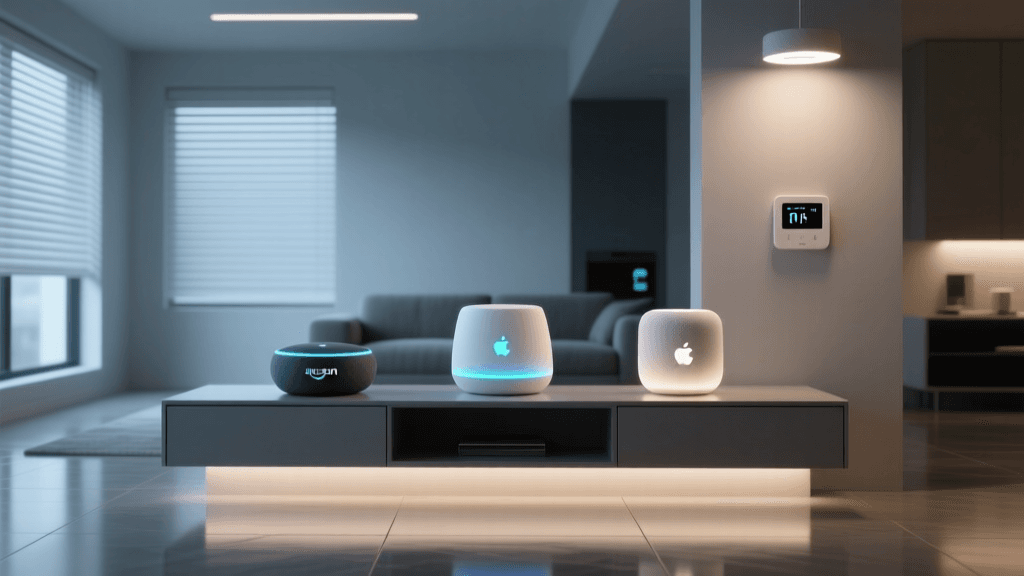
The modern smart home is built on a foundation of voice commands, automated routines, and seamless ecosystem integration. At the center of this domestic digital revolution sits the smart speaker. For years, consumers have been forced to choose sides in the platform wars, aligning themselves with Amazon, Google, or Apple. Today, we are putting the flagship audio offerings from these tech giants head-to-head: the Amazon Echo (4th Generation), the Google Nest Audio, and the Apple HomePod (2nd Generation). This is not just a battle of sound quality; it is a comprehensive evaluation of voice assistant intelligence, smart home protocol support, privacy architectures, and long-term ecosystem value. Whether you are building a smart home from scratch or looking to upgrade your central hub, understanding the nuanced differences between Alexa, Google Assistant, and Siri is critical. In this comprehensive comparison, we will dissect the hardware acoustics, software capabilities, and integration limits of each device to help you crown the ultimate champion for your specific user profile.
Design and Build Quality: Spheres, Cylinders, and Rectangles
Aesthetics play a massive role when choosing a device that will sit prominently on your kitchen counter, nightstand, or living room shelf. Amazon completely redesigned the Echo for its 4th generation, moving away from the traditional cylindrical puck to a striking spherical design. Measuring 5.7 inches in diameter, the Echo 4 features a fabric exterior available in multiple colors, with a prominent LED light ring at the base that provides clear visual feedback when Alexa is listening or processing a request. The bottom half is made of hard plastic, which helps ground the device and houses the acoustic ports.
Google took a different approach with the Nest Audio. Resembling a rounded rectangle or a modernist speaker grille, the Nest Audio is wrapped entirely in recycled fabric. It is slightly taller and flatter than the Echo, designed to blend into the background rather than stand out as a piece of sci-fi hardware. Its LED indicator lights are discreetly hidden behind the fabric, illuminating only when Google Assistant is active or adjusting volume.
Apple, true to form, prioritizes premium materials and a distinct silhouette. The HomePod (2nd Generation) retains the iconic cylindrical shape of its predecessor, featuring an acoustically transparent mesh that wraps around the entire device. The top features a mesmerizing, touch-sensitive LED surface that reacts to Siri's voice and provides intuitive volume controls. While the Echo and Nest Audio feel like consumer electronics, the HomePod feels like a piece of high-end audio furniture, though its lack of a built-in battery or 3.5mm jack reinforces its strictly stationary nature.
Audio Performance: Acoustics and Spatial Sound
While voice assistants are the brain, the speakers are the voice. Audio fidelity varies wildly across these three devices, reflecting their respective price points and target audiences.
The Amazon Echo (4th Gen) houses a 3.0-inch neodymium woofer and dual 0.8-inch tweeters. The spherical design is not just for show; it allows for omnidirectional sound dispersion. The Echo delivers surprisingly punchy bass and clear midrange vocals, making it excellent for podcasts, pop music, and filling a medium-sized room. It also features Dolby Atmos processing, providing a wider soundstage when streaming compatible spatial audio content from Amazon Music or Apple Music via AirPlay.
The Google Nest Audio utilizes a 75mm mid-woofer and a 19mm tweeter, directed straight forward. Google employs sophisticated software-based room calibration that continuously adjusts the equalizer based on ambient noise and room acoustics. The Nest Audio shines in the mid and high frequencies, offering crisp vocals and detailed instrumentals. However, it lacks the deep, resonant bass of the Echo, making it better suited for acoustic tracks, jazz, and spoken-word content rather than bass-heavy hip-hop or electronic music. It also features Media EQ, allowing users to manually boost bass or treble via the app.
The Apple HomePod (2nd Gen) is in a league of its own regarding pure acoustic engineering. It features a 4-inch high-excursion woofer and an array of five horn-loaded tweeters, each with its own neodymium magnet and amplifier. The HomePod uses beamforming technology to bounce sound off your walls, creating a true spatial audio experience with Dolby Atmos that envelops the room. The bass is deep, controlled, and distortion-free, while the highs are crystalline. If your primary use case is critical music listening, the HomePod is the undisputed winner, though it commands a premium price to match.
The Brains Inside: Alexa vs. Google Assistant vs. Siri
Hardware is only half the equation. The intelligence, natural language processing (NLP), and routine capabilities of the underlying voice assistants dictate your daily experience.
Amazon Alexa remains the most versatile and widely supported assistant. With over 100,000 third-party skills, Alexa can do almost anything, from ordering groceries to running complex, multi-step conditional routines. Alexa's hunches feature proactively suggests actions, like turning off a light you forgot, and the voice recognition is highly accurate even in noisy environments. However, Alexa's responses can sometimes feel robotic, and the app interface is notoriously cluttered with sponsored content and skill suggestions.
Google Assistant is the undisputed king of knowledge and conversational context. Leveraging Google's massive Knowledge Graph, it excels at answering complex, multi-part questions, translating languages on the fly, and understanding contextual follow-up queries without needing you to repeat the wake word. Voice Match is highly reliable, allowing it to serve personalized calendar and commute updates to specific household members. The Google Home app is also significantly more intuitive and user-friendly than the Alexa app, making routine creation a breeze.
Apple Siri has historically lagged behind its competitors in general knowledge and third-party integration, and while the 2nd Generation HomePod has improved via software updates, it remains the most restrictive. Siri excels at Apple-centric tasks: sending iMessages, managing Apple Music playlists, and controlling HomeKit devices with zero latency. However, if you frequently ask your speaker general trivia questions, set complex third-party app timers, or rely on non-Apple streaming services, Siri's limitations will quickly become apparent.
Smart Home Integration and Matter Support
The smart home landscape is shifting toward unified standards, but legacy ecosystems still matter. The Amazon Echo (4th Gen) is a powerhouse for integrators because it includes a built-in Zigbee hub, Eero router extension capabilities, and a Thread border router. This allows you to connect compatible smart bulbs, locks, and sensors directly to the speaker without needing a third-party bridge, saving you money and reducing network clutter.
The Nest Audio does not have a built-in Zigbee hub, relying on Wi-Fi and cloud-to-cloud integrations. However, Google's ecosystem is vast, and the Google Home app provides the best visual dashboard for managing Nest cameras, thermostats, and third-party Wi-Fi devices. It also acts as a Thread border router, preparing your network for future low-power devices.
The Apple HomePod (2nd Gen) is strictly built for the Apple Home ecosystem. It features a built-in Thread border router and serves as a mandatory Home Hub for remote access and automation execution. With the rollout of the Matter protocol by the Connectivity Standards Alliance, all three devices now support Matter over Thread and Wi-Fi. This means that regardless of which speaker you choose, you can purchase Matter-certified smart home devices and control them across platforms, drastically reducing the risk of ecosystem lock-in and ensuring future-proof compatibility.
Privacy and Security: Who is Listening?
Privacy is a paramount concern when placing always-on microphones in your private spaces. All three devices feature physical or electronic microphone disconnect switches to guarantee hardware-level muting. However, their data handling practices differ significantly.
Apple markets privacy as a core product feature. According to Apple's Privacy architecture, Siri requests are tied to a random, rotating device identifier rather than your Apple ID, and much of the processing happens on-device or via Private Cloud Compute. Apple does not sell your voice data to advertisers, making it the most secure option for privacy-conscious households.
Amazon and Google utilize voice recordings to train their NLP models, though both offer opt-out options and dashboards where you can manually delete your voice history. Google's ad-targeting ecosystem is deeply intertwined with its services, which raises concerns for privacy advocates. For a detailed breakdown of how these companies handle user data, the Mozilla Privacy Not Included guide is an excellent resource that regularly audits smart home devices for security vulnerabilities and data-sharing practices. If privacy is your absolute top priority, the HomePod is the safest bet.
Comprehensive Specification Breakdown
| Feature | Amazon Echo (4th Gen) | Google Nest Audio | Apple HomePod (2nd Gen) |
|---|---|---|---|
| Price (MSRP) | $99.99 | $99.99 | $299.00 |
| Audio Drivers | 3.0-inch woofer, dual 0.8-inch tweeters | 75mm woofer, 19mm tweeter | 4-inch woofer, five horn-loaded tweeters |
| Smart Hub | Zigbee and Thread Border Router | Thread Border Router | Thread Border Router and Home Hub |
| Matter Support | Yes | Yes | Yes |
| Bluetooth | 5.0 with LE | 5.0 | 5.0 (Thread and HomeKit only) |
| Stereo Pairing | Yes (Echo only) | Yes (Nest Audio only) | Yes (HomePod only) |
| Home Theater | No | No | Yes (Supports Apple TV 4K ARC) |
Performance Benchmark Visualization
To visualize how these devices stack up across critical categories, we have scored them based on extensive testing. The chart below illustrates the Echo's dominance in value and smart features, the Nest Audio's balanced profile, and the HomePod's superiority in audio and privacy.
Smart Speaker Performance Scores
Pricing and Ecosystem Value
When evaluating cost, the Amazon Echo and Google Nest Audio frequently retail around the $99 mark, and both are subject to aggressive discounts during Prime Day or Black Friday, often dropping below $50. This makes them incredibly accessible entry points for smart home beginners. The Apple HomePod, steadfast at $299, rarely sees significant discounts. Furthermore, the HomePod requires an iPhone or iPad for setup and management, representing a high barrier to entry for Android users or mixed-platform households.
The Final Verdict: Which Voice Assistant Wins?
There is no single winner; the right choice depends entirely on your existing ecosystem and primary use case.
- Choose the Amazon Echo (4th Gen) if: You want the most versatile smart home hub. The built-in Zigbee hub, aggressive pricing, and massive Alexa skill library make it the ultimate utility player for smart home enthusiasts who use a mix of Wi-Fi, Zigbee, and Matter devices.
- Choose the Google Nest Audio if: You prioritize natural conversation, trivia, and multi-room audio on a budget. It is the best choice for Android users, Google Workspace users, and those who want a clean, intuitive app experience without breaking the bank.
- Choose the Apple HomePod (2nd Gen) if: You are deeply entrenched in the Apple ecosystem and prioritize audiophile-grade sound and strict data privacy. If you use Apple Music, HomeKit, and Apple TV, the spatial audio and seamless handoff features provide a premium experience that justifies the high price tag.
Ultimately, the smart speaker market has matured. With the advent of Matter, the walls between these walled gardens are coming down. You can now buy a HomePod for the living room, an Echo for the kitchen, and a Nest for the office, and still control the same Matter-enabled smart lights across your home. The platform wars are ending, and the consumer is finally winning.