The Smart Home Brain Trust: Choosing Your Core Ecosystem
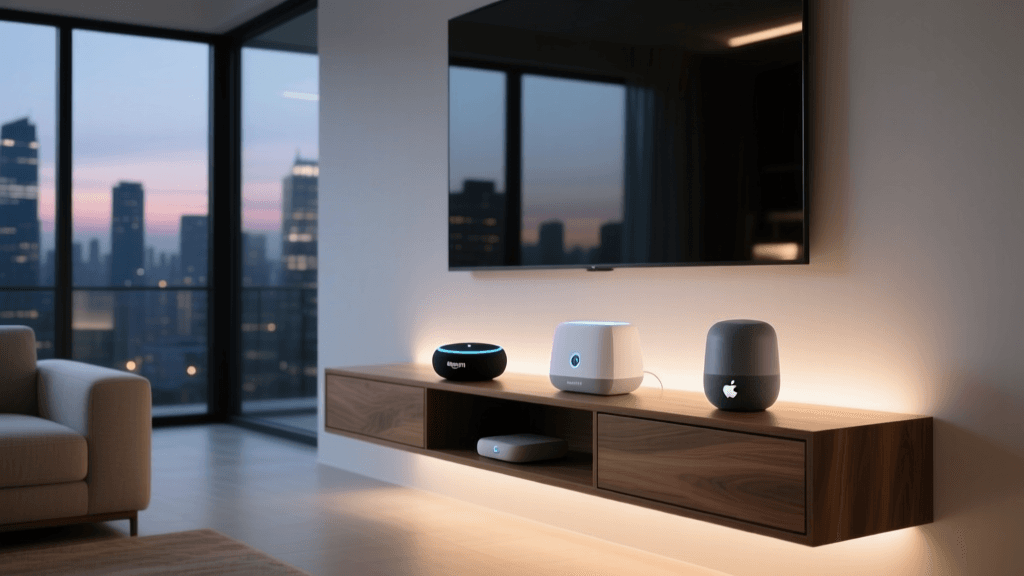
The smart speaker market has evolved far beyond simple novelty gadgets that play music and set kitchen timers. Today, these devices serve as the central nervous system of the modern connected home. When it comes to choosing the brain of your smart home, the battle inevitably narrows down to the big three: Amazon Alexa (represented by the flagship Echo 4th Gen), Google Assistant (via the Nest Audio), and Apple Siri (housed in the HomePod 2nd Gen). Each ecosystem offers a distinct philosophy regarding audio quality, smart home integration, privacy, and voice intelligence.
For consumers, this fragmented landscape can be incredibly confusing. Do you prioritize the vast third-party compatibility of Alexa, the natural conversational intelligence of Google, or the privacy-focused, premium audio experience of Apple? In this comprehensive SmartHomeDeck comparison, we break down the hardware, software, ecosystem compatibility, and long-term value of the Amazon Echo, Google Nest, and Apple HomePod to help you make the definitive choice for your household.
Hardware Design and Audio Performance
Before diving into the software ecosystems, it is essential to evaluate these devices as physical speakers. After all, the most common use case for any smart speaker is still listening to music, podcasts, and audiobooks.
The Amazon Echo (4th Gen) abandoned the cylindrical puck design of its predecessors for a striking spherical shape. Measuring 5.7 x 5.7 x 5.3 inches, it houses dual 20mm tweeters and a single 3-inch woofer. The audio profile is surprisingly robust, offering deep bass that can easily fill a medium-sized living room, though it can occasionally sound a bit muddy at maximum volume.
The Google Nest Audio features a sleek, fabric-wrapped pill design (6.89 x 4.89 x 3.07 inches). It utilizes a 75mm woofer and a 19mm tweeter. Google has heavily optimized the Nest Audio for directional sound and vocal clarity. It excels at separating instruments and delivering crisp highs, making it arguably the best-sounding speaker in the $99 price bracket.
The Apple HomePod (2nd Gen) is the undisputed heavyweight in both physical stature and audio fidelity. Standing 6.6 inches tall and weighing 5.15 pounds, it packs a custom 4-inch high-excursion woofer and an array of five beamforming tweeters. Powered by the Apple S7 chip, it uses computational audio and room-sensing technology to automatically tune its output to your specific environment. The result is breathtaking spatial audio that outclasses both the Echo and the Nest Audio by a significant margin.
| Feature | Amazon Echo (4th Gen) | Google Nest Audio | Apple HomePod (2nd Gen) |
|---|---|---|---|
| MSRP | $99.99 | $99.99 | $299.00 |
| Audio Configuration | 2x 20mm tweeters, 1x 3-inch woofer | 19mm tweeter, 75mm woofer | 5x beamforming tweeters, 4-inch woofer |
| Smart Home Hub | Yes (Zigbee, Thread, Matter) | No (Wi-Fi only) | Yes (Thread, Matter) |
| Temperature Sensor | Yes | No | Yes |
| UWB (Ultra Wideband) | No | No | Yes (for seamless handoff) |
Voice Intelligence: Alexa vs. Google Assistant vs. Siri
The hardware is only half the equation; the voice assistant is the interface you will interact with daily.
Amazon Alexa: The Routine Master
Alexa remains the most capable assistant for smart home automation and complex routines. With over 100,000 third-party skills and native support for virtually every major smart home brand, Alexa is the undisputed king of compatibility. Its routine builder is incredibly granular, allowing you to trigger actions based on specific voice commands, schedules, sensor states, or even the sound of a snoring baby. However, Alexa can sometimes feel rigid in its natural language processing, requiring you to phrase commands exactly as the system expects them.
Google Assistant: The Conversational Genius
If you treat your smart speaker as a search engine and a conversational partner, Google Assistant is the clear winner. Leveraging Google's vast Knowledge Graph, it handles follow-up questions, context, and complex multi-part queries far better than its rivals. You can ask, 'Who is the director of Oppenheimer?' and follow up with, 'How tall is he?' without repeating the subject. Google's natural language understanding makes it feel less like a command terminal and more like a helpful human assistant.
Apple Siri: The Ecosystem Integrator
Siri has historically lagged behind in general knowledge and third-party compatibility, and while Apple has improved its natural language processing, it still trails Google in conversational depth. Where Siri truly shines is in its seamless integration with the Apple ecosystem. Sending iMessages, initiating FaceTime calls, managing Apple Reminders, and accessing Apple Music playlists are executed with zero friction. If your household is entirely invested in iPhones, iPads, and Macs, Siri's contextual awareness of your personal data (like calendar events and contacts) is unmatched.
Smart Home Protocols: Zigbee, Thread, and Matter
For smart home enthusiasts, the underlying connectivity protocols are often the deciding factor. The introduction of the Matter standard by the Connectivity Standards Alliance (CSA) has begun to unify the industry, but local hub capabilities still vary wildly between these three devices.
Matter is designed to unify the smart home, but local processing and border router capabilities still dictate the speed and reliability of your automations when the internet goes down.
- Amazon Echo (4th Gen): This is the only speaker in this comparison with a built-in Zigbee hub. This means you can connect older Zigbee bulbs and sensors directly to the Echo without needing a third-party bridge. It also acts as a Thread border router and supports Matter over Wi-Fi and Thread.
- Google Nest Audio: Surprisingly, the Nest Audio does not contain a Thread radio or a Zigbee hub. It relies entirely on Wi-Fi for smart home commands. To get Thread border routing in the Google ecosystem, you must purchase a Nest Hub (2nd Gen) or a Nest Wifi Pro router.
- Apple HomePod (2nd Gen): The HomePod acts as a powerful Thread border router and fully supports Matter. It serves as the ultimate local hub for HomeKit and Matter devices, ensuring that automations run locally on your network with lightning-fast response times, even if your ISP experiences an outage.
Privacy and Data Security
In an era where devices are constantly listening for a wake word, privacy is a paramount concern. The three tech giants approach data collection and user privacy from very different angles.
Apple has staked its modern brand identity on user privacy. According to Apple's official privacy frameworks, Siri requests are associated with a random, rotating device identifier rather than your Apple ID. Furthermore, the HomePod processes many basic commands (like setting timers or controlling local HomeKit accessories) entirely on-device, meaning the audio never reaches Apple's cloud servers.
Google and Amazon operate on advertising and data-driven business models, which inherently means more data is collected to train their AI models and serve targeted content. Both companies offer robust privacy dashboards, physical microphone mute buttons, and the ability to auto-delete voice recordings. Google provides detailed controls via the My Activity dashboard, as outlined in their Google Nest privacy documentation, allowing users to pause audio saving or delete history by date. However, the baseline level of data collection is undeniably higher than Apple's closed-loop approach.
Media Ecosystems and Subscription Costs
When calculating the true cost of ownership, you must consider the media subscriptions required to get the most out of these speakers.
The Amazon Echo defaults to Amazon Music. While it supports Spotify via voice, the integration is sometimes clunky compared to native Amazon Music Unlimited, which costs around $9.99/month. However, if you are already a Prime member, you get access to a limited catalog of ad-free music at no extra cost.
The Google Nest Audio is deeply integrated with YouTube Music and Spotify. Voice casting from your phone to the speaker works flawlessly, and Google's ability to pull up highly specific, niche playlists via natural language queries is a massive advantage for music discovery.
The Apple HomePod is unapologetically tied to Apple Music. While you can stream Spotify via AirPlay from your iPhone, you cannot natively link a Spotify Premium account to Siri for voice-controlled playback on the HomePod itself. To unlock the speaker's full potential, an Apple Music subscription ($10.99/month) is practically mandatory.
Multi-Room Audio and Stereo Pairing
If you plan to expand your audio footprint, multi-room capabilities are essential. All three ecosystems support grouping speakers together for whole-home audio. However, there are distinct limitations regarding stereo pairing (using two identical speakers to create dedicated left and right channels).
Amazon allows you to stereo-pair two identical Echo devices and even add an Echo Sub for a dedicated 2.1 channel home theater experience when linked to a Fire TV. Google supports stereo pairing of two Nest Audios, providing a wide, immersive soundstage. Apple allows stereo pairing of two HomePods, which unlocks Dolby Atmos spatial audio processing that is nothing short of cinematic, though the $600 price tag for a pair is a significant barrier to entry.
Final Verdict: Who Should Buy What?
Choosing between the Echo, Nest Audio, and HomePod ultimately comes down to identifying your primary use case and the devices you already own.
Buy the Amazon Echo (4th Gen) if:
You are a smart home tinkerer who wants maximum compatibility. The built-in Zigbee hub, Thread border router, and temperature sensor make it an incredible value at $99. It is the best choice for users who want to build complex, multi-step automations and rely on a wide variety of third-party smart home brands.
Buy the Google Nest Audio if:
You prioritize conversational intelligence and crisp audio on a budget. For $99, it offers the best vocal clarity and natural language processing on the market. It is ideal for families who use the speaker to ask homework questions, manage shared Google Calendars, and listen to Spotify or YouTube Music.
Buy the Apple HomePod (2nd Gen) if:
You are an Apple purist who demands audiophile-grade sound and strict privacy. At $299, it is a premium investment, but the computational audio, Thread routing, and seamless AirPlay/UWB handoff from your iPhone are unparalleled. It is the only choice for households fully committed to the HomeKit ecosystem and Apple Music.