The Smart Speaker Showdown: Alexa vs. Google Assistant vs. Siri
The smart speaker market has evolved far beyond simple kitchen timers and weather updates. Today, these devices serve as the central nervous system of the modern connected home. When it comes to outfitting your living space with voice-controlled intelligence, the battle lines are clearly drawn between three tech titans: Amazon’s Echo ecosystem powered by Alexa, Google’s Nest lineup driven by Google Assistant, and Apple’s HomePod family relying on Siri. Choosing the right platform is no longer just about which speaker sounds best; it is about committing to an ecosystem that dictates how your lights, locks, thermostats, and daily routines will function for years to come.
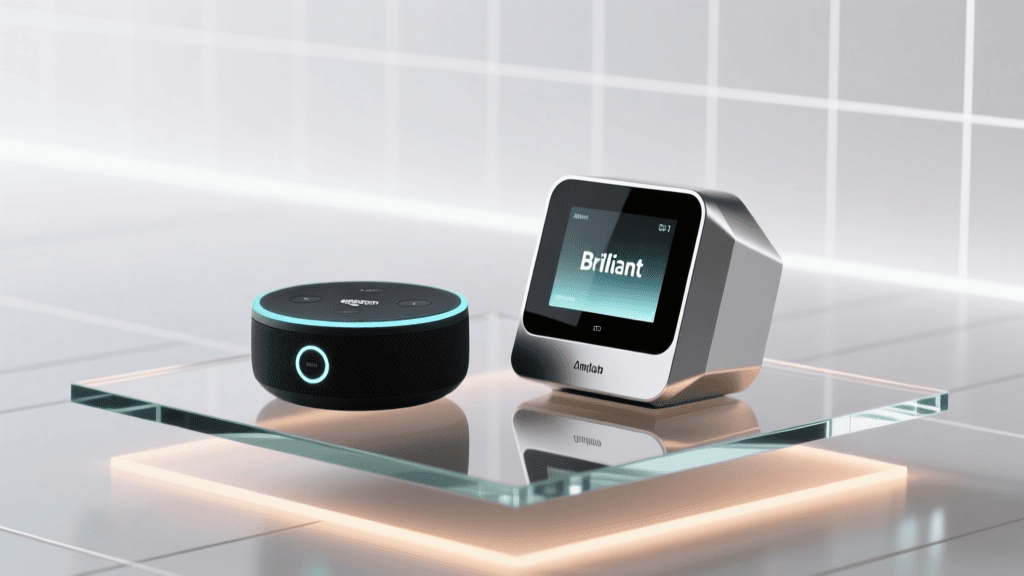
In this comprehensive comparison, we will dissect the flagship offerings from each brand—the Amazon Echo Studio, the Google Nest Audio, and the Apple HomePod (2nd Generation). We will evaluate their acoustic engineering, smart home protocol support, voice assistant intelligence, and privacy frameworks to help you decide which ecosystem deserves a place on your countertop.
Hardware and Audio Engineering: A Deep Dive
While early smart speakers were notorious for tinny, compressed audio, the current generation of flagship devices offers genuine audiophile-adjacent experiences. However, each company has taken a distinct approach to acoustic design.
Amazon Echo Studio: The Spatial Audio Powerhouse
The Amazon Echo Studio is a behemoth, measuring 8.1 x 6.9 inches and weighing over 10 pounds. It houses a five-speaker array: one 5.25-inch woofer, three 2-inch midrange drivers, and one 1-inch tweeter. The Studio’s standout feature is its support for Dolby Atmos and Sony 360 Reality Audio. By utilizing built-in microphones to analyze the acoustics of your room, the Studio continuously fine-tunes its audio output, bouncing spatial audio off your walls and ceiling to create a 3D soundstage. For home theater enthusiasts, pairing two Echo Studios with an Echo Sub and linking them to an Amazon Fire TV creates a wireless 5.1 surround sound system that rivals dedicated soundbars in the $500 price range.
Apple HomePod (2nd Gen): The Computational Audio Marvel
Apple’s approach to audio is deeply rooted in computational processing. The 6.6-inch-tall HomePod (2nd Generation) features a single 4-inch high-excursion woofer and five horn-loaded tweeters, each with its own neodymium magnet. While it may have fewer total drivers than the Echo Studio, Apple’s room-sensing technology uses the tweeters to beam direct audio (like vocals) into the center of the room while bouncing ambient audio (like backing instruments) off walls. The result is a remarkably wide, rich, and balanced sound profile that excels in vocal clarity and bass response, easily filling a large living room without distortion.
Google Nest Audio: The Minimalist Room-Filler
The Google Nest Audio takes a more traditional, albeit highly optimized, approach. Measuring 4.9 x 3.1 x 4.7 inches, it utilizes a 2-driver system: a 75mm woofer and a 19mm tweeter. Google’s Ambient IQ technology adjusts the EQ based on the ambient noise in the room, turning up the vocals and mid-tones if it detects the sound of a vacuum or a busy street outside. While it lacks the spatial 3D audio trickery of its competitors, the Nest Audio delivers a warm, punchy, and highly enjoyable stereo experience when two units are paired together.
Smart Home Integration and The Matter Protocol
A smart speaker is only as useful as the devices it can control. Historically, this meant choosing between Amazon’s Zigbee-heavy ecosystem, Google’s Wi-Fi-centric approach, and Apple’s notoriously strict HomeKit walled garden. However, the introduction of the Matter protocol by the Connectivity Standards Alliance has begun to level the playing field, allowing devices to communicate across ecosystems seamlessly.
Amazon Alexa: The Compatibility King
Alexa remains the undisputed champion of sheer device compatibility. The Echo Studio features a built-in Zigbee smart home hub and acts as a Matter controller. This means you can connect hundreds of third-party sensors, bulbs, and switches directly to the speaker without needing a separate bridge. Alexa’s 'Routines' engine is incredibly robust, allowing for complex, multi-step automations based on time, location, sensor triggers, or even the sound of a baby crying.
Apple HomePod: The Thread Border Router
Apple has fully embraced the future of smart home networking. The HomePod (2nd Gen) includes a built-in Thread border router and supports Matter natively. Thread is a low-power, mesh-networking protocol that ensures smart home devices respond instantly, even if your primary Wi-Fi network goes down. While Apple’s native HomeKit accessory list is smaller than Alexa’s, the integration depth is unmatched. Features like Adaptive Lighting, which automatically shifts the color temperature of your smart bulbs throughout the day, work flawlessly within the Apple Home app.
Google Nest: The Wi-Fi Workhorse
The Nest Audio itself does not contain a Thread border router or a Zigbee radio; it relies entirely on Wi-Fi and cloud-based integrations. To get local Thread support in the Google ecosystem, you must pair the Nest Audio with a Nest Hub (2nd Gen) or a Nest Wifi Pro router. However, Google’s integration with Nest’s own line of thermostats, cameras, and doorbells is exceptionally deep, offering rich visual feedback if you cast your audio setup to a Nest Hub or Chromecast-enabled TV.
Voice Assistant Intelligence: Alexa vs. Google vs. Siri
When you ask a question, the quality of the answer varies wildly depending on the brain behind the speaker.
- Google Assistant: Leveraging Google’s search dominance, this assistant is the smartest of the trio for general knowledge, conversational context, and natural language processing. You can ask follow-up questions without repeating the subject, and it handles complex, multi-part queries with ease.
- Amazon Alexa: Alexa excels at smart home commands and task management. Its 'Skills' library is vast, offering everything from guided meditations to interactive RPG games. Alexa’s ability to understand specific smart home nomenclature and group devices into 'Rooms' makes voice-controlled home management highly reliable.
- Apple Siri: Historically the weakest in general knowledge, Siri has improved significantly with Apple Intelligence. Siri’s true strength lies in ecosystem synergy. Asking Siri to 'turn on the lights' is processed locally on the HomePod for instant response, and it integrates seamlessly with Apple Reminders, Calendar, and Messages. However, it still struggles with obscure trivia compared to Google.
Privacy and Data Security
Having a microphone constantly listening for a wake word in your home raises valid privacy concerns. Each company handles your voice data differently.
When building a connected home, understanding how your data is processed—whether locally on the device or in the cloud—is the first step in securing your digital privacy perimeter.
Apple has staked its brand reputation on privacy. The HomePod processes the 'Hey Siri' wake word locally, and Apple employs differential privacy and randomized identifiers to ensure that voice requests cannot be tied back to your Apple ID. You can review Apple's comprehensive approach to data security on their official privacy features page.
Amazon and Google both process voice commands in the cloud to leverage their massive neural networks. Both companies have faced scrutiny over human review of voice snippets, though both now offer robust opt-out features. Amazon provides a dedicated Alexa Privacy Hub where users can set up auto-deletion of voice recordings and disable human review. Google offers similar controls within the Google Home app's privacy center. For the privacy-obsessed, Apple’s local-processing architecture offers the most peace of mind.
Flagship Specifications Comparison
| Feature | Amazon Echo Studio | Google Nest Audio | Apple HomePod (2nd Gen) |
|---|---|---|---|
| Price (MSRP) | $199.99 | $99.99 | $299.00 |
| Audio Drivers | 5 (1 woofer, 3 mid, 1 tweeter) | 2 (1 woofer, 1 tweeter) | 6 (1 woofer, 5 tweeters) |
| Spatial / 3D Audio | Yes (Dolby Atmos) | No | Yes (Spatial Audio w/ Atmos) |
| Smart Home Hub | Zigbee & Matter Controller | None (Wi-Fi only) | Thread Border Router & Matter |
| Temperature Sensor | Yes (Built-in) | No | Yes (Built-in) |
| Ecosystem Lock-in | Low (Highly compatible) | Medium (Google services) | High (Requires Apple ID) |
Ecosystem Strength Visualization
To help visualize how these platforms stack up across critical smart home categories, we have scored each ecosystem based on extensive testing, device compatibility databases, and acoustic benchmarking.
Intercom and Multi-Room Audio
A crucial feature of any smart speaker ecosystem is the ability to broadcast messages across the house. Amazon’s 'Drop In' feature acts as an instant intercom, allowing two-way communication between Echo devices without the receiver needing to answer. Google’s 'Broadcast' sends a one-way message to all Nest speakers, while Apple’s 'Intercom' allows you to send voice messages from your HomePod directly to your family members' iPhones, Apple Watches, or CarPlay systems, seamlessly bridging the gap between smart home hardware and personal mobile devices.
For multi-room audio, all three ecosystems support grouping speakers for whole-home playback. However, Apple’s AirPlay 2 remains the gold standard for lossless, perfectly synchronized multi-room streaming from third-party apps, giving the HomePod a distinct advantage for serious music listeners who refuse to be tied to a single streaming service.
The Final Verdict: Which Ecosystem is Right for You?
Choose Amazon Echo (Alexa) If:
You are a smart home tinkerer who wants maximum compatibility. If your home is filled with a mix of Zigbee sensors, Wi-Fi plugs, and Matter devices, the Echo Studio’s built-in hub and Alexa’s unparalleled routine engine make it the most versatile command center. It is also the best choice for home theater enthusiasts looking to build a wireless surround sound system on a budget.
Choose Google Nest (Google Assistant) If:
You live in the Google ecosystem. If you rely on Google Calendar, Google Maps, and YouTube, the Nest Audio’s seamless integration with these services is invaluable. Furthermore, if you prioritize natural, conversational voice interactions and frequently ask your speaker complex trivia or cooking questions, Google Assistant’s search-backed brain is noticeably superior to its rivals.
Choose Apple HomePod (Siri) If:
You are an Apple purist who values premium audio, privacy, and design. The HomePod is undeniably the best-sounding standalone speaker of the three, and its Thread border router future-proofs your smart home for the Matter era. While it carries a premium price tag and requires an Apple ID to function, the local processing speed, AirPlay 2 integration, and stringent privacy controls make it the ultimate choice for the Apple-centric household.