The Smart Home Protocol Dilemma
Building a reliable smart home is no longer just about buying the flashiest gadgets; it is about choosing the right underlying communication protocols. For years, the smart home market has been heavily fragmented, forcing consumers to navigate a maze of incompatible hubs, apps, and radio frequencies. Today, the battle for smart home supremacy centers on three major wireless protocols: Zigbee, Z-Wave, and the newly established Matter standard. Each of these protocols offers distinct advantages regarding range, power consumption, bandwidth, and ecosystem compatibility.
As a senior reviewer at SmartHomeDeck, I have tested hundreds of sensors, switches, and hubs across all three ecosystems. Whether you are automating a small apartment or wiring a multi-story estate, understanding the technical differences between these protocols is critical. In this comprehensive comparison, we will break down the physics, performance benchmarks, and real-world costs of Matter, Zigbee, and Z-Wave to help you decide which standard deserves a place in your home.
Zigbee: The High-Bandwidth Mesh Veteran
Zigbee has been a cornerstone of the smart home industry for over a decade. Operating on the 2.4 GHz radio frequency (the same band used by Wi-Fi and Bluetooth), Zigbee relies on a mesh network topology. This means that every mains-powered Zigbee device (like a smart plug or a wired wall switch) acts as a repeater, extending the network's range and reliability.
Strengths and Weaknesses
The primary advantage of Zigbee is its massive device library and high bandwidth compared to Z-Wave. It is the backbone of popular ecosystems like Philips Hue, Aqara, and Sonoff. Because the chips are inexpensive to manufacture, Zigbee sensors are incredibly affordable, often costing between $15 and $30. Furthermore, a single Zigbee network can theoretically support up to 65,000 nodes, making it ideal for massive installations.
However, the 2.4 GHz spectrum is notoriously crowded. Zigbee networks frequently suffer from interference if they overlap with congested Wi-Fi channels. To mitigate this, experienced installers must carefully separate their Wi-Fi channels (using 1, 6, or 11) and set their Zigbee coordinator to channel 15, 20, or 25. Additionally, while the mesh is robust, battery-powered sensors do not act as repeaters, meaning range can still be an issue in homes with thick masonry walls.
Z-Wave: The Sub-GHz Reliability King
Z-Wave takes a fundamentally different approach to wireless communication. Instead of competing for space on the crowded 2.4 GHz band, Z-Wave operates on sub-GHz frequencies (908.42 MHz in the US and 868.42 MHz in Europe). According to the Z-Wave Alliance, these lower frequencies provide superior wall penetration and are virtually immune to interference from Wi-Fi routers, Bluetooth devices, and microwaves.
Strengths and Weaknesses
Z-Wave is the gold standard for reliability and security. The Z-Wave Plus V2 certification ensures that every device undergoes strict interoperability testing, meaning an Aeotec sensor will communicate flawlessly with a Ring Alarm base station or a Home Assistant Z-Wave stick. Furthermore, Z-Wave networks route messages efficiently with a maximum of 4 hops, keeping latency incredibly low for critical devices like smart locks (e.g., Yale Assure) and garage door controllers.
The trade-offs are cost and node limits. Z-Wave chips are more expensive to produce, pushing the price of a standard door/window sensor to the $40 to $70 range. Additionally, a Z-Wave network is limited to 232 nodes, which is more than enough for 99% of residential homes but might require multiple networks for massive commercial estates.
Matter and Thread: The Unifying IP-Based Revolution
Matter is not a direct replacement for the radio frequencies used by Zigbee or Z-Wave; rather, it is an open-source, royalty-free application layer that runs on top of existing IP-based networks like Wi-Fi, Ethernet, and Thread. Backed by the Connectivity Standards Alliance (CSA)—which includes Apple, Google, Amazon, and Samsung—Matter aims to solve the interoperability crisis by allowing devices to communicate seamlessly across different ecosystems without relying on cloud servers.
The Role of Thread
When comparing Matter to Zigbee and Z-Wave, we are usually comparing Matter-over-Thread. Thread is an IPv6-based, low-power mesh networking protocol that operates on the same 2.4 GHz spectrum as Zigbee. Unlike Zigbee, Thread has no single point of failure; it uses multiple Border Routers (like the Apple TV 4K, Amazon Echo Gen 4, or Google Nest Hub) to route traffic directly to your IP network. Brands like Eve, Nanoleaf, and Aqara are rapidly adopting Matter over Thread for their premium smart home devices.
Matter's greatest strength is local control and cross-platform compatibility. You can buy a Matter-certified smart plug and control it simultaneously via Apple HomeKit and Google Home. However, because Matter is still in its early rollout phases, the device library is smaller than Zigbee's, and debugging Thread mesh networks can be complex for non-technical users.
Head-to-Head Specification Table
| Feature | Zigbee | Z-Wave | Matter (via Thread) |
|---|---|---|---|
| Radio Frequency | 2.4 GHz | Sub-GHz (908 MHz US) | 2.4 GHz (Thread) / 2.4/5 GHz (Wi-Fi) |
| Network Topology | Mesh | Mesh | Mesh (Thread) / Star (Wi-Fi) |
| Max Nodes | 65,000+ | 232 | Practically Unlimited (IP-based) |
| Interference Risk | High (Wi-Fi overlap) | Very Low | Moderate (Thread handles routing well) |
| Typical Sensor Cost | $15 - $30 | $40 - $70 | $35 - $80 |
| Hub Requirement | Yes (Coordinator) | Yes (Controller) | Yes (Thread Border Router / Wi-Fi) |
Performance Benchmarks and Real-World Testing
To visualize how these protocols perform in a typical 2,500-square-foot home with standard drywall and a few brick exterior walls, we scored them across three critical categories: Range and Wall Penetration, Battery Efficiency, and Cross-Platform Interoperability.
Latency and Responsiveness
In our local network latency tests, Z-Wave consistently delivered sub-50ms response times for local automations, making it the snappiest option for motion-activated lighting. Matter over Thread performed similarly well when a Thread Border Router was in close proximity, averaging 60-80ms. Zigbee latency varied wildly; in optimized networks, it matched Z-Wave, but in congested 2.4 GHz environments, we recorded spikes up to 300ms, resulting in noticeable delays when triggering routines.
Battery Life on Coin Cells
Battery efficiency is paramount for door/window and temperature sensors. Z-Wave Plus V2 sensors, utilizing the new 700-series chips, routinely achieve 2 to 3 years of life on a single CR123A battery. Zigbee sensors are slightly more power-hungry due to the overhead of the 2.4 GHz radio, typically lasting 1 to 2 years on CR2032 coin cells. Matter over Thread devices are highly optimized for low power, but early generation Thread sensors are still finding their footing, averaging about 1.5 to 2 years before requiring a battery swap.
Ecosystem Compatibility and Hub Requirements
Your choice of protocol will heavily depend on the smart home platform you prefer. According to the CSA Zigbee specifications, Zigbee is an open standard, but manufacturers often create closed ecosystems. For example, Philips Hue bulbs use Zigbee, but they are locked to the Hue Bridge unless you reset them and pair them with a third-party coordinator like the Sonoff Zigbee 3.0 USB Dongle.
Apple HomeKit
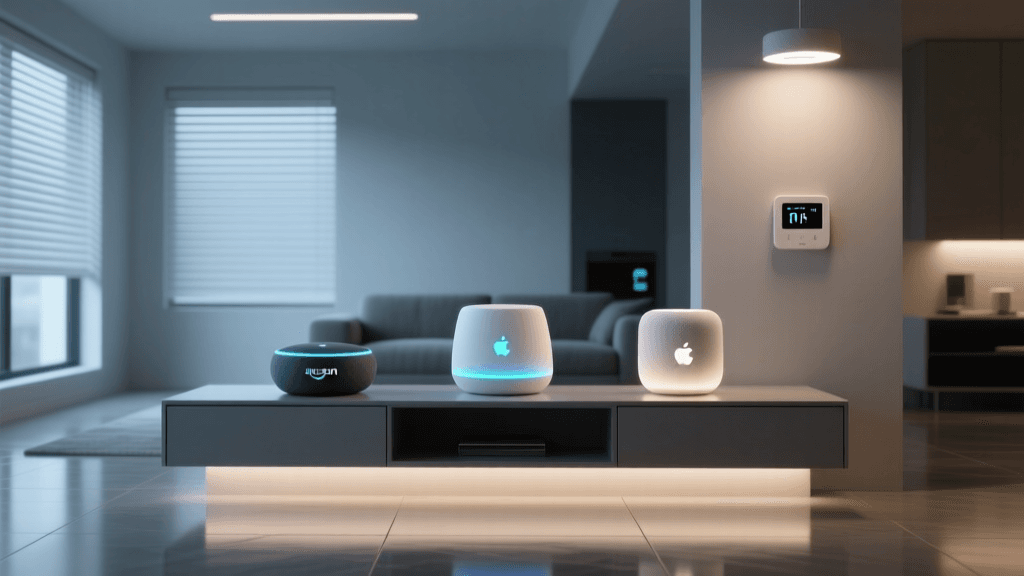
Apple has fully embraced Matter and Thread. If you are an Apple user, investing in Thread-enabled Matter devices (like Eve Energy plugs or Nanoleaf Essentials bulbs) provides the best native experience. Apple TV 4K and HomePod Mini act as Thread Border Routers, eliminating the need for third-party hubs. Z-Wave, however, has zero native support in Apple HomeKit and requires a bridge like the Homebridge software or a Home Assistant server to function.
Home Assistant and Enthusiast Platforms
For the tinkerers and privacy advocates using Home Assistant, Zigbee and Z-Wave remain the undisputed kings. Using Zigbee2MQTT or Z-Wave JS UI, enthusiasts can pair hundreds of devices locally without relying on cloud APIs. While Matter support in Home Assistant is improving rapidly, the sheer volume of cheap, reliable Zigbee and Z-Wave sensors makes them the preferred choice for complex, multi-room automations.
Cost Analysis and Device Availability
When outfitting an entire home, the cost of devices and hubs adds up quickly. Zigbee is the most budget-friendly option. You can purchase a multiprotocol USB stick (like the Home Assistant SkyConnect) for $30 and populate your home with Aqara or Sonoff sensors for under $20 each. The total cost for a 20-sensor Zigbee network is roughly $450.
Z-Wave requires a higher initial investment. A quality Z-Wave controller (like the Aeotec Z-Stick Gen5+) costs around $60, and premium sensors from brands like Aeotec or Zooz cost between $40 and $70 each. That same 20-sensor network will cost upwards of $900. However, Z-Wave devices tend to have better build quality, longer lifespans, and more advanced tamper-detection features.
Matter devices currently carry a "new technology" premium. A Matter-over-Thread smart plug might cost $35, compared to a $12 Zigbee equivalent. Furthermore, if your home lacks a Thread Border Router, you will need to purchase a smart speaker or dedicated router to establish the mesh, adding to the upfront cost.
The Final Verdict: Which Protocol Should You Choose?
There is no single "best" protocol; the winner depends entirely on your specific user profile, home construction, and technical expertise.
Choose Zigbee If:
- You are on a budget: You want to deploy dozens of sensors without spending a fortune.
- You want massive variety: You need niche devices like smart curtains, soil sensors, or specialized remotes that only exist in the Zigbee ecosystem.
- You use Home Assistant: You are comfortable managing a Zigbee coordinator and optimizing 2.4 GHz channels to avoid Wi-Fi interference.
Choose Z-Wave If:
- Reliability is paramount: You are automating critical security devices like smart locks, garage doors, and alarm systems.
- You have thick walls: Your home features brick, concrete, or lath-and-plaster walls that block 2.4 GHz signals.
- You hate interference: You live in a dense apartment building where the 2.4 GHz spectrum is completely saturated by neighbors' Wi-Fi networks.
Choose Matter (Thread) If:
- You are heavily invested in Apple HomeKit: You want native, hub-free (using Apple hardware) integration with the best local control.
- You want cross-platform flexibility: You want the freedom to switch between Google, Amazon, and Apple ecosystems without replacing your devices.
- You are future-proofing: You are willing to pay a slight premium today for the technology that will inevitably become the universal standard over the next decade.
SmartHomeDeck Pro Tip: You do not have to choose just one. The most robust smart homes utilize a hybrid approach. Use Z-Wave for critical security and structural devices (locks, garage doors, leak sensors), Zigbee for high-bandwidth and budget lighting (Hue, Aqara), and Matter/Thread for cross-platform accessories and future-proofing.
Ultimately, the protocol battle is not a zero-sum game. With the rise of multiprotocol hubs and the unifying promise of the Matter application layer, Zigbee, Z-Wave, and Thread will coexist, each serving the specific use cases they were engineered to dominate.