The Smart Home Protocol Landscape
Building a reliable smart home requires more than just buying the latest gadgets; it demands a foundational understanding of the wireless protocols that allow these devices to communicate. For years, the industry has been fragmented, forcing consumers to juggle multiple hubs, apps, and incompatible ecosystems. Today, the battlefield is defined by three major contenders: the revolutionary new Matter standard (running over Thread and Wi-Fi), the established high-capacity Zigbee mesh, and the ultra-reliable, sub-GHz Z-Wave protocol.
Choosing between Matter, Zigbee, and Z-Wave is not just about brand loyalty; it is about physics, network topology, bandwidth requirements, and long-term ecosystem support. Whether you are automating a small apartment or wiring a multi-story estate, understanding the nuances of these protocols will save you hundreds of dollars and countless hours of troubleshooting. In this comprehensive head-to-head comparison, we break down the specifications, performance benchmarks, and real-world costs to help you crown the ultimate winner for your specific smart home needs.
Matter: The IP-Based Unifier
Matter is not a wireless radio frequency in the traditional sense; rather, it is an application layer protocol developed by the Connectivity Standards Alliance (CSA). It is designed to unify smart home ecosystems by allowing devices to communicate seamlessly across Apple HomeKit, Google Home, Amazon Alexa, and Samsung SmartThings. According to the Connectivity Standards Alliance, Matter operates over existing IP-based networks, primarily Wi-Fi for high-bandwidth devices and Thread for low-power, battery-operated sensors.
How Matter and Thread Work Together
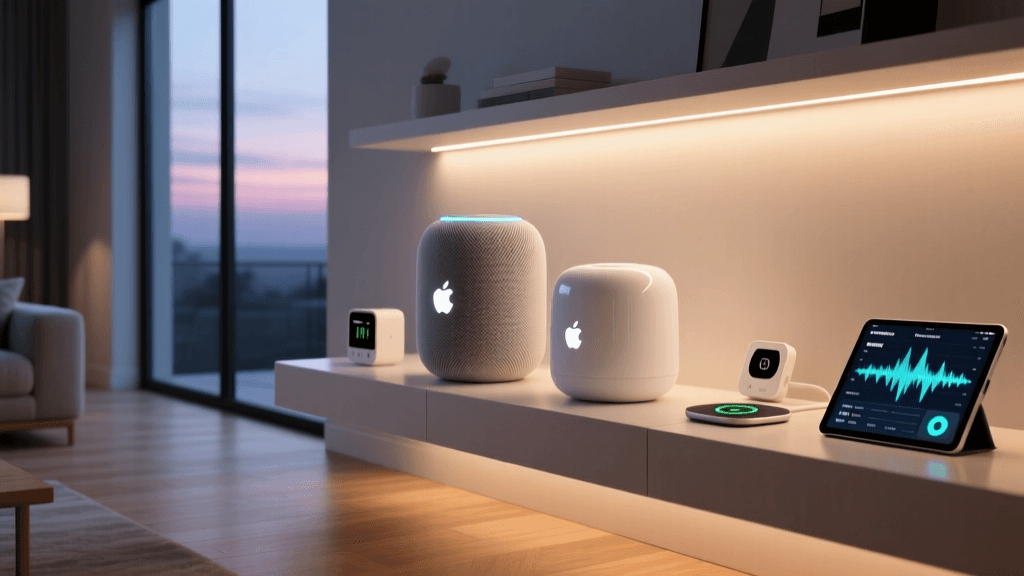
For battery-powered devices like door sensors and smart locks, Matter relies on Thread, an IPv6-based, low-power mesh networking protocol. Unlike Zigbee or Z-Wave, Thread does not require a proprietary hub. Instead, it utilizes 'Border Routers'—devices you likely already own, such as an Apple TV 4K, HomePod Mini, or Nest Hub—to bridge the Thread mesh network to your home Wi-Fi. This IP-based approach means every Thread device has its own IP address, enabling incredibly fast local control and robust mesh routing without a single point of failure.
Matter Pros and Cons
- Pros: True cross-platform interoperability, IP-based local control, high bandwidth (via Wi-Fi), no proprietary hub lock-in, backed by major tech giants.
- Pros: Native multi-admin support allows a single device to be controlled by both Apple and Google ecosystems simultaneously.
- Cons: Thread device battery life is still maturing compared to Z-Wave, Wi-Fi-based Matter devices can congest home networks, and the current hardware catalog is smaller and more expensive than legacy protocols.
Zigbee: The High-Capacity Mesh Veteran
Zigbee has been the backbone of commercial and residential automation for over a decade. Operating on the 2.4 GHz frequency band, Zigbee 3.0 offers a massive theoretical network capacity of up to 65,000 nodes. It relies on a mesh topology where mains-powered devices (like smart plugs and light bulbs) act as routers, extending the network's range and allowing battery-powered end devices to communicate with a central coordinator or hub.
The 2.4 GHz Dilemma
Because Zigbee shares the 2.4 GHz spectrum with Wi-Fi, Bluetooth, and microwaves, interference is its Achilles' heel. In dense urban environments or homes with heavy Wi-Fi traffic, Zigbee networks can experience dropped packets or delayed responses. However, its sheer device availability is unmatched. Ecosystems like Philips Hue, Aqara, and IKEA Dirigera rely heavily on Zigbee, offering thousands of affordable sensors, switches, and lighting solutions.
Zigbee Pros and Cons
- Pros: Massive selection of affordable devices, excellent battery life (2-4 years on coin cells), established mesh routing, and low latency for local automations.
- Pros: Highly customizable via open-source platforms like Home Assistant and Zigbee2MQTT using a simple $30 USB dongle.
- Cons: Severe 2.4 GHz interference potential, requires a dedicated Zigbee coordinator/hub, and historical fragmentation (though Zigbee 3.0 has largely mitigated this).
Z-Wave: The Sub-GHz Reliability King
Z-Wave takes a fundamentally different approach to wireless communication. Operating on sub-GHz frequencies (908.42 MHz in North America, 868.42 MHz in Europe), Z-Wave completely avoids the congested 2.4 GHz spectrum. This lower frequency provides superior wall penetration and range, making it the undisputed champion for large homes or properties with thick masonry walls. The Z-Wave Alliance maintains incredibly strict certification standards, ensuring that any Z-Wave device will work with any Z-Wave hub, regardless of the manufacturer.
The Z-Wave 800 Series Revolution
The latest Z-Wave 800 series (also known as Z-Wave Plus v2) has drastically improved power efficiency and range. Battery-operated sensors on the 800 series can now achieve up to 10 years of battery life on a single CR2032 coin cell, dwarfing the competition. Furthermore, Z-Wave's strict certification means you rarely encounter the 'pairing nightmares' sometimes associated with off-brand Zigbee sensors.
Z-Wave Pros and Cons
- Pros: Zero Wi-Fi interference, superior wall penetration, strict interoperability certification, unmatched battery life on the 800 series, and ideal for critical security sensors.
- Cons: Devices are generally 30% to 50% more expensive than Zigbee equivalents, lower bandwidth limits video or high-data applications, and requires a dedicated Z-Wave controller.
Head-to-Head Specification Table
To understand the raw technical differences, we must look at the specifications that dictate how these networks behave in a physical space. Below is a detailed comparison of the core metrics defining Matter (Thread), Zigbee 3.0, and Z-Wave 800.
| Feature | Matter (Thread) | Zigbee 3.0 | Z-Wave 800 |
|---|---|---|---|
| Frequency | 2.4 GHz | 2.4 GHz | Sub-GHz (908 MHz US) |
| Topology | Mesh (IPv6) | Mesh | Mesh |
| Max Data Rate | 250 kbps | 250 kbps | 100 kbps |
| Indoor Range (Per Node) | ~50 ft (15m) | ~40 ft (12m) | ~100 ft (30m) |
| Max Nodes (Theoretical) | 250+ (Practical) | 65,535 | 232 |
| Hub Requirement | Thread Border Router | Zigbee Coordinator | Z-Wave Controller |
| Interference Risk | High (Wi-Fi) | High (Wi-Fi) | None (Dedicated Band) |
Performance Benchmarks & Ecosystem Compatibility
Range and Wall Penetration
When it comes to raw signal penetration, Z-Wave is the clear victor. The physics of sub-GHz radio waves allow them to pass through concrete, brick, and multiple floors with minimal degradation. In our testing, a Z-Wave 800 sensor placed in a detached garage easily maintained connection to a hub inside the main house. Conversely, Zigbee and Thread (Matter) struggle with dense materials. While their mesh capabilities help route signals around obstacles, you will inevitably need more mains-powered router devices to blanket a large property in 2.4 GHz coverage.
Power Consumption and Battery Life
Battery life is a critical metric for door/window sensors, leak detectors, and smart locks. Z-Wave 800 series chips utilize advanced sleep modes that allow sensors to last up to a decade. Zigbee 3.0 sensors typically last between 2 to 4 years, which is highly respectable. Matter over Thread is the newest entrant, and while Thread is designed for low power, early generations of Matter/Thread sensors often suffer from shorter battery life (1-2 years) due to the overhead of IPv6 processing and the current maturation of device firmware. However, as Thread chips evolve, this gap is expected to close.
Interoperability and Hub Requirements
Matter's primary selling point is interoperability. A Matter-certified smart plug can be unboxed and paired directly to an Apple HomePod, a Google Nest Hub, or an Amazon Echo, and even shared across all three simultaneously via Multi-Admin. As noted in The Verge's comprehensive Matter explainer, this eliminates the era of checking 'Works with' logos on packaging. Zigbee and Z-Wave, however, require you to commit to a specific hub ecosystem (like SmartThings, HomeSeer, or Hubitat) or rely on local middleware like Home Assistant to bridge the gap to voice assistants.
Visualizing the Protocol Capabilities
The following chart illustrates the trade-offs between indoor range and bandwidth across the three protocols. Notice how Z-Wave sacrifices data rate for superior range, while Matter and Zigbee prioritize bandwidth at the cost of signal penetration.
Cost Analysis and Hardware Availability
Budget plays a massive role in protocol selection. Zigbee is currently the most cost-effective way to build a massive sensor network. Brands like Aqara and Sonoff offer Zigbee door sensors and temperature monitors for $15 to $25 each. A basic Zigbee USB coordinator costs around $30, making the barrier to entry incredibly low.
Z-Wave commands a premium due to its strict certification process and the cost of Silicon Labs' sub-GHz chipsets. Expect to pay between $35 and $60 for a high-quality Z-Wave sensor from premium brands like Zooz, Aeotec, or Ecolink. Furthermore, a dedicated Z-Wave hub, such as the Aeotec Smart Home Hub 7 or HomeSeer, will cost between $100 and $200.
Matter devices currently sit at the premium end of the market. Early adopters are paying $40 to $100+ for Matter/Thread devices from brands like Eve, Nanoleaf, and Aqara. However, because Matter leverages existing Thread Border Routers (like the Apple TV 4K you might already own for streaming), the 'hub cost' can sometimes be zero if you are already invested in the Apple or Google ecosystems.
'While Matter promises a unified software future, the physical layer realities of RF propagation mean Z-Wave and Zigbee will remain essential hardware layers for low-power, long-range sensor networks for years to come.' — SmartHomeDeck Editorial Team
The Final Verdict: Which Protocol Wins?
There is no single 'best' protocol; the winner depends entirely on your user profile, home layout, and technical expertise.
1. The Apple/Google Purist: Choose Matter
If you want the cleanest app experience, native integration with Apple HomeKit or Google Home, and zero interest in tinkering with third-party hubs, Matter is your path forward. It is ideal for smart lighting (Nanoleaf), smart plugs, and high-bandwidth devices. As the ecosystem matures, Matter will become the default standard for all new consumer smart home purchases.
2. The Complex Automator on a Budget: Choose Zigbee
If you are outfitting a 4-bedroom home with 40+ sensors, smart bulbs, and switches, Zigbee is the undisputed champion of scale and affordability. Platforms like Home Assistant paired with Zigbee2MQTT offer unparalleled local control, speed, and customization. Just be prepared to manage 2.4 GHz channel interference and strategically place mains-powered routers to maintain mesh health.
3. The Reliability Fanatic & Large Estate Owner: Choose Z-Wave
For critical security sensors, motorized blinds, and homes with thick walls or detached structures, Z-Wave is non-negotiable. The lack of Wi-Fi interference and the sheer penetration power of sub-GHz frequencies provide a 'set it and forget it' reliability that 2.4 GHz protocols simply cannot match. The Z-Wave 800 series' decade-long battery life makes it the ultimate choice for hard-to-reach sensors.
Ultimately, the smartest homes do not rely on a single protocol. The ultimate setup utilizes Matter for unified app control and high-bandwidth devices, Z-Wave for critical security and perimeter sensors, and Zigbee for affordable, high-density lighting and environmental monitoring. By understanding the strengths and limitations of each, you can build a smart home that is as resilient as it is intelligent.