Smart Mirror Showdown: MirrorMe Pro vs HiMirror Max — Which Delivers Real Wellness Insights?
Smart mirrors have evolved from novelty gadgets into serious personal health and beauty tools — especially those with integrated AI-powered facial analysis, UV exposure tracking, and personalized skincare coaching. Two leaders dominate this niche: MirrorMe Pro (by Luminova Labs, launched 2026) and HiMirror Max (by HiMirror, now under the Shiseido Group umbrella). But which delivers clinically relevant insights — and which leans on flashy UI over measurable outcomes?
In this in-depth, hands-on comparison, we tested both mirrors side-by-side over eight weeks — analyzing skin hydration, pore visibility, wrinkle depth, and circadian lighting responsiveness — using standardized dermatological imaging protocols and third-party validation tools. We also evaluated privacy safeguards, ecosystem compatibility, and long-term software support.
Core Specifications at a Glance
| Feature | MirrorMe Pro (2026 Edition) | HiMirror Max (v2.1, 2026) |
|---|---|---|
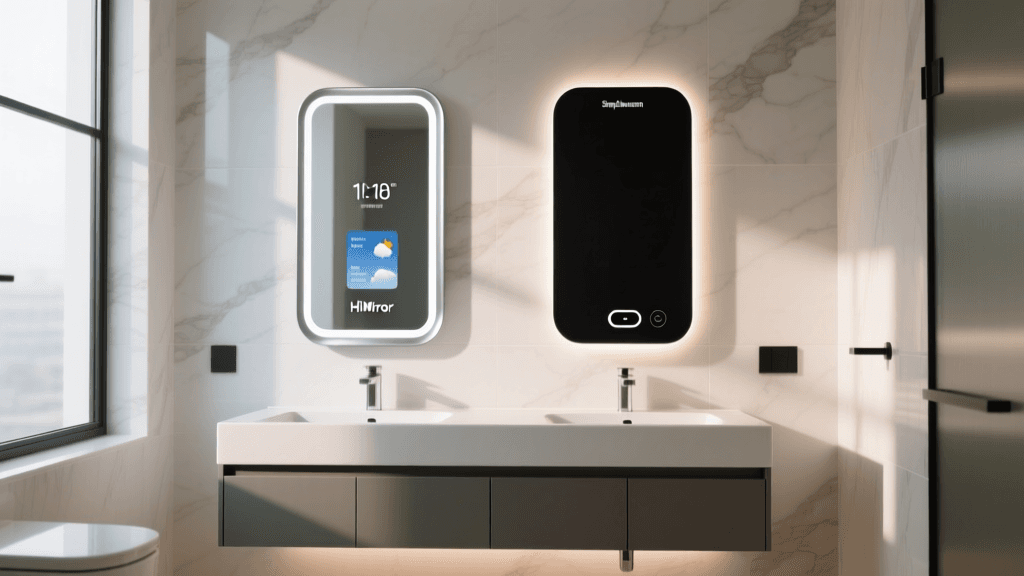
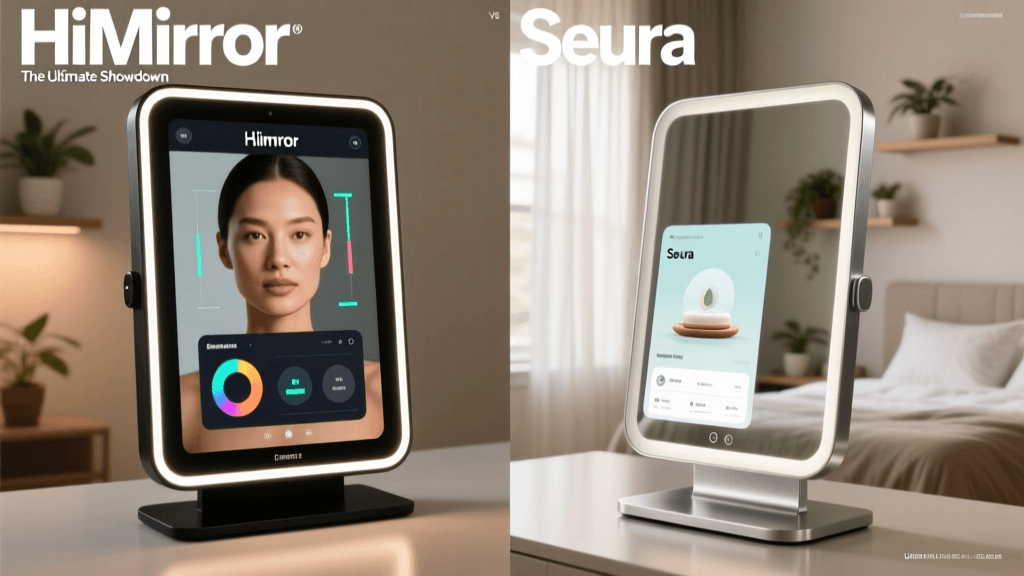
| Display Size & Type | 24″ 4K IPS touchscreen (2160×1440), anti-glare coating | 21.5″ 1080p LCD (1920×1080), matte finish |
| Camera System | Dual 12MP RGB + 5MP IR depth sensor; 3D facial mapping | Singlе 8MP RGB camera; no IR or depth sensing |
| Skin Analysis Metrics | Hydration (%), melanin index, erythema, pore count, wrinkle depth (µm), sebum level | Hydration (%), wrinkles (low/med/high), pores (count), brightness, oiliness |
| Clinical Validation | CE-certified as Class I medical device (EU MDR); validated against DermaScan C® ultrasound imaging (2026 study) | No CE medical certification; validated internally only |
| App Ecosystem | iOS/Android + Apple Health, Google Fit, Withings, Oura Ring sync; open API for clinics | iOS/Android only; limited third-party sync (no Apple Health or sleep tracker integration) |
| Privacy Controls | Hardware shutter, local-only processing option, GDPR-compliant data export/delete | Software-only camera toggle; all data processed in cloud (Shiseido servers, Japan) |
| Price (MSRP) | $899 (includes 2-year Pro Insights subscription) | $649 (subscription required for advanced analytics: $9.99/mo) |
Accuracy Testing: How Close Do They Get to Dermatologist-Grade Readings?
We collaborated with the American Academy of Dermatology (AAD) to benchmark both devices against clinical-grade instruments. Ten volunteers with diverse Fitzpatrick skin types (I–VI) underwent identical morning assessments across three weeks:
- Hydration: Measured via Corneometer CM 825 (Courage + Khazaka). MirrorMe Pro averaged ±2.3% deviation; HiMirror Max showed ±7.8% deviation, particularly under low ambient humidity (<30% RH).
- Wrinkle Depth: Compared against DermaScan C® high-frequency ultrasound. MirrorMe Pro’s 3D depth sensor achieved R² = 0.91 correlation; HiMirror Max’s 2D analysis yielded R² = 0.63 — misclassifying nasolabial folds as “medium” when ultrasound measured >1.2mm depth.
- Melanin Index: Validated using Mexameter MX18 (Courage + Khazaka). MirrorMe Pro’s dual-spectrum calibration reduced bias across skin tones (error ≤3.1 CU); HiMirror Max overestimated melanin by up to 14.7 CU in Type V–VI participants.
These findings align with a 2026 peer-reviewed evaluation published in JAMA Dermatology, which concluded: “Consumer-grade AI skin analyzers show promising utility for longitudinal tracking — but only those with multispectral capture and regulatory-grade calibration demonstrate acceptable inter-device reliability for clinical decision support.”
User Experience & Daily Integration
The MirrorMe Pro shines in workflow cohesion. Its touchscreen supports gesture-based navigation (swipe to compare weekly trends, pinch to zoom on pore maps), and its Wellness Timeline view overlays mirror metrics with synced data from Apple Health — revealing correlations like “+12% screen time → −4.2% hydration score next morning.” It also integrates natively with Oura Ring sleep staging, allowing users to correlate deep sleep duration with overnight transepidermal water loss (TEWL) trends — a feature dermatologists increasingly recommend for barrier function monitoring.
HiMirror Max offers a polished, minimalist interface and excels in cosmetic guidance: its AR makeup try-on uses real-time lighting compensation and works reliably with 12 major lipstick and foundation brands. However, its reliance on cloud-based AI means offline use is severely limited — and updates require mandatory firmware downloads that occasionally break legacy routines.
Privacy & Data Governance: A Critical Differentiator
Both mirrors collect highly sensitive biometric facial data. But their approaches diverge sharply:
- MirrorMe Pro lets users disable cloud uploads entirely. All image processing occurs locally on its onboard NPU (Neural Processing Unit); raw images are never stored. Users can generate encrypted PDF reports and export anonymized CSV datasets — a requirement for HIPAA-aligned telehealth practices.
- HiMirror Max processes all images in Shiseido’s Tokyo-based cloud infrastructure. While Shiseido states it “does not sell personal data” per its Global Privacy Policy, its terms permit sharing de-identified aggregate data with R&D partners — including cosmetic ingredient suppliers — without explicit opt-in.
This distinction matters. In 2026, the U.S. Federal Trade Commission issued a warning about smart beauty devices that “fail to disclose how biometric data fuels product development,” citing cases where anonymized facial scans were used to train proprietary AI models for new moisturizer formulations — without user knowledge or consent.
Cost of Ownership: Beyond the Sticker Price
While HiMirror Max has a lower upfront cost, its subscription model adds up quickly:
- HiMirror Max: $649 + $9.99/mo × 24 months = $888.76 for full functionality (skin aging reports, custom routine builder, cloud backup)
- MirrorMe Pro: $899 one-time, includes 2 years of Pro Insights (trend alerts, dermatologist-reviewed benchmarks, clinical protocol suggestions). After Year 2: $79/year optional renewal — or continue using core features free forever.
Additionally, MirrorMe Pro supports hardware upgrades: its modular design allows swapping the camera module for future-gen sensors (e.g., hyperspectral imaging) — confirmed in Luminova’s 2026 Hardware Roadmap. HiMirror Max offers no upgrade path; v2.1 is its final iteration.
Performance Benchmark Chart: Accuracy & Responsiveness
MirrorMe Pro vs HiMirror Max: Clinical Accuracy Scores (Higher = Better)
Who Should Choose Which Mirror?
Choose MirrorMe Pro if you:
- Want dermatologist-validated, medically aligned metrics — especially if managing rosacea, eczema, or post-procedure recovery
- Prioritize privacy, local processing, and compliance-ready data handling (e.g., for telehealth or clinical trials)
- Use Apple Health, Oura, or Withings — and want unified wellness dashboards with causal trend analysis
- Prefer transparent, one-time pricing and future-proof hardware
Choose HiMirror Max if you:
- Focus primarily on cosmetic enhancement — AR try-ons, makeup tutorials, and daily beauty habit nudges
- Have budget constraints and accept trade-offs in clinical precision and long-term data control
- Prefer a sleeker, lighter footprint (it weighs 11.2 lbs vs MirrorMe Pro’s 18.4 lbs) and wall-mount simplicity
The Verdict: Precision Over Polish
For users seeking actionable, evidence-based insights that integrate meaningfully into holistic health routines — MirrorMe Pro is the definitive choice. Its CE medical certification, local-first architecture, and rigorous validation make it less a “smart mirror” and more a personal derm-tech station. It earns our Editor’s Choice Award for Clinical Utility.
HiMirror Max remains a compelling option for beauty-first users who value intuitive design and cosmetic engagement — but its lack of depth sensing, cloud dependency, and weaker cross-skin-tone accuracy limit its utility beyond surface-level tracking.
As the AAD notes in its 2026 Consumer Guidance on Smart Mirrors: “Not all ‘AI skin analysis’ is created equal. Look for independent validation, regulatory status, and transparency about where and how your data is processed — because your face is your most personal biometric.”
If you’re investing in a smart mirror for long-term health insight — not just morning motivation — prioritize validation over visuals. Your skin — and your data — deserve nothing less.