The Value Proposition of Smart Climate Control
When outfitting a home with smart technology, the thermostat is often the first device consumers upgrade. According to the U.S. Department of Energy, heating and cooling account for nearly half of a typical home's energy consumption. A smart thermostat can drastically reduce this footprint, but the market is heavily split between premium, feature-rich devices and budget-friendly, utilitarian options. In this comprehensive value analysis, we are pitting the gold standard of premium climate control, the Google Nest Learning Thermostat, against the undisputed king of budget smart home gear, the Amazon Smart Thermostat. Is the Nest worth the massive price premium, or does Amazon's affordable offering provide everything the average homeowner actually needs? Let us break down the hardware, software, ecosystem integration, and long-term return on investment.
The Premium Contender: Google Nest Learning Thermostat
The Google Nest Learning Thermostat has long been the poster child for the smart home revolution. Priced typically around $249, it represents a significant upfront investment. However, it earns its premium moniker through a combination of exquisite hardware design, passive machine learning, and deep ecosystem integration. The Nest does not just respond to your commands; it actively learns your routines. Over the first few weeks of use, its internal algorithms track when you wake up, when you leave for work, and what temperatures you prefer at different times of the day. Eventually, it builds an automated schedule that requires zero manual input. Furthermore, the Nest features advanced HVAC health monitoring. It tracks how long your furnace or air conditioner takes to reach the target temperature, alerting you via the app if it detects anomalies that might indicate a failing blower motor or a refrigerant leak. For homes with multiple zones or uneven heating, the Nest supports up to 32 remote temperature sensors, ensuring that the rooms you actually occupy are the ones dictating the climate.
The Budget Contender: Amazon Smart Thermostat
On the other side of the spectrum sits the Amazon Smart Thermostat, usually retailing for around $79. Developed in partnership with Honeywell Home, this device strips away the flashy dials and AI-driven predictive modeling in favor of straightforward, reliable, and highly connected temperature control. It lacks a built-in screen for advanced programming, relying instead on the Alexa app for scheduling and adjustments. Where the Amazon thermostat shines is in its integration with Alexa's "Hunches." If you tell Alexa you are going to sleep, or if your Echo device detects that the house is empty, the thermostat can automatically adjust the climate. It is a fundamentally different approach to smart automation: rather than the thermostat learning your habits independently, it leans on the broader Alexa ecosystem to trigger climate routines. While it lacks remote sensor support and HVAC diagnostic alerts, it covers the fundamental bases of smart climate control, including remote access, geofencing, and voice commands, at a fraction of the cost.
Head-to-Head Specifications
| Feature | Google Nest Learning Thermostat | Amazon Smart Thermostat |
|---|---|---|
| Typical Price | $249 | $79 |
| Display | Full-color LCD with Farsight | Hidden LED matrix, touch interface |
| AI Learning | Native Auto-Schedule | Relies on Alexa Hunches |
| Remote Sensors | Yes (up to 32) | No |
| HVAC Monitoring | Advanced system diagnostics | Basic filter change reminders |
| Ecosystem | Google Home, Matter, Thread | Amazon Alexa (No HomeKit/Google) |
| C-Wire Required | Recommended (Extender included) | Strictly Required |
Design and Hardware Quality
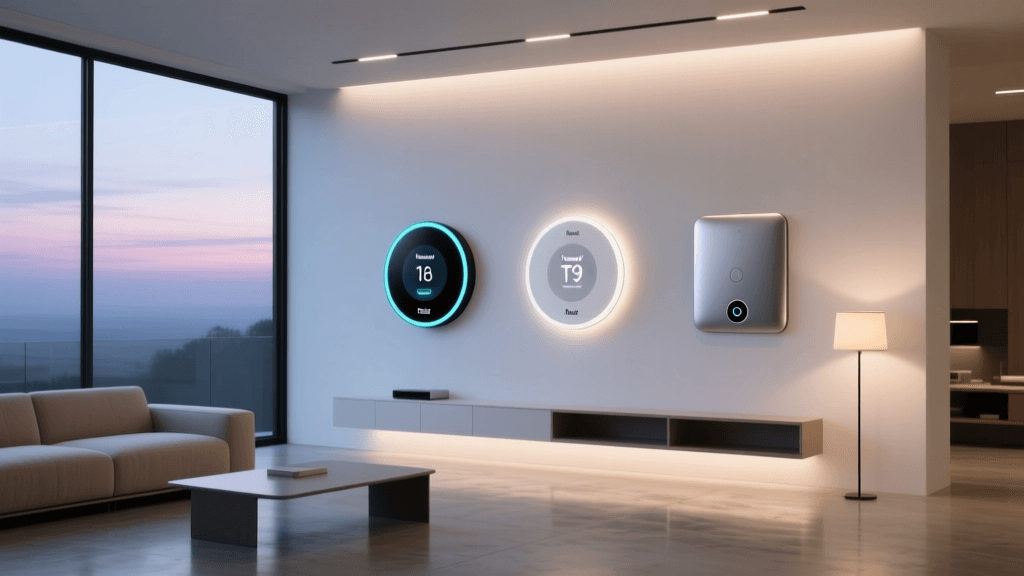
The physical presence of a thermostat matters. It sits on your wall, a constant visual anchor in high-traffic areas like hallways and living rooms. The Nest Learning Thermostat is a triumph of industrial design. Its iconic stainless steel ring acts as a physical dial, offering a satisfying, weighted click as you turn it to adjust the temperature. The high-resolution screen features "Farsight," which wakes up and displays the time, weather, or current temperature when it detects you walking into the room from across the hall. It feels like a luxury timepiece for your wall. Conversely, the Amazon Smart Thermostat adopts a minimalist, unassuming aesthetic. It is a flat, white plastic square with a capacitive touch interface and a hidden LED matrix display that only illuminates when you approach or touch it. While it blends into the background nicely, it lacks the premium tactile feedback of the Nest. The Amazon device is designed to be forgotten, whereas the Nest is designed to be admired.
Ecosystem Lock-In and Smart Features
Ecosystem lock-in is a critical factor in this comparison. The Nest is deeply embedded in the Google Home universe. It supports Matter and Thread, making it a future-proof hub for other smart devices. It integrates seamlessly with Google Assistant, Nest cameras, and Google's presence detection algorithms. If you have a Nest Hub or use Google Maps for location services, the geofencing capabilities are incredibly accurate, ensuring your HVAC system powers down the moment the last person leaves the house. Amazon's device, naturally, demands allegiance to Alexa. It requires the Alexa app for initial setup and advanced scheduling. If your home is already populated with Echo Dots, Ring doorbells, and Blink cameras, the Amazon Smart Thermostat slots in perfectly. You can create complex Alexa Routines, such as having the thermostat drop the temperature when your Ring Alarm is armed in "Away" mode. However, if you prefer Apple HomeKit or Google Home, the Amazon thermostat is entirely incompatible, severely limiting its long-term flexibility for households that mix and match smart home brands.
Energy Savings and Return on Investment
The primary justification for any smart thermostat is energy savings. The EPA ENERGY STAR program notes that certified smart thermostats can save homeowners roughly 8% on heating and cooling bills annually. But how does the ROI compare between a $249 premium device and a $79 budget device? The Nest's advanced learning algorithms and remote sensors generally yield higher absolute energy savings because it optimizes run-times more efficiently and prevents heating or cooling empty rooms. However, the Amazon Smart Thermostat's drastically lower entry price means it achieves a positive return on investment much faster. If the Amazon device saves you $60 a year, it pays for itself in just over a year. The Nest might save you $90 a year, but it takes nearly three years to recoup the initial hardware cost. For budget-conscious consumers or renters who might move in a few years, the Amazon thermostat offers superior immediate financial value.
Installation and HVAC Compatibility
Both thermostats require a C-wire (common wire) for continuous power, though the Nest famously includes a power extender kit in the box for older homes lacking one. The Amazon Smart Thermostat strictly requires a C-wire, meaning homes with older, simpler HVAC systems might face an additional $100 to $150 electrician bill to run a new wire or install an adapter. Neither device natively supports high-voltage baseboard heaters without specific third-party adapters. The Nest's HVAC health monitoring also adds a layer of preventative maintenance value. By alerting you to a struggling compressor before it completely dies in the middle of a summer heatwave, the Nest can potentially save you thousands in emergency repair costs, a feature the budget Amazon device completely lacks. However, for standard 24V central air systems with an existing C-wire, the Amazon device offers a remarkably fast, 15-minute app-guided installation process that is just as user-friendly as the Nest.
The Verdict: Which Should You Buy?
Choosing between these two devices ultimately comes down to your budget, your existing smart home ecosystem, and how long you plan to stay in your current home.
Buy the Google Nest Learning Thermostat if:
- You are a Premium Upgrader: You value beautiful industrial design, a high-resolution display, and tactile controls that elevate the look of your home.
- You have a Multi-Zone Home: You need remote temperature sensors to balance out uneven heating and cooling across different floors or rooms.
- You want Preventative Maintenance: You value the HVAC health monitoring alerts that can warn you of system failures before they become expensive emergencies.
- You use Google Home: You are already invested in Google Assistant, Nest cameras, and Google's superior geofencing capabilities.
Buy the Amazon Smart Thermostat if:
- You are a Renter or First-Time Buyer: You want the energy-saving benefits of a smart thermostat but need to keep upfront hardware costs as low as possible to achieve a fast ROI.
- You are an Alexa Loyalist: Your home is already filled with Echo devices, Ring alarms, and Alexa routines, making the "Hunches" integration incredibly convenient.
- You prefer Minimalist Design: You want a device that blends into the wall and doesn't draw attention to itself with bright screens or shiny metal rings.
- You have a Standard HVAC Setup: Your system already has a C-wire and you do not require remote sensors to manage your home's climate effectively.
In the battle of budget versus premium, the Amazon Smart Thermostat wins on pure, undeniable financial value and rapid return on investment. However, the Google Nest Learning Thermostat remains the undisputed champion of holistic home climate management, offering diagnostic insights and hardware elegance that justify its premium price tag for the right homeowner.