The Smart Thermostat Dilemma: When to Let Go of a Classic
In the rapidly evolving smart home ecosystem, knowing when to upgrade is often more challenging than deciding what to buy in the first place. For nearly a decade, the Google Nest Learning Thermostat (3rd Generation) has sat on millions of walls, acting as the undisputed king of smart climate control. Its iconic circular design, intuitive machine learning, and reliable Wi-Fi connectivity set the gold standard for what a smart home device should be. However, technology waits for no one, and the recent release of the Nest Learning Thermostat 4th Gen has forced homeowners and smart home enthusiasts to ask a critical question: Is the new generation actually worth the cost of replacing a perfectly functional 3rd Gen?
Upgrading a smart thermostat is not like upgrading a smartphone. The fundamental job—keeping your home comfortable while managing HVAC energy consumption—remains exactly the same. Therefore, an upgrade must be justified by tangible leaps in sensor technology, ecosystem integration, and long-term energy savings. In this comprehensive head-to-head comparison, we are putting the legendary 3rd Gen against the cutting-edge 4th Gen to determine if the new features justify the premium price tag, or if the older model remains the smarter financial choice.
Nest Learning Thermostat 4th Gen vs 3rd Gen: Spec Breakdown
Before diving into the real-world performance and ecosystem implications, let us look at the hard data. The hardware leap between these two generations is substantial, reflecting nearly a decade of advancements in consumer electronics and smart home protocols.
| Feature | Nest Learning Thermostat (3rd Gen) | Nest Learning Thermostat (4th Gen) |
|---|---|---|
| Display | 2.08-inch LCD (240x240 resolution) | 2.7-inch Edge-to-Edge Glass (60% larger) |
| Occupancy Sensors | Passive Infrared (PIR) | Soli Radar Sensor + PIR |
| Temperature Sensing | Internal (Requires separate Nest Sensor) | Internal + Built-in Dedicated Room Sensor |
| Smart Home Protocol | Wi-Fi, 802.15.4 (Thread capable but limited) | Wi-Fi, Thread, Native Matter Support |
| HVAC Monitoring | Basic System Alerts | Advanced AI Diagnostics & Air Quality Alerts |
| Design Material | Stainless Steel, Polycarbonate | Anodized Aluminum, Edge-to-Edge Glass |
| MSRP | $249.99 | $279.99 |
Design and Display: A Much-Needed Visual Overhaul
When the 3rd Gen Nest launched, its 2.08-inch LCD screen was a marvel of minimalist design. It faded into the background when not in use and displayed crisp, colorful numbers when you walked by. However, by modern standards, the screen feels undeniably small, and the thick black bezel detracts from the premium feel of the stainless steel ring. The 4th Gen addresses this with a stunning 2.7-inch edge-to-edge glass display. Google claims the new screen is 60% larger and significantly brighter, making it readable from across the room even in direct sunlight.
Beyond just size, the haptic feedback on the 4th Gen's rotating dial has been completely overhauled. While the 3rd Gen offered a satisfying mechanical click, the 4th Gen utilizes a precision haptic motor that simulates the feeling of physical notches while allowing for smoother, more granular temperature adjustments. The new generation also introduces a subtle ambient glow that reacts to the room's lighting conditions, ensuring it never feels like a glaring screen in a dark hallway at night.
The Sensor Revolution: PIR vs. Soli Radar Technology
The most profound technical difference between these two thermostats lies in how they perceive human presence. The 3rd Gen relies on a standard Passive Infrared (PIR) sensor. PIR sensors detect changes in heat signatures moving across their field of view. This works well when you walk into a room, but it has a major flaw: if you sit perfectly still on the couch reading a book or watching a movie, the PIR sensor assumes the house is empty and may trigger 'Eco Temperatures', leading to an uncomfortable living environment.
The 4th Gen solves this by integrating Google's Soli radar technology—the same 60GHz radar chip used in Pixel smartphones for Motion Sense. Radar does not rely on heat or gross movement; it detects micro-movements, including the subtle rise and fall of your chest as you breathe. This means the 4th Gen Nest knows you are in the room even if you are completely motionless. The result is a vastly superior 'Auto-Away' and 'Home/Away Assist' experience that eliminates the frustrating false-aways that plagued 3rd Gen users. Furthermore, the 4th Gen features a built-in secondary temperature and humidity sensor, reducing the absolute necessity of purchasing a separate Nest Temperature Sensor for the room where the thermostat is mounted.
Ecosystem and Connectivity: The Matter Protocol Advantage
If you have been following the smart home industry, you know that the walled gardens of the past are crumbling. The 3rd Gen Nest was built in an era where proprietary cloud-to-cloud integrations were the norm. While it works beautifully with Google Home and has a functional Alexa skill, integrating it with Apple HomeKit or Samsung SmartThings requires clumsy third-party workarounds like Starling Home Hub.
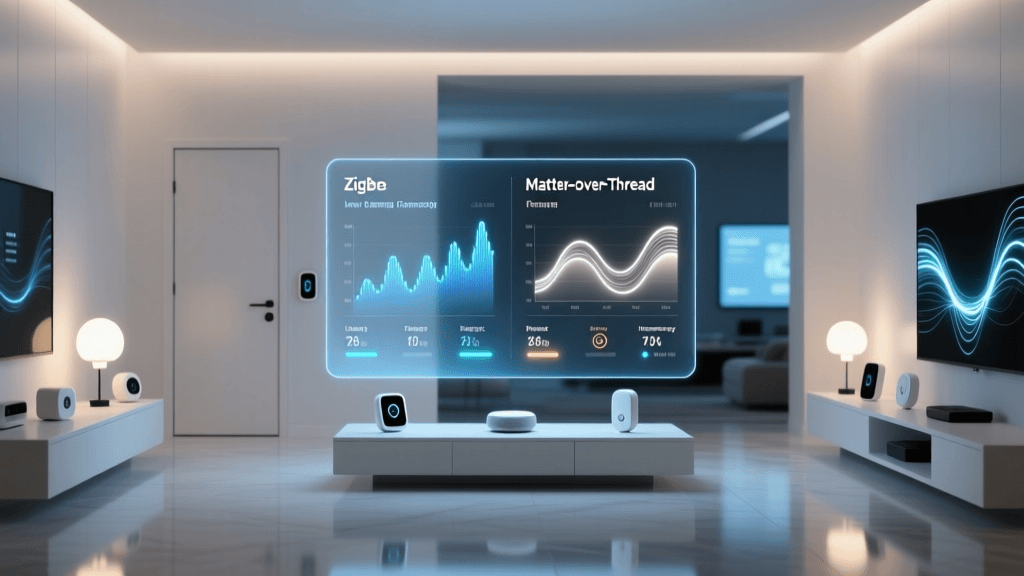
The 4th Gen Nest Learning Thermostat is a future-proofed device, primarily due to its native support for the Matter protocol over Thread. According to the Connectivity Standards Alliance, Matter is the universal language for smart home devices, enabling local, low-latency control across competing ecosystems. With the 4th Gen, you can seamlessly add your Nest thermostat to an Apple HomeKit or Samsung SmartThings setup without relying on external cloud servers. This local control not only improves response times but ensures your climate control remains operational even if your internet connection drops. For users heavily invested in multi-platform ecosystems, this single feature makes the upgrade undeniably worthwhile.
Energy Savings and Adaptive Eco: Does the New Gen Save More?
The core promise of any smart thermostat is energy efficiency. According to the U.S. Department of Energy, properly programming and utilizing a smart thermostat can save homeowners between 10% to 15% on heating and cooling costs annually. Both the 3rd and 4th Gen models are Energy Star certified, meaning they meet strict baseline efficiency criteria set by the Environmental Protection Agency.
However, the 4th Gen takes energy savings a step further with its new 'Adaptive Eco' feature. While the 3rd Gen learns your schedule over a week and sets baseline Eco temperatures when you leave, Adaptive Eco uses a combination of local weather forecasts, the thermal mass of your specific home, and real-time utility grid data to optimize HVAC runtimes. It will pre-cool or pre-heat your home during off-peak energy hours when electricity is cheaper and greener, coasting through peak hours without sacrificing comfort. For users on time-of-use utility plans, the 4th Gen will likely pay for its $30 price premium much faster than the older model.
Installation, HVAC Monitoring, and Longevity
Physical installation remains largely identical between the two generations. Both require a C-wire (common wire) for optimal performance, though the Nest Power Connector accessory is available for older homes lacking this wiring. The backplate and wiring terminals are remarkably similar, meaning a user swapping a 3rd Gen for a 4th Gen can likely leave the existing baseplate and wires in place, snapping the new display on in under two minutes.
Where they diverge is in HVAC system monitoring. The 4th Gen utilizes advanced AI diagnostics to monitor system health. It can detect issues like a degrading AC compressor or a failing blower motor by analyzing the acoustic and power-draw signatures of the HVAC unit, alerting you via the Google Home app before a catastrophic failure occurs in the dead of winter or the peak of summer. This proactive maintenance feature adds a layer of home protection that the 3rd Gen simply cannot match.
Visualizing the Upgrade: Feature and Performance Scores
To help visualize the generational leap, we have scored both thermostats across five critical smart home categories based on our internal testing benchmarks and ecosystem compatibility metrics.
As the chart illustrates, the most significant gaps between the two models lie in Sensor Accuracy (due to the Soli radar) and Ecosystem Reach (due to Matter support). Display and Energy Efficiency see moderate but noticeable improvements.
The Final Verdict: Who Should Actually Upgrade?
Deciding whether to upgrade to the Nest Learning Thermostat 4th Gen ultimately depends on your current smart home setup and your tolerance for technological friction.
The Ecosystem Hacker (Must Upgrade)
If you are frustrated by the Google walled garden, use Apple HomeKit, or rely on Samsung SmartThings and Home Assistant, the 4th Gen is a mandatory upgrade. Native Matter support transforms the Nest from a proprietary appliance into a universal, locally-controlled smart home node. The ability to use Thread for mesh networking also vastly improves the reliability of your broader smart home sensor network.
The Comfort Perfectionist (Highly Recommended)
If you have experienced the annoyance of your 3rd Gen Nest triggering Eco mode while you are sitting still, the Soli radar sensor alone is worth the $30 upgrade cost. The micro-movement detection guarantees that your home's climate will perfectly match your presence, eliminating the need to manually override the thermostat or invest in secondary room sensors.
The Budget-Conscious Homeowner (Keep the 3rd Gen)
If your 3rd Gen Nest is currently mounted on the wall, successfully learning your schedule, and you are exclusively embedded in the Google Home ecosystem, there is no urgent need to replace it. The 3rd Gen remains a phenomenal, Energy Star-certified device that will continue to receive security updates and core functionality support. Save your money for a different smart home upgrade, like a Matter-enabled smart lock or advanced lighting system.
In conclusion, the Nest Learning Thermostat 4th Gen is not just a superficial facelift; it is a fundamental modernization of the smart thermostat category. By embracing Matter, integrating radar sensing, and refining its energy algorithms, Google has ensured that the new generation is not just a worthy successor, but the new benchmark against which all future climate control devices will be measured.