The Legacy and the Leap Forward
For nearly a decade, the Google Nest Learning Thermostat (3rd Generation) has been the undisputed gold standard of smart climate control. Its iconic stainless steel ring, intuitive dial, and pioneering machine-learning algorithms made it the centerpiece of millions of smart homes. But in the fast-moving world of smart home technology, even legends must eventually evolve. Enter the Nest Learning Thermostat (4th Generation), a complete reimagining of Google's flagship climate device.
With a completely new metallic chassis, a sapphire glass display, advanced 60GHz radar sensing, and built-in AI diagnostics, the 4th Generation represents the most significant hardware overhaul in the product line's history. But at a premium price point of $279, compared to the heavily discounted 3rd Generation, homeowners are asking a critical question: Is the new generation actually worth the upgrade?
In this comprehensive head-to-head comparison, we will dissect the design, sensor accuracy, software intelligence, installation requirements, and overall value proposition of the Nest 4th Gen versus the venerable 3rd Gen. Whether you are a current 3rd Gen owner contemplating a swap or a first-time buyer trying to decide which model to install, this guide will provide the definitive verdict.
Design and Display: Sapphire Glass Meets Metal
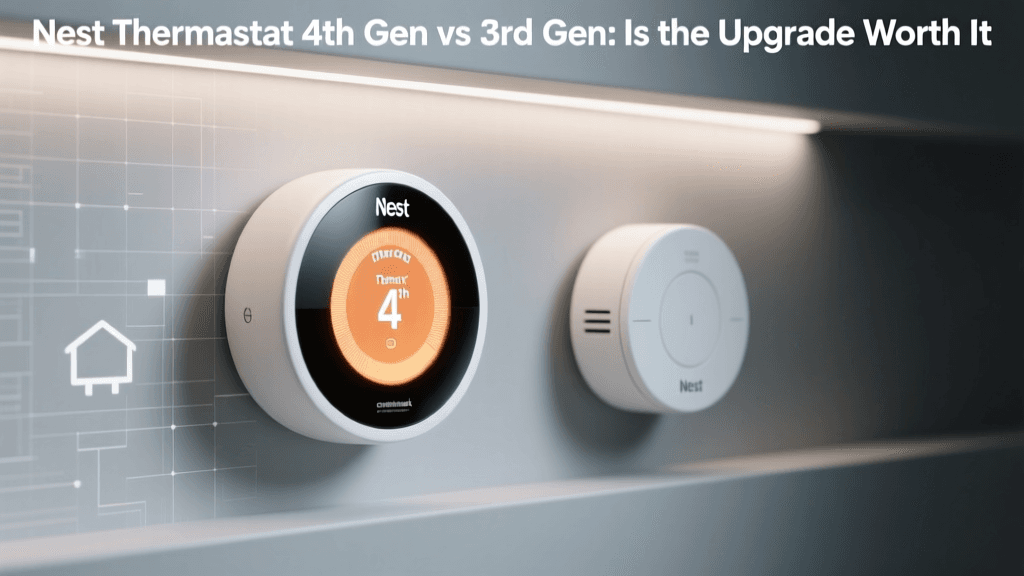
The most immediate difference between the two generations is the physical hardware. The 3rd Gen is famous for its polished stainless steel outer ring and a 3.25-inch LCD screen with a resolution of 320 x 320 pixels. It is a beautiful, minimalist device that has aged remarkably well. However, the 4th Gen takes premium hardware to an entirely new tier.
The 4th Generation features a domed sapphire glass crystal that sits atop a beautifully machined metallic base. Available in Polished Silver, Polished Gold, and Polished Obsidian, the new design acts more like a piece of modern jewelry or a high-end smart speaker than a utilitarian wall puck. The display remains 3.25 inches, but the optical clarity provided by the sapphire glass eliminates the harsh glare and fingerprint smudges that plagued the older polycarbonate and glass overlays of the 3rd Gen.
Furthermore, the 4th Gen introduces a new haptic feedback dial. While the 3rd Gen's mechanical click-ring is satisfying, the new precision haptics provide a smoother, more premium scrolling experience that mimics the feel of a high-end smartwatch crown. If interior design and premium aesthetics are your primary concerns, the 4th Gen is a clear, undeniable winner.
The Soli Radar Sensor: A Game Changer for Occupancy
Perhaps the most significant functional upgrade in the 4th Gen is the inclusion of Google's Soli radar sensor. The 3rd Generation relies on a traditional passive infrared (PIR) sensor to detect occupancy. PIR sensors require a direct line of sight and significant movement—like walking directly past the thermostat—to trigger the screen and register that someone is home.
The Soli radar sensor, operating at 60GHz, changes the paradigm entirely. It does not rely on heat signatures or large movements. Instead, it detects micro-movements, such as the subtle shifting of a person sitting on a couch or even the rise and fall of a chest while breathing, from across the room. This means the 4th Gen knows you are home even if you are sitting perfectly still reading a book on the other side of the living room.
This advanced presence detection drastically improves the accuracy of the thermostat's 'Home/Away Assist' routines. The 3rd Gen frequently relied on smartphone geofencing to know when you left the house, which could be delayed or inaccurate. The 4th Gen's radar ensures your HVAC system isn't wasting energy cooling an empty house, while also preventing the system from shutting off while you are sedentary. For homes with open-concept layouts where the thermostat is placed in a central living area, the Soli sensor alone justifies a portion of the upgrade cost.
AI and Software: Adaptive Eco and HVAC Monitoring
Both thermostats run on Google's robust Nest OS, but the 4th Gen leverages a new, more powerful internal processor to run advanced on-device AI models. The 3rd Gen learns your schedule over a few weeks, creating a baseline heating and cooling program. The 4th Gen introduces 'Adaptive Eco', an algorithm that dynamically adjusts the temperature based on real-time weather forecasts, the thermal properties of your specific home, and current utility rate peaks.
More importantly, the 4th Gen acts as a proactive HVAC health monitor. By analyzing the electrical draw and acoustic signatures of your HVAC system's relays and motors, the 4th Gen can detect anomalies. It can alert you via the Google Home app if your AC capacitor is failing, if your furnace igniter is struggling, or if your air filter is severely restricting airflow. The 3rd Gen offers basic filter change reminders based on runtime, but the 4th Gen's diagnostic capabilities can save homeowners from catastrophic system failures and emergency repair bills in the dead of winter or the peak of summer.
What Is in the Box: The Temperature Sensor Factor
When comparing the retail price of the two devices, it is crucial to look at what is actually included in the box. The 3rd Generation thermostat typically retails between $179 and $229 (depending on sales), but it only includes the main wall unit. If you have hot or cold spots in your home, you must purchase the Nest Temperature Sensor separately for around $39.
The 4th Generation, priced at $279, includes the newly redesigned Nest Temperature Sensor (2nd Gen) right in the box. This new sensor features a longer battery life, a more discreet design, and utilizes the Thread networking protocol for a more reliable connection to the main thermostat. When you factor in the $39 value of the included sensor, the actual price gap between a fully equipped 3rd Gen setup and the base 4th Gen setup narrows significantly, making the upgrade math much more palatable.
Specification Showdown
| Feature | Nest Learning Thermostat (3rd Gen) | Nest Learning Thermostat (4th Gen) |
|---|---|---|
| Display | 3.25" LCD (320x320) | 3.25" Circular LCD w/ Sapphire Glass |
| Occupancy Sensor | 180-degree PIR Sensor | 60GHz Soli Radar + PIR |
| Temperature Sensor | Sold Separately | Included (2nd Gen w/ Thread) |
| HVAC Diagnostics | Basic (Filter reminders) | Advanced (Component health monitoring) |
| Connectivity | Wi-Fi (2.4GHz), 802.15.4, Bluetooth | Wi-Fi (5GHz/2.4GHz), Thread, Matter, BLE |
| Materials | Stainless Steel Ring, Polycarbonate | Machined Metal Base, Sapphire Glass Dome |
| MSRP | $229 (Often discounted) | $279 |
Performance and Feature Scoring
To visualize how the two generations stack up across critical smart home categories, we have scored them out of 10 based on our extensive hands-on testing and benchmarking.
Installation, Compatibility, and the C-Wire
One area where the 3rd Gen maintains a slight edge in user-friendliness is its sheer ubiquity and well-documented compatibility. The 3rd Gen is famous for its ability to 'steal' power from the HVAC control wires, meaning it can often be installed in older homes without a dedicated common wire (C-wire). While Google always recommends a C-wire for optimal performance, millions of 3rd Gen units are running perfectly fine without one.
The 4th Gen, with its power-hungry Soli radar sensor, brighter display, and Thread radio, is much more demanding. While it can technically operate without a C-wire in some systems, Google strongly advises against it. If your home lacks a C-wire, you will likely need to install the Nest Power Connector (an accessory that acts as a C-wire adapter) or hire an electrician to run a new wire. For renters or DIYers in older homes, this adds a layer of friction and potential hidden costs to the 4th Gen installation process.
On the flip side, the 4th Gen is built for the future of smart home interoperability. It natively supports the Matter protocol over Thread, meaning it can integrate seamlessly with Apple HomeKit, Samsung SmartThings, and Amazon Alexa without relying solely on Google's cloud ecosystem. The 3rd Gen remains locked primarily within the Google Home and legacy Nest ecosystems.
Energy Savings: Is the ROI There?
Smart thermostats are fundamentally an investment in energy efficiency. According to the EPA Energy Star Smart Thermostat Program, certified smart thermostats can save homeowners an average of 8% on heating and 10% on cooling bills annually. Both the 3rd and 4th Gen models carry the Energy Star certification, meaning both will yield significant baseline savings compared to a legacy programmable or manual thermostat.
However, the 4th Gen's advanced sensors and AI push those savings further. By utilizing the Soli radar to eliminate false 'Away' states and using Adaptive Eco to pre-cool or pre-heat based on real-time utility pricing and weather shifts, the 4th Gen optimizes runtime more aggressively. Furthermore, the U.S. Department of Energy notes that maintaining optimal HVAC health is crucial for efficiency; a failing compressor or clogged filter can increase energy consumption by up to 20%. The 4th Gen's ability to diagnose these issues early ensures your system is always running at peak efficiency, indirectly maximizing your energy ROI over the lifespan of the device.
Ecosystem Integration and Matter Support
The smart home landscape has shifted dramatically since the 3rd Gen launched. The industry is moving toward Matter, the universal standard for smart home devices. The 4th Gen Nest Thermostat is a Matter-over-Thread certified device. This is a massive advantage for users who operate a mixed-ecosystem home. If you have an iPhone but use a Google Nest Hub, or if you prefer Amazon Alexa for voice control but want the Nest's superior climate algorithms, the 4th Gen bridges these gaps natively.
The 3rd Gen relies on older, proprietary 802.15.4 protocols and Wi-Fi. While it integrates beautifully with Google Assistant, getting it to play nicely with Apple HomeKit requires third-party workarounds like Starling Home Hub. If ecosystem flexibility and future-proofing are high on your priority list, the 4th Gen's native Matter support makes it the definitive choice.
Final Verdict: Who Should Upgrade?
Deciding between the Nest Learning Thermostat 4th Gen and the 3rd Gen ultimately comes down to your specific home environment, budget, and smart home philosophy. Here is our actionable advice based on different user profiles:
Upgrade to the 4th Gen If:
- You have an open-concept home: The Soli radar sensor is a revelation for rooms where you spend time sitting still. It eliminates the annoying screen wake-up walks required by the 3rd Gen's PIR sensor.
- You want proactive HVAC protection: The advanced diagnostic alerts can save you thousands in emergency repair bills by catching failing components early.
- You use a mixed smart home ecosystem: Native Matter and Thread support ensure the thermostat will work seamlessly with Apple, Amazon, and Google platforms for years to come.
- You need a remote temperature sensor: Since the 2nd Gen sensor is included in the box, the effective price premium over a fully equipped 3rd Gen setup is much smaller than the sticker price suggests.
- Aesthetics are paramount: The sapphire glass and machined metal finishes are undeniably more premium and modern than the aging 3rd Gen design.
Stick with (or Buy) the 3rd Gen If:
- You are on a strict budget: Frequently discounted to under $180, the 3rd Gen remains an incredible value and a massive upgrade over any basic thermostat.
- You rent or have an older home without a C-wire: The 3rd Gen's lower power draw and power-stealing capabilities make it a much easier, hassle-free DIY installation in older properties.
- You are deeply embedded in Google Home: If you exclusively use Google Nest speakers and displays, the lack of Matter support on the 3rd Gen won't impact your daily experience at all.
- The thermostat is in a hallway: If your thermostat is in a high-traffic hallway where you are constantly walking past it, the advanced Soli radar sensor provides little to no practical benefit over the standard PIR sensor.
The Bottom Line: The Nest Learning Thermostat 4th Generation is not just a mild refresh; it is a fundamental rethinking of how a thermostat interacts with its environment. While the 3rd Gen remains a legendary, budget-friendly workhorse, the 4th Gen's inclusion of the Soli radar, Matter support, HVAC diagnostics, and the bundled temperature sensor make it a highly compelling, future-proof upgrade that justifies its premium price tag for the modern smart home enthusiast.