The Flagship Smart Speaker Landscape
The smart speaker market has evolved dramatically over the last decade. What began as simple voice-activated novelty gadgets designed to set timers and play basic radio streams has transformed into a battleground for high-fidelity audio and central smart home automation. Today, the premium tier of smart speakers serves a dual purpose: acting as an audiophile-grade listening device and the neural hub for your connected home. For consumers, the choice is no longer just about which voice assistant is the smartest; it is about acoustic engineering, ecosystem lock-in, privacy architectures, and protocol support.
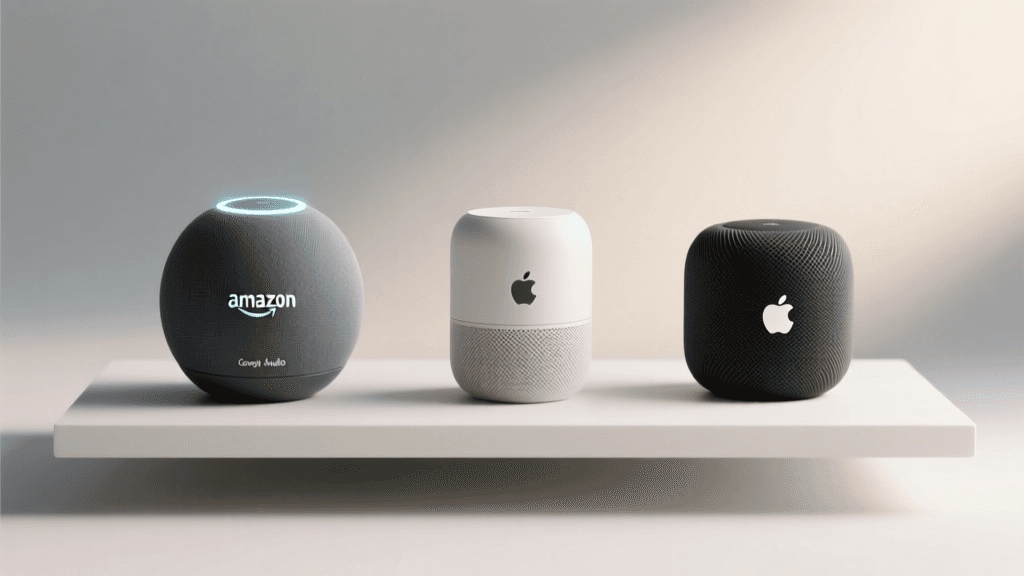
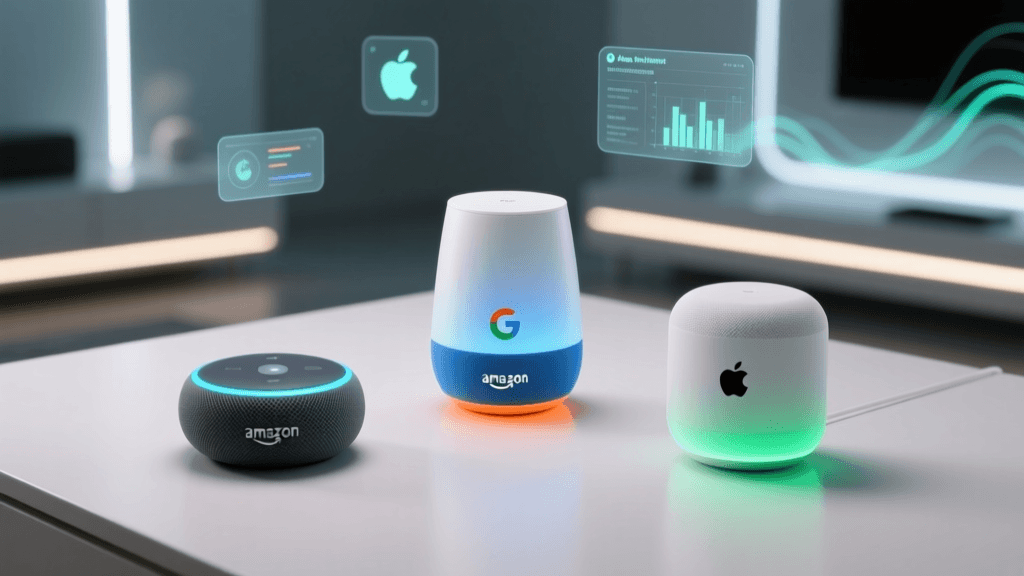
In this comprehensive comparison, we are putting the three undisputed heavyweights of the premium smart speaker market head-to-head: the Amazon Echo Studio, the Apple HomePod (2nd Generation), and the Google Nest Audio. Each device represents the pinnacle of its respective company's vision for the future of ambient computing and home entertainment. Whether you are deeply entrenched in the Apple ecosystem, rely on the vast third-party integrations of Alexa, or prefer the contextual intelligence of Google Assistant, this guide will dissect the hardware, software, and smart home capabilities of these flagship devices to help you make the ultimate purchasing decision.
Hardware and Acoustic Engineering
When you step into the premium price bracket, you expect premium sound. The days of tinny, bass-less smart speakers are long gone, replaced by sophisticated driver arrays and real-time room correction algorithms.
Amazon Echo Studio
The Echo Studio is Amazon's most ambitious audio project to date. It features a massive five-driver setup, including a forward-facing 1-inch tweeter, two mid-range drivers, a side-firing tweeter for spatial audio effects, and a downward-firing 5.25-inch woofer with a bass port. This configuration allows the Studio to produce a genuinely room-filling sound with deep, resonant bass that outpaces its competitors. Furthermore, the Studio supports Dolby Atmos and 360 Reality Audio, utilizing built-in microphones to continuously analyze the acoustics of your room and automatically tune its audio output for optimal fidelity. For bass enthusiasts, the inclusion of a 3.5mm line-out and built-in smart home hub makes it a versatile centerpiece.
Apple HomePod (2nd Generation)
Apple approaches audio with a philosophy rooted in computational acoustics. The 2nd Generation HomePod utilizes a custom-engineered 4-inch high-excursion woofer and a powerful motor to deliver astonishingly deep bass for its relatively compact cylindrical footprint. It is surrounded by five horn-loaded tweeters, each with its own neodymium magnet, controlled by individual amplifiers. Apple's Spatial Audio with Dolby Atmos support is nothing short of magical, using beamforming technology to project direct and ambient audio precisely around the room. The HomePod also features room-sensing technology that uses its microphones to detect nearby walls, reflecting sound off them to create a wider, more immersive soundstage. According to Apple's official specifications, the device leverages the S7 chip for advanced system sensing and real-time audio tuning.
Google Nest Audio
The Google Nest Audio takes a more traditional, albeit highly refined, approach to speaker design. It houses a 75mm mid-woofer and a 19mm tweeter, delivering a warm, balanced sound profile that excels in vocal clarity and midrange presence. While it lacks the dedicated spatial audio drivers of the Echo Studio or the computational wizardry of the HomePod, the Nest Audio features Media EQ and Ambient IQ, which adjust the sound profile based on the type of media playing and the ambient noise levels in your room. Its true strength lies in stereo pairing; two Nest Audios linked together create a remarkably wide and detailed stereo image that rivals dedicated bookshelf speakers.
Flagship Smart Speaker Performance Benchmark
Voice Assistant Intelligence: Alexa vs. Siri vs. Google Assistant
The brain behind the brawn is just as critical as the audio hardware. The underlying voice assistants dictate how seamlessly these devices integrate into your daily routines.
Amazon Alexa (Echo Studio)
Alexa remains the undisputed champion of third-party integrations and smart home routines. With tens of thousands of skills and native support for virtually every smart home brand on the market, Alexa's versatility is unmatched. The Echo Studio's seven-microphone array ensures that voice pickup is flawless, even when Dolby Atmos tracks are blasting at high volumes. Alexa's routines are highly customizable, allowing for complex, multi-step conditional logic that power users will appreciate.
Apple Siri (HomePod)
Siri on the HomePod is optimized for privacy and ecosystem fluidity. While it may lack the vast third-party skill library of Alexa, Siri excels at natural language processing, context retention, and executing complex queries related to Apple services. With the integration of the S7 chip, more Siri requests are processed on-device, drastically reducing latency and enhancing privacy. If your home runs on Apple TV, iMessage, and Apple Music, the HomePod acts as a seamless vocal extension of your iPhone, allowing for features like Intercom and seamless audio handoff simply by bringing your phone near the speaker.
Google Assistant (Nest Audio)
Google Assistant is widely regarded as the most conversational and contextually aware AI. It excels at answering complex, multi-layered trivia questions, leveraging Google's massive search index. The Nest Audio's three far-field microphones are highly sensitive, though they can occasionally struggle to hear over loud music compared to the Echo Studio's array. Google's routine capabilities are robust, and the integration with Google Calendar, Maps, and YouTube makes it an exceptional digital assistant for organizing daily life.
Smart Home Hubs and Protocol Support
A premium smart speaker should do more than play music; it should act as the central nervous system for your smart home devices. This is where the differences between the three devices become starkly apparent.
The Matter and Thread Revolution
The introduction of the Matter standard has fundamentally shifted the smart home landscape. As noted by the Connectivity Standards Alliance (CSA), Matter enables seamless, secure, and reliable communication across different ecosystems. Both the Echo Studio and the HomePod are fully equipped to act as Matter controllers and Thread border routers. This means they can natively connect to low-power, mesh-network smart home devices like sensors, smart locks, and lighting fixtures without requiring a separate hub or bridging device.
The Nest Audio's Hub Limitation
Here lies the most significant drawback of the Google Nest Audio: it is not a smart home hub. Unlike the Echo Studio or the HomePod, the Nest Audio lacks built-in Zigbee, Thread, or Matter border router capabilities. To control Thread devices or act as a local hub for your Google Home ecosystem, you must purchase a separate device, such as a Nest Hub or Nest Wifi Pro. If your primary goal is to consolidate devices and reduce hub clutter, the Nest Audio falls short in this specific category.
Detailed Specifications Comparison
To visualize the hardware and feature disparities, review the comprehensive specification table below.
| Feature | Amazon Echo Studio | Apple HomePod (2nd Gen) | Google Nest Audio |
|---|---|---|---|
| Audio Drivers | 1x Tweeter, 2x Mid, 1x Side Tweeter, 1x Woofer | 1x Woofer, 5x Horn-loaded Tweeters | 1x 75mm Woofer, 1x 19mm Tweeter |
| Microphones | 7-mic array | 4-mic array (Siri) | 3-mic far-field array |
| Spatial Audio | Dolby Atmos, 360 Reality Audio | Spatial Audio with Dolby Atmos | No (Stereo Pairing only) |
| Smart Home Hub | Zigbee, Matter, Thread Border Router | Matter, Thread Border Router, HomeKit | No built-in hub (Wi-Fi/Bluetooth only) |
| Connectivity | Wi-Fi 6, Bluetooth 5.0, 3.5mm Line-out | Wi-Fi 5 (802.11ac), Bluetooth 5.0, Thread | Wi-Fi 5 (802.11ac), Bluetooth 5.0, Chromecast |
| Temperature/Humidity | No | Yes (Built-in Sensor) | No |
| Approx. Price | $199.99 | $299.00 | $99.99 |
Ecosystem Lock-In and Media Services
Your choice of smart speaker is inextricably linked to the media services you subscribe to and the mobile operating system you use daily.
The Apple Walled Garden
The HomePod is unapologetically designed for Apple users. It requires an iPhone or iPad for setup and relies heavily on Apple Music for lossless, spatial audio playback. While it supports AirPlay 2 for casting from third-party apps, native voice commands for services like Spotify are non-existent. However, if you are an Apple Music subscriber, the HomePod offers an unparalleled, frictionless listening experience with features like Sound Recognition (alerting you to smoke alarms or crying babies) and seamless Handoff.
Amazon's Agnostic Approach
The Echo Studio is the most platform-agnostic of the trio. It natively supports Amazon Music HD, Spotify, Apple Music, and Tidal, allowing you to set any of them as your default voice-activated service. Furthermore, the Echo Studio can act as a wireless home theater speaker when paired with an Amazon Fire TV device, utilizing its Dolby Atmos capabilities to create a surprisingly immersive living room cinema experience.
Google's Chromecast Integration
The Nest Audio shines for users who rely on Google's casting ecosystem. Built-in Chromecast allows you to fling audio from virtually any app on your Android or iOS device directly to the speaker. It integrates beautifully with YouTube Music and Spotify. However, like Apple, Google restricts some native voice commands for competing services, making the Chromecast workaround a frequent necessity for non-YouTube music platforms.
Privacy and Data Security
As these devices listen continuously for their wake words, privacy is a paramount concern for modern consumers. Apple has built its brand around user privacy, and the HomePod reflects this by processing many Siri requests locally on the S7 chip, minimizing cloud transmission. Furthermore, Apple's HomeKit Secure Video and end-to-end encryption ensure that your smart home data remains private. Amazon and Google have historically faced scrutiny over data collection, though both have introduced robust privacy controls, physical microphone mute buttons, and options to auto-delete voice recordings. Amazon's Alexa Privacy Hub provides granular control over what data is stored, but the fundamental reliance on cloud processing for complex queries remains a differentiator for privacy-focused buyers.
The Verdict: Which Flagship Speaker is Right for You?
Choosing between the Amazon Echo Studio, Apple HomePod, and Google Nest Audio ultimately comes down to prioritizing audio performance, smart home infrastructure, and ecosystem loyalty.
Choose the Amazon Echo Studio if:
- You are a Smart Home Power User: The built-in Zigbee and Thread/Matter hubs make it the ultimate all-in-one device, eliminating the need for extra dongles and bridges.
- You want the most versatile audio hub: With Dolby Atmos, a 3.5mm jack, and Fire TV home theater integration, it offers the widest array of use cases.
- You use multiple music services: Alexa's agnostic approach to streaming platforms ensures you aren't locked into a single subscription.
Choose the Apple HomePod (2nd Gen) if:
- You are deeply invested in the Apple Ecosystem: If your household runs on iPhones, Apple Music, and Apple TV, the seamless integration, AirPlay 2, and Intercom features are unmatched.
- You prioritize computational audio and privacy: The room-sensing spatial audio is breathtaking, and Apple's on-device processing provides peace of mind regarding data privacy.
- You want environmental sensing: The built-in temperature and humidity sensor adds a unique layer of utility for home automation routines.
Choose the Google Nest Audio if:
- You are on a budget but want premium sound: Priced significantly lower than its competitors, it offers incredible value, especially when bought on sale or in stereo pairs.
- You rely on Google Assistant and Chromecast: For managing calendars, asking complex queries, and casting audio from diverse mobile apps, Google's ecosystem is highly efficient.
- You already have a smart home hub: If you possess a Nest Hub or Nest Wifi routers to handle Thread and Matter protocols, the Nest Audio's lack of a built-in hub won't be a hindrance.
Ultimately, the Apple HomePod takes the crown for pure, unadulterated acoustic elegance and ecosystem fluidity, while the Amazon Echo Studio wins on sheer versatility, bass response, and smart home hub utility. The Google Nest Audio remains the best value proposition for those who prioritize conversational AI and multi-room casting over native hub functionality. Assess your current device ecosystem, evaluate your smart home protocol needs, and select the digital centerpiece that will best orchestrate your connected life.