The Ultimate Flagship Robot Vacuum Showdown
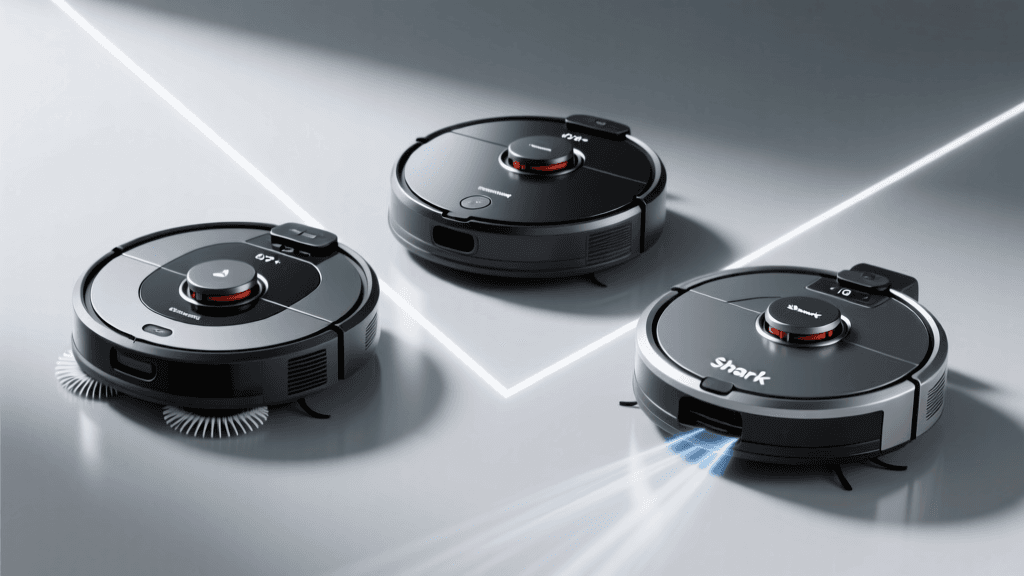
The robot vacuum market has evolved far beyond simple bump-and-turn cleaning discs. Today, high-end robot vacuums are sophisticated, AI-driven home robots capable of mapping multi-level floor plans, identifying pet waste, and mopping hard floors with mechanical precision. For smart home enthusiasts and busy homeowners alike, choosing the right flagship device is a significant investment in both time and money. In this comprehensive comparison, we are putting the industry titans head-to-head: the Roborock S8 Pro Ultra, the iRobot Roomba Combo j9+, and the Shark Matrix Plus with Self-Empty Base.
Each of these brands brings a distinct philosophy to the table. Roborock is renowned for pushing the boundaries of LiDAR navigation and sonic mopping. iRobot (Roomba) relies on decades of proprietary robotics data, dual-brush engineering, and advanced visual AI. Shark, meanwhile, has carved out a massive footprint by offering aggressive cleaning matrices and exceptional value, often undercutting the premium price tags of its competitors. But which ecosystem deserves a permanent spot in your smart home? Let us break down the specifications, performance benchmarks, and integration capabilities of these three flagship contenders.
The Contenders at a Glance
Before diving into the granular performance metrics, it is essential to understand the baseline hardware specifications. The following table outlines the core capabilities of the flagship models representing each brand in this comparison.
| Feature | Roborock S8 Pro Ultra | Roomba Combo j9+ | Shark Matrix Plus (RV2320S) |
|---|---|---|---|
| Navigation Tech | LiDAR + Reactive 3D Obstacle Avoidance | vSLAM + PrecisionVision Navigation | LiDAR + AI Laser Navigation |
| Suction Power | 6,000 Pa | Undisclosed (High-Performance Aerodynamic) | Undisclosed (Matrix Clean Navigation) |
| Brush System | DuoRoller (Dual All-Rubber) | Dual Multi-Surface Rubber Brushes | Multi-Surface Brushroll |
| Mopping Style | VibraRise Sonic Mopping (Auto-Lift) | Retractable Robotic Mop Arm | Standard Drag Mop Pad |
| Dock Capabilities | Auto-Empty, Auto-Wash, Auto-Refill, Hot Air Dry | Auto-Empty, Auto-Wash, Auto-Refill | Auto-Empty Only |
| Approximate MSRP | $1,599 | $1,099 | $699 |
Navigation and Obstacle Avoidance: LiDAR vs. Vision
Navigation is the backbone of any robot vacuum. If a robot cannot map your home efficiently, its suction power is irrelevant. Roborock and Shark both utilize LiDAR (Light Detection and Ranging) to map rooms. LiDAR operates by emitting laser pulses to measure distances, creating a highly accurate, real-time topographical map of your floor plan. This allows the Roborock S8 Pro Ultra and Shark Matrix Plus to clean in perfect, methodical lines and operate in pitch-black environments without missing a beat.
iRobot takes a different approach with the Roomba Combo j9+, relying on vSLAM (visual Simultaneous Localization and Mapping) paired with a front-facing camera and PrecisionVision AI. While LiDAR is superior for spatial mapping, Roomba's camera-based AI excels at object recognition. The Roomba is famous for its P.O.O.P. (Pet Owner Official Promise) guarantee, meaning it is specifically trained to recognize and avoid pet waste. According to extensive testing by industry experts at Tom's Guide, Roomba's visual obstacle avoidance remains the gold standard for homes with unpredictable floor clutter, such as stray cables, shoes, and pet accidents.
Roborock counters this with its Reactive 3D system, which uses structured light and a 3D camera to identify obstacles. While highly effective, Shark's AI Laser Navigation, though improved, still occasionally struggles with low-profile objects like dark-colored rugs or thin charging cables. If your home is generally tidy, LiDAR offers the fastest, most efficient cleaning paths. If your floors are chaotic, Roomba's visual AI provides the safest peace of mind.
Suction Power and Carpet Cleaning Mechanics
When it comes to raw suction, Roborock boasts an impressive 6,000 Pascals (Pa) on the S8 Pro Ultra. However, suction is only half the equation; brush design dictates how well that suction is applied to the floor. Both Roborock and Roomba utilize dual all-rubber brush systems. These counter-rotating rubber fins are exceptional for agitating carpet fibers and are highly resistant to hair tangles, making them ideal for pet owners and households with long-haired residents.
iRobot's proprietary dual-brush design has been refined over a decade. As noted in deep-dive reviews by WIRED, the Roomba's aerodynamic brush system automatically adjusts its height to maintain constant contact with both hard floors and thick carpets, ensuring consistent debris extraction. Shark's Matrix Plus utilizes a traditional bristle-and-rubber combo brushroll. While effective on hard floors, traditional bristles are more prone to wrapping hair, requiring more frequent manual maintenance with the included cleaning tool.
Shark's unique selling proposition is its Matrix Clean Navigation. Instead of a single pass, the Shark Matrix Plus cleans in a precise grid pattern, taking multiple passes in overlapping directions. This mimics manual vacuuming and is incredibly effective at lifting embedded dust from deep within carpet piles, compensating for its lower raw Pa rating compared to the Roborock.
Mopping Capabilities: Scrubbing, Dragging, and Retracting
The integration of mopping into robot vacuums has historically been an afterthought, with early models simply dragging a damp cloth across the floor. Today's flagships have completely redefined hard floor maintenance.
- Roborock S8 Pro Ultra (VibraRise): Roborock utilizes sonic vibration technology, scrubbing the floor at up to 3,000 times per minute to break down dried stains like coffee or mud. Crucially, when the robot's ultrasonic sensors detect carpet, the entire mopping module mechanically lifts 5mm into the robot's chassis. This allows the S8 Pro Ultra to vacuum carpets and mop hard floors in a single, uninterrupted run without dampening your rugs.
- Roomba Combo j9+ (Retractable Arm): iRobot solved the carpet-mopping dilemma with a marvel of mechanical engineering. The j9+ features a robotic arm that physically lifts the mop pad up and over the top of the robot when carpet is detected. This completely eliminates the risk of wet carpets and allows for a larger, heavier mop pad to be used on hard surfaces.
- Shark Matrix Plus (Standard Drag): Shark's mopping system is the most rudimentary of the three. It relies on a standard gravity-fed or lightly pumped drag pad. It does not lift or retract. If you have mixed flooring, you must use the app to create 'No-Mop' zones over your carpets, or the Shark will drag a wet pad across your rugs. It is suitable for light dusting but cannot tackle dried stains.
The Docking Station Ecosystem: Auto-Empty and Auto-Wash
The true value of a modern robot vacuum lies in its docking station. The goal is to minimize human intervention for weeks at a time. The Roborock RockDock Ultra is currently the most comprehensive base on the market. It empties the robot's dustbin into a sealed bag, washes the mop pad with fresh water, refills the robot's internal water tank, and dries the mop pad with hot air to prevent mold and mildew.
The Roomba Clean Base AutoEmpty + AutoWash matches Roborock in emptying dust, refilling water, and washing the mop. However, it lacks the hot air drying feature, relying on ambient air drying which can occasionally lead to musty odors in humid climates. The Shark Clean & Empty Base is strictly an auto-empty dock. It seals dust and allergens away brilliantly, but you must manually remove, wash, and reattach the mop pad after every mopping session.
The filtration within these docks is also a critical factor for indoor air quality. According to the Environmental Protection Agency (EPA), utilizing devices equipped with true HEPA filtration can significantly reduce airborne particulate matter, which is vital for allergy sufferers. Both Roomba and Shark utilize high-efficiency sealed bags in their auto-empty bases that trap 99% of dust and allergens, ensuring that the emptying process does not pollute your home's air.
Smart Home Integration and App Experience
A flagship robot vacuum must integrate seamlessly into a broader smart home ecosystem. All three devices support Amazon Alexa and Google Assistant, allowing for voice commands like 'Alexa, tell Roborock to clean the kitchen.' However, the depth of integration varies wildly.
Roborock's app is widely considered the most feature-rich and intuitive on the market. It allows for granular control, including setting specific suction levels and water flow rates for individual rooms, creating reactive barriers, and scheduling multi-floor cleaning routines. Furthermore, Roborock has been a pioneer in adopting the Matter smart home protocol, ensuring future-proof compatibility with Apple HomeKit and universal smart home hubs.
iRobot's app is robust and user-friendly, offering excellent mapping and P.O.O.P. avoidance toggles, but it historically lags in adopting open standards like Matter, preferring to keep users within its proprietary ecosystem. Shark's app is functional but basic; it handles mapping and scheduling adequately but lacks the advanced customization, 3D map editing, and IoT automation triggers found in the Roborock and Roomba applications.
Smart Home Deck Pro Tip: If you utilize complex home automation routines (e.g., triggering the vacuum to start when your smart lock engages and the last person leaves), Roborock's IFTTT and Matter support offer vastly superior automation capabilities compared to Shark's native integrations.
Final Verdict: Which Flagship Should You Choose?
Choosing between Roborock, Roomba, and Shark ultimately comes down to your specific household environment, budget, and tolerance for maintenance. There is no single 'best' robot vacuum; rather, there is a best robot vacuum for you.
1. The Tech Enthusiast & Mixed-Floor Home: Roborock S8 Pro Ultra
If budget is a secondary concern and you demand the absolute pinnacle of automation, the Roborock S8 Pro Ultra is the undisputed champion. Its VibraRise sonic mopping and auto-lifting chassis mean you never have to worry about wet carpets. The RockDock Ultra handles every conceivable maintenance task, including hot-air drying, making it a true 'set it and forget it' appliance. It is the premier choice for homes with a mix of thick rugs and hard floors, and for users who want deep smart home integration via Matter.
2. The Pet Owner & Cluttered Home: iRobot Roomba Combo j9+
For households with pets, toddlers, or a general abundance of floor clutter, the Roomba Combo j9+ is the safest and most reliable investment. iRobot's PrecisionVision AI and P.O.O.P. guarantee provide unmatched peace of mind against catastrophic messes. The fully retractable robotic mop arm is an engineering marvel that completely protects your carpets. While the dock lacks hot-air drying, the sheer reliability of its obstacle avoidance makes it the top pick for chaotic environments.
3. The Budget-Conscious Upgrader: Shark Matrix Plus
Coming in at nearly half the price of the Roborock, the Shark Matrix Plus offers incredible value. Its Matrix Clean grid-navigation system is phenomenal for deep-cleaning carpets, and the auto-empty base is highly effective at managing dust and allergens. However, you must be willing to compromise on mopping capabilities and manually wash the mop pad. It is the ideal choice for primarily carpeted homes, or hard-floor homes where the user does not mind basic mopping and light manual intervention.
By aligning your specific household needs with the unique strengths of these three flagship ecosystems, you can ensure that your smart home's cleaning routine is handled efficiently, autonomously, and effectively for years to come.