Introduction: The Smart Thermostat Value Dilemma
The smart thermostat market has matured significantly over the last decade, evolving from a niche luxury for tech enthusiasts into a mainstream household staple. Today, homeowners are faced with a classic consumer dilemma: do you opt for the ultra-affordable budget pick that covers the basics, or do you invest in a premium, feature-rich powerhouse? In this comprehensive value analysis, we are putting the budget king, the Wyze Smart Thermostat, head-to-head against the high-end heavyweight, the Ecobee SmartThermostat Premium.
At first glance, the price gap is staggering. The Wyze typically retails for around $60 to $70, while the Ecobee Premium commands a price tag of roughly $249. That is nearly a 400% markup. But does the Ecobee deliver four times the value? To answer this, we must look beyond the sticker price and analyze installation requirements, ecosystem compatibility, sensor technology, and long-term energy savings. Whether you are outfitting a small apartment or a sprawling multi-story home, this guide will help you determine which device truly offers the best return on investment for your specific needs.
The Contenders at a Glance
Wyze Smart Thermostat: The Budget Disruptor
Wyze built its brand on offering premium smart home features at rock-bottom prices, and their thermostat is no exception. It strips away the fancy touchscreens and built-in speakers, focusing entirely on reliable app control, basic scheduling, and geofencing. It is designed for the pragmatic user who wants to automate their HVAC system without breaking the bank.
Ecobee SmartThermostat Premium: The High-End Command Center
The Ecobee Premium is more than just a thermostat; it is a smart home hub, an air quality monitor, and a high-fidelity smart speaker wrapped in a sleek glass chassis. It utilizes advanced room sensors to manage hot and cold spots, and it natively supports virtually every major smart home ecosystem, including Apple HomeKit.
Design, Hardware, and Wall Presence
When you are installing a device that will sit on your wall for the next decade, aesthetics matter. The Wyze Smart Thermostat features a minimalist, circular design with a hidden LED display that only lights up when you approach it or interact with the dial. It is unobtrusive and modern, but the build quality feels distinctly plasticky. The dial offers satisfying clicks, but the interface is limited, forcing you to rely heavily on the smartphone app for complex scheduling.
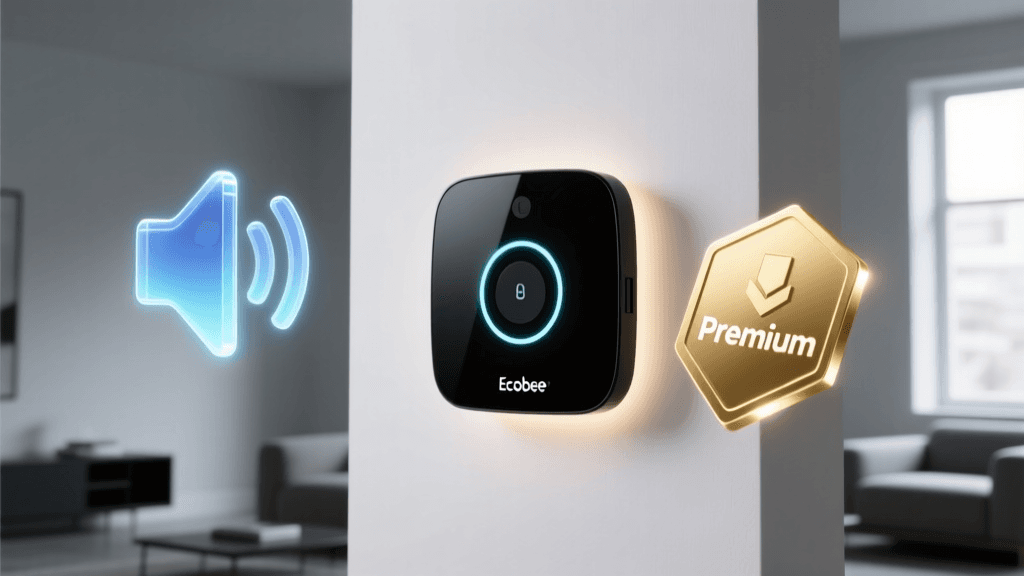
Conversely, the Ecobee Premium is a showpiece. It features a stunning, edge-to-edge glass touchscreen that responds instantly to swipes and taps. The device feels substantial and premium. Furthermore, the Ecobee Premium doubles as a high-quality smart speaker with Alexa built-in, featuring audio tuned by Bang & Olufsen. If you frequently use voice assistants in your hallway or living room, the Ecobee eliminates the need for a separate smart speaker, subtly offsetting its higher upfront cost.
Installation and the C-Wire Conundrum
One of the most critical aspects of any smart thermostat comparison is the wiring. Modern smart thermostats require continuous power to maintain their Wi-Fi connections and run their displays. This is typically provided by a Common wire, or "C-wire." Older homes often lack this wire, which can lead to dropped connections or even damage to your HVAC control board.
- Wyze: Wyze includes a C-wire adapter in the box for most installations. However, the adapter can be bulky to hide inside the wall or at the furnace, and it is not compatible with all complex HVAC systems, particularly some heat pumps and dual-fuel setups.
- Ecobee: Ecobee includes a Power Extender Kit (PEK). The PEK is generally considered more robust and compatible with a wider variety of HVAC systems, including multi-stage heating and cooling. It requires wiring at the furnace control board, which is slightly more intimidating for DIY beginners but results in a much more stable and reliable power delivery.
If you have a modern HVAC system with a C-wire already at the wall plate, both devices take about 15 minutes to install. If you lack a C-wire, Ecobee's PEK offers a more professional, long-term solution, whereas Wyze's adapter is a functional but somewhat clunky workaround.
Sensors and Climate Precision
This is where the value proposition begins to shift heavily in favor of the premium pick. A standard thermostat only measures the temperature in the hallway where it is mounted. If your living room is baking in the afternoon sun while your bedroom is freezing, a standard smart thermostat will not know or care.
The Ecobee Premium comes bundled with a SmartSensor, and supports up to 32 additional sensors. These sensors do not just track temperature; they track occupancy. Ecobee's "Smart Home" and "Smart Away" features use these sensors to automatically adjust the temperature based on which rooms are actually being used. This solves the multi-story home dilemma and ensures you are not paying to heat or cool empty guest rooms.
The Wyze Thermostat does support Wyze Climate Sensors, which are incredibly affordable (often sold in multi-packs for under $40). However, Wyze's software logic for these sensors is less sophisticated. You can prioritize certain rooms during specific times of the day, but you lack the seamless, occupancy-driven automation that makes Ecobee's sensor ecosystem feel like magic.
Ecosystem Compatibility and Smart Home Integration
For smart home enthusiasts, ecosystem compatibility can be a dealbreaker. Here is how the two stack up:
- Amazon Alexa: Both support Alexa. However, Ecobee has Alexa built directly into the hardware, complete with a far-field microphone array. Wyze requires a separate Alexa device for voice control.
- Google Home: Both integrate flawlessly with Google Assistant.
- Apple HomeKit: This is a massive victory for Ecobee. The Ecobee Premium is fully HomeKit compatible, allowing for secure, local control via Siri and Apple Home hubs. Wyze does not support HomeKit natively. Apple users would have to rely on third-party workarounds like Homebridge, which is not ideal for the average consumer.
- IFTTT & SmartThings: Both offer support, though Ecobee's API and SmartThings integration are generally faster and more reliable.
Energy Savings and ROI: The True Value Analysis
The primary justification for any smart thermostat is energy savings. According to the U.S. Department of Energy, you can save as much as 10% a year on heating and cooling by simply turning your thermostat back 7°-10°F for 8 hours a day from its normal setting. Smart thermostats automate this "setback" process using geofencing and scheduling, ensuring you never waste money heating an empty house.
Furthermore, EPA ENERGY STAR certified smart thermostats are independently verified to deliver significant energy savings based on real-world usage data. Both Wyze and Ecobee carry the ENERGY STAR certification, meaning both will save you money compared to a manual thermostat. But which saves you more?
Bar chart comparing upfront costs and 5-year energy savings between Wyze, Ecobee, and standard thermostats.
Let us break down the return on investment (ROI). Assuming an average annual HVAC spend of $1,500, a 10% savings equates to $150 per year. Over five years, that is $750 in savings.
- Wyze ROI: At $60 upfront, the Wyze pays for itself in less than 5 months. Everything after that is pure profit. However, without advanced occupancy sensors, you might only achieve an 8% savings rate if your schedule is highly irregular.
- Ecobee ROI: At $249 upfront, the Ecobee takes about 20 months to pay for itself. However, because of its superior room sensors and smart recovery algorithms (which learn exactly how long it takes your home to heat up or cool down based on outdoor weather), Ecobee users frequently report savings closer to 12-15%, pushing the 5-year savings well over $1,000 in extreme climates.
The Value Takeaway: If your goal is strictly to spend the absolute minimum to achieve automated scheduling and geofencing, Wyze offers an unbeatable, immediate ROI. If you want to maximize total energy savings over a decade, eliminate hot/cold spots, and gain a smart speaker, the Ecobee Premium yields a higher total financial and experiential return.
Head-to-Head Specification Table
| Feature | Wyze Smart Thermostat | Ecobee SmartThermostat Premium |
|---|---|---|
| Retail Price | ~$60 - $70 | ~$249 |
| Display | Hidden LED, Rotary Dial | Full Color Glass Touchscreen |
| Room Sensors | Supported (Sold Separately) | 1 Included (Supports up to 32) |
| Voice Assistant | None Built-in | Amazon Alexa Built-in |
| Apple HomeKit | No | Yes |
| C-Wire Solution | Adapter Included | Power Extender Kit (PEK) Included |
| Air Quality Monitor | No | Yes (VOC and CO2 tracking) |
Software and App Experience
The hardware is only half the battle; the software you interact with daily is equally important. The Wyze app is a centralized hub for all Wyze products. While it is feature-rich, it can feel cluttered and occasionally sluggish. The thermostat interface within the app provides basic usage graphs and scheduling tools, but it lacks deep, granular data.
Ecobee's app, on the other hand, is a masterclass in smart home software design. It provides detailed monthly energy reports, comparing your usage to similar homes in your area. Crucially, the Ecobee app includes HVAC Health Monitoring. It tracks your system's runtime and performance, alerting you if your heating or cooling system is taking longer than usual to reach the target temperature, which can be an early warning sign of a failing compressor or a dirty filter. This preventative maintenance feature alone can save you from a catastrophic $5,000 HVAC failure.
The Final Verdict: Which Should You Buy?
Declaring a single "winner" is impossible because the value proposition depends entirely on your home environment and smart home ecosystem. Here is our final breakdown based on user profiles.
Choose the Wyze Smart Thermostat If:
- You are a renter or on a strict budget: You want the core benefits of a smart thermostat (remote control, geofencing) without a massive upfront investment. You can easily take it with you when you move.
- You live in a small home or apartment: If your HVAC system only serves a single zone or a small square footage, you do not need expensive room sensors to manage temperature disparities.
- You are deeply embedded in the Wyze ecosystem: If you already use Wyze cams, locks, and lighting, having your thermostat integrated into the same app and automation routines is highly convenient.
Choose the Ecobee SmartThermostat Premium If:
- You are an Apple HomeKit user: Native HomeKit support is non-negotiable for many, and Ecobee is one of the few premium thermostats that still fully supports Apple's platform.
- You have a large, multi-story home: The included SmartSensor is vital for balancing temperatures across different floors and eliminating the "hot upstairs, cold downstairs" problem.
- You want a premium, all-in-one device: You value the sleek glass aesthetic, the built-in Alexa speaker for the hallway, and the peace of mind that comes with HVAC health monitoring and indoor air quality tracking.
Ultimately, the Wyze is a triumph of affordability, proving that you do not need to spend hundreds of dollars to automate your home's climate. However, the Ecobee Premium justifies its premium price tag through superior hardware, advanced sensor logic, and a polished software experience that actively protects your HVAC investment. Assess your home's layout, check your wiring, and choose the tool that best fits your financial and environmental goals.