The Evolution of the Smart Home Hub
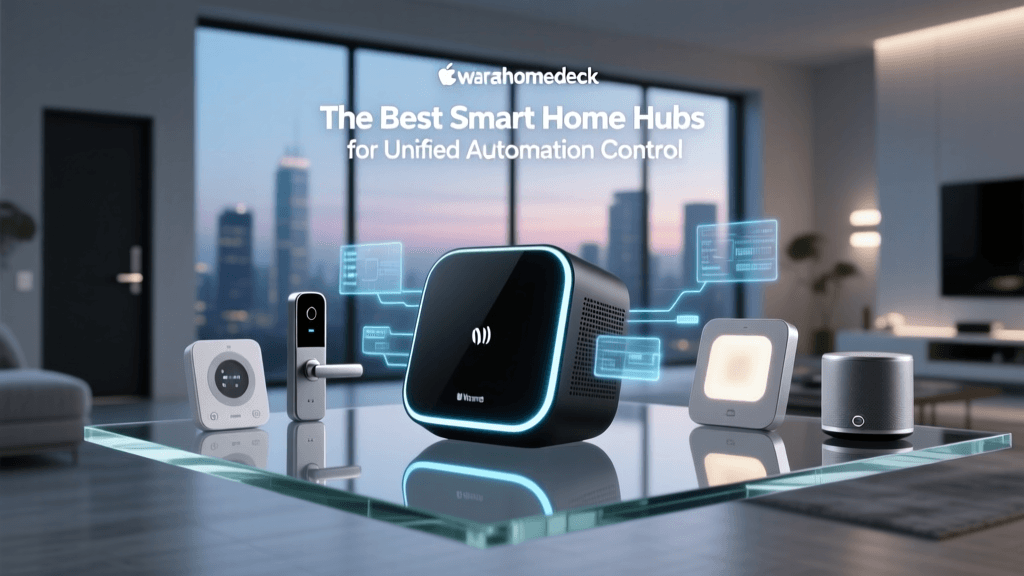
The smart home landscape is undergoing a seismic shift. For years, consumers were forced to navigate a fragmented ecosystem of proprietary hubs, conflicting wireless protocols, and cloud-dependent automations that would fail the moment the internet went down. Today, the introduction of unified standards has completely rewritten the rules of home automation. If you are building or upgrading a smart home, selecting the right central brain is the most critical decision you will make. In this comprehensive buyer's guide, we evaluate the best smart home hubs for Matter and Thread networks, ensuring your setup is fast, reliable, and future-proof.
Gone are the days when a hub merely translated a Zigbee signal to your Wi-Fi router. Modern hubs act as sophisticated border routers, local processing engines, and multi-protocol bridges. Whether you are deeply entrenched in the Apple HomeKit ecosystem, looking for a budget-friendly entry point with Amazon Alexa, or demanding granular local control for advanced automations, there is a hub tailored to your specific needs. Below, we break down the top contenders on the market, comparing their hardware capabilities, protocol support, and overall value.
Understanding Matter and Thread: The New Standards
Before diving into the hardware, it is crucial to understand the technologies driving the current hub renaissance. The smart home industry has historically been plagued by interoperability issues. A smart bulb from one brand often refused to communicate with a motion sensor from another unless a third-party cloud service bridged the gap. This resulted in latency, privacy concerns, and reliability issues.
To solve this, the industry united to create Matter, an open-source, royalty-free connectivity standard developed by the Connectivity Standards Alliance (CSA). Matter operates at the application layer, meaning it provides a common language for devices to talk to each other, regardless of the underlying wireless protocol (Wi-Fi, Thread, or Ethernet). If a device is Matter-certified, it will work seamlessly with any Matter-compatible hub, breaking down the walled gardens of the past.
While Matter defines the language, Thread defines the transportation layer for low-power devices. The Thread Group defines Thread as an IP-based, low-power mesh networking protocol built specifically for the Internet of Things (IoT). Unlike Wi-Fi, which drains batteries and clogs up your primary network, Thread allows battery-operated sensors and smart locks to communicate efficiently. Furthermore, Thread creates a self-healing mesh network; every Thread device acts as a node, extending the range and reliability of your smart home. To connect this Thread mesh to your home network and the broader Matter ecosystem, you need a Thread Border Router—which is built into many of the best modern smart hubs.
Top 5 Smart Home Hubs for Modern Ecosystems
1. Apple TV 4K (3rd Generation) - Best for Apple HomeKit Users
For users invested in the Apple ecosystem, the Apple TV 4K (3rd Generation) is far more than a premium streaming device; it is the ultimate smart home hub. Specifically, the Wi-Fi + Ethernet model is a powerhouse for modern smart home protocols. It features a built-in Thread border router and acts as a primary Matter controller for Apple Home. Powered by the A15 Bionic chip, it processes local automations with zero perceptible latency.
- Pros: Seamless integration with iOS, exceptional local processing speed, acts as a Thread Border Router, supports HomeKit Secure Video for local camera storage.
- Cons: Requires an Apple device for initial setup and management, lacks native support for Z-Wave or legacy Zigbee devices without a separate bridge.
- Best For: Households heavily reliant on iPhones, iPads, and HomePods who want a secure, local-first smart home experience.
- Estimated Price: $149 (Wi-Fi + Ethernet model)
The inclusion of a Thread radio in the Ethernet model of the Apple TV 4K makes it a mandatory purchase for Apple users looking to adopt Matter-over-Thread devices like the Nanoleaf Essentials line or Eve Motion sensors.
2. Amazon Echo (4th Gen) - Best Budget All-in-One Hub
Amazon has transformed its flagship smart speaker into a formidable smart home hub. The spherical Amazon Echo (4th Gen) is packed with radios, including a built-in Zigbee 3.0 hub, a Matter controller, and Thread border router capabilities (especially when paired with an Eero mesh Wi-Fi system). It serves as an excellent, budget-friendly entry point for users who want to control a wide variety of devices using Alexa without purchasing a dedicated, standalone hub.
- Pros: Excellent value for money, built-in Zigbee hub supports hundreds of legacy devices, temperature sensor enables climate-based automations, AZ1 Neural Edge engine for faster voice processing.
- Cons: Automations are primarily cloud-dependent, the physical design may not appeal to everyone, lacks local dashboard for advanced programming.
- Best For: Amazon Alexa users looking for an affordable, multi-purpose device that handles voice control, music, and basic Zigbee/Matter hub duties.
- Estimated Price: $99
3. Homey Pro (2023) - Best for Power Users and Multi-Protocol
If you want absolute control over every conceivable wireless protocol without relying on the cloud, the Homey Pro (2023) is the undisputed king of the hill. This sleek, puck-shaped device houses an astonishing eight radios: Wi-Fi, Bluetooth, Zigbee, Z-Wave 800, Thread, Matter, 433MHz, and Infrared. It processes all automations locally on its powerful dual-core processor, ensuring your smart home functions perfectly even if your internet connection drops.
- Pros: Unmatched protocol support (8 radios), 100% local processing, advanced flow-based automation builder, massive compatibility database of over 50,000 devices.
- Cons: Premium price tag, steeper learning curve for beginners, requires a Homey Bridge for remote access outside the home network.
- Best For: Smart home enthusiasts, tinkerers, and power users who want a single hub to rule them all, bridging legacy RF devices with modern Matter/Thread gear.
- Estimated Price: $399
4. Samsung SmartThings Station - Best for Samsung Galaxy Users
Samsung's approach to the smart home hub market is elegant and highly integrated. The SmartThings Station is a compact, unassuming device that doubles as a 15W fast wireless charger for your Galaxy smartphone or earbuds. Beneath its minimalist exterior lies a robust hub capable of acting as a Matter controller, a Thread border router, and a Zigbee hub. It integrates flawlessly with the SmartThings app, which is widely considered one of the most user-friendly smart home interfaces on the market.
- Pros: Doubles as a wireless charger, excellent SmartThings app integration, highly affordable, supports SmartThings Find for locating lost Galaxy devices.
- Cons: Lacks local processing for complex automations, no Z-Wave support, heavily optimized for the Samsung/Android ecosystem.
- Best For: Samsung Galaxy users who want a simple, attractive, and affordable way to bring Matter, Thread, and Zigbee devices into the SmartThings ecosystem.
- Estimated Price: $79
5. Hubitat Elevation (Model C-8) - Best for Local Control and Privacy
Hubitat has built a cult following among smart home veterans who prioritize privacy, speed, and local control above all else. The Model C-8 is the latest iteration, featuring a significantly improved external antenna design for better Zigbee and Z-Wave mesh coverage. While it natively supports Zigbee and Z-Wave, recent firmware updates have introduced robust Matter controller capabilities. Hubitat's 'Rule Machine' allows for incredibly complex, conditional automations that rival professional-grade control systems.
- Pros: Lightning-fast local automations, exceptional privacy (no cloud required for logic), highly customizable dashboards, powerful Rule Machine.
- Cons: Outdated web-based user interface, lacks a native Thread radio (requires an external Thread border router to integrate Thread devices via Matter), steep learning curve.
- Best For: Privacy advocates and automation geeks who want granular control over their home's logic without sending data to third-party cloud servers.
- Estimated Price: $199
Comprehensive Hub Comparison Table
To help you visualize the differences between these top-tier smart home controllers, we have compiled a detailed comparison table highlighting their core capabilities and protocol support.
| Product | Best For | Matter Controller | Thread Border Router | Zigbee | Z-Wave | Local Processing | Price |
|---|---|---|---|---|---|---|---|
| Apple TV 4K (Ethernet) | Apple HomeKit Users | Yes | Yes | No | No | Yes | $149 |
| Amazon Echo (4th Gen) | Budget All-in-One | Yes | Yes (w/ Eero) | Yes | No | Partial | $99 |
| Homey Pro (2023) | Power Users | Yes | Yes | Yes | Yes | Yes | $399 |
| SmartThings Station | Samsung Galaxy Users | Yes | Yes | Yes | No | No | $79 |
| Hubitat Elevation C-8 | Privacy & Local Logic | Yes | No | Yes | Yes | Yes | $199 |
Price Comparison of Top Smart Hubs
The chart below illustrates the retail price distribution of the hubs reviewed, highlighting the gap between budget entry-points and premium power-user equipment.
Buyer's Guide: How to Choose the Right Hub
Selecting the right hub goes beyond simply picking a brand name. You must evaluate your current device inventory, your desired ecosystem, and your tolerance for cloud reliance. Here are the critical factors to consider before making your purchase.
Local vs. Cloud Processing
When a motion sensor triggers a light to turn on, the command must be processed somewhere. In a cloud-based system (like standard SmartThings or basic Alexa routines), the signal travels from the sensor to the hub, up to the manufacturer's cloud server, back down to the hub, and finally to the light. This introduces latency (often 500ms to 2 seconds) and a point of failure: if your internet goes down, your automations stop working.
Local processing hubs, like the Homey Pro, Hubitat Elevation, and Apple TV 4K, handle this logic internally on the device's processor. The result is instantaneous execution and 100% reliability during internet outages. If privacy and speed are your top priorities, a local-first hub is non-negotiable.
Matter Controller vs. Thread Border Router
It is vital to understand the distinction between a Matter Controller and a Thread Border Router, as marketing materials often blur the lines. A Matter Controller is the 'brain' that manages your Matter devices, issues commands, and stores your home's topology. A Thread Border Router is simply a bridge that connects the low-power Thread mesh network to your home's Wi-Fi/Ethernet network.
A hub can be a Matter Controller without being a Thread Border Router (like the Hubitat C-8). In this scenario, you can still use Thread-based Matter devices, provided you have another Thread Border Router on your network, such as a Google Nest Hub or an Apple HomePod Mini. Conversely, a device like the SmartThings Station acts as both, making it a self-contained solution for Thread devices.
Legacy Protocol Support: Zigbee and Z-Wave
While Matter is the future, it is still in its infancy. Millions of homes are already equipped with highly reliable Zigbee and Z-Wave devices. If you have invested heavily in these legacy protocols, you must ensure your new hub can support them. The Homey Pro and Hubitat Elevation are the clear winners here, offering native, robust support for both Zigbee 3.0 and Z-Wave 800 series chips. If you only plan to buy new, Matter-certified devices moving forward, a hub like the Apple TV 4K or SmartThings Station will suffice without the need for legacy radios.
Ecosystem Lock-In and App Experience
Finally, consider the software experience. The hardware is only as good as the app used to control it. Apple's Home app offers a beautiful, unified interface but restricts you to Apple-approved accessories and logic. The SmartThings app is incredibly user-friendly and great for basic routines. Hubitat and Homey offer web-based dashboards that look dated but provide unparalleled depth for programming complex conditional logic, variable tracking, and custom dashboards.
Final Verdict
The transition to Matter and Thread has revitalized the smart home hub category, turning what was once a necessary evil into a powerful, unifying cornerstone of the modern connected home. For Apple loyalists, the Apple TV 4K (Ethernet) remains the gold standard for secure, local automation. Budget-conscious consumers and Alexa fans will find immense value in the Amazon Echo (4th Gen), while Samsung users get a brilliant dual-purpose device in the SmartThings Station. However, for those who demand absolute control, local processing, and multi-protocol supremacy, the Homey Pro (2023) and Hubitat Elevation stand in a league of their own. Whichever path you choose, investing in a modern hub today guarantees your smart home is ready for the innovations of tomorrow.