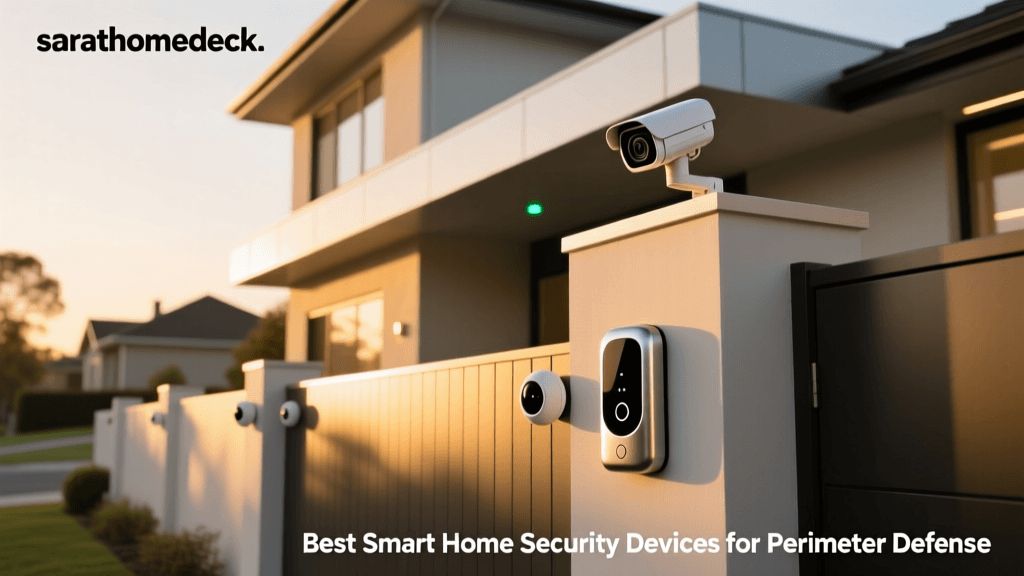
Securing Your Perimeter: The First Line of Defense
When it comes to home security, the perimeter is your most critical line of defense. While indoor cameras and smart locks are excellent for monitoring activity inside your home and controlling access, smart video doorbells and outdoor security cameras serve a dual purpose: they act as a powerful visual deterrent to potential intruders while providing you with real-time, actionable intelligence about what is happening on your property. Whether you are trying to stop porch pirates from stealing your deliveries, keep an eye on your children playing in the front yard, or simply want the peace of mind that comes with knowing who is approaching your door after dark, investing in the right outdoor security gear is essential.
However, the smart home market is flooded with options, ranging from budget-friendly wired models to premium, AI-powered, solar-charged camera systems. Navigating the differences in resolution, field of view, power requirements, and mandatory cloud subscription fees can be overwhelming. In this comprehensive buyer's guide, we break down the best smart video doorbells and outdoor security cameras available today, comparing their features, ecosystem compatibility, and long-term costs to help you build a robust, reliable perimeter security network.
Why Smart Doorbells and Outdoor Cameras Matter
The psychological impact of visible security cameras cannot be overstated. According to numerous criminology studies and expert analyses from publications like Wired, properties equipped with visible outdoor cameras and smart doorbells are significantly less likely to be targeted by opportunistic burglars. The presence of a glowing LED ring or a prominent camera dome signals to bad actors that their faces will be recorded in high definition and instantly transmitted to a homeowner's smartphone.
Beyond deterrence, these devices offer unparalleled convenience. Modern smart doorbells allow you to answer your door from anywhere in the world via two-way audio, making it look like you are home even when you are on vacation. Furthermore, advanced AI detection can differentiate between a stray cat, a passing car, a delivery driver, and a potential threat, ensuring your phone only buzzes when it truly matters. As noted by the tech experts at CNET, the integration of these devices into broader smart home routines—such as triggering porch lights to turn on when motion is detected at night—creates a layered security approach that is highly effective.
The Best Smart Video Doorbells
Ring Battery Doorbell Plus: The Best for Head-to-Toe Visibility
The Ring Battery Doorbell Plus is a standout choice for homeowners who want premium features without the hassle of running new wiring. Its most impressive feature is the 1536p HD resolution with a square aspect ratio, providing a 'Head-to-Toe' video feed. This means you can actually see packages left on your doormat, a common blind spot for older, wider doorbells. The device features dual-band Wi-Fi connectivity, ensuring a stable connection even if your router is located on the other side of a thick exterior wall.
Installation is incredibly straightforward thanks to the quick-release rechargeable battery pack. However, it is important to note that Ring devices are heavily reliant on the cloud. To access features like online video history, snapshot capture, and person alerts, you will need a Ring Home subscription. While this adds a monthly cost, the integration with Amazon Alexa is seamless, allowing you to view the feed on Echo Show devices and receive announcements when someone is at the door.
Google Nest Doorbell (Wired): The Best for Continuous Recording and AI
If you have existing doorbell wiring and want the absolute best in smart AI recognition, the Google Nest Doorbell (Wired) is the undisputed champion. Unlike battery-powered alternatives, the wired Nest Doorbell offers 24/7 continuous video recording (CVVR) when paired with a Nest Aware Plus subscription. This is a game-changer for security, as you will never miss an event that happened between motion triggers.
Google's machine learning algorithms are exceptionally accurate. The doorbell can recognize familiar faces (like family members) versus strangers, and it can distinguish between people, animals, and vehicles right out of the box without requiring a premium subscription for basic alerts. The HDR (High Dynamic Range) imaging is also top-tier, perfectly balancing the bright sunlight hitting your porch with the dark shadows near your door. For users deeply embedded in the Google Home ecosystem, the Nest Doorbell integrates flawlessly with Google Assistant speakers and Nest Hubs.
The Best Outdoor Security Cameras
Arlo Pro 5S 2K Spotlight: The Premium Feature Powerhouse
For those who refuse to compromise on video quality and smart features, the Arlo Pro 5S 2K Spotlight is a premium outdoor camera that delivers on every front. It boasts a massive 160-degree diagonal field of view, 2K HDR resolution, and a built-in spotlight that enables full-color night vision. The 12x digital zoom allows you to pinch and expand on your smartphone screen to read license plates or see facial details with surprising clarity.
Arlo's smart detection is highly customizable, allowing you to draw specific 'Activity Zones' to ignore the busy street while focusing on your driveway. The camera also features a built-in siren that can be triggered manually or automatically. The primary drawback of the Arlo ecosystem is the cost; to unlock the best AI features, cloud recording, and smart notifications, an Arlo Secure subscription is virtually mandatory. However, for users who want a set-it-and-forget-it premium security solution, the Arlo Pro 5S is worth the investment.
EufyCam 3 (S330): The Best for Local Storage and Zero Monthly Fees
The EufyCam 3 system is a breath of fresh air for consumers tired of monthly subscription fatigue. This 4K resolution camera system connects to the Eufy HomeBase 3, a local hub that sits inside your home and stores your footage securely on built-in 16GB eMMC memory (expandable up to 16TB via a hard drive). Because your footage never has to leave your home, privacy is maximized, and monthly cloud fees are entirely optional.
Each EufyCam 3 features an integrated solar panel on its top edge. As long as the camera receives a couple of hours of direct sunlight a day, it will essentially maintain an infinite battery life, eliminating the need to climb ladders to recharge your cameras. The BionicMind AI processing happens locally on the HomeBase 3, providing incredibly fast and accurate facial recognition and human detection without relying on cloud servers. For Apple users, Eufy also offers robust support for Apple HomeKit Secure Video (HKSV), a feature notably absent from Ring and Arlo.
Feature Comparison Table
| Device | Resolution | Power Source | Field of View | Local Storage Option | Smart Ecosystem |
|---|---|---|---|---|---|
| Ring Battery Doorbell Plus | 1536p HD | Battery / Wired | 150° x 150° | No | Amazon Alexa |
| Google Nest Doorbell (Wired) | 960p HD | Wired Only | 145° Diagonal | No | Google Home |
| Arlo Pro 5S 2K Spotlight | 2K HDR | Battery | 160° Diagonal | No (Hub required for some) | Alexa, Google, IFTTT |
| EufyCam 3 (S330) | 4K Ultra HD | Battery + Solar | 160° Diagonal | Yes (HomeBase 3) | Apple HomeKit, Alexa, Google |
Cloud Storage vs. Local Storage: The Hidden Costs
When budgeting for a smart home security system, the upfront cost of the hardware is only half the equation. Cloud storage subscriptions can quickly add up, especially if you are monitoring multiple cameras. Below is a visualization of the entry-level monthly costs associated with the major ecosystems discussed in this guide.
As the data illustrates, choosing a system with robust local storage capabilities, like Eufy, can save you hundreds of dollars over the lifespan of your devices. However, cloud storage does offer the distinct advantage of off-site backup; if a burglar manages to steal your indoor hub or local server, your cloud footage remains safe and accessible to law enforcement.
Essential Buying Considerations
Resolution, HDR, and Field of View
While 1080p was the standard for years, you should now aim for at least 2K (1440p) or 4K resolution for outdoor cameras. Higher resolution allows you to digitally zoom in on recorded footage to identify license plates or facial features without the image turning into a blurry mess. Equally important is HDR (High Dynamic Range). Outdoor cameras frequently deal with harsh lighting contrasts—such as a dark porch roof and bright midday sun. HDR balances these exposures so you aren't left staring at a silhouetted figure against a blown-out white background.
Power Sources and Battery Life
Your choice of power source will dictate your installation options. Wired cameras (connected to existing doorbell transformers or outdoor junction boxes) offer the most reliability and enable features like continuous recording and pre-buffering. Battery-powered cameras offer ultimate placement flexibility but require periodic recharging and usually only record when motion is triggered, meaning you might miss the beginning of an action. Solar panels are an excellent middle ground, provided your property receives adequate direct sunlight to keep the internal batteries topped up.
Smart Home Ecosystem Compatibility
Before purchasing, consider the digital ecosystem you are already invested in. If you use Amazon Alexa, Ring devices offer the deepest integration. If you prefer Google Home, Nest products are the obvious choice. For Apple users, finding devices that support Apple HomeKit Secure Video (HKSV) is highly recommended. HKSV processes video locally on your Apple TV or HomePod for facial recognition and encrypts the footage end-to-end in iCloud, offering the highest standard of consumer privacy available in the smart home space today. As highlighted in comprehensive reviews by The Verge, ecosystem lock-in is a real factor; mixing and matching brands often results in a clunky user experience requiring multiple apps.
Expert Placement and Installation Tips
Even the most expensive 4K camera is useless if placed incorrectly. Follow these expert guidelines for optimal perimeter security:
- Height Matters: Mount doorbells at roughly 48 inches from the ground for the best face-level view. For outdoor security cameras, aim for a height of 6 to 9 feet. This is high enough to be out of reach of vandals or thieves trying to spray paint the lens, but low enough to capture clear facial details.
- Avoid Direct Sunlight: Position cameras so they are not facing directly east or west, where the rising or setting sun will blind the sensor and trigger constant false motion alerts.
- Test Your Wi-Fi First: Before drilling holes, use your smartphone to test the Wi-Fi signal strength at the exact mounting location. Outdoor walls are heavily insulated and block signals. If your signal is weak, consider investing in a mesh Wi-Fi system with an outdoor node or a dedicated Wi-Fi extender.
- Utilize Privacy Zones: Be a good neighbor. Use your app's privacy zone settings to black out areas that capture your neighbor's windows, yard, or public sidewalks to avoid legal disputes and respect community privacy.
Final Verdict
Building a comprehensive smart home security perimeter requires balancing upfront hardware costs, ongoing subscription fees, and smart ecosystem compatibility. For front-door monitoring, the Ring Battery Doorbell Plus offers unbeatable package visibility, while the Google Nest Doorbell (Wired) is the ultimate choice for AI smarts and continuous recording. For the broader yard and driveway, the Arlo Pro 5S delivers premium, feature-rich cloud security, whereas the EufyCam 3 stands out as the definitive choice for privacy-focused users who want 4K resolution, solar power, and zero mandatory monthly fees. By carefully assessing your property's unique layout and your digital ecosystem preferences, you can deploy a camera system that keeps your home secure, deters crime, and provides total peace of mind.