Building a smart home has never been more accessible — or more overwhelming. With thousands of connected devices on the market, choosing the right products can feel like navigating a maze of compatibility charts, ecosystem lock-ins, and conflicting reviews. That's exactly why we created this comprehensive guide to the best smart home products available today.
At Smart Home Deck, we've spent hundreds of hours testing, comparing, and living with the most popular smart home devices across every category. Our editorial team evaluates each product using our proprietary Deck Score methodology, which weighs five critical factors: ease of setup, daily usability, ecosystem compatibility, long-term reliability, and value for money. Every product on this list has earned a Deck Score of 8.0 or higher, ensuring you're investing in devices that truly enhance your daily life.
How We Selected the Best Smart Home Products
Before diving into our picks, it's important to understand the rigorous criteria behind our selections. We don't simply aggregate online reviews or repeat manufacturer talking points. Our process is hands-on, deliberate, and designed to reflect how real people actually use smart home technology.
- Hands-On Testing: Every product on this list has been physically installed and used in a real home environment for a minimum of four weeks.
- Ecosystem Compatibility: We test each device across multiple platforms including Amazon Alexa, Google Home, Apple HomeKit, Samsung SmartThings, and the emerging Matter standard.
- Long-Term Reliability: We monitor firmware update frequency, customer support responsiveness, and community-reported issues over extended periods.
- Privacy & Security: We evaluate data collection practices, local processing capabilities, and the availability of privacy controls.
- Value Assessment: Price is always considered relative to features, build quality, and the competitive landscape.
Whether you're just starting your smart home journey or looking to expand an existing setup, this guide covers the essential categories every connected home needs. For more detailed category breakdowns, check out our complete best-picks library.
Comparison Table: Best Smart Home Products at a Glance
| Product | Category | Deck Score | Ecosystem | Price Range | Best For |
|---|---|---|---|---|---|
| Amazon Echo (4th Gen) | Smart Speaker & Hub | 9.2/10 | Alexa | $$ | Best overall smart home hub |
| Philips Hue White & Color Ambiance | Smart Lighting | 9.4/10 | All major platforms | $$$ | Premium smart lighting |
| Ecobee Smart Thermostat Premium | Smart Thermostat | 9.3/10 | All major platforms | $$$ | Energy savings & comfort |
| Ring Battery Doorbell Pro | Smart Doorbell | 8.8/10 | Alexa / Ring | $$ | Wire-free video doorbell |
| Roborock S8 Pro Ultra | Robot Vacuum | 9.1/10 | Alexa / Google | $$$$ | Hands-free floor cleaning |
| Aqara Door & Window Sensor P2 | Smart Sensors | 8.9/10 | Matter / Thread | $ | Affordable automation triggers |
| August Wi-Fi Smart Lock | Smart Lock | 9.0/10 | All major platforms | $$ | Retrofit smart locking |
| Google Nest Cam (Wired) | Smart Security Camera | 8.7/10 | Google Home | $$ | Indoor/outdoor surveillance |
| Sonos Era 300 | Smart Audio | 9.0/10 | Alexa / Sonos | $$$ | High-fidelity smart audio |
| TP-Link Kasa Smart Plug Mini | Smart Plug | 8.6/10 | All major platforms | $ | Easiest smart home entry point |
Amazon Echo (4th Gen) — Best Smart Speaker & Hub
Deck Score: 9.2/10
The Amazon Echo (4th Gen) remains the gold standard for smart home hubs disguised as a speaker. Its spherical design houses a surprisingly capable audio system with clear mids, punchy bass, and room-filling volume that outperforms most competitors in its price bracket. But where the Echo truly shines is its role as the nerve center of your smart home.
The built-in Zigbee hub eliminates the need for separate bridges when connecting compatible devices — a significant advantage for anyone building out a smart home from scratch. Simply plug in a Zigbee-compatible sensor, bulb, or switch, and Alexa discovers it almost instantly. The addition of a temperature sensor opens up automation possibilities like triggering your smart thermostat when a room gets too warm or too cold.
Voice recognition has improved dramatically with this generation. The Echo reliably distinguishes between different household members, enabling personalized responses, calendar readouts, and routines. Multi-room audio works seamlessly when paired with other Echo devices, and the 3.5mm audio output lets you connect to existing stereo systems.
For those concerned about privacy, the physical microphone mute button and visible LED ring indicator provide clear feedback about when the device is listening. Amazon's privacy dashboard allows you to review and delete voice recordings at any time.
Pros
- Built-in Zigbee hub reduces device clutter
- Excellent sound quality for the size
- Temperature sensor enables advanced automations
- Vast Alexa skill library and ecosystem
- Reliable voice recognition across multiple users
Cons
- Limited compatibility with Apple HomeKit natively
- No built-in display for visual feedback
- Zigbee hub doesn't support all third-party devices
Philips Hue White & Color Ambiance — Best Smart Lighting
Deck Score: 9.4/10
Smart lighting is often the gateway into home automation, and no system does it better than Philips Hue. The White & Color Ambiance line offers an extraordinary range of 16 million colors, warm-to-cool white tuning, and brightness levels that can transform any room from a cozy reading nook to a vibrant entertainment space.
The Hue Bridge (required for full functionality) connects to your router and creates a dedicated Zigbee mesh network for your lights. This means your bulbs don't compete with your Wi-Fi bandwidth, resulting in rock-solid reliability and near-instant response times. We've tested systems with over 40 bulbs on a single Bridge and experienced zero lag or dropped connections.
What truly sets Hue apart is the depth of its automation capabilities. Geofencing automatically adjusts lights when you leave or arrive home. Entertainment sync matches your lights to on-screen action when watching movies or playing games. The Hue Labs section offers experimental features created by both Philips and the community, from circadian rhythm lighting to gentle sunrise alarms.
The ecosystem compatibility is unmatched. Hue works natively with Amazon Alexa, Google Home, Apple HomeKit, Samsung SmartThings, and now supports Matter over Thread with the latest Bridge firmware. This future-proofing makes Hue one of the safest long-term investments in smart lighting.
If you're exploring other lighting options, our smart lighting guide covers budget alternatives and specialty bulbs.
Pros
- Unmatched color accuracy and brightness range
- Dedicated Zigbee mesh ensures reliability
- Works with virtually every smart home platform
- Extensive automation and scene capabilities
- Matter support ensures long-term compatibility
Cons
- Premium pricing compared to competitors
- Hue Bridge required for full feature set
- Individual bulbs can add up quickly for whole-home setups
Ecobee Smart Thermostat Premium — Best Smart Thermostat
Deck Score: 9.3/10
A smart thermostat is one of the few smart home devices that can actually pay for itself through energy savings, and the Ecobee Smart Thermostat Premium leads the category in both intelligence and features. Its room sensors detect occupancy and temperature across multiple zones, ensuring your home is comfortable where you actually are — not just where the thermostat happens to be mounted.
The Premium model includes a built-in air quality monitor that tracks volatile organic compounds (VOCs), carbon dioxide levels, and humidity. When paired with a compatible HVAC system, it can automatically trigger ventilation or alert you when air quality drops. The integrated Alexa speaker means you can control your entire smart home directly from the thermostat without needing a separate device in that room.
Installation is straightforward for most homes with a C-wire, and Ecobee includes a power extender kit for systems without one. The app provides detailed energy usage reports, showing you exactly when and how much energy your HVAC system consumes. Smart Recovery learns how long your system takes to reach target temperatures and adjusts start times accordingly, so your home is always comfortable when you need it to be.
The ecobee Smart Security subscription adds professional monitoring capabilities, turning your thermostat into a home security hub with built-in smoke and freeze detection alerts. While the subscription is optional, it adds meaningful value for those looking to consolidate their smart home services.
Pros
- Room sensors deliver true multi-zone comfort
- Built-in air quality monitoring is genuinely useful
- Integrated Alexa speaker eliminates device redundancy
- Detailed energy reports help reduce utility bills
- Works with Alexa, Google Home, Apple HomeKit, and SmartThings
Cons
- Higher upfront cost than basic smart thermostats
- Full security features require monthly subscription
- Design may not suit all interior aesthetics
Ring Battery Doorbell Pro — Best Smart Doorbell
Deck Score: 8.8/10
The Ring Battery Doorbell Pro represents the sweet spot in Ring's lineup, combining premium features with the flexibility of battery power. Unlike wired-only models, this doorbell installs in minutes without requiring existing doorbell wiring, making it ideal for renters and homeowners alike. When mounted with the included wedge kit, you get a wide 150-degree field of view with head-to-toe video capture.
Video quality is excellent in daylight with sharp 1536p resolution and accurate color reproduction. Night vision uses infrared LEDs that provide clear visibility without the washed-out look common in cheaper cameras. The built-in motion detection offers customizable motion zones, and the Bird's Eye View feature (available with a Ring Home subscription) provides an aerial perspective of motion events, showing the path a visitor took approaching your door.
Two-way audio is clear and responsive, with noise cancellation that works well even in windy conditions. Quick Replies let you set pre-recorded responses for common interactions like package deliveries, and the built-in siren can be triggered remotely through the app for added deterrence.
Battery life varies significantly based on motion event frequency and temperature, but most users report two to four months between charges. The quick-release battery makes recharging painless — simply pop it out, plug it into any USB-C charger, and snap it back in.
For a broader look at entry-point security, browse our smart doorbell comparison guide.
Pros
- Battery-powered installation requires no wiring
- Head-to-toe video with excellent resolution
- Bird's Eye View adds valuable context to motion events
- Quick-release rechargeable battery
- Wide selection of compatible accessories and mounts
Cons
- Best features require Ring Home subscription
- Battery life decreases in extreme cold
- Limited integration outside the Amazon/Ring ecosystem
Roborock S8 Pro Ultra — Best Robot Vacuum
Deck Score: 9.1/10
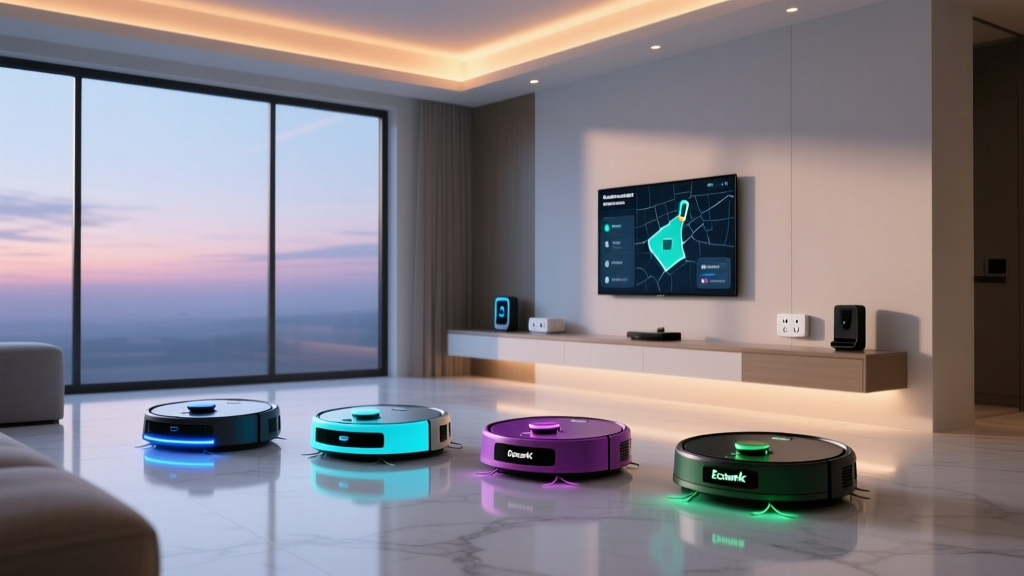
The Roborock S8 Pro Ultra redefines what a robot vacuum can do. This isn't just a vacuum — it's a fully autonomous floor care system that vacuums, mops, empties its own dustbin, refills its own water tank, washes its own mop pad, and even dries the mop with warm air. The dock handles everything, meaning you might go weeks without thinking about floor cleaning at all.
The dual rubber brush system effectively handles everything from fine dust to pet hair without the tangles that plague bristle brushes. With 6000 Pa of suction power, it pulls debris from deep within carpet fibers and transitions seamlessly between hard floors and rugs using automatic carpet detection. When mopping, the VibraRise system scrubs floors with sonic vibration while automatically lifting the mop pad 20mm when it detects carpet.
Navigation is powered by LiDAR combined with a front-facing camera and 3D structured light, creating detailed maps of your home with room-level precision. You can set custom cleaning schedules per room, define no-go zones, create virtual walls, and even target specific spills with spot cleaning commands. The obstacle avoidance system reliably detects cables, shoes, pet waste, and other common floor hazards.
Smart home integration allows voice commands through Alexa and Google Assistant, and the Roborock app offers one of the most comprehensive control interfaces in the category. You can monitor consumable life, adjust water flow rates, customize suction power per room, and review cleaning history with detailed path maps.
Pros
- Truly autonomous with self-emptying, self-washing, and self-drying
- Exceptional navigation and obstacle avoidance
- Dual brush system resists hair tangles
- Simultaneous vacuuming and mopping with carpet lift
- Detailed app with granular room-by-room controls
Cons
- Premium price point
- Large dock requires dedicated floor space
- Replacement consumables add ongoing costs
Aqara Door & Window Sensor P2 — Best Smart Sensors
Deck Score: 8.9/10
Sensors are the unsung heroes of any smart home, transforming passive automation into intelligent, responsive environments. The Aqara Door & Window Sensor P2 stands out as one of the first sensors to support the Matter protocol over Thread natively, making it a future-proof choice for any ecosystem.
The sensor itself is remarkably compact — small enough to mount discreetly on any door or window frame without drawing attention. Detection is instantaneous, with no perceptible delay between a door opening and your automation triggering. The built-in light sensor adds an extra dimension of utility, enabling automations like turning on hallway lights only when a door opens in dark conditions.
Thread connectivity means the sensor communicates through a low-power mesh network rather than Wi-Fi, resulting in exceptional battery life. A single CR2032 coin battery lasts well over a year in typical use, and replacement takes seconds. The Thread mesh also improves reliability as you add more Thread devices to your home, since each device acts as a signal repeater.
Practical automation examples are nearly limitless: receive alerts when a child arrives home from school, trigger an exterior light when the back door opens after sunset, log how often a window is opened for air quality tracking, or integrate with a smart thermostat to pause heating when a window is detected open. The Aqara app provides a clean, intuitive interface for creating these automations without any coding knowledge.
Pros
- Matter over Thread ensures broad, future-proof compatibility
- Instant detection with zero perceptible lag
- Integrated light sensor enables conditional automations
- Outstanding battery life exceeding one year
- Compact, discreet design
Cons
- Requires a Thread border router for Matter functionality
- No built-in temperature or humidity sensing
- Adhesive mount may not suit all surfaces
August Wi-Fi Smart Lock — Best Smart Lock
Deck Score: 9.0/10
The August Wi-Fi Smart Lock solves one of the biggest barriers to smart lock adoption: the need to replace your existing hardware. August's retrofit design installs on the interior side of your door over your existing deadbolt thumbturn, preserving your original keys and exterior hardware. This makes it ideal for renters, historic homes, and anyone who doesn't want to change their locks.
Installation takes about 15 minutes with just a screwdriver, and the process is guided step-by-step through the August app. Once installed, the lock connects directly to your Wi-Fi network without requiring a separate bridge or hub — a significant advantage over competitors that add cost and complexity with proprietary gateways.
Auto-Unlock is the feature that makes the August truly transformative. Using a combination of Bluetooth and geofencing, the lock detects your approach and automatically unlocks the door as you arrive home with arms full of groceries. DoorSense technology confirms whether your door is actually closed and locked, eliminating the anxiety of wondering whether you secured your home.
The virtual key system lets you grant time-limited access to guests, dog walkers, cleaners, or contractors without sharing physical keys. You can set recurring schedules, one-time access windows, or permanent access that can be revoked instantly. Activity logs show exactly who locked or unlocked the door and when.
For more entry-point security options, explore our smart lock buyer guide.
Pros
- Retrofit design preserves existing keys and hardware
- Built-in Wi-Fi eliminates need for a separate hub
- Auto-Unlock provides seamless keyless entry
- DoorSense confirms actual door state
- Flexible virtual key sharing for guests
Cons
- Battery life averages 3-6 months depending on usage
- Bulky interior unit may not fit all door configurations
- Auto-Unlock occasionally triggers prematurely
Google Nest Cam (Wired) — Best Smart Security Camera
Deck Score: 8.7/10
The Google Nest Cam (Wired) delivers a compelling combination of intelligent detection, clean design, and seamless Google Home integration. Its versatile mounting system works equally well indoors and outdoors, with an IP54 weather resistance rating and a magnetic stand that allows creative positioning on walls, shelves, or ceilings.
Video quality is sharp at 1080p with HDR support that handles challenging lighting conditions like sunlit doorways or shadowed corners. The 130-degree field of view covers most rooms or entryways from a single position, and night vision delivers clear, full-color imagery in low light when ambient lighting is available.
Google's on-device machine learning powers genuinely useful detection features. The camera distinguishes between people, animals, and vehicles, reducing false alerts from swaying trees or passing shadows. Familiar face detection (available with Nest Aware subscription) can alert you specifically when an unrecognized person is detected, while known family members trigger no notification.
The included three hours of free event video history is generous compared to competitors that offer nothing without a subscription. Nest Aware adds continuous recording, intelligent alerts, and up to 60 days of event history. Integration with Google Home displays means you can pull up live feeds on your Nest Hub or Chromecast-connected TV with a simple voice command.
Pros
- Indoor/outdoor versatility in a single device
- Intelligent person, animal, and vehicle detection
- Three hours of free event video history included
- Excellent Google Home ecosystem integration
- Clean, modern design that blends into any environment
Cons
- Requires wired power — no battery option
- Best features locked behind Nest Aware subscription
- Limited compatibility with non-Google platforms
Sonos Era 300 — Best Smart Audio
Deck Score: 9.0/10
The Sonos Era 300 is where audiophile-grade sound meets smart home convenience. Designed specifically for spatial audio, this speaker uses six drivers arranged in a unique configuration to create an immersive, three-dimensional soundstage that fills the room from every direction. Whether you're listening to Dolby Atmos Music on Amazon Music or spatial audio on Apple Music, the Era 300 delivers an experience that flat, forward-facing speakers simply cannot match.
Beyond spatial audio, the Era 300 excels as a traditional stereo speaker. Trueplay tuning (available on iOS) uses your phone's microphone to analyze your room's acoustics and optimize the speaker's output accordingly. The result is balanced, detailed sound with deep bass that defies the speaker's relatively compact footprint.
As a smart speaker, the Era 300 supports Amazon Alexa for voice control, with far-field microphones that reliably pick up commands even at high volumes. The Sonos app provides access to over 100 streaming services, and the system supports AirPlay 2 for direct streaming from Apple devices. Bluetooth connectivity adds flexibility for quick, casual listening.
Multi-room audio remains Sonos's strongest advantage. Group any combination of Sonos speakers for synchronized whole-home playback, or use the stereo pair option to create a dedicated left-right configuration for critical listening. The Line-In adapter (sold separately) allows you to connect turntables or other analog sources.
Pros
- Exceptional spatial audio performance
- Trueplay room correction optimizes sound for your space
- Access to 100+ streaming services through Sonos app
- Seamless multi-room audio across all Sonos products
- Line-In support for analog sources
Cons
- Premium price for a single speaker
- Google Assistant not currently supported
- No native Apple HomeKit / Siri integration
TP-Link Kasa Smart Plug Mini — Best Smart Plug
Deck Score: 8.6/10
Sometimes the simplest smart home devices deliver the most practical value. The TP-Link Kasa Smart Plug Mini transforms any standard outlet into a smart-controlled power source, enabling voice control, scheduling, and automation for lamps, fans, coffee makers, holiday lights, and virtually anything with a physical switch.
The compact design is one of the Kasa Mini's strongest attributes. Unlike bulkier smart plugs that block adjacent outlets, this device is small enough to use side-by-side in a standard duplex outlet. Setup takes under two minutes through the Kasa app, which walks you through Wi-Fi connection and naming without any confusing steps.
The Kasa app offers surprisingly robust features for such an inexpensive device. Schedules let you set on/off times by day of the week. Timers provide countdown-based control. Away Mode randomly toggles connected devices to simulate occupancy while you're on vacation. Energy monitoring tracks power consumption, helping you identify energy-hungry devices.
Compatibility spans all major platforms: Amazon Alexa, Google Home, Samsung SmartThings, and IFTTT. Voice commands work reliably, and the plug's response time to both voice and app commands is nearly instant. The device operates on 2.4GHz Wi-Fi, which provides good range but means you'll need a compatible network — most modern routers support this by default.
If you're looking to expand beyond plugs, our smart home beginner's guide covers the best starting points for new setups.
Pros
- Extremely affordable entry point into smart home automation
- Compact design doesn't block adjacent outlets
- Energy monitoring tracks power consumption
- Away Mode simulates occupancy for security
- Works with Alexa, Google Home, SmartThings, and IFTTT
Cons
- 2.4GHz Wi-Fi only — no 5GHz support
- No native Apple HomeKit support
- Not suitable for high-draw appliances above 15A
How to Choose the Right Smart Home Products for Your Needs
Selecting the best smart home products isn't about buying everything on this list — it's about building a cohesive system that matches your lifestyle, budget, and technical comfort level. Here's a strategic approach to planning your smart home.
Start With Your Ecosystem
The single most important decision you'll make is choosing your primary smart home platform. This choice determines which devices work together seamlessly and how you'll interact with your system daily.
- Amazon Alexa: The broadest device compatibility and largest skill library. Ideal for users who want maximum flexibility and don't mind Amazon's data ecosystem.
- Google Home: Best for users deeply invested in Google services. Superior natural language processing and search-based responses.
- Apple HomeKit: Prioritizes privacy and security with strict device certification requirements. Best for iPhone users who value data protection.
- Matter: The emerging universal standard that works across all platforms. Choosing Matter-compatible devices future-proofs your investment regardless of which ecosystem you use today.
Prioritize High-Impact Categories
Not all smart home products deliver equal daily value. Based on our testing and user feedback, here's the typical impact hierarchy:
- Smart lighting — Used multiple times daily, immediately noticeable impact
- Smart thermostat — Continuous background comfort with energy savings
- Smart speaker/hub — Central control point and voice interface
- Smart lock — Daily convenience and security enhancement
- Robot vacuum >— Significant time savings for floor maintenance
- Security cameras & doorbells — Peace of mind and package monitoring
- Sensors — Enable advanced automations across all other devices
- Smart plugs — Simple, low-cost way to add smart control to existing devices
Budget Wisely
A common mistake is buying cheap devices that need replacing within a year. Our recommendation is to invest in quality for devices you'll interact with daily (thermostats, locks, lighting) and save on simpler devices (plugs, sensors) where budget options perform nearly as well. The products on this list represent the best value at their respective price points, and each has proven its long-term reliability through our extended testing.
Understanding the Deck Score Methodology
Every product reviewed on Smart Home Deck receives a Deck Score from 1 to 10, calculated across five weighted categories:
- Ease of Setup (20%): How quickly and intuitively can a typical user install and configure the device? We evaluate unboxing experience, app quality, and the clarity of included instructions.
- Daily Usability (25%): Does the product enhance daily life or add friction? We assess response times, reliability of automations, and whether the device becomes a natural part of your routine.
- Ecosystem Compatibility (20%): How well does the device integrate with popular smart home platforms? We test across Alexa, Google Home, Apple HomeKit, SmartThings, and Matter where applicable.
- Long-Term Reliability (20%): Does the manufacturer provide consistent firmware updates? Are there known hardware failure points? We track community reports and support responsiveness.
- Value for Money (15%): Does the product justify its price relative to features, build quality, and competitive alternatives?
Products scoring 8.0 or above earn a place in our best-picks guides. Scores of 9.0 and above indicate category-leading excellence that we confidently recommend to most users.
Frequently Asked Questions
What is the best smart home ecosystem to start with?
For most beginners, Amazon Alexa offers the widest selection of compatible devices, the most helpful voice assistant capabilities, and the lowest barrier to entry. The Echo lineup provides affordable hubs and speakers, and the Alexa app makes device management straightforward. However, if privacy is your top priority, Apple HomeKit enforces stricter data handling requirements on compatible devices. Google Home is ideal for users who rely heavily on Google services like Calendar, Maps, and Gmail, as the assistant integrates these services naturally into voice responses. The good news is that the Matter standard is making ecosystem choice less restrictive — Matter-compatible devices work across all major platforms.
Do smart home products work without internet?
Most smart home products require an internet connection for initial setup and remote access, but many continue to function locally without internet. Devices using Zigbee, Z-Wave, or Thread protocols communicate through local hubs and can maintain basic functionality — like light switches controlling paired bulbs — during internet outages. Products that rely entirely on cloud processing, such as most voice assistants and cloud-based security cameras, lose significant functionality without internet. When building your smart home, prioritize devices with local processing capabilities for critical functions like lighting and security. The Smart Home Deck guide on offline functionality covers this topic in depth.
How much does a complete smart home setup cost?
A functional smart home can start as low as $100-$200 with a smart speaker and a few smart plugs or bulbs. A mid-range setup covering lighting, climate, security, and voice control typically ranges from $800 to $2,000. Premium whole-home installations with high-end audio, comprehensive security, motorized shades, and advanced automation can exceed $5,000-$10,000. Our recommendation is to start with a smart speaker/hub and one category (lighting is the most popular starting point), then expand gradually as you learn what automations genuinely improve your daily routine. This phased approach prevents overspending on features you may never use.
Are smart home products secure and private?
Security and privacy vary significantly between manufacturers and product categories. Reputable brands like those featured in this guide implement encryption for data in transit and at rest, offer two-factor authentication, and provide transparent privacy policies. Devices that process data locally (like many Zigbee and Thread products) inherently offer better privacy than cloud-dependent alternatives. To maximize security: use unique passwords for each smart home account, enable two-factor authentication wherever available, keep device firmware updated, place smart home devices on a separate Wi-Fi network or VLAN, and regularly review app permissions. Apple HomeKit devices undergo the most rigorous privacy certification, while Matter-compatible devices must meet baseline security requirements defined by the Connectivity Standards Alliance.
Will smart home products become obsolete quickly?
This is a legitimate concern, but choosing wisely can protect your investment for many years. Products supporting open standards like Matter, Thread, Zigbee, and Z-Wave are significantly more future-proof than those relying on proprietary protocols. The products on this list were selected partly for their standards compliance and manufacturer track records of long-term firmware support. Philips Hue, for example, has supported its original Bridge hardware with firmware updates for nearly a decade. When evaluating any smart home purchase, check whether the device supports open standards, whether the manufacturer has a history of supporting older products, and whether the device can function independently if the manufacturer's cloud service were discontinued. Buying from established brands with large install bases generally provides better long-term support than newer startups.
Final Thoughts: Building Your Smart Home With Confidence
The best smart home is one that works so seamlessly you forget it's there. It anticipates your needs, responds to your routines, and enhances your daily life without demanding constant attention or troubleshooting. The products featured in this guide have earned their place through rigorous real-world testing and consistently excellent performance across every metric we measure.
Whether you start with a single smart plug or commit to a whole-home transformation, the key is choosing products that communicate well together and align with your preferred ecosystem. Every product on this list has demonstrated the reliability, usability, and value that define a truly smart home investment.
Ready to dive deeper into specific categories? Explore our complete library of smart home best-picks guides for detailed comparisons across lighting, security, audio, climate control, and more. Our team continuously tests new products and updates our recommendations to ensure you always have access to the most current, trustworthy advice.
Your smart home journey starts with a single device — make it count.