The Renter’s Dilemma: Smart Tech vs. Security Deposits
The modern smart home is a marvel of convenience, offering automated lighting, keyless entry, and climate control at the tap of a screen. But for the millions of people living in apartments and rental properties, upgrading to a smart home often feels like an impossible dream. The primary obstacle isn't the cost of the technology; it's the strict terms of the lease agreement. Landlords typically prohibit tenants from drilling holes, replacing hardwired fixtures, or altering the structural integrity of the property. According to legal experts at Nolo, landlords are legally permitted to deduct from your security deposit for damages that exceed normal wear and tear, which frequently includes unpatched drill holes, stripped door frames, or altered electrical wiring.
Fortunately, the smart home industry has recognized the massive renter demographic. Today, a new wave of 'no-drill,' 'retrofit,' and 'plug-and-play' devices allows you to transform a standard rental into a futuristic smart home without ever picking up a power drill. When it is time to move out, you simply reverse the process, pack your tech in a box, and get your full security deposit back.
What Makes a Device Truly Renter-Friendly?
Before diving into our top picks, it is crucial to understand the criteria that separate a true renter-friendly device from a homeowner-exclusive one. When curating this list, we evaluated products based on four strict pillars:
- Zero Hardwiring: Devices must operate on batteries, USB power, or standard wall outlets. No messing with the apartment's electrical panel or low-voltage wiring.
- No-Drill Mounting: Installation should rely on tension rods, existing hardware (like peepholes or deadbolts), or heavy-duty, damage-free adhesives.
- 100% Reversibility: You must be able to restore the apartment to its exact original condition in under 20 minutes.
- Network Flexibility: Apartment buildings often have thick concrete walls or shared Wi-Fi networks that struggle with dozens of IoT devices. Renter-friendly setups should utilize local hubs (Zigbee, Thread, or Bluetooth) to reduce router strain.
Best Smart Security & Access (No Drilling into Door Frames)
SwitchBot Smart Lock Pro
Replacing a traditional deadbolt requires removing the entire lock assembly, which violates almost every residential lease. The SwitchBot Smart Lock Pro solves this by utilizing a retrofit design. It mounts directly over the interior thumb-turn of your existing deadbolt using industrial-strength 3M VHB adhesive tape. It takes roughly 10 minutes to calibrate, works with your original exterior keys, and allows you to lock or unlock your door via smartphone, voice assistant, or a wireless keypad you can stick to the wall using Command Strips. When your lease ends, a quick twist with a hairdryer softens the adhesive, allowing you to peel it off without damaging the paint or wood.
Ring Peephole Cam
Outdoor cameras require drilling into siding or door frames, which is a massive red flag for property managers. The Ring Peephole Cam is a brilliant workaround. It replaces the standard optical peephole in your apartment door. You simply unscrew the existing peephole lens, place it safely in a Ziploc bag, and thread the Ring camera through the existing hole. It provides 1080p HD video, two-way talk, and knock detection, all powered by a rechargeable battery pack inside your apartment. Reversing it takes exactly two minutes.
Best Smart Lighting for Apartments (No Rewiring Required)
Philips Hue Go (Portable Table Lamp)
Hardwired smart switches require you to open up your wall plates and deal with complex wiring diagrams—a dangerous and lease-breaking endeavor. Instead, rely on smart bulbs and portable lamps. The Philips Hue Go is a portable, plug-in smart light that features an internal battery for up to 48 hours of cordless use. It provides millions of colors, integrates seamlessly with all major voice assistants, and requires zero installation. Simply plug it in, place it on a shelf or desk, and control it via the Hue app.
Govee LED Strip Lights (With a Crucial Renter Hack)
LED strip lights are incredibly popular for adding ambient bias lighting behind TVs or along baseboards. However, the stock adhesive backing on most LED strips (including Govee's) will rip the paint and drywall paper right off when removed. The Renter Hack: Before applying the strips, clean your baseboards with isopropyl alcohol, apply 3M Command Strips (the flat, interlocking picture-hanging ones) every six inches, and mount the LED strips to the Command Strips. This guarantees damage-free removal when you move out.
Best Smart Climate & Window Treatments
Sensibo Smart AC Controller
Most apartments rely on split-system mini-splits or window air conditioning units, which cannot be connected to a traditional smart thermostat like a Nest or Ecobee. The Sensibo Smart AC Controller bridges this gap. It acts as an advanced infrared (IR) blaster that mimics your AC's original remote control. You simply plug the Sensibo into a standard wall outlet, point it toward your AC unit, and instantly gain app-based scheduling, geofencing, and temperature-based automation for your 'dumb' air conditioner.
SwitchBot Curtain (Tension Rod Edition)
Motorized window blinds usually require custom tracks and hardwiring. The SwitchBot Curtain is a small, battery-powered robot that clamps directly onto your apartment's existing curtain rod (whether it's a traditional track, a U-rail, or a standard tension rod). It quietly opens and closes your curtains based on a set schedule or the built-in light sensor, waking you up with natural sunlight without any permanent modifications to the window frame.
Tackling Phantom Loads with Smart Plugs
Renters often pay a premium for electricity, especially in older, poorly insulated apartment buildings. The U.S. Department of Energy notes that standby power (often called phantom loads) can account for up to 10% of an average household's annual electricity use. Devices like space heaters, window fans, and coffee makers constantly draw power even when turned off.
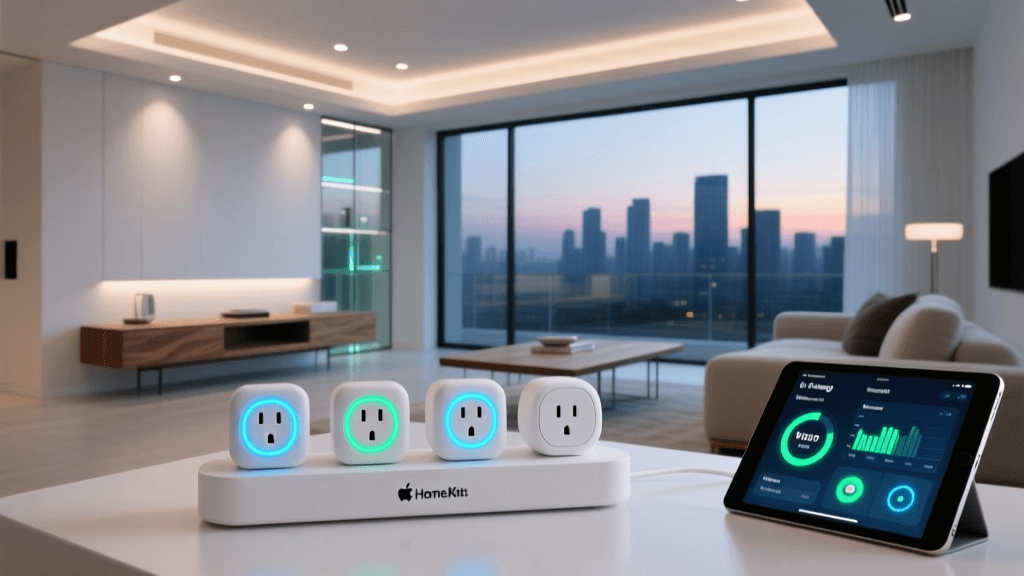
By utilizing smart plugs like the Kasa Smart Plug Mini (EP25), you can completely cut power to these appliances when they aren't in use. You can set schedules to ensure your space heater is physically disconnected from the grid while you are at work, providing both energy savings and crucial fire safety for renters. As highlighted in Consumer Reports' Smart Home Guide, utilizing smart plugs is one of the most cost-effective and least intrusive ways to begin building a smart home ecosystem.
Comprehensive Renter-Friendly Smart Home Comparison
| Product | Category | Installation Method | Reversibility Time | Est. Cost |
|---|---|---|---|---|
| SwitchBot Lock Pro | Security | 3M VHB Adhesive over thumb-turn | 5 Minutes | $179 |
| Ring Peephole Cam | Security | Threads into existing peephole hole | 3 Minutes | $199 |
| Philips Hue Go | Lighting | Plug-and-play (Freestanding) | 0 Minutes | $99 |
| Sensibo Smart AC | Climate | Plug-and-play (IR Blaster) | 0 Minutes | $119 |
| SwitchBot Curtain | Window | Clamps to existing rod | 2 Minutes | $89 |
| Kasa Smart Plug | Energy | Plugs into wall outlet | 0 Minutes | $25 |
Setup Time Visualization
One of the greatest advantages of renter-friendly smart home tech is the speed of deployment. Unlike hardwired systems that require weekend-long projects, these devices can be installed in minutes. The chart below illustrates the average setup time required to get these top-rated devices fully operational and connected to your network.
Pro-Tips for Apartment Smart Home Installations
"The golden rule of renting is documentation. Before you install a single smart device, take time-stamped photos of your doors, walls, and windows. When you use adhesive-based smart locks or cameras, keep the original hardware in a labeled envelope taped to the inside of your closet door. When move-out day arrives, you won't be scrambling to find the original peephole lens or deadbolt thumb-turn."
The Hub Strategy for Shared Wi-Fi
Many apartment complexes provide shared Wi-Fi networks that utilize client-isolation (meaning devices on the network cannot talk to each other) or have strict device limits. If your landlord provides the internet, you may find that Wi-Fi-dependent smart bulbs refuse to connect. The solution is to purchase a local smart home hub, such as the Aeotec Smart Home Hub or the SwitchBot Hub 2. These hubs connect to your router via a single Ethernet cable or Wi-Fi connection, and then create a private, localized Zigbee or Bluetooth mesh network for all your sensors, locks, and lights. This keeps your apartment's smart traffic off the building's shared network and ensures your devices work even if the building's internet goes down.
Moving Out: The Reversibility Checklist
When your lease is up, follow this checklist to ensure a smooth transition and the return of your security deposit:
- Adhesive Removal: Never rip 3M VHB tape off drywall or wood. Use a hairdryer on medium heat to warm the adhesive for 60 seconds, then use dental floss to gently 'saw' through the foam tape layer. Clean any residue with Goo Gone or isopropyl alcohol.
- Hardware Swap: Reinstall the original optical peephole and deadbolt thumb-turns. Test the physical keys to ensure the lock mechanism wasn't misaligned during your smart lock's tenure.
- Factory Reset: Perform a hard factory reset on all cameras, locks, and hubs. This removes your personal Wi-Fi credentials and ensures the next tenant cannot accidentally access your cloud accounts.
- Final Walkthrough: Use your pre-move-in photos to verify that all paint, baseboards, and doors are in their original condition.
Conclusion
Living in a rental no longer means you have to sacrifice the convenience, security, and energy efficiency of a modern smart home. By focusing on retrofit devices, plug-and-play lighting, and non-destructive mounting techniques, you can build a robust, automated ecosystem that moves with you from apartment to apartment. Whether you are securing your door with a SwitchBot Lock, optimizing your window AC with a Sensibo, or setting the mood with portable Hue lamps, the best smart home devices for renters prove that you don't need to own the deed to own your home's intelligence.