The Intersection of Smart Homes and Sustainability
As homeowners become increasingly conscious of their environmental impact, the smart home industry has pivoted from offering mere convenience to delivering tangible sustainability. Nowhere is this shift more evident than in climate control. Heating, ventilation, and air conditioning (HVAC) systems are the largest energy consumers in the average household. Upgrading to an energy-efficient smart thermostat is one of the most impactful eco-friendly home improvements you can make, bridging the gap between modern comfort and environmental stewardship.
In this comprehensive buyer's guide, we evaluate the best smart thermostats for energy savings, focusing on models that utilize advanced algorithms, smart sensors, and grid-interactive features to minimize wasted electricity and reduce your home's carbon footprint.
Why Upgrade to an Energy-Efficient Smart Thermostat?
According to the U.S. Department of Energy, heating and cooling account for nearly half of a typical home's annual energy consumption. Traditional programmable thermostats often fail to deliver their promised savings because they are difficult to program and cannot adapt to real-time changes in your schedule or local weather conditions.
Smart thermostats solve this by learning your habits, utilizing geofencing to detect when the house is empty, and participating in utility demand-response programs. By automatically adjusting temperatures when you are asleep or away, these devices prevent the unnecessary burning of fossil fuels at the power plant, directly lowering your household greenhouse gas emissions while simultaneously shrinking your monthly utility bills.
Top Eco-Friendly Smart Thermostats Compared
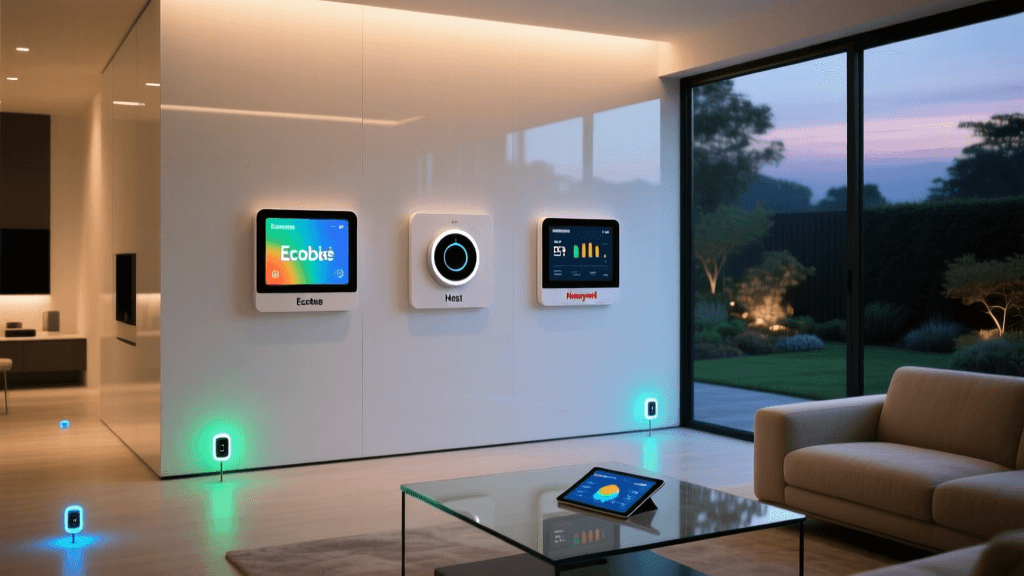
Before diving into our in-depth reviews, here is a side-by-side comparison of the top energy-saving thermostats on the market. All models listed below carry the ENERGY STAR certification, ensuring they meet strict energy efficiency guidelines set by the U.S. Environmental Protection Agency.
| Feature | Ecobee Premium | Nest Learning | Honeywell Home T9 | Amazon Smart |
|---|---|---|---|---|
| Energy Star Certified | Yes | Yes | Yes | Yes |
| Smart Room Sensors | Included | Sold Separately | Included | No |
| Geofencing Support | Yes | Yes | Yes | Yes (via Alexa) |
| Grid-Interactive / Demand Response | Yes (eco+) | Yes (Rush Hour) | Yes | Yes |
| Average Retail Price | $249 | $249 | $199 | $79 |
1. Ecobee Smart Thermostat Premium: Best Overall for Energy Tracking
The Ecobee Smart Thermostat Premium is widely regarded as the gold standard for eco-conscious homeowners who want granular control and deep insights into their energy usage. At the heart of its energy-saving capabilities is the eco+ software. This intelligent algorithm automatically adjusts your home's temperature based on local weather, humidity, and your utility's time-of-use pricing, ensuring your HVAC system runs when electricity is cheapest and most abundant on the grid.
Furthermore, the Premium model includes a SmartSensor that detects occupancy and temperature in the rooms you use most. This prevents the common eco-faux pas of overcooling or overheating an entire house just to make one poorly insulated room comfortable. The built-in air quality monitor also tracks volatile organic compounds (VOCs) and CO2, alerting you when to open a window for natural ventilation instead of running the AC.
- Best Eco-Feature: eco+ software optimizes HVAC runtime based on grid demand and weather forecasts.
- Compatibility: Works with Apple HomeKit, Alexa, Google Assistant, and Samsung SmartThings.
- Cost Range: $229 - $249
2. Google Nest Learning Thermostat: Best for Automated Eco-Schedules
The Google Nest Learning Thermostat pioneered the smart climate control market and remains a top-tier choice for automated energy savings. Its defining feature is its ability to learn your schedule within the first week of use, automatically building a customized heating and cooling schedule that prioritizes efficiency. When you leave the house, Nest's Home/Away Assist uses your smartphone's location and built-in sensors to trigger Eco Temperatures, ensuring you never pay to condition an empty house.
The iconic Nest Leaf icon appears on the display whenever you choose a temperature that saves energy, providing positive psychological reinforcement for eco-friendly habits. Additionally, the Nest Thermostat participates in utility "Rush Hour" events, slightly adjusting your temperature during peak grid strain in exchange for utility rebates.
- Best Eco-Feature: Auto-Schedule and Home/Away Assist eliminate the need for manual programming.
- Compatibility: Google Home ecosystem, works with most 24V HVAC systems.
- Cost Range: $229 - $249
3. Honeywell Home T9: Best for Zoned Eco-Cooling
For larger homes or residences with multiple stories, single-point temperature readings often lead to massive energy waste. The Honeywell Home T9 tackles this with its dual-purpose Smart Room Sensors, which measure not only temperature but also humidity and occupancy. By prioritizing the rooms that are currently occupied, the T9 ensures your HVAC system isn't wasting energy fighting the afternoon sun in an empty guest bedroom.
The T9 also features geofencing capabilities and integrates seamlessly with utility demand-response programs. Its dual-band Wi-Fi connectivity ensures it stays connected to the cloud, guaranteeing that your eco-schedules and remote adjustments are always executed without interruption.
- Best Eco-Feature: Multi-room focus prevents whole-house over-conditioning.
- Compatibility: Amazon Alexa, Google Assistant, SmartThings, IFTTT.
- Cost Range: $179 - $199
4. Amazon Smart Thermostat: Best Budget Energy Saver
You do not need to spend over $200 to make a significant environmental impact. The Amazon Smart Thermostat, built in partnership with Honeywell, offers core energy-saving features at a fraction of the premium price. It is ENERGY STAR certified and utilizes Alexa "Hunches" to automatically adjust the temperature when you leave the house or go to sleep.
While it lacks the built-in occupancy sensors of its more expensive counterparts, its aggressive price point means the return on investment (ROI) regarding energy savings is achieved much faster. It is an excellent entry point for renters or budget-conscious homeowners looking to reduce their carbon footprint immediately.
- Best Eco-Feature: Low manufacturing footprint and rapid ROI on energy savings.
- Compatibility: Alexa ecosystem (Requires C-Wire).
- Cost Range: $59 - $79
Energy Savings Visualized: Annual Cost Reduction
To understand the potential environmental and financial impact of these devices, we have visualized the estimated annual HVAC energy savings based on manufacturer data and EPA averages. While actual savings depend on your local climate, home insulation, and baseline habits, smart thermostats consistently deliver double-digit percentage reductions in HVAC energy use.
Estimated Annual HVAC Energy Savings by Brand
Note: Ecobee's higher estimated savings are largely attributed to its included room sensors and eco+ grid-interactive software, which aggressively optimizes runtime compared to standard scheduling.
Key Features to Look for in an Eco-Friendly Thermostat
When shopping for a green home upgrade, not all smart thermostats are created equal. The ENERGY STAR Certified Smart Thermostats list is the best starting point, but you should also look for the following advanced eco-features:
1. Grid-Interactive Capabilities (Demand Response)
The modern power grid is transitioning to renewable energy sources like solar and wind, which are intermittent. Grid-interactive thermostats can communicate with your local utility company. During peak demand hours (when the grid might rely on dirty "peaker" fossil fuel plants), the thermostat will slightly pre-cool or pre-heat your home, then reduce HVAC usage during the peak window. Many utilities offer substantial cash rebates for enrolling your device in these programs.
2. Adaptive Recovery
Also known as "early start," this feature learns how long it takes your specific HVAC system to reach the target temperature. Instead of blasting the AC at full power right when you wake up, the thermostat starts the system gradually at the most energy-efficient time, preventing short-cycling and reducing peak power draw.
3. Maintenance and Filter Reminders
A clogged HVAC filter restricts airflow, forcing your system to work harder and consume more electricity. Smart thermostats track actual blower runtime and send precise alerts to your phone when it is time to change the filter or schedule annual maintenance, keeping your system operating at peak eco-efficiency.
How to Maximize Your Thermostat's Eco-Potential
According to the Consumer Reports Thermostat Buying Guide, the device is only as good as the parameters you set. To ensure you are getting the maximum environmental benefit, follow these actionable tips:
- Set the Right Baselines: The DOE recommends setting your thermostat to 68°F (20°C) in the winter when you are awake, and lowering it 7°-10°F when asleep or away. In the summer, aim for 78°F (26°C) when home.
- Leverage Ceiling Fans: A ceiling fan creates a wind-chill effect that makes a room feel up to 4°F cooler. This allows you to raise your smart thermostat's cooling setpoint without sacrificing comfort, saving massive amounts of AC compressor energy.
- Seal the Envelope: A smart thermostat cannot fix a drafty house. Ensure your windows are sealed with weatherstripping and your attic is properly insulated so the conditioned air your HVAC system generates actually stays inside.
- Utilize Geofencing: Ensure the companion app on all household members' smartphones has location permissions enabled. This guarantees the thermostat accurately triggers Eco-Modes the moment the last person leaves the house.
Conclusion
Transitioning to an energy-efficient smart thermostat is a cornerstone of the modern eco-friendly home. Whether you opt for the advanced grid-interactive features of the Ecobee Premium, the automated learning of the Google Nest, the zoned precision of the Honeywell T9, or the budget-friendly efficiency of the Amazon Smart Thermostat, you are making a measurable dent in your household's carbon footprint. By combining intelligent hardware with mindful temperature baselines and proper home insulation, you can enjoy year-round comfort while actively contributing to a greener, more sustainable power grid.