Mastering Smart Home Routines: The Ultimate Scene Showcase
When building a smart home, the true magic does not lie in turning on a single light bulb via voice command. It lies in the orchestration of multiple devices working in perfect harmony through scenes, routines, and automations. While basic voice commands offer convenience, a well-architected automation transforms your house into a proactive living space that anticipates your needs, saves energy, and enhances security without requiring manual intervention.
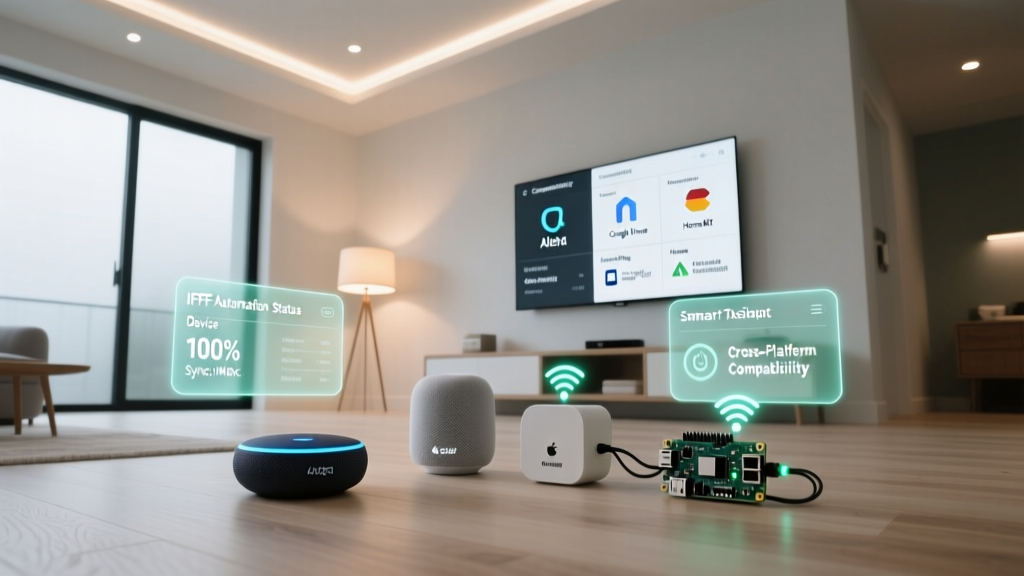
However, not all smart home ecosystems are created equal. The depth of logic, the variety of triggers, and the reliability of local execution vary wildly between Amazon Alexa, Google Home, Apple HomeKit, Samsung SmartThings, and Home Assistant. In this comprehensive showcase, we will explore the absolute best, most advanced automation routine for each major platform. We will break down the specific hardware required, the exact setup steps, cost ranges, and the unique features that make each ecosystem shine.
1. Amazon Alexa: The Whisper & Commute Routine
Amazon Alexa has evolved far beyond simple timers and shopping lists. With the introduction of Alexa Hunches, Wait steps, and customized voice settings, Alexa excels at time-based and sequential morning routines. The ultimate showcase for Alexa is the Morning Whisper & Commute Routine, designed to wake you up gently while preparing your home for departure without disturbing sleeping family members.
Recommended Hardware: Ecobee SmartThermostat ($249), Philips Hue White and Color Ambiance Bulbs ($199 for a starter kit), and a Sonos Era 100 speaker ($249). Total estimated cost: $600 - $800.
How to Set It Up:
- Open the Alexa app, navigate to More > Routines, and tap the + icon.
- Trigger: Set the schedule for 6:30 AM on weekdays.
- Action 1 (Lighting): Set Philips Hue bedroom lights to 2000K (warm amber) at 15% brightness to simulate a gentle sunrise.
- Action 2 (Climate): Set the Ecobee thermostat to your preferred 'Home' temperature (e.g., 72°F).
- Action 3 (Delay): Add a 'Wait' step for 10 minutes to allow you to wake up gradually.
- Action 4 (Audio): Instruct Sonos to play your 'Morning Flash Briefing' or a specific Spotify news playlist.
- Action 5 (Whisper Mode): Add a custom action for Alexa to adjust her voice settings to 'Whisper Mode'. This ensures that when she reads your calendar and commute traffic, she does so quietly, preventing the routine from waking a partner or a baby in the next room.
This routine leverages Alexa's unique ability to sequence delays and modify her own voice output parameters, a feature not natively supported by Google or Apple without complex workarounds.
2. Google Home: Geofenced Security & Nest Cam Scripting
Google Home's greatest strength lies in its seamless integration with the Nest hardware ecosystem and its powerful, yet often overlooked, Google Home Scripts web editor. While the standard app handles basic 'If This, Then That' logic, the web-based Scripts editor allows for complex conditional branching, making it ideal for robust security automations.
Recommended Hardware: Nest Cam (Wired, $149), Yale Assure Lock 2 ($259), and Google Nest Thermostat ($129). Total estimated cost: $400 - $600.
How to Set It Up:
- Basic Routine (App): Create a 'Leaving Home' routine triggered by Geofencing (when the last registered user's phone leaves a 150-meter radius of the home). Set the Yale Lock to lock automatically and the Nest Thermostat to 'Eco' mode.
- Advanced Script (Web Editor): Log into home.google.com and navigate to the Scripts section. Create a new script with the following logic:
- Starter: Nest Cam detects 'Person' or 'Animal' on the front porch.
- Condition: Check the state of the 'Home/Away Assist' mode. IF mode is 'Away' AND time is between 10:00 PM and 6:00 AM.
- Action: Trigger a custom audio alert on the Nest Hub Max in the kitchen ('Motion detected at front door while away') and send a high-priority push notification to your phone with the camera snapshot.
By combining standard app-based geofencing with web-based conditional scripting, Google Home becomes a formidable security monitoring platform that minimizes false alarms by checking multiple environmental states before triggering an alert. For more on Google's automation capabilities, refer to the official Google Nest Routines Support documentation.
3. Apple HomeKit: NFC-Triggered Adaptive Lighting & Media
Apple HomeKit prioritizes privacy, local execution, and a premium user experience. Its standout feature is the deep integration with the iOS Shortcuts app and native support for Adaptive Lighting, which automatically shifts the color temperature of compatible bulbs throughout the day to match your circadian rhythm.
Recommended Hardware: Aqara U200 Smart Lock ($229), Nanoleaf Shapes ($179), and Apple TV 4K (acting as a Hub, $129). Total estimated cost: $400 - $700.
How to Set It Up:
- Purchase a pack of inexpensive NFC tags and place one on your nightstand or bedside table.
- Open the Shortcuts app on your iPhone, go to the Automation tab, and create a new Personal Automation.
- Trigger: Select 'NFC' and scan the tag on your nightstand.
- Action 1 (Security): Add the 'Control Home' action to lock the Aqara U200 door and close any smart blinds.
- Action 2 (Lighting): Turn on the Nanoleaf Shapes, but specifically enable the 'Adaptive Lighting' toggle. This ensures the lights emit a deep, sleep-inducing amber hue that will slowly transition to cooler tones as morning approaches.
- Action 3 (Media): Instruct the Apple TV 4K to launch a specific sleep soundscape or turn off the display completely.
This setup eliminates the need to fumble with apps or speak voice commands in bed. A simple tap of your phone against the nightstand triggers a complex, multi-room scene. The Shortcuts app provides granular control over HomeKit that the native Home app sometimes hides. You can explore more about iOS automation in the Apple Shortcuts User Guide.
4. Samsung SmartThings: Multi-Sensor Leak & Presence Automations
Samsung SmartThings is the undisputed king of sensor diversity and local processing via Edge Drivers. Because SmartThings supports Zigbee, Z-Wave, and now Matter, it can connect to hundreds of niche sensors that other platforms ignore. The best showcase for SmartThings is a critical infrastructure protection routine: the Leak & Presence Water Shutoff.
Recommended Hardware: SmartThings Station ($49), Aeotec Multisensor 7 ($69), and Moen Flo Smart Water Shutoff ($499). Total estimated cost: $600 - $900.
How to Set It Up:
- Place the Aeotec Multisensor 7 behind your washing machine or under your water heater.
- Open the SmartThings app and navigate to Automations > Add Routine.
- Trigger (If): Aeotec Sensor detects Moisture > 0%.
- Condition (And If): SmartThings Station detects your phone's presence within 50 meters (ensuring you are home to deal with the issue, or triggering a different 'Away' routine if you aren't).
- Action (Then): Send a critical push notification that overrides silent mode on your Galaxy phone.
- Delay & Secondary Action: Add a 3-minute delay. If moisture is still detected after 3 minutes (filtering out false positives from a spilled drop), trigger the Moen Flo valve to shut off the main water supply to the house.
Because SmartThings processes Zigbee and Z-Wave routines locally via the hub, this automation will execute even if your home internet connection drops—a critical necessity for leak prevention.
5. Home Assistant: Solar Divert & Energy Arbitrage
For power users, tinkerers, and privacy advocates, Home Assistant is the ultimate platform. It is entirely local, open-source, and capable of integrating over 2,000 different services. The pinnacle of Home Assistant automation is energy management, specifically Solar Divert & Energy Arbitrage, which saves hundreds of dollars annually by intelligently managing power flow.
Recommended Hardware: Raspberry Pi 4 or Intel NUC ($60-$150), Shelly 1PM Relays ($25 each), and an Emporia Vue 2 Energy Monitor ($149). Total estimated cost: $200 - $400 (excluding existing solar panels or EV chargers).
How to Set It Up:
- Home Assistant relies heavily on YAML for complex logic, though the visual editor has improved. Navigate to Settings > Automations & Scenes.
- Trigger: Time pattern (every 5 minutes) OR state change of Solar Production entity.
- Condition: Solar production > 3000W AND Grid export price (pulled from an API like Octopus Energy) > $0.15/kWh AND EV battery < 90%.
- Action: Turn on the Shelly 1PM relay connected to your EV charger, diverting excess solar energy into your car rather than selling it back to the grid for pennies.
- Nighttime Arbitrage: Create a secondary automation that triggers at 2:00 AM. If grid prices drop below $0.05/kWh, turn on the Shelly relay connected to your smart water heater or battery bank to charge up on cheap electricity.
This level of granular, API-driven energy arbitrage is impossible on closed ecosystems like Alexa or HomeKit. For developers looking to build advanced logic, the Home Assistant Automation Documentation is an invaluable resource.
Platform Automation Capabilities Comparison
To help you decide which ecosystem aligns with your technical skills and automation goals, we have compiled a comparison of their core automation architectures.
| Platform | Trigger Complexity | Local Execution | Best Feature | Est. Hub Cost |
|---|---|---|---|---|
| Amazon Alexa | Medium (Delays, Hunches) | Low (Cloud dependent) | Whisper Mode & Sequential Delays | $50 (Echo) |
| Google Home | High (Web Scripts) | Medium (Nest devices) | Conditional Web Scripting | $100 (Nest Hub) |
| Apple HomeKit | Medium (Shortcuts App) | High (Apple TV/HomePod) | Adaptive Lighting & NFC Triggers | $129 (Apple TV) |
| SmartThings | High (Edge Drivers) | Very High (Zigbee/Z-Wave) | Critical Infrastructure Protection | $70 (Station) |
| Home Assistant | Extreme (YAML/Node-RED) | Absolute (100% Local) | Energy Arbitrage & API Routing | $100 (Mini PC) |
Conclusion: Choosing Your Automation Engine
The 'best' smart home automation platform ultimately depends on your lifestyle, technical proficiency, and willingness to invest time into setup. If you prioritize ease of use and sequential morning routines, Amazon Alexa offers the most accessible path to a smarter morning. For those heavily invested in security cameras and conditional logic, Google Home's web scripts provide a hidden layer of power.
Apple users who value privacy, local execution, and circadian-friendly lighting will find HomeKit and the Shortcuts app to be a beautifully integrated, albeit sometimes restrictive, environment. Meanwhile, Samsung SmartThings remains the top choice for homeowners looking to protect their physical infrastructure with diverse, locally-processed Z-Wave and Zigbee sensors.
Finally, for the data-driven homeowner who views their house as a programmable machine, Home Assistant is unrivaled. Its ability to pull in external APIs, manage solar diversion, and execute complex YAML logic makes it the gold standard for smart home enthusiasts. Whichever platform you choose, moving beyond simple voice commands and embracing automated scenes is the true key to unlocking the potential of your smart home.