The End of Walled Gardens in Smart Homes
For years, smart home enthusiasts and casual users alike have been forced to choose a side. If you bought an Amazon Echo, you were largely locked into Alexa-compatible devices. If you preferred Apple HomeKit, you paid a premium for the 'Works with Apple Home' badge, and if you were a Google Nest user, you navigated a completely different ecosystem. This fragmentation created frustrating walled gardens, making it nearly impossible for a household with mixed preferences to operate a unified smart home.
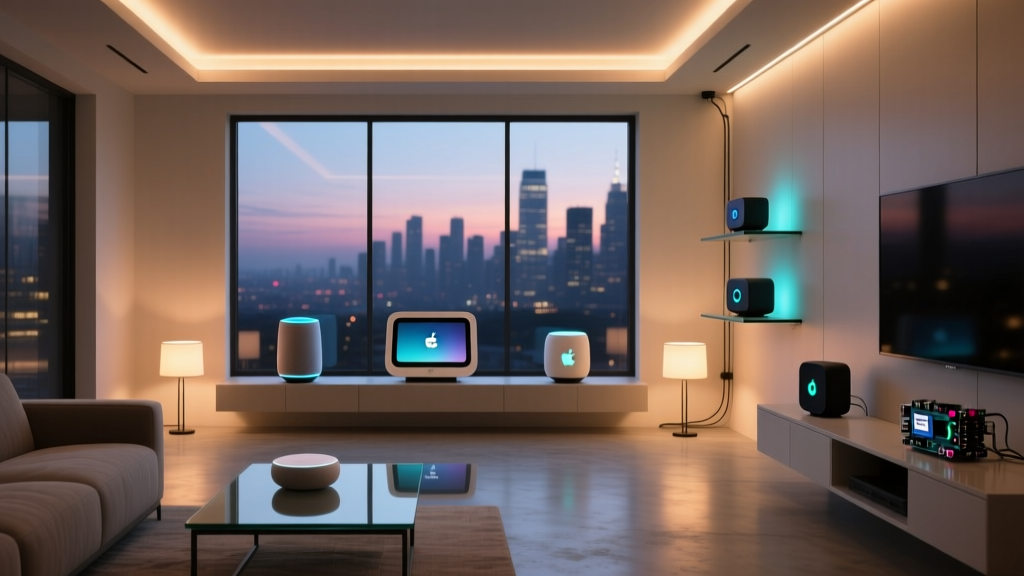
Today, the landscape has fundamentally shifted. The introduction of the Matter smart home standard and the Thread networking protocol has dismantled these barriers. Cross-platform compatibility is no longer a pipe dream; it is the new industry baseline. In this comprehensive guide, we will explore the best cross-platform smart home devices that bridge Amazon Alexa, Apple HomeKit, and Google Home, allowing you to build a cohesive, responsive, and future-proof smart home regardless of which voice assistant you prefer to shout at in the kitchen.
Understanding Matter and Thread: The Cross-Platform Backbone
Before diving into specific products, it is crucial to understand the technologies making true cross-platform functionality possible. Matter, developed by the Connectivity Standards Alliance (CSA), is an open-source, royalty-free application layer protocol. It allows devices to communicate securely and reliably across different ecosystems. If a device is Matter-certified, it can be controlled by Alexa, Siri, and Google Assistant simultaneously.
Complementing Matter is Thread, a low-power, wireless mesh networking protocol. While Wi-Fi and Bluetooth have their places, Thread provides a robust, self-healing mesh network that doesn't congest your home's primary Wi-Fi bandwidth. Together, Matter and Thread form the ultimate foundation for cross-platform smart home devices, ensuring local execution, lightning-fast response times, and universal compatibility.
Best Cross-Platform Smart Hubs and Speakers
To orchestrate a cross-platform home, you need hubs and speakers that act as Thread Border Routers and Matter Controllers. These devices bridge the gap between your wireless mesh network and your home's Wi-Fi, while simultaneously managing device authorization across ecosystems.
Apple HomePod (2nd Generation)
Cost: $299
Protocols: Wi-Fi, Bluetooth, Thread, Matter
Best For: Audiophiles and households with mixed Apple and Android users.
The 2nd Generation HomePod is not just a premium speaker; it is a powerhouse for cross-platform homes. It features a built-in Thread border router and acts as a Matter controller. Even if members of your household prefer Android phones and Google Home, the HomePod can seamlessly control Matter-enabled Thread devices locally without relying on cloud servers. Its support for multi-admin setups means an iPhone user and a Pixel user can both have full control over the same smart lights and locks.
Amazon Echo (4th Gen)
Cost: $99
Protocols: Wi-Fi, Bluetooth, Zigbee, Matter
Best For: Budget-conscious builders with legacy Zigbee devices.
The spherical Echo 4th Gen remains one of the most versatile hubs on the market. It includes a built-in Zigbee hub, allowing you to connect older, non-Matter smart home devices directly to Alexa. More importantly, Amazon has rolled out Matter controller support via firmware updates. This allows the Echo to seamlessly integrate new Matter-over-Thread devices, bridging them into the Alexa ecosystem while leaving the door open for Apple and Google controllers to manage the exact same devices.
Google Nest Hub (2nd Gen)
Cost: $99
Protocols: Wi-Fi, Bluetooth, Thread, Matter
Best For: Visual feedback and kitchen/bedroom command centers.
While it lacks the Zigbee support of the Echo, the Nest Hub 2nd Gen is a phenomenal Thread border router. Google has been aggressive in adopting Matter, and the Nest Hub acts as a reliable bridge for Thread devices. Its visual interface makes it an excellent cross-platform controller for households that want a central dashboard for security cameras, lighting scenes, and climate control, regardless of the primary smartphone brand used by the family.
Best Cross-Platform Lighting Solutions
Lighting is usually the first step into the smart home world. Fortunately, lighting manufacturers have been some of the earliest and most enthusiastic adopters of Matter and Thread.
Nanoleaf Essentials A19 and Lightstrips
Cost: $19.99 - $49.99
Protocols: Bluetooth, Thread, Matter
Nanoleaf was among the very first companies to market with native Thread and Matter support. The Essentials line allows you to pair the bulbs directly to an Apple HomePod, a Nest Hub, or an Echo via Thread. Because they operate on a mesh network, adding more bulbs actually strengthens your smart home's signal. They support adaptive lighting and millions of colors, responding instantly to voice commands from any of the big three assistants.
Philips Hue (via Matter Bridge Update)
Cost: $59.99 (Bridge) + $24.99+ per bulb
Protocols: Zigbee (to Bridge), Matter (from Bridge)
If you already have a massive investment in Philips Hue, you do not need to replace your bulbs. Signify (the parent company of Hue) released a firmware update for the Hue Bridge that enables Matter support. This turns the Hue Bridge into a Matter bridge, exposing all your connected Zigbee lights to Apple HomeKit, Google Home, and Amazon Alexa simultaneously. It is the gold standard for retrofitting an existing premium lighting ecosystem into a unified cross-platform setup.
Best Cross-Platform Climate and Security Devices
Ecobee Smart Thermostat Premium
Cost: $249
Protocols: Wi-Fi, Matter (via firmware)
The Ecobee Premium is a masterclass in cross-platform compatibility. Long before Matter existed, Ecobee ensured its thermostats worked natively with Alexa, Siri, and Google Assistant. With the addition of Matter support, the Ecobee integrates even more deeply into local automations. It includes a built-in air quality monitor, a smart speaker, and a remote room sensor, making it the undisputed king of cross-platform climate control.
Yale Assure Lock 2
Cost: $279 (with Matter over Thread module)
Protocols: Bluetooth, Thread, Matter
Smart locks have historically been highly fragmented. The Yale Assure Lock 2 changes the game by offering swappable smart modules. By inserting the Matter over Thread module, the lock becomes universally compatible. You can grant access codes via Apple Home, check the lock status via Google Home, and trigger automated locking routines via Alexa—all from the exact same hardware.
Cross-Platform Device Comparison Matrix
The following table summarizes the top devices, their native ecosystem support, underlying protocols, and average retail costs to help you plan your unified smart home.
| Device | Category | Protocols | Ecosystem Support | Avg. Price |
|---|---|---|---|---|
| Apple HomePod (2nd Gen) | Hub / Speaker | Thread, Matter, Wi-Fi | Alexa, Google, Apple | $299 |
| Amazon Echo (4th Gen) | Hub / Speaker | Zigbee, Matter, Wi-Fi | Alexa, Google, Apple | $99 |
| Nanoleaf Essentials A19 | Lighting | Thread, Matter, BT | Alexa, Google, Apple | $19 |
| Philips Hue Bridge | Lighting Hub | Zigbee, Matter, Wi-Fi | Alexa, Google, Apple | $59 |
| Ecobee Premium | Thermostat | Matter, Wi-Fi | Alexa, Google, Apple | $249 |
| Yale Assure Lock 2 | Security | Thread, Matter, BT | Alexa, Google, Apple | $279 |
Device Category Analysis: Price vs. Compatibility
When building a cross-platform home, it is helpful to visualize where you get the most universal compatibility for your dollar. The chart below illustrates the average entry price for various device categories alongside their cross-platform compatibility scores (based on native Matter support and multi-admin reliability).
Setting Up Multi-Admin Automations
The true magic of cross-platform devices lies in the 'Multi-Admin' feature inherent to the Matter protocol. In the past, pairing a smart plug to Apple HomeKit meant it was removed from Google Home. With Matter, Multi-Admin allows a single device to be securely paired to multiple fabric networks simultaneously.
Actionable Setup Advice:
- Primary Setup: Scan the Matter QR code on your device (e.g., the Yale Assure Lock 2) using your primary ecosystem's app (e.g., Apple Home).
- Enable Multi-Admin: Within the Apple Home app, navigate to the device settings, select 'Turn On Access for Other Apps,' and generate a secondary pairing code.
- Secondary Setup: Open the Google Home or Alexa app, select 'Add Device,' and scan the newly generated code. The device now lives in both ecosystems natively.
- Cross-Ecosystem Automations: You can now create an automation in Apple Home that turns on the Nanoleaf Essentials lights when the Yale lock is unlocked, while simultaneously allowing a Google Nest Hub to announce the lock's status.
Privacy and Data Handling Across Ecosystems
When merging Amazon, Google, and Apple ecosystems, privacy becomes a complex matrix. Each company has a different approach to data harvesting and cloud processing. According to privacy advocates at the Electronic Frontier Foundation (EFF), the proliferation of cloud-dependent smart home devices has historically increased the risk of data exposure and unauthorized surveillance.
Fortunately, prioritizing Matter and Thread devices inherently improves your privacy posture. Because Thread is a local mesh network and Matter supports local execution, commands sent from an Apple HomePod to a Nanoleaf bulb do not need to travel to an external cloud server and back. They are routed locally through your home's network. By relying on cross-platform Matter devices, you drastically reduce the amount of telemetry data sent to third-party servers, keeping your household's daily routines private and secure.
Conclusion: Building Your Unified Home
The era of choosing between Amazon, Apple, and Google is officially over. By investing in Matter-certified, Thread-enabled devices like the Ecobee Premium thermostat, Nanoleaf lighting, and the Yale Assure Lock 2, you can build a resilient, lightning-fast smart home that caters to every family member's preferred ecosystem. Start with a robust Thread border router like the HomePod or Nest Hub, prioritize devices bearing the Matter logo, and embrace the multi-admin feature to unlock the true, unified potential of your smart home.