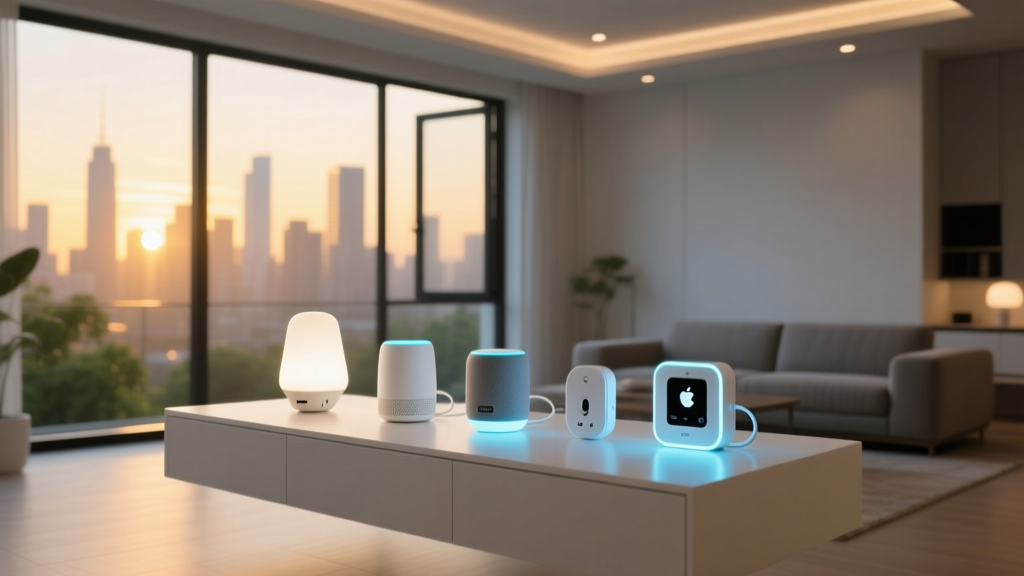
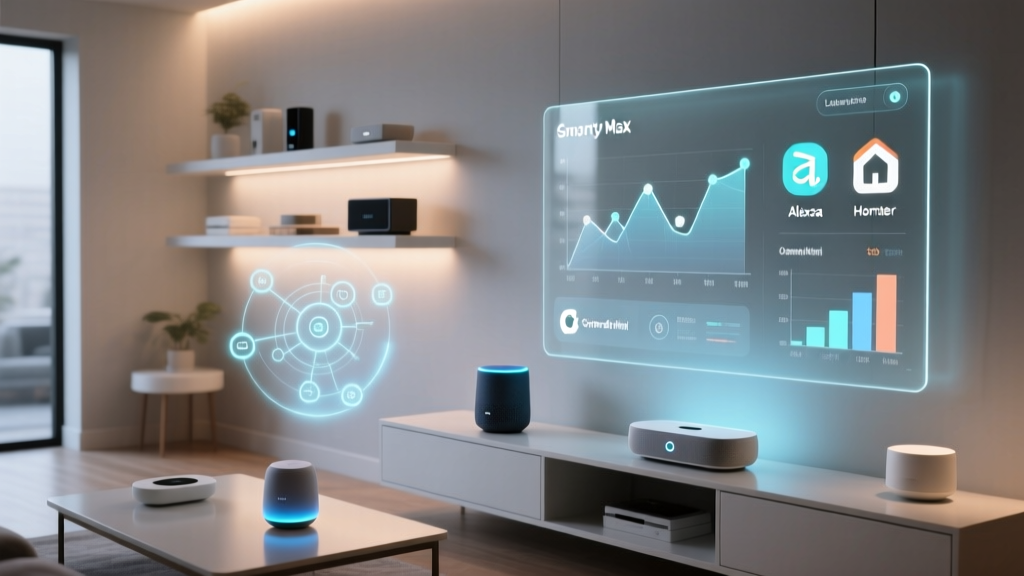
The Fragmented Smart Home Dilemma
For years, smart home enthusiasts and casual users alike have faced a frustrating dilemma: the 'walled garden' effect. You might start with an Amazon Echo for voice control, switch to an iPhone and fall in love with Apple HomeKit's privacy, and later install a Google Nest Thermostat for energy savings. The result? A fragmented ecosystem requiring multiple apps, conflicting automations, and a frustrating user experience. Building a unified smart home used to mean pledging allegiance to a single tech giant. Today, however, the landscape has fundamentally shifted.
At SmartHomeDeck, we believe your smart home should adapt to your preferences, not the other way around. Thanks to the advent of universal standards and cross-platform hardware, you no longer need to choose just one side. This comprehensive guide explores the best cross-platform smart home devices that bridge the gap between Amazon Alexa, Google Home, Apple HomeKit, and Samsung SmartThings, ensuring your home remains flexible, future-proof, and entirely under your control.
The Matter and Thread Revolution
To understand cross-platform compatibility today, we must first discuss the Connectivity Standards Alliance (CSA) and their groundbreaking Matter protocol. Matter is an open-source, royalty-free connectivity standard that allows smart home devices to communicate seamlessly across different ecosystems. If a device bears the Matter logo, it is guaranteed to work with Apple, Amazon, Google, and Samsung simultaneously.
Working hand-in-hand with Matter is Thread, a low-power, mesh networking protocol. Unlike Wi-Fi, which can clog your router's bandwidth, or Bluetooth, which has limited range, Thread creates a robust, self-healing mesh network. Devices act as 'Border Routers,' passing signals from one another back to your primary hub. When selecting cross-platform devices, prioritizing 'Matter over Thread' is the gold standard for reliability and speed.
Best Universal Smart Lighting
Lighting is the entry point for most smart homes, and it is also where cross-platform compatibility shines brightest.
Philips Hue (with Matter-Enabled Bridge)
Philips Hue has long been the premium choice for smart lighting, but it was historically tied to its own proprietary Zigbee ecosystem. That changed when Signify released a firmware update enabling the Hue Bridge to act as a Matter bridge. Now, your entire Hue setup can be exposed to Apple Home, Google Home, and SmartThings simultaneously via Matter.
- Compatibility: Alexa, Google, Apple, SmartThings (via Matter)
- Protocol: Zigbee (local mesh) bridged to Matter
- Cost Range: $60 for the Bridge; $50-$200 for bulbs and light strips
- Best Feature: Unmatched color accuracy, deep dimming capabilities down to 0.1%, and local processing via the Hue Bridge ensures lights work even if the internet goes down.
Nanoleaf Essentials Matter Bulbs
For those who want to skip the hub entirely, Nanoleaf Essentials are phenomenal. They connect directly to your home network using Thread, provided you have a Thread Border Router (like an Apple TV 4K or Nest Hub).
- Compatibility: Apple, Google, Alexa (via Matter over Thread)
- Protocol: Thread / Bluetooth
- Cost Range: $25 - $30 per bulb
- Best Feature: Native Thread support means blazing-fast response times and zero Wi-Fi congestion.
Best Universal Hubs and Bridges
A cross-platform home needs a central brain to manage local automations and translate protocols. These hubs act as the ultimate diplomats between your devices and your preferred voice assistants.
Samsung SmartThings Station
Do not let the 'Samsung' branding fool you; the SmartThings Station is a universal powerhouse. Priced aggressively at around $79, it serves as a Matter controller, a Thread Border Router, and a SmartThings hub all in one compact, sleek package.
- Role: Matter Controller, Thread Border Router, Zigbee Hub
- Ecosystem Support: Aggregates devices into the SmartThings app, which then seamlessly links to Alexa and Google Home via native cloud integrations.
- Why it wins: It is currently one of the most affordable and reliable ways to introduce Thread and Matter routing into a mixed-ecosystem home.
Home Assistant Green
For the privacy-conscious power user, Home Assistant is the undisputed king of cross-platform integration. The Home Assistant Green is a plug-and-play hub that runs entirely locally. It pulls in devices from Apple, Google, Amazon, and thousands of niche brands into a single, unified dashboard.
- Role: Local Automation Server and Universal Bridge
- Ecosystem Support: Exposes unified virtual devices back to Alexa, Google, and Apple via HomeKit Bridge.
- Cost Range: $99 for the Green hub
- Why it wins: 100% local processing means zero cloud latency and absolute data privacy. If a brand shuts down its servers, your local Home Assistant setup keeps working.
Best Cross-Platform Sensors and Security
Sensors are the eyes and ears of your smart home. Cross-platform sensors ensure that whether you ask Siri to check the front door or use an Alexa Routine to trigger the hallway lights, the data is instantly available.
Aqara Presence Sensor FP2
The FP2 is a marvel of modern sensor technology. Utilizing millimeter-wave radar, it does not just detect motion; it detects human presence (even if you are sitting perfectly still reading a book) and can map out to 30 distinct zones in a single room.
- Compatibility: Apple HomeKit, Alexa, Google Home, SmartThings (via Matter)
- Protocol: Wi-Fi / Matter
- Cost Range: $69
- Setup Note: To use its advanced multi-zone features across platforms, ensure you are pairing it via Matter, which exposes the distinct zones as individual binary sensors to your chosen ecosystem.
Eve Door & Window (Matter Edition)
Eve has been a champion of Apple HomeKit for years, but their pivot to Matter has made their sleek, reliable sensors universal. The Eve Door & Window sensor provides instant open/close alerts and tracks historical statistics.
- Compatibility: Apple, Google, Alexa, SmartThings
- Protocol: Thread / Matter
- Cost Range: $40
- Best Feature: Powered by a standard replaceable battery, it boasts a lifespan of over a year and requires zero proprietary hubs.
Device Compatibility Matrix
To help you visualize how these devices interact across the major platforms, refer to the compatibility matrix below. Note that 'Matter' indicates native support via the universal standard, while 'Cloud' indicates reliance on the manufacturer's cloud servers to bridge the gap.
| Device | Primary Protocol | Apple Home | Google Home | Amazon Alexa | SmartThings |
|---|---|---|---|---|---|
| Philips Hue Bridge | Zigbee / Matter | Matter | Matter | Cloud / Matter | Cloud / Matter |
| Nanoleaf Essentials | Thread / Matter | Matter | Matter | Matter | Matter |
| SmartThings Station | Thread / Zigbee | Cloud Link | Cloud Link | Cloud Link | Native |
| Home Assistant Green | Local Server | Native Bridge | Native Link | Native Skill | Cloud Link |
| Aqara FP2 Sensor | Wi-Fi / Matter | Matter | Matter | Matter | Matter |
| Eve Door & Window | Thread / Matter | Matter | Matter | Matter | Matter |
Cost Analysis: Proprietary vs. Cross-Platform
A common misconception is that building a cross-platform, Matter-enabled smart home is significantly more expensive than buying into a single proprietary ecosystem. While individual Matter-certified devices can sometimes carry a slight premium due to new hardware requirements, the elimination of redundant, brand-specific hubs actually balances the cost. As noted in The Verge's comprehensive Matter explainer, the long-term savings come from not being locked into a single brand's expensive proprietary accessories.
Average Setup Cost: Proprietary vs. Matter Cross-Platform
Privacy and Data Handling in Cross-Platform Setups
When mixing ecosystems, privacy becomes a complex web. If you use an Aqara sensor with Apple HomeKit, your data is processed locally or end-to-end encrypted. However, if you expose that same sensor to Amazon Alexa via a cloud bridge, you are subject to Amazon's data handling policies.
The Local Advantage: Devices utilizing Thread and Matter communicate locally within your home. The commands do not travel to a cloud server in another country to turn on your living room lamp. This drastically reduces latency and keeps your daily habits private.
The Hub Strategy: To maximize privacy, use a local hub like Home Assistant or the Apple TV 4K as your primary controller. Only expose specific, non-sensitive devices (like smart plugs or lights) to cloud-based voice assistants like Alexa or Google Assistant, while keeping cameras and door locks strictly on local, encrypted networks.
Cross-Platform Automation Strategies
Matter is incredible for basic commands and state reporting, but it is still evolving regarding complex automations (like multi-condition logic or advanced camera AI triggers). Here is how to handle advanced cross-platform automations:
- Use SmartThings for Broad Strokes: The SmartThings app is excellent for creating simple 'If This, Then That' routines that involve devices from different brands. For example, triggering a Hue light when an Eve door sensor opens.
- Leverage Home Assistant for Granular Control: If you need an automation that says, 'Turn on the lights only if the Aqara FP2 detects presence, the sun is below the horizon, and the TV is off,' Home Assistant is required. Matter currently exposes basic states, but advanced logic requires a robust local server.
- Voice Assistant Routines: Both Alexa and Google Home now support Matter devices in their native routine builders. You can use an Apple HomeKit-exclusive Matter sensor to trigger an Alexa Guard routine, effectively bridging the platforms through the device's universal language.
Actionable Advice for Mixing Ecosystems
Ready to build your universal smart home? Follow these foundational rules to ensure a smooth experience:
- Pick a Primary Controller: Even in a cross-platform home, you need one 'source of truth' to manage Thread networks and Matter pairings. Choose either an Apple TV 4K, a Nest Hub Pro, or a SmartThings Station to act as your primary Thread Border Router.
- Look for the Logo: Before purchasing any new device, check the packaging for the official Matter logo. If it is not there, verify if the manufacturer has committed to a firmware update.
- Update Firmware First: Out-of-the-box firmware on early Matter devices was notoriously buggy. Before attempting to pair a new device to multiple ecosystems, connect it to its native app and update the firmware immediately.
- Standardize Naming Conventions: Because Matter exposes devices to multiple apps simultaneously, a device named 'Living Room Lamp' in the Hue app will appear as 'Living Room Lamp' in Apple Home and Alexa. Use clear, standardized names to avoid confusing your voice assistants.
Conclusion
The era of being locked into a single smart home ecosystem is officially over. By leveraging the power of Matter, Thread, and universal hubs like the SmartThings Station and Home Assistant Green, you can curate a smart home that utilizes the best hardware on the market, regardless of the logo on the box. Whether you are prioritizing the privacy of Apple HomeKit, the voice recognition of Amazon Alexa, or the AI smarts of Google Home, a cross-platform approach ensures your home remains adaptable, resilient, and truly smart for years to come.