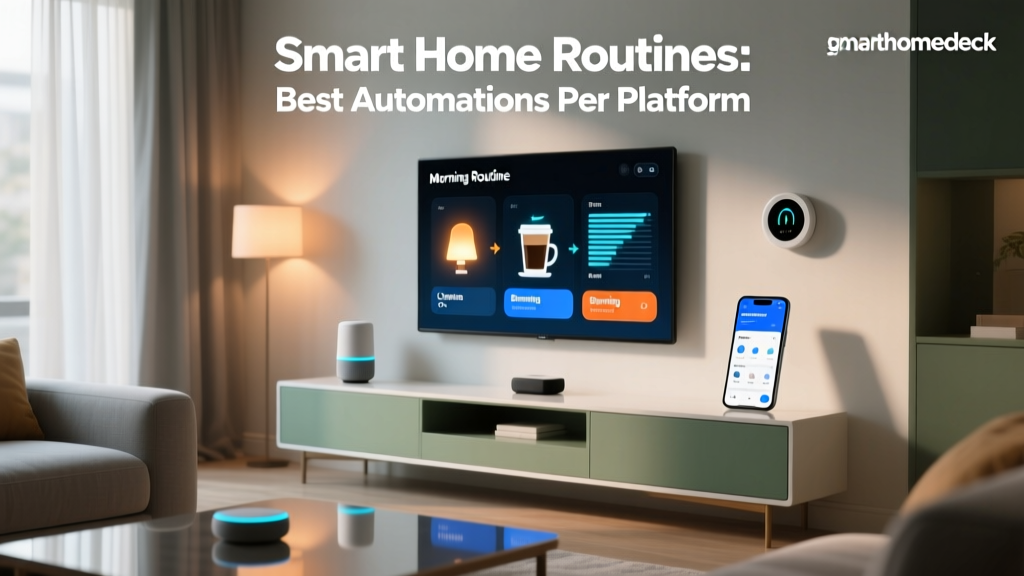
Home Assistant Add-Ons Ecosystem: Expanding Functionality for Your Smart Home
Home Assistant has cemented itself as one of the most powerful, flexible, and privacy-focused smart home platforms available today. At its core, it provides a unified interface to control hundreds of smart home devices from virtually any manufacturer. But the true power of Home Assistant lies not just in its base functionality — it lies in the Home Assistant add-ons ecosystem, a vast and ever-growing library of extensions that transform the platform from a simple hub into a comprehensive smart home command center.
Whether you are looking to integrate advanced network monitoring, set up local voice assistants, manage energy consumption, or build complex automations that rival commercial offerings, the add-ons ecosystem provides the tools you need. This comprehensive guide explores the Home Assistant add-ons ecosystem in depth, covering everything from essential add-ons and setup strategies to privacy considerations, automation workflows, and how the platform compares to alternatives.
If you are new to Home Assistant or considering making the switch from a cloud-dependent platform, understanding the add-ons ecosystem is essential to unlocking the full potential of your smart home. Let us dive in.
Platform Overview: What Makes the Home Assistant Add-Ons Ecosystem Unique
Home Assistant is an open-source home automation platform that runs locally on your network. Unlike proprietary smart home hubs that rely on cloud servers, Home Assistant processes everything within your own home, giving you unparalleled control over your devices, your data, and your automations. The platform supports integrations with thousands of devices and services, from smart lights and thermostats to security cameras and media players.
Understanding Add-Ons vs. Integrations
Before exploring the ecosystem, it is important to distinguish between two key concepts in Home Assistant: integrations and add-ons.
Integrations are built-in components that allow Home Assistant to communicate with specific devices or services. For example, a Philips Hue integration lets Home Assistant discover and control your Hue lights. Integrations are part of the core platform and are maintained by the Home Assistant community and developers.
Add-ons, on the other hand, are separate applications that run alongside Home Assistant within the same operating environment (typically Home Assistant OS or a supervised installation). Add-ons extend the platform's capabilities by providing entirely new services — such as a local MQTT broker, a network ad blocker, a media server, or a local AI-powered voice assistant. They are managed through the Home Assistant Supervisor and can be installed, updated, and configured directly from the user interface.
This distinction matters because add-ons represent a fundamentally different approach to expanding functionality. Rather than simply adding support for another device, add-ons introduce entirely new capabilities to your smart home infrastructure. They transform your Home Assistant server into a multi-purpose appliance that can handle tasks far beyond basic device control.
The Architecture Behind Add-Ons
Home Assistant add-ons run as Docker containers within the Home Assistant OS environment. This containerized architecture provides several benefits:
- Isolation: Each add-on runs in its own container, preventing conflicts between different services and ensuring stability.
- Easy management: Add-ons can be installed, started, stopped, updated, and removed with a single click from the Home Assistant interface.
- Resource efficiency: Containers share the host operating system's kernel, making them lightweight compared to full virtual machines.
- Community contributions: The containerized model makes it relatively straightforward for developers to package their tools as Home Assistant add-ons, leading to a rich and diverse ecosystem.
The Home Assistant project maintains a curated set of official add-ons that are tested and supported by the core team. Beyond these, the community has created hundreds of third-party add-on repositories that extend functionality even further. The Home Assistant Community Store (HACS) also plays a role, though HACS primarily focuses on custom integrations, frontend cards, and themes rather than add-ons in the strict sense.
Why the Add-Ons Ecosystem Matters
The add-ons ecosystem is what sets Home Assistant apart from closed platforms like Samsung SmartThings, Apple HomeKit, or Google Home. With those platforms, you are limited to the features and integrations the manufacturer chooses to provide. With Home Assistant, the add-ons ecosystem gives you the freedom to build a smart home that is tailored precisely to your needs, without relying on external cloud services or paying subscription fees.
For homeowners who have invested in a variety of smart home devices from different manufacturers, the add-ons ecosystem provides the glue that holds everything together. It enables cross-brand automations, local processing, and advanced features that simply are not possible with stock hub firmware.
Best Add-Ons to Expand Your Smart Home Functionality
The Home Assistant add-on repository contains dozens of options, and the community repositories add hundreds more. Choosing the right add-ons for your setup depends on your specific needs, hardware capabilities, and technical comfort level. Below, we explore some of the most impactful and widely used add-ons across several categories.
Network & Security Add-Ons
AdGuard Home is one of the most popular community add-ons, providing network-wide ad blocking and DNS filtering. By running AdGuard Home as an add-on, you can block advertisements, trackers, and malicious domains for every device on your network — not just those running browser extensions. This is particularly useful for smart home devices that may phone home to unknown servers or display ads in their interfaces.
Mosquitto Broker is an essential add-on for anyone working with MQTT-based devices. MQTT (Message Queuing Telemetry Transport) is a lightweight messaging protocol widely used in IoT devices, and many popular smart home products — including Tasmota-flashed devices, Zigbee2MQTT coordinators, and various sensors — rely on it. The Mosquitto add-on provides a local MQTT broker that enables fast, reliable communication between your devices and Home Assistant without any cloud dependency.
NGINX Home Assistant SSL Proxy is an official add-on that enables secure remote access to your Home Assistant instance. By setting up SSL certificates and a reverse proxy, you can access your dashboard from anywhere over an encrypted connection without exposing your server directly to the internet. For users who want remote access without relying on the Nabu Casa cloud service, this add-on is a critical component of a secure setup.
Fail2Ban and SSH & Web Terminal add-ons provide additional layers of security. Fail2Ban monitors login attempts and blocks suspicious IP addresses, while the SSH add-on gives you command-line access to your Home Assistant server for advanced configuration and troubleshooting.
Media & Entertainment Add-Ons
Plex Media Server and Jellyfin are community add-ons that transform your Home Assistant hardware into a full-featured media server. While these may seem tangential to smart home automation, they integrate beautifully with Home Assistant's media player entities, allowing you to build automations around your media consumption — such as dimming lights when a movie starts or pausing playback when a doorbell rings.
Spotify Connect (available through various community add-ons) enables your Home Assistant server to act as a Spotify Connect target, letting you stream music directly through connected speakers and integrate music playback into your automations and scenes.
For those with smart displays or dedicated dashboard tablets, the WallPanel add-on provides a streamlined interface optimized for wall-mounted screens, complete with motion detection, screen wake features, and camera support for intercom functionality.
Home Automation & Productivity Add-Ons
Node-RED is arguably the most powerful add-on in the entire ecosystem. This visual programming tool allows you to create complex automation flows using a drag-and-drop interface. While Home Assistant's built-in automation editor is capable, Node-RED excels at handling intricate logic, conditional branching, and multi-step workflows that would be cumbersome to implement with YAML configuration alone. Node-RED connects directly to Home Assistant via a dedicated integration, giving it access to all your entities, services, and events.
AppDaemon is another automation powerhouse, providing a Python-based environment for writing advanced automations. If you are comfortable with programming, AppDaemon offers far more flexibility than the standard automation engine, including the ability to create custom apps that respond to state changes, time events, and complex conditions.
InfluxDB paired with Grafana creates a comprehensive data logging and visualization solution. InfluxDB stores time-series data from your sensors and devices, while Grafana provides beautiful, customizable dashboards for analyzing trends in temperature, energy usage, occupancy patterns, and more. This combination is invaluable for homeowners who want to understand their home's performance over time and make data-driven decisions about energy-efficient devices like smart thermostats.
ESPHome is an add-on that deserves special attention. It provides a framework for creating custom IoT devices using inexpensive ESP8266 and ESP32 microcontrollers. With ESPHome, you can build custom sensors, switches, and controllers using simple YAML configuration, then flash the firmware over-the-air. This add-on effectively turns Home Assistant into a development platform for custom hardware, opening up possibilities that no commercial smart home product can match.
Voice Control & AI Add-Ons
The voice assistant landscape within Home Assistant has evolved dramatically. The Wyoming Protocol add-on ecosystem enables local voice processing through a collection of complementary add-ons:
- Whisper provides local speech-to-text conversion using OpenAI's Whisper model, running entirely on your hardware.
- Piper delivers text-to-speech synthesis with natural-sounding voices, also running locally.
- Rhasspy offers an offline voice assistant framework that can be customized with your own wake words, intents, and responses.
Together, these add-ons create a fully local voice assistant that rivals commercial offerings like Amazon Alexa or Google Assistant — without sending any audio data to the cloud. For privacy-conscious users, this is a game-changer. You can place microphone-equipped devices throughout your home knowing that your conversations are never recorded or transmitted to external servers.
The OpenAI Integration (while technically an integration rather than an add-on) deserves mention here as well. When combined with local add-ons, it enables sophisticated natural language processing for voice commands, allowing you to control your smart home with conversational language rather than rigid command structures.
Device Bridge & Protocol Add-Ons
Zigbee2MQTT is one of the most important add-ons for expanding device compatibility. It acts as a bridge between Zigbee devices and Home Assistant via MQTT, supporting hundreds of Zigbee products from manufacturers like Aqara, IKEA, Tuya, Sonoff, and many others. Unlike proprietary Zigbee hubs, Zigbee2MQTT exposes every attribute and capability of your devices, enabling fine-grained control and monitoring that manufacturer hubs often hide.
Z-Wave JS UI serves a similar purpose for Z-Wave devices, providing a powerful management interface for your Z-Wave network. It supports advanced features like network healing, device association management, and firmware updates — capabilities that are often missing from simpler Z-Wave integrations.
HomeKit Bridge and Matter Server add-ons enable two-way communication with Apple's ecosystem and the emerging Matter standard. The HomeKit Bridge exposes your Home Assistant entities to Apple devices, allowing you to use Siri and the Home app to control devices that are not natively HomeKit-compatible. The Matter Server add-on provides support for the Matter protocol, ensuring your setup is ready for the next generation of smart home interoperability.
Setup Tips: Building a Robust Add-On Foundation
Getting the most from the Home Assistant add-ons ecosystem requires careful planning and proper setup. Below are essential tips for building a reliable, performant, and maintainable add-on configuration.
Hardware Considerations
The hardware you choose for your Home Assistant server directly impacts how many add-ons you can run simultaneously and how well they perform. While Home Assistant can run on modest hardware like a Raspberry Pi 4, a serious add-on setup benefits from more capable hardware.
Recommended minimum specifications for a multi-add-on setup:
- Processor: An Intel N100 or equivalent x86 processor provides significantly better performance than ARM-based boards, especially for compute-intensive add-ons like Whisper, Plex, or Frigate NVR.
- RAM: At least 8 GB of RAM is recommended. Add-ons like InfluxDB, Node-RED, and media servers can be memory-hungry, and running multiple add-ons on 4 GB or less may lead to instability.
- Storage: A solid-state drive (SSD) is strongly recommended over an SD card. Add-ons like InfluxDB and Frigate generate significant write operations that will quickly wear out an SD card. A 128 GB or larger SSD provides ample space for add-ons, databases, and media storage.
- Network: A wired Ethernet connection is essential for reliable operation, particularly if you are running media servers, NVR software, or network monitoring add-ons.
For users who want to run resource-intensive add-ons like Frigate NVR (a powerful AI-powered security camera recorder), consider hardware with a dedicated GPU or a Coral TPU (Tensor Processing Unit) for object detection. The Coral USB Accelerator can dramatically improve Frigate's performance, enabling real-time person, vehicle, and animal detection across multiple camera feeds.
Installation & Configuration Best Practices
Start with official add-ons. The official add-on repository maintained by the Home Assistant team offers the most stable and well-supported options. Begin your setup with official add-ons before exploring community repositories. Official add-ons receive timely updates, have thorough documentation, and are tested against each new Home Assistant release.
Add add-ons incrementally. Resist the temptation to install every interesting add-on at once. Instead, add one or two at a time, configure them thoroughly, and verify stability before adding more. This approach makes troubleshooting much easier when issues arise, as you can identify which add-on introduced a problem.
Configure proper backups. Before installing any add-on, ensure you have a recent backup of your Home Assistant configuration. The built-in backup feature (available under Settings > System > Backups) creates a snapshot of your entire setup, including add-on configurations. For added safety, configure automated backups to a network location or cloud storage using the Google Drive Backup or Samba Backup add-ons.
Manage resources carefully. Each add-on consumes system resources. Monitor your server's CPU, memory, and disk usage through the Home Assistant System panel or through Grafana dashboards powered by the InfluxDB add-on. If you notice performance degradation after installing a new add-on, consider whether the functionality it provides justifies the resource cost, or whether you might need to upgrade your hardware.
Keep add-ons updated. Like any software, add-ons receive updates that fix bugs, patch security vulnerabilities, and add new features. Enable automatic updates for add-ons where possible, or establish a regular schedule for reviewing and applying updates. The Home Assistant Supervisor panel shows available updates for all installed add-ons, making it easy to stay current.
Repository Management
Home Assistant supports multiple add-on repositories. The official repository is included by default, but you can add community repositories to access additional add-ons. Some of the most popular community repositories include:
- Home Assistant Community Add-ons: Maintained by community developer Frenck, this repository includes high-quality add-ons like AdGuard Home, Node-RED, AppDaemon, and many others. These add-ons are well-maintained and widely used.
- AlexBelgium's Repository: Offers a wide range of add-ons including Portainer, Jellyfin, and various utility tools.
- Zigbee2MQTT Repository: The dedicated repository for the Zigbee2MQTT add-on, ensuring you receive the latest updates and device support.
When adding community repositories, exercise caution. Only add repositories from trusted sources with active maintenance and community support. Abandoned repositories may contain outdated add-ons with security vulnerabilities or compatibility issues with newer versions of Home Assistant.
Networking & Port Management
Many add-ons expose web interfaces or services on specific network ports. Proper port management is essential to avoid conflicts and maintain security. Key principles include:
- Avoid port conflicts: Before installing an add-on, check which port it requires and ensure no other service is using that port on your network.
- Use the internal Docker network: Where possible, allow add-ons to communicate with Home Assistant through the internal Docker network rather than exposing them on the local network. This reduces your attack surface and simplifies configuration.
- Restrict external access: Only expose add-ons to the external network if absolutely necessary, and always use SSL encryption and authentication. The NGINX reverse proxy add-on can centralize SSL management for all your add-on web interfaces.
Automation & Integration: Unlocking the Full Potential of Add-Ons
The true value of the Home Assistant add-ons ecosystem emerges when you combine add-ons with Home Assistant's powerful automation engine. Add-ons do not just add features — they create new entities, sensors, and services that can trigger and control automations, enabling workflows that would be impossible with device-level integrations alone.
Cross-Add-On Automation Workflows
Consider the following automation scenarios that leverage multiple add-ons working together:
Intelligent Security Automation: Frigate NVR detects a person in your driveway. This triggers an automation that turns on exterior smart lights, sends a notification with a snapshot to your phone, records the event in InfluxDB for trend analysis, and announces the detection through your local Piper voice system on indoor speakers. If the person is recognized as a family member (via Frigate's face recognition or double-take integration), the automation adjusts to simply log the arrival and turn on the porch light.
Energy Management Automation: InfluxDB and Grafana track your home's energy consumption patterns over time. When consumption exceeds a defined threshold during peak pricing hours, an automation automatically adjusts your smart thermostat, pauses non-essential smart plugs, and sends you a notification with a Grafana chart showing current usage versus your daily average. This kind of data-driven automation is only possible with the combination of logging, visualization, and device control add-ons.
Network-Aware Presence Detection: AdGuard Home or a dedicated presence detection add-on monitors which devices are connected to your Wi-Fi network. When your phone disconnects (indicating you have left home), automations trigger your departure routine — arming security sensors, turning off lights, lowering the thermostat, and starting the robot vacuum. When your phone reconnects, the arrival routine reverses these actions and uses Piper to greet you by name.
Node-RED: The Automation Powerhouse
For complex automation workflows, Node-RED is an indispensable add-on. Its visual flow editor makes it possible to design sophisticated logic that would require dozens of YAML automations to replicate. Key advantages of using Node-RED for add-on-driven automations include:
- Visual debugging: Node-RED displays message payloads in real time as they flow through your automation, making it easy to identify where a workflow is failing or producing unexpected results.
- Complex conditional logic: Switch nodes, function nodes, and change nodes allow you to build intricate decision trees that respond to multiple conditions simultaneously.
- External API integration: HTTP request nodes enable Node-RED to interact with external APIs, webhooks, and services, bridging the gap between your local smart home and the broader internet.
- Dashboard capabilities: Node-RED includes its own dashboard framework, allowing you to create custom control panels that complement the Home Assistant interface.
A common pattern is to use Node-RED for complex automations while reserving Home Assistant's built-in automation editor for simpler, single-purpose routines. This hybrid approach leverages the strengths of both systems and keeps your automation logic organized and maintainable.
Building Custom Dashboards with Add-On Data
Add-ons generate a wealth of data that can be displayed on custom Home Assistant dashboards. InfluxDB stores historical sensor data, Frigate provides camera feeds and event clips, AdGuard Home tracks blocked requests, and system monitoring add-ons report hardware health metrics. By combining these data sources into a unified dashboard, you create a single pane of glass for monitoring your entire smart home.
Custom Lovelace cards available through HACS — such as the ApexCharts card for InfluxDB data, the Frigate card for camera feeds, and the Mini Graph card for trend visualization — enable you to build dashboards that are both beautiful and functional. These dashboards become the central interface for your smart home, providing at-a-glance insights that inform your daily routines and long-term decisions about your home's systems.
Scene Coordination Across Add-Ons
Home Assistant scenes can incorporate add-on functionality to create rich, multi-layered experiences. A "Movie Night" scene, for example, might:
- Dim smart lights to 20 percent brightness with a warm color temperature
- Close smart blinds or curtains
- Set the thermostat to a comfortable temperature
- Start playback on your Plex media server add-on
- Send a notification to other household members via the Home Assistant companion app
This level of coordination across lighting, climate, media, and communication — all triggered by a single scene activation — exemplifies the power of the add-ons ecosystem when combined with Home Assistant's core automation capabilities.
Privacy & Security: Maintaining Control in a Connected Home
Privacy is one of the primary reasons homeowners choose Home Assistant over cloud-dependent platforms. The add-ons ecosystem reinforces this advantage by providing tools that enhance privacy and security rather than compromising them. However, maintaining a secure setup requires deliberate configuration and ongoing vigilance.
Local-First Philosophy
The Home Assistant project is built on a local-first philosophy. Core functionality operates without an internet connection, and add-ons are designed to extend this principle. When choosing add-ons, prioritize those that process data locally over those that rely on cloud services.
For example, the Whisper add-on performs speech-to-text conversion entirely on your hardware, whereas cloud-based voice assistants send your audio recordings to remote servers for processing. Similarly, Frigate NVR stores all camera footage locally, while commercial NVR solutions often upload recordings to cloud servers where they may be subject to data retention policies and potential breaches.
The AdGuard Home add-on enhances privacy by blocking tracking domains and preventing smart devices from communicating with telemetry servers. Many IoT devices regularly send usage data, diagnostics, and even environmental data to manufacturer servers. AdGuard Home's DNS filtering gives you visibility into and control over these communications, allowing you to decide which external connections are necessary and which should be blocked.
Securing Remote Access
If you need to access your Home Assistant instance remotely, the add-ons ecosystem provides several secure options:
- Nabu Casa: The official remote access service provided by the Home Assistant creators. While it is a paid service, it uses a secure tunnel that does not require opening ports on your router, and it directly supports the project's development.
- Cloudflare Tunnel (cloudflared): A community add-on that establishes a secure tunnel through Cloudflare's network, providing remote access without exposing your server's IP address or opening firewall ports.
- Tailscale: A community add-on that creates a private mesh VPN (Virtual Private Network) connecting your devices directly to your Home Assistant server. Tailscale uses WireGuard encryption and requires no port forwarding, making it one of the most secure remote access options available.
- NGINX + Let's Encrypt: For users comfortable with more manual configuration, the NGINX reverse proxy add-on combined with the Let's Encrypt add-on provides SSL-encrypted remote access through your own domain name.
Regardless of which remote access method you choose, always enable two-factor authentication (2FA) on your Home Assistant user account. This adds a critical layer of security that protects your smart home even if your password is compromised.
Managing Add-On Permissions
Each add-on in Home Assistant has a defined set of permissions that determine what system resources it can access. When installing an add-on, review its required permissions carefully. Common permissions include:
- Full Access: Grants the add-on unrestricted access to the host system. This should be avoided unless absolutely necessary, as a compromised add-on with full access could affect your entire system.
- Host Network: Allows the add-on to use the host's network stack directly. This is required for some add-ons but increases the potential attack surface.
- Docker Access: Permits the add-on to interact with the Docker daemon. This is a powerful permission that should be granted only to trusted add-ons like Portainer.
Follow the principle of least privilege: grant each add-on only the permissions it needs to function, and avoid enabling optional permissions unless you have a specific reason to do so.
Monitoring & Auditing
Several add-ons help you monitor the security posture of your Home Assistant installation:
- System Log Access: The built-in log viewer and the SSH add-on provide access to system logs that can reveal unauthorized access attempts or anomalous behavior.
- AdGuard Home Query Logs: Review DNS query logs to identify devices that are communicating with unexpected external servers. This can reveal compromised devices or overly aggressive data collection by manufacturers.
- Fail2Ban: Automatically blocks IP addresses that exhibit brute-force login behavior, protecting your instance from automated attacks.
Establish a routine for reviewing security-related logs and monitoring dashboards. The Grafana + InfluxDB combination can be configured to track login attempts, network traffic patterns, and resource usage anomalies, providing early warning of potential security issues.
Comparison: Home Assistant Add-Ons vs. Alternative Smart Home Platforms
Understanding how the Home Assistant add-ons ecosystem compares to alternative platforms helps clarify its unique value proposition and identify situations where other solutions might be more appropriate.
Home Assistant Add-Ons vs. Samsung SmartThings
Samsung SmartThings offers a polished, user-friendly experience with strong integration with Samsung devices and a curated selection of third-party products. However, SmartThings is fundamentally limited by its closed architecture. You cannot add custom functionality, run local servers, or extend the platform beyond what Samsung and its partners provide. Automations are constrained to the capabilities of the SmartThings app, and many features require a stable internet connection.
Home Assistant's add-ons ecosystem offers vastly more flexibility. Where SmartThings provides a fixed set of features, Home Assistant allows you to add virtually any capability through add-ons — from network-wide ad blocking to AI-powered security camera analysis. The trade-off is complexity: Home Assistant requires more technical knowledge to set up and maintain, and the add-ons ecosystem demands a willingness to learn and experiment.
Home Assistant Add-Ons vs. Apple HomeKit
Apple HomeKit excels in ease of use, privacy, and integration with the Apple ecosystem. Siri voice control works seamlessly, the Home app is intuitive, and Apple's privacy standards ensure that your data is handled responsibly. However, HomeKit's device compatibility is more limited than Home Assistant's, and you cannot extend the platform with custom add-ons or run local servers.
Home Assistant complements HomeKit beautifully through the HomeKit Bridge add-on, which exposes Home Assistant entities to Apple devices. This allows you to use Siri and the Home app to control devices that lack native HomeKit support, while leveraging Home Assistant's add-ons for advanced automation and monitoring. Many users run both platforms simultaneously, using HomeKit for everyday control and Home Assistant for behind-the-scenes automation and data processing.
Home Assistant Add-Ons vs. Google Home & Amazon Alexa
Google Home and Amazon Alexa dominate the smart home market with their voice-first interfaces and extensive device compatibility. Both platforms offer routines (automations) and support for a wide range of products. However, both are fundamentally cloud-dependent platforms that prioritize data collection and ecosystem lock-in over user privacy and customization.
The Home Assistant add-ons ecosystem provides alternatives to virtually every feature offered by Google Home and Amazon Alexa — with the critical advantage of local processing. The Whisper, Piper, and Rhasspy add-ons deliver local voice control. Node-RED and AppDaemon provide automation capabilities that far exceed the routines available on commercial platforms. And InfluxDB + Grafana offer data analysis tools that Google and Amazon simply do not provide to end users.
For users who want the convenience of voice control without the privacy implications, the combination of Home Assistant's voice add-ons with locally controlled speakers and microphones provides a compelling alternative to cloud-based voice assistants.
Home Assistant Add-Ons vs. Hubitat Elevation
Hubitat Elevation is perhaps the closest competitor to Home Assistant in terms of local processing and advanced automation capabilities. Hubitat runs locally, supports Zigbee and Z-Wave natively, and offers a rule engine for automations. However, Hubitat's add-on ecosystem is far more limited. While Hubitat supports some community-developed drivers and apps, it does not offer the breadth of containerized add-ons that Home Assistant provides.
Where Hubitat excels is in simplicity and reliability for core smart home functions. Its built-in Zigbee and Z-Wave radios eliminate the need for separate coordinators, and its rule engine is accessible to non-programmers. But for users who want to run media servers, AI-powered NVR, network monitoring tools, and custom IoT development environments alongside their smart home hub, Home Assistant's add-ons ecosystem is unmatched.
When Home Assistant Add-Ons Might Not Be the Right Choice
Despite its strengths, the Home Assistant add-ons ecosystem is not ideal for every situation:
- Minimal technical experience: If you are uncomfortable with concepts like Docker containers, network configuration, and YAML files, the learning curve may be steep. Platforms like Apple HomeKit or Samsung SmartThings offer simpler, more guided experiences.
- Limited hardware: Running multiple add-ons requires capable hardware. If you only have a Raspberry Pi or similar low-power device, you may need to be selective about which add-ons you install, or consider upgrading to more powerful hardware.
- Desire for official support: Home Assistant is a community-driven project. While the community is active and helpful, there is no official support line to call when something goes wrong. Users who prefer guaranteed professional support may be better served by commercial platforms.
Frequently Asked Questions About the Home Assistant Add-Ons Ecosystem
What is the difference between Home Assistant add-ons and HACS integrations?
Home Assistant add-ons and HACS (Home Assistant Community Store) integrations serve different purposes within the platform. Add-ons are standalone applications that run in their own Docker containers alongside Home Assistant. They provide separate services — such as an MQTT broker, a media server, or a network ad blocker — that enhance your overall smart home infrastructure. Add-ons are managed through the Supervisor panel and have their own configuration interfaces.
HACS integrations, on the other hand, are Python-based components that extend Home Assistant's core functionality from within the platform. They add support for new devices, create custom sensor types, provide frontend cards for dashboards, or introduce new automation actions. HACS integrations run as part of Home Assistant itself rather than as separate applications.
In practice, many users leverage both add-ons and HACS integrations to build their ideal smart home. For example, you might install the Zigbee2MQTT add-on to manage your Zigbee network, then use a HACS integration to add a custom Lovelace card that displays Zigbee network health metrics on your dashboard.
Can I run Home Assistant add-ons without Home Assistant OS?
The Home Assistant add-ons system, managed by the Supervisor, is available on two installation types: Home Assistant OS (the recommended full-stack installation) and Home Assistant Supervised (installed on top of a standard Linux distribution). If you use the Home Assistant Container installation method (running Home Assistant as a standalone Docker container) or the Home Assistant Core installation (a Python virtual environment), you do not have access to the Supervisor or the add-on store.
However, this does not mean you cannot use the same tools. Users on Container or Core installations can run the equivalent services as standalone Docker containers or native applications. For example, instead of installing the Mosquitto Broker add-on, you can run the Eclipse Mosquitto Docker container separately and configure Home Assistant to connect to it. The trade-off is that you lose the convenience of centralized management through the Supervisor interface, and you must handle updates, backups, and configuration manually.
For most users, especially those new to Home Assistant, the Home Assistant OS installation method is recommended because it provides the full add-ons experience with minimal configuration effort.
How do I troubleshoot add-on issues in Home Assistant?
Troubleshooting add-on issues follows a systematic approach:
Check the add-on logs first. Every add-on has a Log tab in its interface panel. Error messages, warnings, and startup information are displayed here and often provide clear guidance on what is going wrong. Common issues include incorrect configuration values, missing dependencies, or port conflicts.
Verify configuration settings. Many add-on issues stem from misconfigured settings. Compare your configuration against the add-on's documentation, paying special attention to required fields, correct data types, and proper formatting. The add-on's documentation page (accessible from the add-on store) typically includes example configurations and explanations of each setting.
Check for compatibility issues. After a Home Assistant core update, some add-ons may temporarily become incompatible. Check the add-on's repository or community forum threads to see if others are experiencing similar issues. In most cases, add-on developers release compatibility updates shortly after a new Home Assistant version is released.
Review system resources. If an add-on is crashing or performing poorly, check your system's resource usage through the Supervisor panel or the System Monitor integration. Insufficient RAM or CPU capacity is a common cause of add-on instability, particularly on lower-powered hardware like Raspberry Pi devices.
Use the community for support. The Home Assistant community forum (community.home-assistant.io) is an invaluable resource. Search for your specific add-on and issue — chances are, someone else has encountered and solved the same problem. When posting for help, include your add-on version, Home Assistant version, relevant log excerpts, and a description of what you have already tried.
Are Home Assistant add-ons safe to use, and how do I evaluate community add-ons?
Official Home Assistant add-ons maintained by the core development team are generally safe and undergo thorough testing before release. They are updated regularly to address security vulnerabilities and compatibility issues. Community add-ons vary more widely in quality and security practices, but many are maintained by experienced developers with strong track records in the community.
To evaluate the safety and reliability of a community add-on, consider the following criteria:
- Repository reputation: Is the repository well-known and widely used within the community? Repositories like the Home Assistant Community Add-ons (by Frenck) have established track records of quality and security.
- Update frequency: Has the add-on been updated recently? An add-on that has not been updated in over a year may have unpatched vulnerabilities or compatibility issues with current Home Assistant versions.
- Open source code: Can you review the add-on's source code? Open-source add-ons allow the community to audit the code for security issues and malicious behavior. Be cautious of add-ons that distribute closed-source binaries.
- Required permissions: Does the add-on request permissions that seem excessive for its stated functionality? An add-on that provides a simple utility should not require full system access or Docker socket access.
- Community feedback: Check the Home Assistant community forum and the repository's issue tracker for reports of problems, security concerns, or abandoned maintenance.
By applying these evaluation criteria, you can confidently explore the community add-on ecosystem while minimizing security risks. The vast majority of popular community add-ons are safe, well-maintained, and provide genuine value to your smart home setup.
How many add-ons can I run simultaneously on my Home Assistant server?
There is no hard limit on the number of add-ons you can run simultaneously — the practical limit is determined by your hardware's resources. Each add-on consumes CPU cycles, RAM, disk I/O, and network bandwidth. The more resource-intensive the add-on, the fewer you can run concurrently.
As a general guideline, a system with an Intel N100 processor and 8 GB of RAM can comfortably run 10 to 15 moderate add-ons simultaneously, including services like Mosquitto, Zigbee2MQTT, Node-RED, AdGuard Home, and InfluxDB. Adding resource-intensive add-ons like Frigate NVR (especially with multiple camera streams) or Plex Media Server (with transcoding) will reduce the number of additional add-ons you can support.
On a Raspberry Pi 4 with 4 GB of RAM, a more conservative approach is advisable. Running 5 to 8 lightweight add-ons is typically feasible, but you may experience performance issues if you attempt to run compute-intensive add-ons like Whisper or Frigate alongside your core smart home services.
Monitor your system resources regularly using the built-in system health panel or Grafana dashboards. If you consistently see CPU usage above 80 percent or memory usage above 90 percent, consider upgrading your hardware, disabling non-essential add-ons, or moving resource-intensive services to a separate machine. Many experienced users run a two-server setup: one dedicated to core Home Assistant functions and lightweight add-ons, and another for compute-intensive services like Frigate, Plex, and machine learning workloads.
Conclusion: Building Your Ideal Smart Home with the Add-Ons Ecosystem
The Home Assistant add-ons ecosystem represents one of the most powerful and flexible approaches to smart home automation available today. By extending the platform's capabilities through carefully chosen add-ons, you can build a smart home that is more intelligent, more private, and more responsive than any commercial off-the-shelf solution.
From network security and local voice control to advanced automation and comprehensive data analysis, the add-ons ecosystem provides the tools to transform a basic smart home setup into a sophisticated, integrated system that adapts to your lifestyle. The key to success is starting with a solid foundation — appropriate hardware, careful add-on selection, and thoughtful configuration — then expanding incrementally as your needs and expertise grow.
Whether you are just beginning your Home Assistant journey or you are an experienced user looking to push the boundaries of what is possible, the add-ons ecosystem offers virtually unlimited potential. Explore the official add-on store, engage with the community, experiment with new tools, and build the smart home that is uniquely yours.
Ready to expand your smart home further? Explore our guides on choosing the best smart home devices for your setup, learn about smart lighting options that integrate seamlessly with Home Assistant, or discover how smart security devices can work with add-ons like Frigate NVR to create a comprehensive home monitoring solution.