- Thread Border Routers encrypt all mesh traffic with 128-bit AES at the network layer, making intercepted packets unreadable without the network key.
- The Matter protocol adds a second security layer with device attestation using 2048-bit certificates and encrypted CASE/PASE sessions.
- Real vulnerabilities stem from physical access, outdated firmware, and insecure commissioning — not wireless sniffing.
- Hardening requires regular firmware updates, VLAN segmentation, and disabling unused cloud services on the border router.
Thread Border Routers are secure by design. They enforce 128-bit AES encryption across all mesh traffic, require authenticated commissioning for every new device, and bridge the Thread network to your home Wi-Fi through a single controlled gateway. For smart home owners and home automation installers evaluating whether Thread-based ecosystems are safe for security-sensitive devices like locks and cameras, the short answer is that the protocol stack provides robust protection against remote attacks — but misconfiguration and neglected firmware create the real risk.
This guide explains exactly how border routers security works in 2026, where the actual attack surfaces lie, and what you must do to harden your deployment. Whether you run an Apple HomePod, a Google Nest Hub, or a standalone Thread Border Router from a vendor like Nanoleaf or Amazon, the principles below apply.
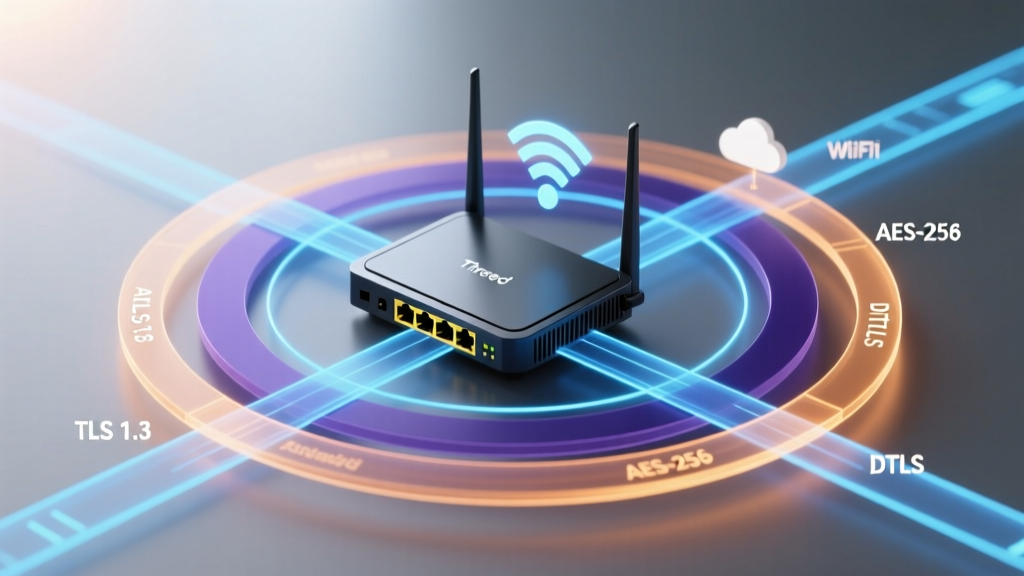
Thread Border Router Security Architecture
A Thread Border Router performs two functions: it routes IPv6 packets between the Thread mesh and your home IP network, and it acts as the commissioning authority for new devices joining the mesh. Both functions carry security implications.
Network-Layer Encryption
Every Thread network operates on the 2.4 GHz frequency band and uses a shared network key derived during commissioning. All MAC-layer frames are encrypted with 128-bit AES-CCM, which provides both confidentiality and message integrity. An attacker capturing packets with a software-defined radio cannot decrypt traffic without the network key. The Thread Group specification mandates that keys rotate when devices leave the network, preventing former nodes from eavesdropping on future traffic. A single Thread network supports up to 250 devices, all sharing this encryption layer.
Matter Protocol Security Overlay
When Matter runs on top of Thread, a second encryption layer activates. The Connectivity Standards Alliance requires every Matter-certified device to carry a Device Attestation Certificate signed with a 2048-bit key. During setup, devices perform a Passcode-Authenticated Session Establishment (PASE) exchange, and during normal operation they use Certificate-Authenticated Session Establishment (CASE). These sessions provide end-to-end encryption independent of the Thread network key. Even if the Thread layer were somehow compromised, Matter traffic remains protected.
A Thread Border Router is a device that connects a Thread mesh network to other IP-based networks such as Wi-Fi or Ethernet, enabling Thread devices to communicate with cloud services and non-Thread devices while enforcing network security policies at the boundary.
Vulnerabilities and Attack Surfaces
The Thread and Matter protocol stacks are well-designed, but border routers security depends on implementation quality and operational hygiene. The following attack surfaces have been documented in security research and real-world deployments.
Commissioning Window Exploitation
When a new device joins a Thread network, the border router opens a commissioning window — typically lasting 300 seconds — during which the device accepts a setup passcode. If an attacker is physically present during this window and knows or brute-forces the passcode, they can inject a rogue node. The Matter specification mitigates this with rate-limiting on passcode attempts, but low-entropy passcodes remain vulnerable.
Firmware and Software Vulnerabilities
Border routers run full operating stacks — often Linux-based — with Wi-Fi drivers, IPv6 routing daemons, and cloud connectivity agents. Each component introduces potential vulnerabilities. In 2025, researchers identified buffer overflow flaws in the OpenThread Border Router implementation that could allow remote code execution if the device was reachable on the local network. Firmware updates from the Thread Group member vendors address these issues, but users who disable automatic updates remain exposed.
Physical Access and Debug Interfaces
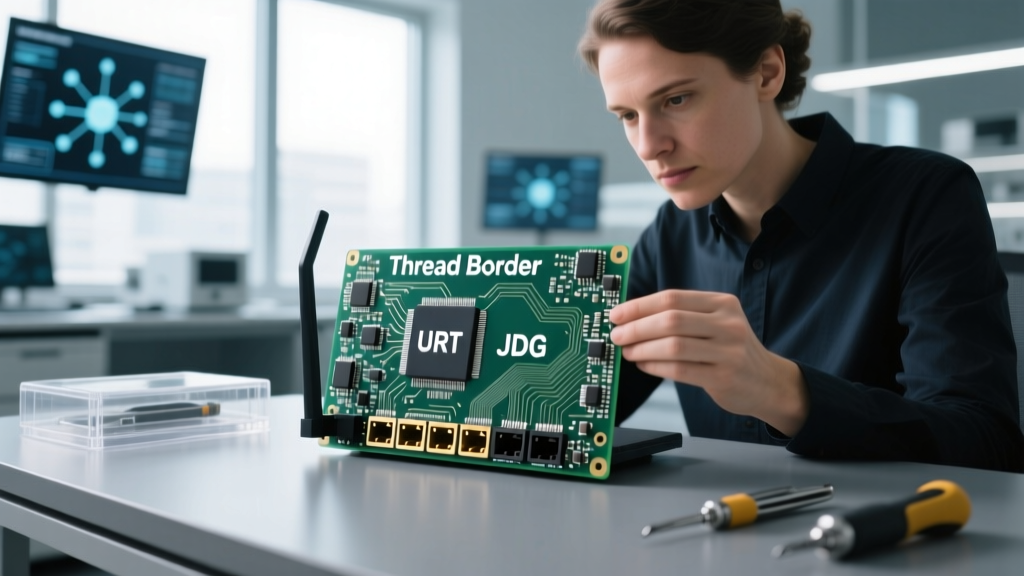
Many standalone border routers expose UART or JTAG debug ports on their circuit boards. An attacker with physical access can extract the Thread network key or inject malicious firmware. This risk is highest for border routers placed in accessible locations like hallways or entryways.
Border Router Security Comparison
The table below compares security features across popular Thread Border Routers available in 2026. All support the Thread 1.4 specification and Matter 1.4 protocol.
| Feature | Apple HomePod (4th Gen) | Google Nest Hub (3rd Gen) | Amazon Echo (5th Gen) | Nanoleaf Thread Border Router |
|---|---|---|---|---|
| Thread Version | 1.4 | 1.4 | 1.4 | 1.4 |
| Automatic Firmware Updates | Yes (forced) | Yes (configurable) | Yes (configurable) | Yes (configurable) |
| Debug Ports Disabled | Yes | Yes | Yes | No (UART exposed) |
| VLAN Support | No | No | No | Yes (802.1Q) |
| Local-Only Mode | Yes | Yes | No | Yes |
| Mesh Latency | 45 milliseconds | 50 milliseconds | 55 milliseconds | 40 milliseconds |
The Connectivity Standards Alliance certifies all these devices for Matter compliance, but security posture beyond the baseline specification varies significantly by vendor.
Border Router Hardening Checklist
Use this checklist to audit and harden every Thread Border Router on your network. Apply these steps after initial deployment and revisit quarterly.
- ☐ Enable automatic firmware updates on the border router and all Thread end devices.
- ☐ Place the border router on a dedicated VLAN or IoT subnet, isolated from your primary computing devices.
- ☐ Disable any unused cloud connectivity or remote access features if you operate locally only.
- ☐ Use high-entropy setup passcodes (minimum 8 digits, no sequential patterns) for device commissioning.
- ☐ Physically secure the border router — mount it out of reach or inside an enclosure to prevent debug port access.
- ☐ Review the border router's connected device list monthly and remove any unrecognized nodes.
- ☐ Disable Wi-Fi Protected Setup on the border router's Wi-Fi interface if it has one.
- ☐ Ensure your home router's firewall blocks inbound IPv6 traffic to the Thread network prefix.
Frequently Asked Questions
Are Thread border routers secure against remote hacking?
Yes, under normal conditions. The 128-bit AES network encryption and Matter's certificate-based session establishment make remote exploitation extremely difficult. The realistic attack path requires either a zero-day vulnerability in the border router's firmware or physical access to the device. Keeping firmware current closes known exploit paths.
Can a Thread border router be used to spy on my network?
A compromised border router could potentially observe unencrypted traffic on your home network if it is not properly segmented. This is why VLAN isolation is critical — it limits the border router's visibility to only the IoT devices it needs to communicate with, preventing lateral movement to computers or phones.
What happens to security when a Thread border router goes offline?
The Thread mesh continues operating among remaining nodes with full encryption intact. However, devices lose cloud connectivity and remote access until the border router recovers. Thread networks can have multiple border routers for redundancy, and the mesh automatically elects a new primary border router if the current one fails.
How does Thread border router security compare to Zigbee and Z-Wave?
Thread's security model is comparable to Zigbee 3.0, which also uses 128-bit AES encryption. However, Thread's IPv6-native architecture and Matter's device attestation provide stronger identity verification than Zigbee's trust-center model. Z-Wave uses S2 security with similar AES-128 encryption but operates on sub-GHz frequencies with lower bandwidth.
Conclusion and Next Steps
Thread Border Routers deliver strong security through layered encryption, authenticated commissioning, and mandatory device attestation. The protocol design resists remote attacks effectively. Your responsibility as a smart home operator is to maintain that security through firmware updates, network segmentation, and physical protection of the hardware.
Your next step: run the hardening checklist above against every border router on your network today. Identify which devices lack automatic updates, which sit on your primary network without isolation, and which have exposed debug interfaces. Address the highest-risk item first — typically firmware update configuration — and schedule the remaining items across the next 30 days.