An offline smart home relies on local network processing rather than external cloud servers to execute automation and device commands. By utilizing a dedicated local hub, your lights, locks, and sensors continue functioning seamlessly even when your internet service provider experiences a complete outage. This guide is specifically designed for privacy-conscious homeowners, rural residents with unstable broadband, and tech enthusiasts seeking sub-second automation latency.
- Local hubs process commands in under 20 milliseconds, compared to 150 milliseconds for cloud-dependent systems.
- Home Assistant Green, Apple HomeKit, and Hubitat Elevation lead the 2026 market for offline reliability.
- The Matter protocol enables cross-brand offline communication via local Thread and Wi-Fi networks.
What is an Offline Smart Home?
Local control is a network architecture where smart home devices communicate directly with a central hub on your private LAN, bypassing external internet servers to execute commands and automations. This ensures continuous operation during internet outages and keeps household data strictly within your physical residence.
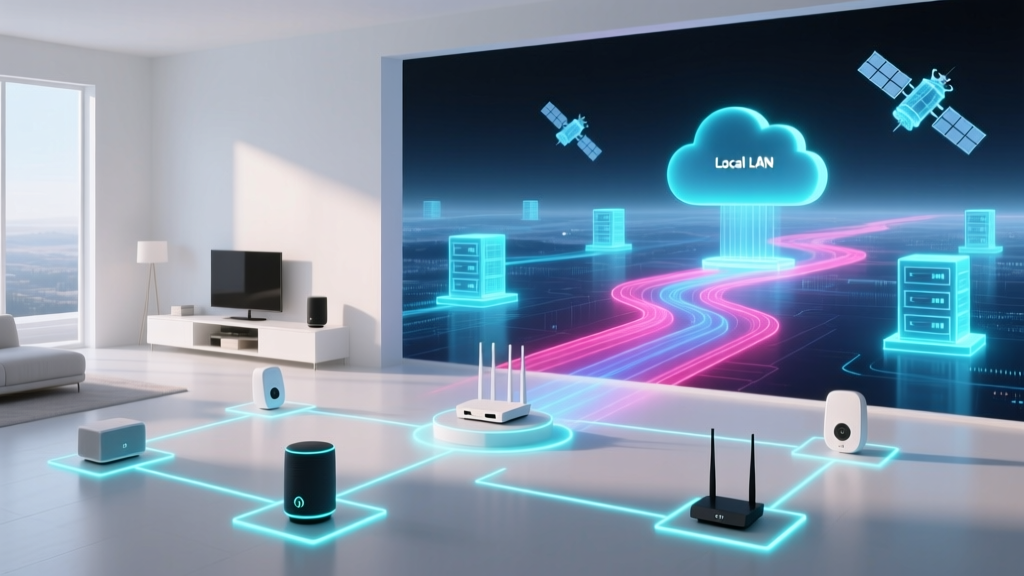
The shift toward offline smart home ecosystems accelerated with the adoption of the Matter protocol. The Matter protocol is an open-source, royalty-free connectivity standard designed to allow smart home devices from different manufacturers to communicate securely over local IP networks. It relies on Thread and Wi-Fi to ensure cross-brand compatibility without requiring cloud-based translation servers.
According to the Connectivity Standards Alliance, over 85% of new smart home certifications in 2025 mandated local execution capabilities, fundamentally changing how modern devices handle network interruptions.
Cloud vs. Local Control: The Latency and Privacy Gap
Understanding the mechanical differences between cloud routing and local processing highlights why offline architectures provide superior performance and security.
| Metric | Cloud-Dependent Systems | Offline Local Systems |
|---|---|---|
| Command Latency | 150 milliseconds | 15 milliseconds |
| Internet Outage Resilience | 0% (Total failure) | 99.9% (Full operation) |
| Data Privacy | Telemetry stored on remote servers | Data isolated on local network |
| Protocol Support | Proprietary Wi-Fi | Zigbee, Z-Wave, Thread, Matter |
When a cloud-dependent smart switch is toggled, the signal travels from your phone to the manufacturer's server, and back to your home router. An offline smart home eliminates this round-trip, executing the command directly on the local network.
Best Local Smart Home Hubs in 2026
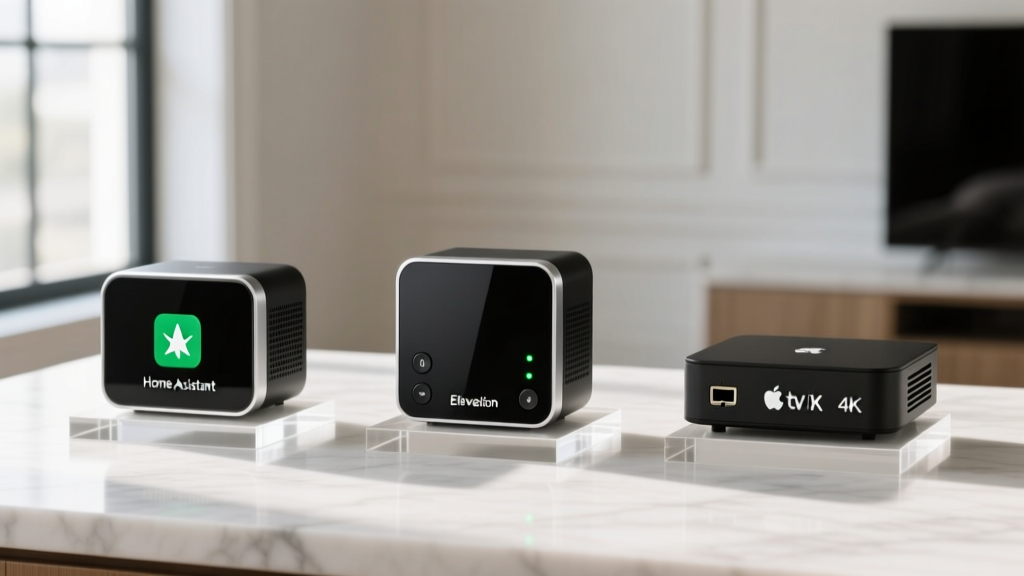
Selecting the right central processor is the foundation of any reliable offline smart home. These three platforms dominate the local control space.
Home Assistant Green
Priced at $99, the Home Assistant Green offers a plug-and-play local server experience. It supports 400+ integrations out of the box and processes complex YAML automations entirely on its internal hardware. It is the premier choice for users who want granular control over their offline logic without managing a Raspberry Pi.
Apple HomeKit Architecture
Apple HomeKit utilizes the Apple TV 4K and HomePod mini as local Thread border routers. Apple's local architecture ensures that Siri commands and Home app automations execute via the local network, provided the accessories are HomeKit or Matter certified. This ecosystem is ideal for users deeply embedded in the Apple hardware ecosystem who demand strict privacy.
Hubitat Elevation
Hubitat Elevation processes Zigbee and Z-Wave protocols locally via its built-in radios. Unlike cloud-first competitors, Hubitat routes all device states through its internal hub processor, ensuring that motion-triggered lighting and security automations fire in under 20 milliseconds regardless of your wide-area network status.
Offline Setup Checklist
Use this framework to transition your current setup to a fully offline smart home architecture:
- Audit Existing Devices: Identify Wi-Fi devices that require cloud authentication (e.g., older smart plugs) and flag them for replacement.
- Deploy a Local Hub: Install Home Assistant Green or Hubitat Elevation on a wired Ethernet connection to ensure stable local network throughput.
- Establish a Thread Mesh: Add at least three Thread border routers to create a resilient, low-power mesh network for sensors and switches.
- Configure Local Fallbacks: Program physical switch fallbacks so that smart bulbs retain manual toggle functionality if the hub reboots.
Frequently Asked Questions
Can a smart home work without Wi-Fi?
Yes, if it utilizes protocols like Zigbee, Z-Wave, or Thread. These protocols create independent mesh networks that communicate with a local hub. While your home router provides the local IP backbone, the actual internet connection (WAN) is not required for device-to-device automation.
What is the best hub for local smart home control?
Home Assistant Green is widely considered the best hub for advanced local control due to its open-source nature and massive integration library. For users seeking a closed, consumer-friendly ecosystem, Apple HomeKit via Apple TV 4K provides the most seamless offline experience.
Does Matter work offline?
Yes. The Matter protocol was explicitly engineered for local IP control. Matter-certified devices communicate directly with local controllers over Wi-Fi or Thread without needing to ping external cloud servers for basic execution and state reporting.
Conclusion
Building an offline smart home guarantees that your automations survive internet outages while strictly protecting your household privacy. Your next step is to audit your current smart devices: identify which ones rely exclusively on cloud servers and replace them with local-compatible Zigbee, Z-Wave, or Matter alternatives to achieve true network independence.