What is Geofencing in Smart Home Automation?
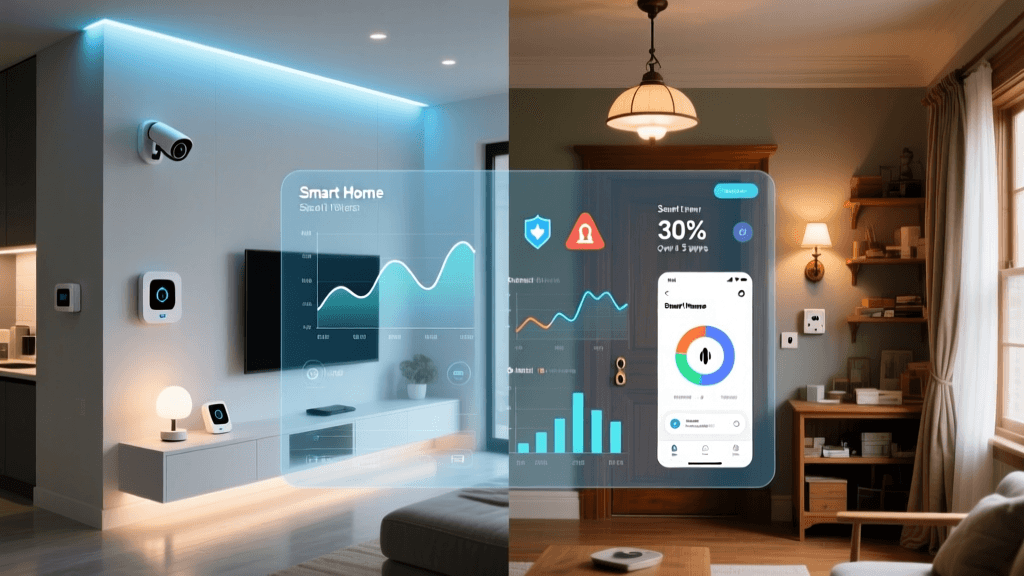
Imagine pulling into your driveway and watching your home come alive before you even touch the door handle. The porch lights illuminate, the thermostat adjusts to your preferred comfort level, and the smart lock disengages. Conversely, when you leave for work, the house powers down, securing the doors and arming the cameras. This seamless orchestration is not magic; it is the power of geofencing. In the realm of smart home basics and education, geofencing represents the shift from manual control and rigid scheduling to context-aware, location-based automation.
At its core, a geofence is a virtual geographic boundary defined by GPS, RFID, Wi-Fi, or cellular data. When your smartphone or a dedicated GPS tracker crosses this invisible perimeter, it triggers a predefined set of actions within your smart home ecosystem. Unlike time-based routines—which blindly turn on your heating at 5:00 PM regardless of whether you are stuck in traffic or already on the couch—geofencing responds to your actual physical presence. This dynamic responsiveness is the cornerstone of advanced smart home automation, offering unprecedented convenience, enhanced security, and significant energy savings.
The Technical Backbone: How Your Home Knows Where You Are
To build reliable location-based automations, it is crucial to understand the underlying technologies that track your presence. Smart home ecosystems rely on a combination of hardware and software protocols to determine your location accurately.
1. GPS and Cellular Triangulation
The most common method for outdoor geofencing relies on the GPS chip inside your smartphone. When you set a geofence radius (typically between 100 and 200 meters) around your home address, the phone's operating system monitors your coordinates. Once you cross the threshold, the OS sends a push notification or an API webhook to your smart home hub. While highly accurate in open areas, GPS can suffer from "urban canyon" drift in dense cities or consume significant battery life if the polling interval is too aggressive.
2. Wi-Fi Presence Detection
For a more battery-friendly and precise approach, many advanced users leverage Wi-Fi presence detection. When your phone connects to your home's 2.4GHz or 5GHz Wi-Fi network, the router registers the device's MAC address. Platforms like Samsung SmartThings or custom Home Assistant setups can use this local network connection as an instant "arrival" trigger, bypassing the need for GPS entirely. This method is incredibly fast but requires your phone to have Wi-Fi enabled and your router to support integration with your smart home hub.
3. Bluetooth Beacons and Ultra-Wideband (UWB)
For indoor micro-geofencing (room-level automation), Bluetooth Low Energy (BLE) beacons and Ultra-Wideband (UWB) are the gold standards. UWB, the technology powering Apple AirTags and modern digital car keys, offers spatial awareness down to the centimeter. While still emerging in mainstream smart home hubs, UWB promises a future where your home knows not just that you are inside, but exactly which room you are occupying, allowing for hyper-localized lighting and audio automation.
Essential Hardware and Ecosystem Compatibility
Implementing geofencing requires a compatible ecosystem and a reliable hub to process the triggers when your phone is miles away. Here is a breakdown of the primary platforms and the hardware required to make location triggers work seamlessly.
- Apple HomeKit: Requires a home hub (Apple TV 4K or HomePod mini, approx. $99-$129). HomeKit's geofencing is highly secure and battery-efficient, relying on Apple's native location services. However, the geofence radius is fixed at roughly 100 meters and cannot be manually adjusted.
- Google Home: Requires a Nest Hub or Nest Speaker. Google's location tracking is robust, leveraging Android's highly optimized location APIs. It supports multi-user households natively, ensuring the automation only triggers when the *last* person leaves.
- Samsung SmartThings: Requires a SmartThings Station or Hub (approx. $59-$99). SmartThings offers the most granular control over geofencing, allowing custom radius sizes and complex multi-presence logic via the SmartThings Routine engine.
- Amazon Alexa: Requires an Echo device. Alexa supports location-based routines via the Alexa app, though it is generally considered slightly less reliable for multi-user "last person to leave" logic compared to HomeKit or SmartThings.
For the endpoints (the devices reacting to the geofence), you will need compatible smart hardware. Popular choices include the Ecobee SmartThermostat Premium ($249) for climate control, the Philips Hue Bridge ($59) paired with Hue bulbs for lighting, and the Meross Smart Garage Door Opener ($45) for secure access.
Top 5 Practical Geofencing Routines to Implement Today
To move beyond basic novelty, you must design routines that solve real-world problems. Here are five highly actionable, location-based automations you can configure today.
1. The "Away" Security and Energy Protocol
Trigger: When the last registered user leaves the 150m geofence.
Actions: Set thermostat to Eco mode (e.g., 65°F in winter, 80°F in summer). Turn off all interior smart lights and smart plugs connected to standby electronics. Arm the smart security system (e.g., Ring Alarm or SimpliSafe) and lock all smart deadbolts (e.g., Yale Assure or Schlage Encode).
2. Climate Pre-Conditioning
Trigger: When any registered user enters a 5-mile radius (using IFTTT or SmartThings custom logic).
Actions: Adjust the HVAC system to the "Home" comfort setpoint. According to the U.S. Department of Energy, you can save as much as 10% a year on heating and cooling by simply adjusting your thermostat 7°-10°F when away. Geofencing ensures you never waste energy cooling an empty house, yet you always return to a comfortable environment.
3. Exterior Lighting Welcome Sequence
Trigger: When a user crosses the 100m boundary AND the local weather API reports "sunset" has passed.
Actions: Turn on porch lights, pathway lighting, and the smart garage light to 100% brightness. This conditional logic prevents your exterior lights from turning on if you arrive home at 2:00 PM in broad daylight.
4. The Garage Door Auto-Close Safety Net
Trigger: When the last user leaves the geofence AND the garage door tilt sensor reads "Open".
Actions: Send a critical push notification to the homeowner's phone. If the door is not closed manually within 5 minutes, trigger the smart garage motor to close automatically. This prevents the catastrophic security risk of leaving your home wide open while on vacation.
5. Pet Care and Environmental Monitoring
Trigger: When the last user leaves the geofence.
Actions: Activate the smart pet feeder schedule, turn on the living room pet camera (e.g., Wyze Cam v3), and disable the robot vacuum (to prevent it from startling the pets). When the first user returns, the vacuum is scheduled to begin its cleaning cycle.
Comparing Smart Home Ecosystems for Location Triggers
Not all platforms handle location data equally. Below is a comparison of how the major ecosystems manage geofencing parameters.
| Ecosystem | Geofence Radius | Multi-User Support | Battery Impact | Hub Requirement |
|---|---|---|---|---|
| Apple HomeKit | Fixed (~100m) | Excellent (Native) | Very Low | HomePod / Apple TV |
| Google Home | Fixed (~150m) | Good (Household) | Low | Nest Hub / Speaker |
| Amazon Alexa | Fixed (~150m) | Moderate | Low-Medium | Echo Device |
| SmartThings | Customizable | Advanced Logic | Medium | ST Hub / Station |
Energy Savings: Timers vs. Location-Based Automation
While scheduling your devices is a good first step, geofencing eliminates the "empty house" waste that occurs when your schedule changes unexpectedly. The chart below illustrates the estimated energy savings comparison between rigid time-based scheduling and dynamic geofencing across various home systems.
Estimated Energy Savings: Timers vs. Geofencing
As demonstrated, HVAC systems see the most dramatic improvement. Smart thermostats that utilize geofencing, particularly those certified by ENERGY STAR, dynamically adapt to your lifestyle, ensuring peak efficiency without requiring manual intervention.
Overcoming Common Geofencing Pitfalls
Despite its benefits, geofencing can be frustrating if not configured correctly. Here are the most common issues and how to solve them.
The "Spouse Left Behind" Problem
The most notorious geofencing failure occurs when you leave the house, triggering the "Away" security protocol, while your partner is still sleeping on the couch. To fix this, you must configure your automations based on presence state rather than departure events. In Apple HomeKit, this means using the condition: "When the Last Person Leaves." In SmartThings, you can create a virtual presence sensor that only switches to "Away" when all individual phone sensors register as "Not Present."
GPS Drift and False Triggers
If you live near the edge of your geofence radius, GPS drift can cause your phone to rapidly enter and exit the zone, causing your lights to flicker on and off. The solution is to implement a "time delay" or "hysteresis" in your automation logic. Set the rule to trigger only if your phone remains outside the zone for 5 continuous minutes. Alternatively, shrink the geofence radius and rely on Wi-Fi connection for the final "arrival" trigger.
Battery Drain Concerns
Constant GPS polling will destroy your smartphone's battery life. To mitigate this, ensure your smart home app is granted "While Using" or optimized background location permissions rather than "Always On" high-precision GPS. Modern operating systems use low-power cell-tower triangulation and Wi-Fi scanning to detect geofence crossings without keeping the power-hungry GPS chip active.
Privacy and Security Considerations
Handing over your real-time location data to cloud servers requires trust. When configuring geofencing, you are essentially allowing a tech company to track your movements to automate your home. According to the Cybersecurity and Infrastructure Security Agency (CISA), IoT devices and their companion apps can be vulnerable to data interception if not properly secured.
Security Best Practice: Always enable Two-Factor Authentication (2FA) on your smart home ecosystem accounts. Ensure your home Wi-Fi network uses WPA3 encryption, and isolate your IoT devices on a separate guest VLAN to prevent local network spoofing of Wi-Fi presence triggers.
For users highly concerned about cloud privacy, local-first ecosystems like Home Assistant offer a compelling alternative. By running a local server (such as a Raspberry Pi or Intel NUC), you can process GPS data and router MAC addresses entirely within your home network, ensuring your location data never touches an external corporate server.
The Future: Matter and Ultra-Wideband (UWB)
The future of location-based automation lies in the convergence of the Matter protocol and Ultra-Wideband (UWB) technology. Matter is unifying how devices communicate, but the real game-changer for geofencing is UWB. Currently, outdoor geofencing operates on a macro level (a 100-meter circle). UWB will enable micro-geofencing, allowing your home to understand directional movement and precise indoor positioning.
Imagine walking toward your front door, and the lock disengages only when you are exactly two feet away, rather than when you pull into the driveway. Or, the music follows you from the living room to the kitchen based on your exact physical coordinates. As UWB chips become standard in smartphones and smart home border routers, the clumsy, radius-based geofences of today will evolve into seamless, invisible, and hyper-accurate spatial awareness systems, fulfilling the true promise of the automated smart home.