Introduction: The Shift from Reactive to Proactive Living
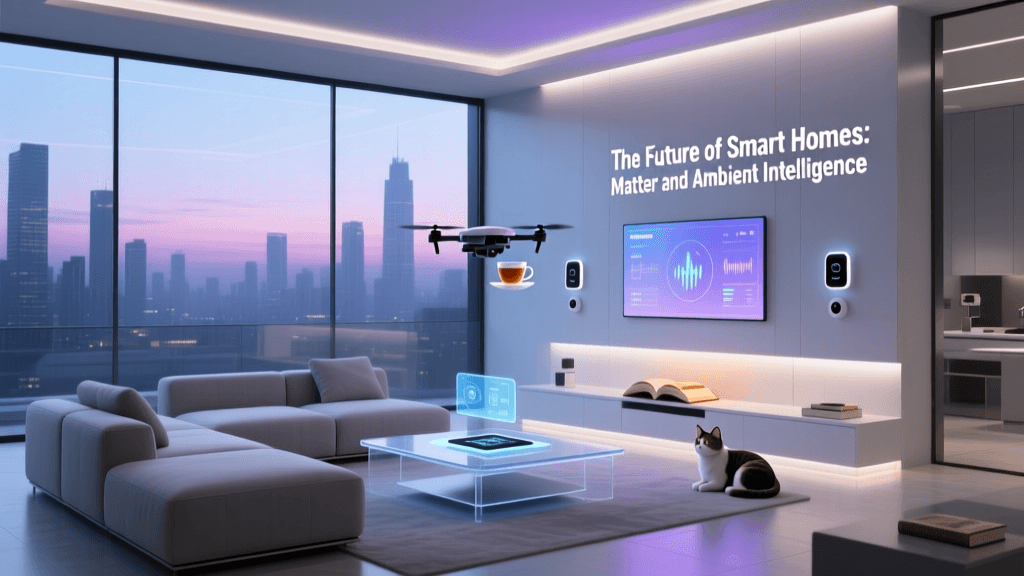
For the past decade, the smart home industry has been defined by fragmentation, proprietary walled gardens, and reactive automation. Homeowners have grown accustomed to the 'If This Then That' (IFTTT) model, where devices only respond to explicit commands or rigid, pre-programmed triggers. However, as we look toward the next generation of smart home technology, a monumental paradigm shift is underway. The future of the smart home is not just about connecting more devices; it is about creating a unified, intelligent ecosystem that anticipates your needs before you even articulate them.
This transformation is being driven by two foundational pillars: the universal adoption of the Matter protocol and the integration of Edge Artificial Intelligence (AI). Together, these technologies are poised to eliminate the friction of cross-brand compatibility, drastically reduce latency, and enhance privacy by processing data locally. In this comprehensive guide, we will explore what is coming next in the smart home space, detailing the technical underpinnings of Matter, the rise of predictive AI, and how you can future-proof your home today with specific, actionable hardware recommendations.
The Matter Protocol: Unifying the Fragmented Ecosystem
The most significant upcoming shift in smart home infrastructure is the widespread maturation of the Matter protocol. Developed by the Connectivity Standards Alliance (CSA), Matter is an open-source, royalty-free connectivity standard designed to unify the smart home. Unlike previous protocols that required proprietary hubs or relied heavily on cloud-based servers, Matter operates over standard Internet Protocol (IP) networks, including Wi-Fi, Ethernet, and Thread.
The true power of Matter lies in its cryptographic attestation and local control capabilities. When you purchase a Matter-certified device—whether it is a smart lock from Yale, a lighting system from Philips Hue, or a smart plug from Eve Energy—you are guaranteed that it will communicate seamlessly with your chosen ecosystem, be it Apple HomeKit, Amazon Alexa, Google Home, or Samsung SmartThings. This multi-admin functionality means a single smart bulb can be controlled simultaneously by an iPhone user and an Android user in the same household without complex workarounds.
Thread Mesh Networking: The Backbone of Matter
While Matter dictates the language devices use to communicate, Thread provides the robust, low-power highway for that communication. According to the Thread Group, Thread is an IPv6-based, low-power mesh networking protocol designed specifically for IoT devices. Unlike traditional Wi-Fi, which can congest your primary router when dozens of smart bulbs and sensors are connected, Thread devices create a decentralized mesh network. Each Thread-enabled device acts as a node, passing signals to neighboring nodes, which drastically improves range and reliability while consuming a fraction of the power.
To leverage Thread, your home requires a Thread Border Router. Fortunately, many modern smart home hubs already contain the necessary silicon. Devices like the Apple TV 4K (Wi-Fi Ethernet model), the Amazon Echo (4th Gen), and the Google Nest Hub Pro double as Thread Border Routers, bridging your Thread mesh network with your home's primary Wi-Fi network and the broader internet.
AI and Predictive Automation: The Brain of the Home
While Matter solves the connectivity problem, Artificial Intelligence solves the usability problem. The next generation of smart homes will transition from reactive systems to proactive, predictive environments. Current smart homes require manual scheduling or rely on basic geofencing (e.g., turning on the lights when your phone crosses a virtual perimeter). Future smart homes will utilize machine learning algorithms to understand your behavioral patterns, circadian rhythms, and environmental preferences.
For example, a next-generation AI-driven HVAC system will not simply turn on when the temperature hits 72 degrees. Instead, it will analyze historical weather data, the thermal mass of your home, your typical arrival time, and real-time occupancy sensors to pre-condition your home in the most energy-efficient manner possible. Lighting systems will dynamically adjust their color temperature and brightness based on the time of day, local weather conditions, and whether you are reading, watching television, or preparing for sleep.
Edge AI vs. Cloud AI: Speed and Privacy
A critical component of this AI revolution is the shift from Cloud AI to Edge AI. Historically, voice commands and automation logic were sent to remote servers for processing, introducing latency and raising significant privacy concerns. The future belongs to Edge AI, where Neural Processing Units (NPUs) embedded directly into local smart home hubs process data on-site.
By processing data locally, Edge AI hubs can execute complex automations in milliseconds, even if your home's internet connection goes down. Furthermore, local processing ensures that sensitive data—such as audio from voice assistants or video feeds from indoor security cameras—never leaves your home network, providing a massive upgrade to consumer privacy.
Upcoming Hardware and Compatibility Shifts
As these software and protocol standards evolve, the hardware landscape is shifting to accommodate them. Below is a comparison of current-generation smart home devices versus the next-generation hardware that will define the upcoming years.
| Feature | Current Generation (Legacy) | Next-Generation (Future Standard) |
|---|---|---|
| Connectivity Protocol | Zigbee, Z-Wave, Proprietary Wi-Fi | Matter over Thread, Wi-Fi 6E/7 |
| Processing Location | Cloud-dependent servers | Local Edge AI via onboard NPUs |
| Ecosystem Compatibility | Locked to specific brand hubs | Universal multi-admin support |
| Automation Logic | Reactive (IFTTT, basic schedules) | Predictive (Machine learning, behavioral) |
| Network Topology | Hub-and-spoke (Star topology) | Self-healing mesh networks (Thread) |
Charting the Adoption of Matter and Edge AI
Industry analysts project a rapid acceleration in the adoption of Matter-certified devices and Edge AI-capable hubs over the next five years. The visualization below illustrates the projected global market growth for these foundational technologies.
Cost Implications and ROI for Early Adopters
Upgrading to a next-generation smart home requires an upfront investment, but the long-term Return on Investment (ROI) through energy savings and hardware longevity is substantial. When building a Matter and Edge AI-ready home, you should budget for the following categories:
- Edge AI Hubs / Thread Border Routers ($100 - $250): Devices like the Apple HomePod (2nd Gen) or the Amazon eero Pro 6E mesh router serve as the central nervous system. A typical 3-bedroom home may require two to three border routers to ensure complete Thread mesh coverage.
- Matter-Certified Smart Plugs and Switches ($25 - $50 each): Brands like Eve and Aqara offer Matter-over-Thread smart plugs that provide real-time energy monitoring. Outfitting a home with 10 smart plugs will cost roughly $300 to $500.
- Intelligent Lighting and Blinds ($50 - $300+ per fixture): Philips Hue and Nanoleaf are leading the charge in Matter-compatible lighting, while companies like SwitchBot and Lutron are integrating Matter into automated window treatments, which are crucial for passive solar heating and cooling.
According to the U.S. Department of Energy, smart home technologies—particularly smart thermostats, automated blinds, and AI-driven lighting—can reduce residential energy consumption by 10% to 25%. For an average household, this translates to hundreds of dollars in annual utility savings, allowing the initial hardware investment to pay for itself within three to five years while simultaneously increasing the property's resale value.
Privacy and Security in the Next Generation
As smart homes become more predictive, they inherently require access to more personal data. This is where the combination of Matter and Edge AI becomes a powerful privacy shield. Because Matter mandates strict cryptographic security standards, every device must be securely authenticated before joining your network, virtually eliminating the risk of rogue IoT devices acting as backdoors for hackers.
Simultaneously, Edge AI ensures that the behavioral data used to train your home's predictive algorithms remains siloed on your local network. When your smart home learns that you typically wake up at 6:30 AM and prefer the thermostat set to 70 degrees, that data is stored on your local hub's secure enclave, not on a corporate cloud server. This local-first approach represents a massive philosophical shift in the tech industry, prioritizing user sovereignty over data harvesting.
Actionable Steps to Future-Proof Your Home Today
You do not need to wait for the next decade to experience the benefits of the upcoming smart home revolution. By making strategic purchasing decisions today, you can lay the groundwork for a seamless transition into the Matter and Edge AI era. Follow these actionable steps to future-proof your home:
- Audit Your Current Hub: Check if your existing smart speakers or mesh routers support Thread. If you own an Amazon Echo (4th Gen), Apple TV 4K (Ethernet), or a Nest Hub Pro, you already have a Thread Border Router. If not, consider purchasing an eero 6+ or a dedicated Thread border router like the Nanoleaf Smart Hub.
- Prioritize Matter-Over-Thread for New Purchases: When buying new sensors, smart plugs, or light switches, look for the official Matter logo on the packaging. Prioritize Thread-enabled devices over Wi-Fi devices to keep your primary router's bandwidth free for laptops and streaming devices.
- Invest in Local-First Ecosystems: If privacy is a primary concern, lean heavily into Apple HomeKit or Home Assistant. Both platforms have aggressively adopted local processing and Matter support, ensuring your automations run instantly without cloud reliance.
- Upgrade to Smart HVAC Controls: Replace legacy thermostats with AI-driven models like the ecobee Smart Thermostat Premium. These devices utilize local occupancy sensors and edge processing to optimize your HVAC usage, providing immediate energy ROI.
- Implement Network Segmentation: Even with Matter's security protocols, best practice dictates placing all IoT devices on a separate VLAN or a dedicated 'Smart Home' guest network via your router's settings. This ensures that a compromised smart bulb cannot access your personal computers or smartphones.
Conclusion
The future of the smart home is rapidly evolving from a disjointed collection of novelty gadgets into a cohesive, intelligent, and proactive living environment. The Matter protocol is finally delivering on the promise of universal compatibility, while Thread mesh networking ensures that your devices remain connected and responsive. Coupled with the privacy-preserving power of Edge AI, the next generation of smart homes will not just respond to your commands—they will intuitively anticipate your needs, optimize your energy consumption, and operate securely within the confines of your local network. By understanding these foundational shifts and investing in compatible hardware today, you can build a resilient, future-proof smart home that will serve you efficiently for years to come.