The Core Dilemma: Manual Control vs. Automated Ecosystems
When transitioning from a traditional home to a smart home, the most impactful changes usually occur in two primary areas: lighting and climate control. For decades, the standard has been simple mechanical switches and programmable thermostats. Today, homeowners face a critical decision: stick with reliable, low-cost traditional wiring, or invest in automated ecosystems that offer unprecedented convenience, energy savings, and remote management.
This guide breaks down the technical realities, installation hurdles, and long-term ROI of upgrading your home's lighting and climate systems. Whether you are retrofitting a mid-century home with outdated wiring or planning the electrical layout for a new build, understanding the difference between traditional circuits and smart protocols is essential for making the right choice.
Lighting Automation: Smart Switches vs. Smart Bulbs vs. Traditional Wiring
In a traditional home, lighting is controlled by single-pole or 3-way mechanical switches that physically connect or disconnect the hot wire to the light fixture. It is foolproof, requires no internet connection, and costs roughly $2 to $10 per switch. However, it lacks scheduling, motion sensing, and remote access.
When deciding to automate, homeowners generally choose between smart bulbs and smart switches. Each approach has distinct advantages and limitations depending on your home's wiring and your automation goals.
Smart Bulbs: The Flexible but Fragile Approach
Smart bulbs, such as the Philips Hue White and Color Ambiance or Wyze Bulb Color, screw into existing fixtures and connect via Wi-Fi, Bluetooth, or a proprietary hub (like the Hue Bridge using Zigbee). They are ideal for lamps, color-changing accents, and fixtures where replacing the wall switch is difficult. However, they suffer from the "wall switch problem": if someone flips the traditional wall switch off, the smart bulb loses power and becomes unresponsive to app or voice commands.
Smart Switches: The Whole-Home Retrofit Solution
Smart switches replace the mechanical switch in your wall and keep the physical control intact while adding wireless capabilities. The Lutron Caseta Wireless system and Leviton Decora Smart line are industry leaders. Because the smart logic is housed in the wall switch, you can use any standard light bulb (LED, incandescent, or smart) and maintain reliable physical control.
Comparison: Traditional vs. Smart Bulbs vs. Smart Switches
| Feature | Traditional Switch | Smart Bulbs (e.g., Philips Hue) | Smart Switches (e.g., Lutron Caseta) |
|---|---|---|---|
| Average Cost per Unit | $2 - $10 | $15 - $60 | $50 - $70 (plus hub) |
| Installation Difficulty | Easy (Wire swap) | Very Easy (Screw in) | Moderate (Requires wiring knowledge) |
| Neutral Wire Required? | No | No | Usually Yes (Except Lutron Caseta) |
| 3-Way Switch Support | Standard Wiring | Complex / Requires Accessories | Easy (Using wireless Pico remotes) |
| Color Changing? | No | Yes | No (Depends on bulb installed) |
Climate Control: Programmable vs. Smart Thermostats
Heating and cooling account for nearly half of the average home's energy consumption. Traditional programmable thermostats, like the basic Honeywell Home 5-2 Day Programmable, were designed to save energy by lowering temperatures when you are asleep or away. In reality, their clunky interfaces lead to user frustration. According to the U.S. Department of Energy, many homeowners abandon programming altogether, using them as manual switches, which negates any potential energy savings.
The Smart Thermostat Advantage
Smart thermostats eliminate the friction of manual programming. Devices like the Ecobee SmartThermostat Premium and the Google Nest Learning Thermostat use algorithms, geofencing, and remote room sensors to learn your habits and adjust temperatures automatically. The EPA's ENERGY STAR program notes that certified smart thermostats can save homeowners approximately 8% on heating and cooling bills annually, translating to significant long-term ROI.
The C-Wire Hurdle
The biggest barrier to smart climate automation is the Common Wire, or "C-wire." Traditional thermostats only require two or three wires to complete the circuit when calling for heat or cooling. Smart thermostats, however, have Wi-Fi radios, backlit screens, and processors that require a continuous 24V power source. The C-wire provides this continuous power. If your home was built before the 2010s, you likely do not have a C-wire connected at your thermostat wall plate. Upgraders must either pull a new 18/5 thermostat cable from the HVAC control board or use a C-wire adapter kit, which taps into existing wires to trick the system into providing continuous power.
Protocols and Ecosystems: The Invisible Wiring
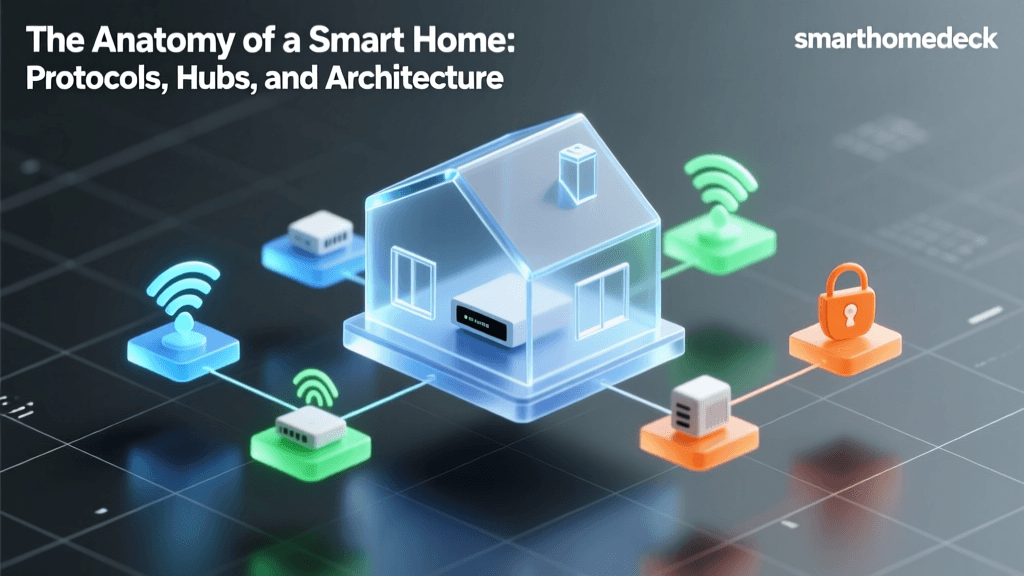
When moving beyond traditional homes, you must choose a communication protocol. Wi-Fi is ubiquitous but consumes high power and can congest your home network if you have 50+ smart bulbs. This is where dedicated mesh networks come in.
- Zigbee & Z-Wave: Low-power mesh networks that require a central hub. If one device fails, the signal routes around it. Ideal for large homes with thick walls.
- Thread & Matter: The future of smart home interoperability. Backed by the Connectivity Standards Alliance (CSA), Matter ensures that devices from Apple, Google, Amazon, and Samsung can communicate locally without relying on cloud servers, drastically reducing latency and improving reliability.
Expert Tip: When retrofitting a traditional home, prioritize local processing hubs (like Hubitat or Home Assistant) or Matter-compatible devices. This ensures your lights and climate controls still function via physical switches and local sensors even if your internet connection drops.
Cost Analysis and Return on Investment (ROI)
While traditional setups win on upfront costs, smart automation offers compounding returns through energy savings, preventative maintenance alerts, and increased property value. Below is a visual comparison of the upfront investment versus the projected 5-year energy savings for a standard 2,000 sq. ft. home.
As the data illustrates, smart lighting offers modest energy savings (primarily through automated shut-offs and LED dimming), but smart climate control provides a massive ROI, often paying for itself within 1.5 to 2 years in extreme climates.
Wiring Realities: What is Behind Your Walls?
Before purchasing any smart switches or thermostats, you must turn off the breaker, remove your existing faceplates, and inspect the wiring.
The Neutral Wire Requirement
Most smart switches (like those from Leviton or TP-Link Kasa) require a neutral wire (usually a bundle of white wires in the back of the switch box) to keep the internal Wi-Fi/Z-Wave radio powered when the light is turned off. Homes built before the 1980s often lack neutral wires in switch boxes. If you have no neutral wire, your best option is the Lutron Caseta system, which uses a proprietary Clear Connect RF protocol and low-draw circuitry that operates without a neutral wire.
Converting 3-Way Switches
In traditional homes, hallways and staircases use 3-way switches, requiring complex traveler wires. Rewiring these for smart switches is notoriously difficult. The smart home workaround is to cap the traveler wires, install a smart switch at the main junction, and mount a battery-operated wireless remote (like the Lutron Pico) over the secondary wall box. This converts a complex wired 3-way circuit into a simple, code-compliant wireless setup in under 20 minutes.
The Final Verdict: Which Path Should You Take?
Deciding between traditional and smart automation is not an all-or-nothing proposition. The most successful smart homes utilize a hybrid approach tailored to the home's physical constraints and the user's lifestyle.
- Choose Traditional If: You are on a strict budget, live in a rental property where modifications are prohibited, or prefer zero-dependency, tactile mechanical controls that will outlast any software update.
- Choose Smart Lighting If: You want to automate lamps, add color ambiance, or have older wiring lacking neutral wires (using hub-based systems like Lutron).
- Choose Smart Climate If: You want immediate financial ROI, have a multi-story home with hot/cold spots (utilizing remote room sensors), and frequently forget to adjust the thermostat when leaving for work or vacation.
Ultimately, bridging the gap between a traditional home and a smart home requires respecting the existing infrastructure. By understanding your wiring limitations and choosing the right protocols, you can build an automated ecosystem that enhances your daily life without sacrificing the reliability of traditional home systems.