The Fragmentation Problem in Smart Home Automation
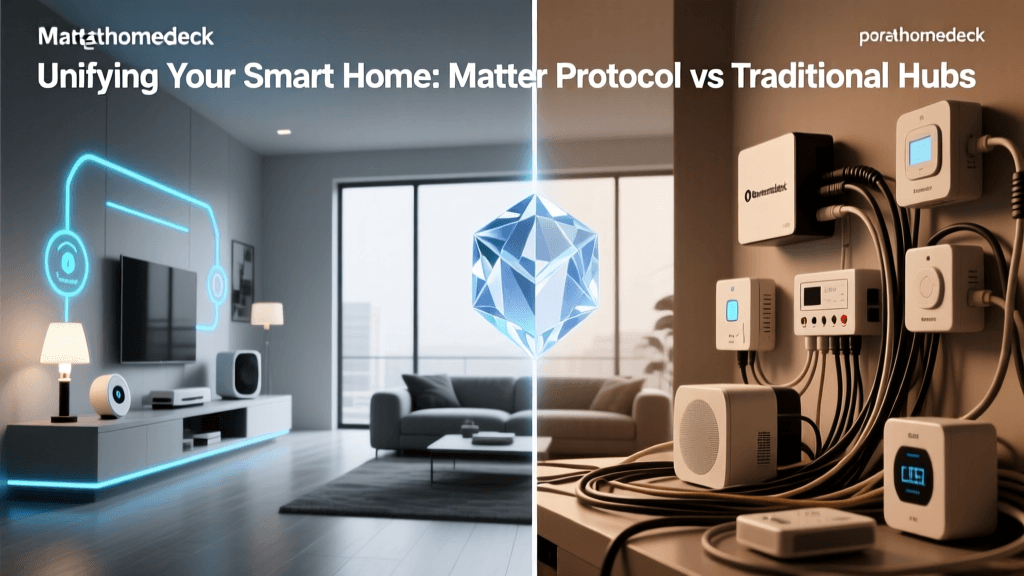
For over a decade, the smart home industry has been plagued by a frustrating paradox: the more devices you buy, the harder it becomes to make them work together. Early adopters of home automation quickly learned the painful reality of 'walled gardens.' If you invested in an Apple HomeKit ecosystem, you were locked out of using some of the most innovative sensors and locks on the market, simply because they lacked Apple's proprietary MFi certification. Conversely, if you built your home around Amazon Alexa or Google Home, you often faced cloud-reliant latency and privacy concerns.
This fragmentation forced consumers to become amateur IT network administrators, juggling multiple hubs, overlapping apps, and complex IFTTT (If This Then That) webhooks just to get a living room lamp to turn on when a front door unlocked. The lack of a universal integration standard stifled market growth and alienated mainstream consumers who simply wanted their homes to work intuitively.
However, a massive paradigm shift has arrived. The introduction of the Matter protocol has fundamentally rewritten the rules of smart home integration, promising a future where devices communicate seamlessly regardless of the brand on the box or the voice assistant on your nightstand.
Enter Matter: The Universal Language for Smart Homes
Matter is not a new radio frequency like Zigbee or Z-Wave, nor is it a competing voice assistant. Instead, it is an open-source, royalty-free application layer protocol developed by the Connectivity Standards Alliance (CSA). The CSA is an industry consortium that includes former rivals like Apple, Google, Amazon, Samsung, and hundreds of smart home manufacturers.
Matter operates on the principle of IP (Internet Protocol) networking. By leveraging IPv6, Matter allows smart home devices to communicate using the same fundamental language as your computer, smartphone, and web browser. This means a Matter-certified smart plug from Eve can natively understand a command from an Amazon Echo, a Samsung SmartThings hub, or an Apple HomePod, without requiring a proprietary cloud server to translate the request.
'Matter is the missing link that transforms a collection of isolated smart gadgets into a truly integrated, responsive, and automated home environment.' — SmartHomeDeck Integration Analysis
Core Pillars of Matter Integration
- Local Control: Matter automations are processed locally on your network. If your internet connection drops, your motion-sensor-triggered lights will still turn on instantly.
- Interoperability: Devices are certified to work across all major ecosystems simultaneously.
- Security by Design: Matter utilizes blockchain-inspired Device Attestation Certificates (DAC) to ensure every node on your network is genuine and secure.
How Multi-Admin Changes Device Integration
The most revolutionary feature of Matter for smart home automation is Multi-Admin. In the legacy ecosystem model, a device could only be 'owned' by one primary platform. If you paired a smart bulb to Google Home, it was invisible to Apple HomeKit unless you bought a second, duplicate bulb.
Multi-Admin allows a single physical device to be paired to multiple smart home controllers simultaneously, with each controller maintaining its own independent access control list (ACL). For example, you can pair a Nanoleaf Essentials A19 bulb to both Apple Home and Google Home. You can then create an automation in Apple Home that turns the bulb red when your iPhone detects you are arriving home, while simultaneously using Google Home to group that same bulb with a Sonos speaker for morning alarm routines.
This eliminates the need for households with mixed-device preferences (e.g., one partner uses an iPhone, the other uses an Android device) to compromise on their automation ecosystems.
Comparing Legacy Protocols vs. Matter Architecture
To understand why Matter is superior for integration, we must compare it to the legacy protocols it aims to unify. Below is a breakdown of how different smart home communication standards handle automation and integration.
| Protocol | Network Topology | Cloud Dependency | Cross-Ecosystem Native Support | Power Efficiency |
|---|---|---|---|---|
| Wi-Fi (Legacy) | Star (Router dependent) | High (Usually) | No (Requires brand-specific cloud) | Low (High drain) |
| Zigbee 3.0 | Mesh | Low (Local hub) | No (Hub dependent) | High |
| Z-Wave Plus | Mesh | Low (Local hub) | No (Proprietary frequencies) | High |
| Bluetooth LE | Star / Mesh | Medium | No | High |
| Matter over Thread | IPv6 Mesh | None (Local) | Yes (Native Multi-Admin) | Very High |
| Matter over Wi-Fi | Star (IPv6) | None (Local) | Yes (Native Multi-Admin) | Medium |
The Role of Thread in Matter Automation
While Matter is the language devices speak, Thread is the physical road they travel on for low-power devices like sensors, locks, and smart bulbs. Thread is an IPv6-based, low-power mesh networking protocol. Unlike Zigbee, which requires a dedicated, single-purpose hub (like the Philips Hue Bridge) to translate its signal to your home router, Thread networks are self-healing and decentralized.
According to The Verge's comprehensive guide to Matter and Thread, the magic of Thread lies in 'Border Routers.' Devices you likely already own—such as the Apple TV 4K (3rd Gen), Apple HomePod Mini, Amazon Echo (4th Gen), and Google Nest Hub (2nd Gen)—contain Thread radios. These devices act as bridges, seamlessly passing Thread mesh traffic from your smart sensors directly into your home's Wi-Fi/Ethernet network for local processing.
As visualized above, Thread offers a near-perfect balance of low latency (crucial for instant automation triggers) and minimal power consumption (allowing battery-powered door sensors to last for years).
Building a Cross-Ecosystem Automation Routine
Let us look at a practical, actionable example of how Matter integration allows you to build a robust automation routine using hardware from competing ecosystems. We will build a 'Sunset Security & Ambience' routine.
The Hardware Stack (Approximate Costs)
- Hub / Border Router: Apple TV 4K (3rd Gen, Wi-Fi + Thread) — $129
- Lighting: Nanoleaf Essentials A19 Bulb (Matter over Thread) — $24
- Power Control: Eve Energy Smart Plug (Matter over Thread) — $39
- Sensor: Aqara Door and Window Sensor P2 (Matter over Thread) — $45
- Total Investment: ~$237
The Automation Logic
In this scenario, the homeowner uses an iPhone and prefers Apple Home for security automations, but uses a Google Nest Hub in the kitchen for family media and lighting control.
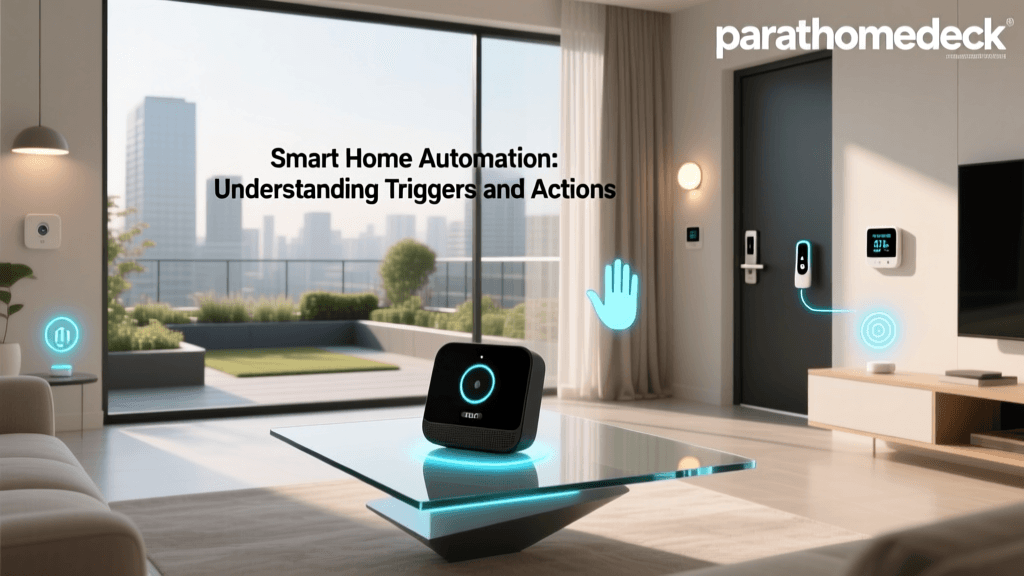
- The Trigger: The Aqara Door Sensor detects the front door opening.
- The Condition: The local hub checks the local astronomy API (built into Apple TV) to confirm the sun has set.
- The Action (Lighting): The Nanoleaf bulb turns on to a warm 2700K color temperature at 80% brightness.
- The Action (Power): The Eve Energy plug turns on the entryway lamp and a smart fan.
Why this matters: Because all three end-devices (Aqara, Nanoleaf, Eve) are Matter-certified over Thread, they join the exact same local mesh network managed by the Apple TV. The automation executes in under 50 milliseconds, entirely locally. Furthermore, because of Multi-Admin, the homeowner's partner can walk into the kitchen and use the Google Nest Hub to turn off the Eve Energy plug, without breaking the Apple Home automation logic.
Upgrading Your Home: What You Need to Get Started
Transitioning to a Matter-integrated home does not require throwing away your existing smart devices. The CSA designed Matter with backward compatibility in mind through software bridges.
1. Upgrade Your Hubs
To utilize Matter over Thread, you need at least one active Thread Border Router. If you are in the Apple ecosystem, ensure you have an Apple TV 4K (3rd Generation) or a HomePod (2nd Gen) / HomePod Mini. For Amazon users, the Echo (4th Gen) or Echo Show (8th/10th Gen, 2nd Gen) will serve this purpose. Google users can rely on the Nest Hub (2nd Gen) or Nest Wifi Pro routers.
2. Leverage Existing Bridges
If you have invested heavily in Philips Hue (Zigbee), your existing Hue Bridge V2 will receive a firmware update that exposes your Hue bulbs to the Matter network. The bridge acts as a translator, converting Matter commands into Zigbee signals. This allows your legacy Hue bulbs to appear natively in Apple Home, Google Home, and SmartThings simultaneously.
3. Look for the Matter Logo
When purchasing new sensors, locks, or plugs, look for the official Matter logo on the packaging. This guarantees the device has passed rigorous interoperability testing and supports local, cross-platform automation.
Privacy and Security in Integrated Automations
One of the primary concerns with integrating dozens of IoT devices is network security. Legacy smart home devices often relied on poorly secured cloud servers, creating vulnerabilities where a breached server could expose a user's home layout and daily routines.
Matter solves this through a cryptographic framework known as Device Attestation Certificates (DAC). When a new Matter device is unboxed and powered on, it must present a unique, manufacturer-issued digital certificate to your smart home hub. The hub checks this certificate against a centralized, blockchain-secured ledger maintained by the CSA. If the device is verified as genuine and uncompromised, it is granted a unique encryption key to join your home's 'fabric' (the local network mesh).
This means that even if a malicious actor attempts to introduce a rogue smart plug to your network to intercept automation traffic, the hub will reject the connection at the protocol level before any data is exchanged. For consumers prioritizing privacy, Matter's local-first architecture ensures that your automation routines—such as when you arm your security system or unlock your doors—never leave your home network to be stored on a corporate cloud server.
Future Predictions: AI and Matter Integration
As Artificial Intelligence and Large Language Models (LLMs) become more integrated into consumer technology, Matter will serve as the crucial API layer that allows AI to control the physical world. Currently, setting up complex conditional automations requires a deep understanding of logic gates, geofencing parameters, and hub-specific applications.
In the near future, AI assistants will leverage Matter's standardized data models to write automations on your behalf using natural language. You will be able to tell your smart speaker, 'Create an automation that dims the lights and turns on the white noise machine if the bedroom door closes after 10 PM and my phone is plugged in.' The AI will identify the Matter device IDs for the bulb, the smart plug, the contact sensor, and the phone's presence, instantly compiling a local automation script that works flawlessly across brands.
Conclusion
The era of smart home fragmentation is drawing to a close. The Matter protocol, supported by the underlying Thread mesh network, represents the most significant leap forward in smart home integration since the invention of the wireless router. By prioritizing local control, ironclad security, and true cross-ecosystem interoperability, Matter empowers consumers to build automation routines based on the best hardware available, rather than being restricted by arbitrary software walled gardens. Whether you are upgrading a single smart plug or wiring a new construction home, ensuring your devices are Matter-ready is the single most important step you can take to future-proof your smart home automation.