The Fundamental Divide: Manual vs. Automated Living
The transition from a traditional home to a smart automated home represents one of the most significant shifts in modern residential living. For decades, the traditional home has operated on a purely reactive, manual basis. You flip a switch to turn on a light, you turn a dial to adjust the thermostat, and you physically lock a deadbolt before bed. While this paradigm is reliable and requires zero technical troubleshooting, it lacks efficiency, adaptability, and remote oversight.
A smart home, by contrast, is proactive. Powered by the Internet of Things (IoT), a network of interconnected sensors, and centralized hubs, an automated home anticipates your needs. Lights adjust based on ambient sunlight and occupancy; thermostats learn your schedule and utilize geofencing to save energy when you leave; and security systems send real-time alerts to your smartphone. But is the premium cost of smart home technology justified for the average homeowner? This comprehensive decision guide breaks down the costs, benefits, and long-term ROI of smart versus traditional home automation to help you make an informed choice.
Feature-by-Feature Breakdown: Traditional vs. Smart
To understand the practical differences, we must compare the core systems that define daily home life: lighting, climate control, and security. The table below outlines the functional and financial differences between standard traditional setups and modern smart alternatives.
| Feature | Traditional Home Setup | Smart Automated Home Setup |
|---|---|---|
| Lighting | Manual toggle/dimmer switches. Standard LED bulbs. Cost: $2-$15 per switch. No scheduling or remote access. | Smart bulbs (Philips Hue) or smart switches (Lutron Caseta). Cost: $50-$200 per room. Features geofencing, motion triggers, and circadian rhythms. |
| Climate Control | Manual or basic programmable thermostat (e.g., Honeywell). Cost: $25-$50. Requires manual reprogramming for seasonal changes. | Learning thermostats (Ecobee, Nest). Cost: $150-$250. Uses occupancy sensors, remote sensors, and AI to optimize HVAC usage automatically. |
| Security | Mechanical deadbolts, peepholes, and basic wired alarm panels. Cost: $50-$300 upfront. No remote video verification. | Smart locks (Yale, Schlage), video doorbells (Ring), and wireless sensors (Abode). Cost: $300-$800+. Offers remote unlocking and instant push alerts. |
| Appliances | Standard washers, dryers, and refrigerators. You must be present to start cycles or check status. | Smart appliances (LG ThinQ, Samsung SmartThings). Cost: 15-20% premium. Send alerts when cycles finish or if a leak is detected. |
The Financial Reality: Upfront Costs vs. Long-Term ROI
The most common barrier to smart home adoption is the perceived upfront cost. Outfitting a standard 3-bedroom, 2-bathroom home with traditional manual switches and a basic programmable thermostat might cost under $200 in hardware. Conversely, retrofitting that same home with a Lutron Caseta lighting hub, an Ecobee SmartThermostat, and a comprehensive Ring Alarm system can easily push initial hardware costs between $1,200 and $1,800.
However, evaluating the financial impact requires looking at the Total Cost of Ownership (TCO) over a 5-year period. Smart homes actively reduce utility bills, offsetting their initial premium through measurable energy savings.
Note: The chart above models cumulative costs including upfront hardware, installation, and average annual HVAC/lighting energy expenditures. The Smart Home line demonstrates a steeper Year 1 cost but a flatter trajectory due to 12-15% annual energy savings.
Energy Efficiency: Where Smart Homes Shine
The strongest objective argument for upgrading from a traditional home to a smart home is energy management. Heating and cooling account for nearly half of a typical home's utility bills. Traditional programmable thermostats notoriously fail to save energy because users find the interfaces confusing and rarely update the schedules when their routines change.
Smart thermostats solve this through automation and machine learning. According to the U.S. Environmental Protection Agency's Energy Star program, certified smart thermostats can save homeowners an average of 8% on heating and 10% on cooling bills annually. Furthermore, the U.S. Department of Energy highlights that features like geofencing—which uses your smartphone's location to automatically set the thermostat to an 'Eco' mode when the house is empty—eliminate the human error of forgetting to adjust the dial before leaving for work.
'The transition to automated climate control isn't just about comfort; it's about eliminating phantom energy waste. A smart home actively manages its own thermal envelope, something a traditional home simply cannot do.' — SmartHomeDeck Energy Analysis Team
Security, Privacy, and the Digital Footprint
While a traditional home's security relies on physical barriers (wood, steel, and glass), a smart home relies on digital encryption and cloud connectivity. This introduces a new variable to the decision-making process: data privacy.
Smart security systems like Abode or Ring offer unparalleled convenience. You can grant temporary digital keys to dog walkers via a smart lock, or verify a package delivery via a video doorbell while on vacation. However, these devices collect vast amounts of telemetry data. The Cybersecurity and Infrastructure Security Agency (CISA) advises consumers to carefully evaluate IoT devices, noting that poorly secured smart home devices can become entry points for broader network breaches.
The Privacy Trade-Off:
- Traditional Home: Zero digital footprint. Complete physical privacy. Vulnerable to physical break-ins without remote notification.
- Smart Home (Cloud-based): High convenience, relies on manufacturer servers (e.g., Amazon, Google). Requires strong passwords and 2FA.
- Smart Home (Local Processing): Systems like Apple HomeKit or Home Assistant process data locally on a hub, offering smart automation with significantly enhanced privacy and zero cloud dependency.
The Ecosystem Factor and the Matter Protocol
When deciding to automate, you aren't just buying devices; you are buying into an ecosystem. Traditional homes have no ecosystem—a Leviton switch works with any brand of lightbulb. In the early days of smart homes, fragmentation was a massive headache; a Zigbee bulb might not talk to a Z-Wave hub.
Today, the landscape is dominated by Amazon Alexa, Google Home, Apple HomeKit, and Samsung SmartThings. For new buyers, the recent rollout of the Matter protocol has dramatically simplified the decision. Matter is an open-source, royalty-free connectivity standard backed by all major tech giants. When shopping for smart devices, looking for the Matter logo ensures that the device will work across traditional ecosystem boundaries, future-proofing your investment and reducing the risk of vendor lock-in.
The Decision Matrix: Which Path is Right for You?
Choosing between maintaining a traditional home setup or taking the leap into automation depends heavily on your lifestyle, technical aptitude, and property type. Use the following matrix to guide your decision.
Stick with a Traditional Home Setup If:
- You are a short-term renter: Hardwired smart switches and smart thermostats require installation that you may not be able to take with you.
- You prioritize absolute digital privacy: If the idea of your home's occupancy data being stored on a corporate server makes you uncomfortable, traditional manual controls offer peace of mind.
- You have limited internet reliability: Cloud-dependent smart homes can become dysfunctional during internet outages. Traditional homes are immune to Wi-Fi drops.
- You prefer tactile simplicity: If you want guests and family members to intuitively understand how to operate the home without needing a tutorial on voice commands or app interfaces.
Upgrade to a Smart Automated Home If:
- You own your home and plan to stay 3+ years: This allows you to recoup the hardware costs through energy savings and increased property resale value.
- You have a busy, variable schedule: Automation routines (e.g., lights turning on at sunset, HVAC adjusting when your phone crosses a 5-mile geofence) remove daily chores from your plate.
- You manage multiple properties: Smart water leak sensors and remote security cameras are invaluable for vacation homes or rental properties.
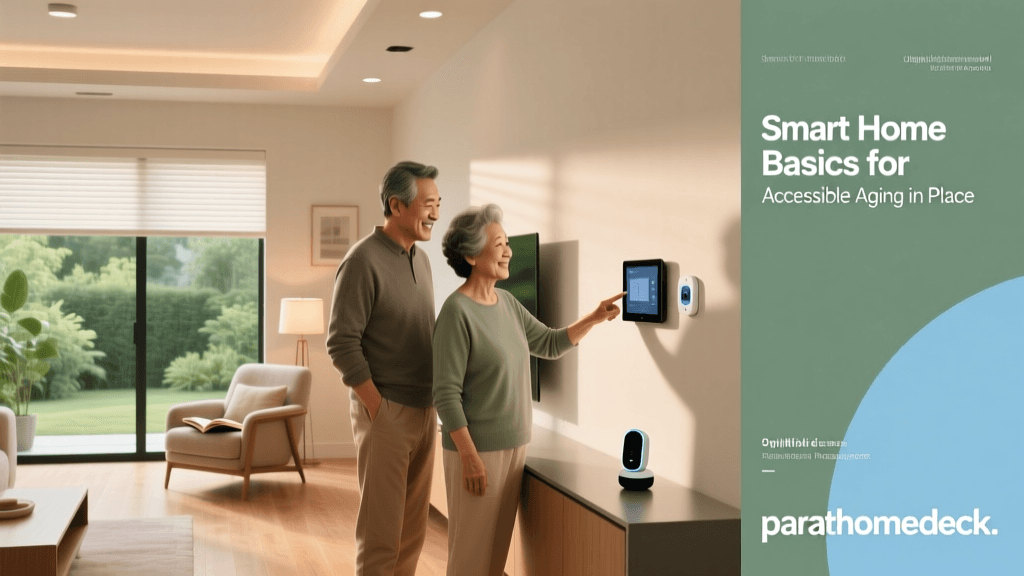
- You have mobility challenges: Voice control and automated routines provide immense accessibility benefits for elderly residents or individuals with physical disabilities.
Actionable Steps for a Phased Upgrade
If you decide that the benefits of a smart home outweigh the traditional approach, do not attempt to automate the entire house in one weekend. A phased approach minimizes frustration and spreads out the cost.
- Phase 1: The Entryway and Climate (Months 1-2): Start with a smart thermostat (Ecobee or Nest) to immediately begin generating energy ROI. Pair it with a smart lock and video doorbell to establish a baseline of automated security.
- Phase 2: High-Traffic Lighting (Months 3-4): Replace switches in the kitchen, living room, and exterior porch with smart dimmers (like Lutron Caseta). Set these to automate via sunrise/sunset schedules.
- Phase 3: Environmental Monitoring (Months 5-6): Add smart smoke/CO detectors and water leak sensors under sinks and near the water heater. These devices offer massive potential savings by preventing catastrophic damage.
- Phase 4: Advanced Routines (Ongoing): Once your hardware is in place, utilize IFTTT (If This Then That) or your hub's native routine builder to create complex automations, such as 'Good Night' routines that lock doors, arm the alarm, and lower the thermostat simultaneously.
Conclusion
The debate between a smart home and a traditional home is no longer about whether the technology works; it is about whether the technology aligns with your personal values regarding convenience, privacy, and energy consumption. While traditional homes offer unmatched simplicity and zero digital footprint, smart homes provide a level of efficiency, security, and proactive management that manual systems simply cannot replicate. By understanding the true long-term costs and leveraging modern standards like Matter, homeowners can confidently design an automated environment that pays for itself in both comfort and capital.