The Next Generation of Smart Home Ecosystems
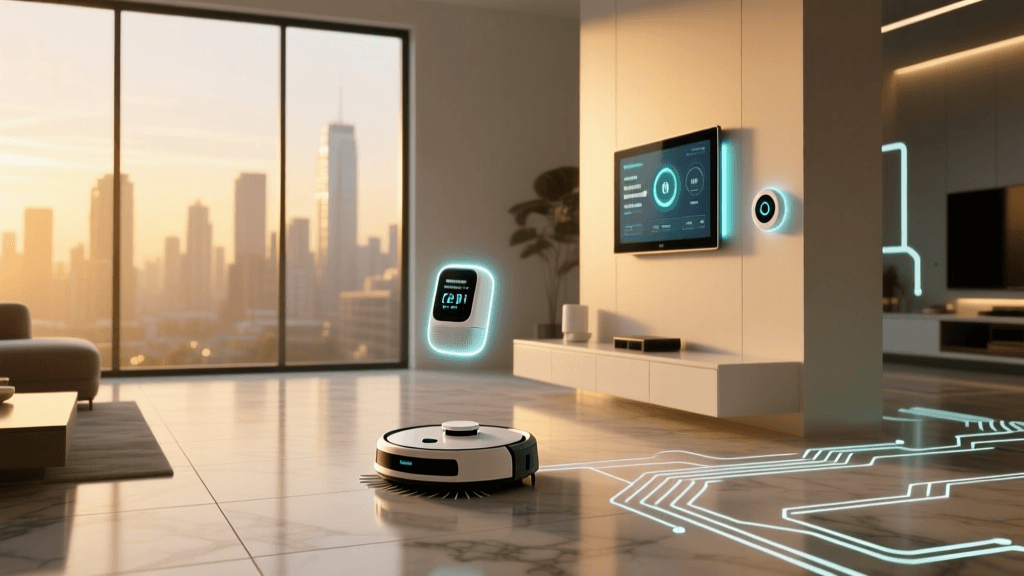
The smart home industry is undergoing a massive paradigm shift. For the past decade, consumers have been forced to navigate a fragmented landscape of proprietary ecosystems, walled gardens, and conflicting wireless protocols. However, as we look toward the future of smart home technology, three foundational pillars are emerging to redefine the market: the Matter interoperability protocol, Thread mesh networking, and Artificial Intelligence (AI) edge computing. Together, these technologies are transitioning the smart home from a collection of disjointed gadgets into a cohesive, intelligent, and privacy-centric environment.
According to industry analyses, the global smart home market is projected to expand exponentially, driven not just by novelty, but by genuine utility in energy management, security, and accessibility. For consumers and tech enthusiasts, understanding these underlying market trends is no longer optional; it is essential for making future-proof purchasing decisions. In this comprehensive guide, we will dissect the technological advancements shaping the future of smart homes, analyze market data, and provide actionable advice on how to build a next-generation ecosystem today.
The Matter Protocol: Breaking Down Walled Gardens
At the forefront of the smart home revolution is Matter, an open-source, royalty-free connectivity standard developed by the Connectivity Standards Alliance (CSA). Matter operates at the application layer, sitting on top of existing network protocols like Wi-Fi, Ethernet, and Thread. Its primary objective is to guarantee that smart home devices from different manufacturers can communicate seamlessly, regardless of the voice assistant or app you use to control them.
How Matter Changes the Market
Historically, buying a smart lock meant committing to a specific ecosystem, such as Apple HomeKit, Amazon Alexa, or Google Home. If you switched your primary smartphone or smart speaker brand, your expensive hardware often became obsolete. Matter introduces 'multi-admin' functionality, allowing a single device to be controlled simultaneously by multiple ecosystems. For example, a Matter-compatible smart plug can be controlled via Apple's Home app on an iPhone and simultaneously via Google Home on an Android tablet, without complex workarounds or third-party cloud bridges.
From a market analysis perspective, Matter drastically lowers the barrier to entry for new consumers while reducing customer support overhead for manufacturers. Devices bearing the Matter logo undergo rigorous certification testing, ensuring a baseline of reliability and security that was previously absent in the budget smart home segment.
Actionable Advice: Buying Matter Devices
When shopping for new devices, look for the official Matter logo on the packaging. Currently, the market is seeing a surge in Matter-compatible lighting, smart plugs, and sensors. For instance, the Eve Energy smart plug (typically priced around $40) and the Aqara Hub M2 (around $60) are excellent entry points. Be aware that while Matter unifies the application layer, you still need a compatible 'controller' or 'hub' (like an Apple TV 4K, Amazon Echo 4th Gen, or Google Nest Hub) to act as the central brain for your Matter network.
Thread Networking: The Backbone of Future Mesh
While Matter dictates how devices talk, Thread dictates how they connect. Thread is an IPv6-based, low-power, wireless mesh networking protocol designed specifically for IoT devices. Unlike Wi-Fi, which can suffer from congestion and dead zones, or Zigbee, which requires proprietary hubs, Thread creates a self-healing mesh network where every powered device acts as a router, extending the network's range and reliability.
The Thread Group has established this protocol as the gold standard for low-latency, low-power smart home communication. Because Thread is IP-based, it integrates natively with Matter without the need for cloud-based translation bridges. This means that if your internet connection goes down, your Thread-based smart switches and sensors will continue to communicate locally with zero latency.
Border Routers: The Critical Component
To utilize Thread, your home requires a 'Border Router.' This device bridges the Thread mesh network to your home's Wi-Fi and the broader internet. Fortunately, many modern smart speakers already contain Thread radios. The Apple HomePod mini ($99), Google Nest Hub Max ($229), and Amazon Echo 4th Gen ($99) all function as Thread Border Routers. If you are building a future-proof smart home, ensuring you have at least one, preferably two, Thread Border Routers in your home is a mandatory step.
Protocol Comparison: Wi-Fi vs. Zigbee vs. Thread vs. Bluetooth LE
To understand why the market is shifting toward Thread and Matter, it is crucial to compare the underlying physical and network layers. Below is a structured comparison of the dominant smart home protocols.
| Protocol | Power Consumption | Network Topology | Latency | Best Use Case |
|---|---|---|---|---|
| Wi-Fi 6 | High | Star (Hub/Router dependent) | High (20-50ms) | High-bandwidth devices (Cameras, Displays) |
| Zigbee 3.0 | Very Low | Mesh (Requires proprietary hub) | Medium (15-30ms) | Legacy sensors, budget lighting |
| Thread 1.3 | Very Low | Self-healing Mesh (IP-based) | Ultra-Low (<10ms) | Next-gen sensors, locks, switches |
| Bluetooth LE | Low | Point-to-Point / Mesh | High (40-100ms) | Proximity tracking, initial device setup |
AI and Edge Computing: Processing Data Locally
The third major trend shaping the future of the smart home is the migration of Artificial Intelligence from the cloud to the 'edge'—meaning the processing happens locally on the device or a local hub, rather than being sent to a remote server. This shift is driven by two critical market demands: reduced latency and enhanced privacy.
The Privacy Imperative
Consumers are increasingly wary of cloud-dependent devices that continuously stream audio and video data to corporate servers. The Federal Trade Commission (FTC) has repeatedly highlighted the privacy and security risks associated with poorly secured IoT devices. Edge computing mitigates this risk by keeping sensitive data within the physical boundaries of the home.
Apple's HomeKit Secure Video is a prime example of edge AI in action. When a smart camera detects motion, the local hub (like an Apple TV) uses on-device machine learning to analyze the video feed, distinguishing between a person, an animal, or a vehicle. Only the encrypted, anonymized metadata and the final video clip are sent to iCloud, and even then, it is end-to-end encrypted. Similarly, Amazon is increasingly integrating local neural engines into its newer Echo devices to process basic voice commands and smart home routines without an internet connection.
Local LLMs and Ambient Computing
Looking forward, the integration of localized Large Language Models (LLMs) into smart home hubs will fundamentally change how we interact with our environments. Instead of rigid, syntax-dependent voice commands ('Turn on the living room lights to 50 percent'), users will be able to use natural, conversational language ('It's getting a bit dark in here, can you make it cozier?'). The local AI will understand the context, the time of day, and the user's historical preferences to adjust lighting, temperature, and audio simultaneously. This concept, known as 'Ambient Computing,' envisions a home that anticipates needs without requiring explicit instructions, effectively making the user interface invisible.
Energy Management and the Electrified Home
As global energy grids face strain and the adoption of electric vehicles (EVs) and solar panels accelerates, the smart home is evolving into a micro-grid management system. Future smart home ecosystems will not just control lights; they will actively manage energy consumption and generation.
Products like the Span Smart Electrical Panel (ranging from $1,500 to $3,000 installed) represent the cutting edge of this trend. Span replaces the traditional breaker box with a software-defined panel that allows homeowners to monitor energy usage at the circuit level via a smartphone app. During a power outage, if paired with a home battery like the Tesla Powerwall, the Span panel can automatically shed non-essential loads (like the EV charger or guest room outlets) to ensure critical circuits (like the refrigerator and medical equipment) remain powered for days.
Market trends indicate that utility companies will soon offer dynamic time-of-use pricing integrated directly into smart home hubs. Your home's AI will automatically pre-cool the house when electricity is cheap and abundant, and power down the HVAC system during peak grid demand, saving consumers hundreds of dollars annually while stabilizing the local power grid.
Actionable Guide: Future-Proofing Your Smart Home Today
Navigating this transition period between legacy proprietary systems and the new Matter/Thread paradigm can be challenging. Here is a practical, step-by-step checklist to ensure your smart home investments remain relevant for the next decade.
- Audit Your Border Routers: Ensure you have at least one modern Thread Border Router. If you are an Apple user, the HomePod mini or the latest Apple TV 4K (Wi-Fi Ethernet model) is essential. For Google users, the Nest Hub (2nd Gen) or Nest Hub Max will serve this purpose.
- Prioritize Thread for Sensors and Switches: When buying battery-operated sensors (door/window, motion, leak) or hardwired smart switches, exclusively look for 'Thread' or 'Matter over Thread' compatibility. Avoid Wi-Fi-based sensors, as they will drain batteries rapidly and congest your home network.
- Invest in Local Processing Hubs: To reduce cloud reliance, purchase hubs that support local execution. The Home Assistant Green ($99) or the Hubitat Elevation ($149) are phenomenal for power users who want to run complex automations locally with zero cloud latency.
- Check for Firmware Update Policies: The transition to Matter is largely software-driven. Many older Zigbee and Wi-Fi hubs from brands like Aqara, SwitchBot, and Nanoleaf are receiving over-the-air (OTA) updates to become Matter bridges. Before discarding older hardware, check the manufacturer's support pages for Matter update roadmaps.
- Budget for Smart Energy: If you are building a new home or undertaking a major renovation, allocate $2,000 to $4,000 for a smart electrical panel and EV-ready circuit management. This is rapidly becoming a standard expectation in the real estate market and significantly boosts property resale value.
Conclusion
The era of the fragmented, frustrating smart home is drawing to a close. The convergence of the Matter protocol, Thread mesh networking, and AI edge computing is laying the groundwork for an ecosystem that is truly interoperable, lightning-fast, and fiercely protective of user privacy. As a consumer, understanding these foundational market trends empowers you to look beyond flashy marketing and focus on the underlying architecture of the devices you bring into your home. By prioritizing open standards, local processing, and energy intelligence, you can build a smart home that not only serves your needs today but is fully prepared for the ambient, AI-driven environments of tomorrow.