The Gateway to Home Automation: Lighting Control
When homeowners decide to transition from a traditional living space to a connected smart home, lighting is almost always the first frontier. It is the most visible, frequently used, and impactful system in any house. However, standing in the electrical aisle of a hardware store or browsing online retailers presents a massive decision matrix: do you stick with reliable, inexpensive traditional mechanical switches, or do you invest in smart switches that integrate with voice assistants, schedules, and automated routines?
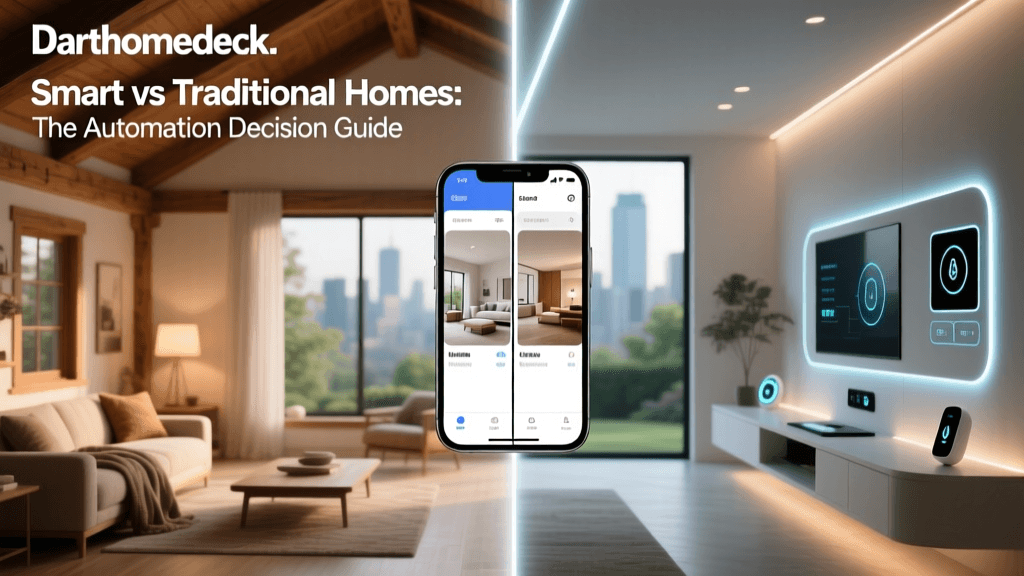
This comprehensive decision guide breaks down the technical, financial, and practical differences between traditional and smart light switches. Whether you are wiring a new build or retrofitting a 1970s colonial, understanding the nuances of neutral wires, wireless protocols, and ecosystem compatibility is crucial for making the right choice for your home automation journey.
Traditional Switches: The Mechanical Baseline
Traditional light switches have remained fundamentally unchanged for decades. They are simple mechanical devices that physically connect or disconnect the electrical circuit, allowing current to flow from the power source (line) to the light fixture (load).
How They Work
A standard single-pole switch uses a brass screw for the incoming hot wire and another for the outgoing load wire. When you flip the toggle or rocker, a metal contact bridges the gap, completing the circuit. In multi-location setups (3-way or 4-way switches), the wiring becomes more complex, utilizing "traveler" wires to allow multiple switches to control a single fixture from different entry points.
Pros and Cons
- Pros: Unbeatable reliability, zero latency, no internet dependency, extremely low cost ($1 to $5 per switch), and a lifespan that often exceeds 30 years.
- Cons: Zero automation capabilities, no remote access, no energy usage tracking, and requires physical presence to operate.
Smart Switches: The Digital Upgrade
Smart switches replace the mechanical connection with digital relays or solid-state dimmers, coupled with a wireless radio transceiver. Brands like Lutron Caseta, Leviton Decora Smart, and TP-Link Kasa dominate this space. They allow you to control your lighting via smartphone apps, voice commands (Alexa, Siri, Google Assistant), or automated triggers based on time, geofencing, or sensor data.
The Neutral Wire Dilemma
The single biggest technical hurdle in smart switch installation is the requirement for a neutral wire. A smart switch is an active electronic device; even when the light is turned "off," the switch's internal radio must remain powered to listen for app commands or voice instructions. This requires a constant trickle of electricity, which is achieved by connecting the switch to the neutral wire to complete a low-power circuit.
The Problem: In many homes built before the mid-1980s, neutral wires were not pulled into the wall switch boxes; they were kept in the ceiling junction boxes. If you open your switch box and only see black (hot), white (load or switched hot), and bare copper (ground) wires, you likely lack a neutral wire.
The Solution: If you have no neutral wire, your options are limited but viable. The Lutron Caseta system is famous for its proprietary Clear Connect RF technology and advanced circuitry that can operate without a neutral wire by leaking a tiny amount of current through the LED bulb itself. Conversely, most Wi-Fi and Zigbee smart switches from Leviton and Kasa strictly require a neutral wire to function safely.
Wireless Protocols: Wi-Fi vs. Zigbee vs. Proprietary
Not all smart switches communicate the same way. Choosing the right protocol impacts your network stability and hub requirements.
- Wi-Fi (e.g., TP-Link Kasa, GE Cync): Connects directly to your home router. No hub is required, making it cheap and easy for beginners. However, installing 20+ Wi-Fi switches can overwhelm standard consumer routers, leading to dropped connections and network congestion.
- Zigbee / Z-Wave (e.g., Leviton, Enbrighten): Requires a dedicated smart home hub (like Hubitat, SmartThings, or an Amazon Echo with built-in Zigbee). These create a mesh network where every wired switch acts as a signal repeater, vastly improving range and reliability without clogging your Wi-Fi bandwidth.
- Proprietary RF (e.g., Lutron Clear Connect): Lutron uses a dedicated, low-frequency radio band that is virtually immune to interference from Wi-Fi or microwaves. It requires the Lutron Smart Bridge but offers the highest reliability in the industry.
- Matter over Thread: The newest industry standard, championed by the Connectivity Standards Alliance, aims to unify ecosystems. Thread-based smart switches create a low-power mesh network that integrates natively with Apple HomePod and modern Amazon Eero routers, representing the future-proof choice for new installations.
Cost and ROI: Traditional vs. Smart
Upgrading a home is a financial decision. Let us compare the costs of outfitting a standard 20-switch home with traditional versus smart hardware, factoring in installation and long-term energy use.
| Feature | Traditional Switch | Smart Switch (Hub-Based) | Smart Bulb (e.g., Philips Hue) |
|---|---|---|---|
| Hardware Cost (per unit) | $1 - $5 | $45 - $70 | $25 - $60 |
| Hub Required? | No | Yes (One-time $50-$100) | Yes (For full features) |
| Color Changing? | No | No | Yes |
| 3-Way Setup Complexity | Moderate (Traveler wires) | Easy (Wireless remotes) | N/A (Keep switch on) |
| Lifespan | 20+ Years | 5 - 10 Years | 3 - 5 Years |
20-Switch Home: 5-Year Cost Breakdown ($)
While the upfront hardware and installation costs for smart switches are significantly higher, the 5-year energy costs can be lower. According to the U.S. Department of Energy, lighting accounts for roughly 10% to 15% of residential electricity use. Smart switches enable aggressive energy-saving routines, such as automatic shut-offs when rooms are vacated (via motion sensors) and ensuring all lights are turned off when the home's security system is armed or when the last person leaves the geofence perimeter.
The Golden Rule: Smart Switches vs. Smart Bulbs
A common mistake for beginners is installing a smart switch on a circuit that controls smart bulbs (like Philips Hue or LIFX). Never do this.
If someone flips a smart switch to the "off" position, it cuts physical power to the circuit. The smart bulbs will instantly lose their network connection, become unresponsive to app commands, and fail to execute automated routines. Furthermore, smart switches and smart bulbs both contain internal dimming electronics; stacking them can cause severe flickering, buzzing, or even damage to the bulb's internal power supply.
Expert Tip: Use Smart Switches for overhead lighting, recessed cans, and hardwired fixtures where you want to maintain the ability to use the physical wall switch. Use Smart Bulbs for table lamps, floor lamps, and accent lighting where color-changing capabilities and individual fixture control are desired.
Multi-Location and 3-Way Setups
In traditional wiring, a 3-way switch setup (controlling one light from two locations, like the top and bottom of a staircase) requires complex traveler wires. If you want to automate a 3-way circuit with traditional smart switches, you often have to rewire the wall boxes, which can be a nightmare in finished homes.
Smart ecosystems solve this elegantly. With systems like Lutron Caseta, you replace the main switch at the primary location with a smart dimmer. At the secondary location, you cap the old traveler wires, install a wireless remote (like the Pico remote) into the wall plate, and sync it digitally. This eliminates the need to trace and rewire complex 3-way traveler circuits, saving hours of electrician labor and drywall repair.
LED Compatibility and Dimming Performance
Traditional incandescent bulbs were simple resistive loads, making them incredibly easy to dim. Modern LED bulbs contain internal drivers that convert AC power to DC, making them notoriously difficult to dim smoothly. Cheap traditional dimmers often cause LEDs to flicker, drop out at low levels, or buzz loudly.
Premium smart switches (like the Lutron Caseta Diva or Leviton Decora Smart) feature advanced microprocessors that allow you to calibrate the high-end and low-end dimming ranges via an app. This ensures your LEDs dim smoothly down to 1% without flickering. When selecting a smart dimmer, always check the manufacturer's compatibility list for your specific brand of LED bulbs to ensure optimal performance.
Energy Efficiency and Environmental Impact
Beyond the convenience of voice control, automation is a powerful tool for energy conservation. The EPA Energy Star program highlights that efficient lighting combined with automated controls yields the highest utility savings. Smart switches allow you to implement "vampire power" reduction by completely cutting power to certain circuits on a schedule. Furthermore, integrating smart switches with smart thermostats and occupancy sensors ensures that lights and HVAC systems are not running in empty rooms, drastically reducing your home's carbon footprint and monthly utility bills.
Decision Matrix: Which Should You Choose?
Choose Traditional Switches If:
- You are on a strict budget and prioritizing basic functionality over automation.
- You live in a home with outdated wiring, no neutral wires, and you do not want to invest in specialized (and more expensive) no-neutral smart switches.
- You prefer absolute reliability with zero dependency on internet uptime, software updates, or cloud servers.
- You are flipping a house and need to keep renovation material costs to an absolute minimum.
Choose Smart Switches If:
- You want to integrate your lighting into a broader smart home ecosystem (HomeKit, Alexa, SmartThings) for routines and voice control.
- You have mobility issues or want to provide easier access to lighting for elderly family members via voice or automated schedules.
- You frequently forget to turn off lights and want geofencing or motion-sensor integrations to automate energy savings.
- You are dealing with complex 3-way or 4-way staircases and want to avoid the headache of rewiring traveler wires by using wireless smart remotes.
Conclusion
The transition from traditional to smart switches is a defining moment in a home's automation lifecycle. While traditional switches offer unmatched simplicity and longevity, smart switches unlock a level of convenience, security, and energy efficiency that mechanical toggles simply cannot match. By carefully evaluating your home's wiring (specifically the presence of neutral wires), choosing the right wireless protocol to protect your network bandwidth, and understanding the distinct roles of smart switches versus smart bulbs, you can build a lighting foundation that is both robust and future-proof. Whether you opt for the ultra-reliable Lutron Caseta, the versatile Leviton Decora, or the budget-friendly Kasa line, the key to success lies in strategic planning and prioritizing the rooms where automation will deliver the highest daily return on investment.