Beyond the Magic: What Actually Makes a Home 'Smart'?
When you ask your voice assistant to dim the lights or check your smartphone to see who is at the front door, the experience feels instantaneous and almost magical. However, beneath this seamless user experience lies a complex, invisible ecosystem of microcontrollers, radio frequency (RF) protocols, edge computing hubs, and cloud servers. To truly master the smart home space, one must move beyond the consumer-facing apps and understand the underlying Internet of Things (IoT) architecture that makes it all possible.
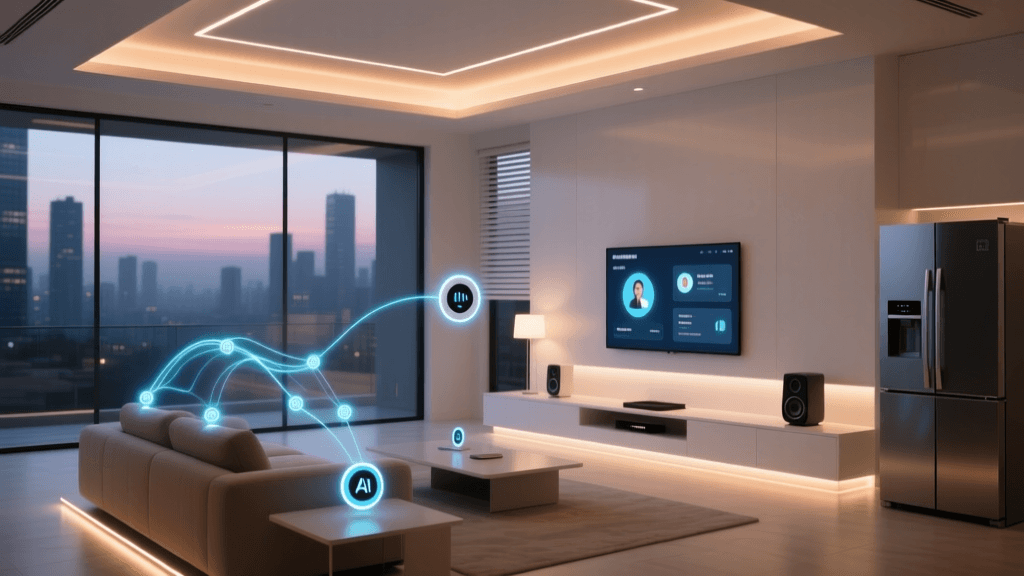
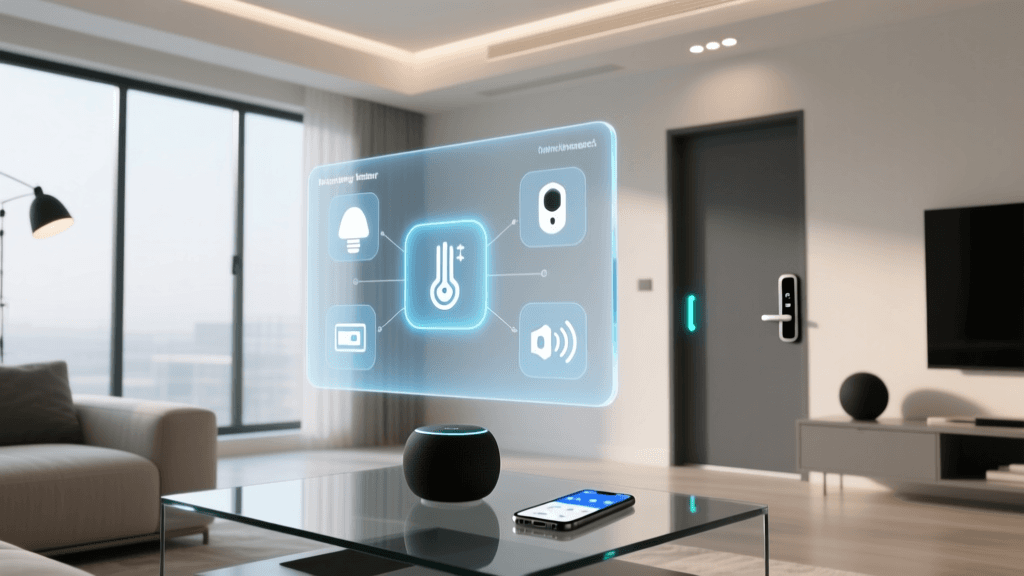
A smart home is not merely a collection of gadgets; it is a localized network of sensors, actuators, and controllers working in concert. Sensors gather data from the environment (like a millimeter-wave presence sensor detecting human breathing or a thermal sensor measuring ambient room temperature). Actuators execute physical actions (like a smart relay cutting power to a lighting circuit or a stepper motor turning a smart lock's deadbolt). The controllers—often referred to as hubs or bridges—act as the central nervous system, translating your smartphone commands into the specific radio frequencies that your devices understand.
A smart home is not defined by the devices you buy, but by the invisible network and protocols that connect them. Without a robust foundation, the most expensive smart devices are nothing more than disconnected novelties.
In this deep explainer, we will dissect the architecture of the modern smart home, evaluate the competing wireless protocols, and provide actionable advice on building a resilient, future-proof network.
The Anatomy of an IoT Device: Microcontrollers and Edge Processing
Every smart device, from a $15 smart plug to a $250 smart refrigerator, contains a microcontroller unit (MCU). In the early days of IoT, these MCUs were incredibly basic, relying entirely on cloud servers to process logic. If you wanted a light to turn on when a motion sensor was triggered, the sensor sent a signal to your Wi-Fi router, out to the internet, into the manufacturer's cloud server, back to your router, and finally to the smart bulb. This 'cloud-dependent' architecture resulted in noticeable latency (often 1 to 3 seconds) and total failure during internet outages.
Today's architecture heavily favors Edge Computing (or local processing). Modern MCUs, such as the ESP32 or Nordic nRF52 series found in many premium devices, possess enough processing power to handle logic locally. When paired with a local hub, the command never leaves your home network. The latency drops to milliseconds, and your automations continue to function even if your broadband connection goes down.
The Nervous System: Decoding Wireless Protocols
The most critical decision in smart home architecture is selecting the right wireless communication protocol. Unlike standard IT networks that rely almost exclusively on Wi-Fi, the smart home utilizes a fragmented landscape of RF protocols, each optimized for specific use cases regarding bandwidth, power consumption, and range.
1. Wi-Fi (High Bandwidth, High Power)
Wi-Fi is ubiquitous and offers massive bandwidth, making it mandatory for smart home cameras, video doorbells, and smart displays. However, Wi-Fi is incredibly power-hungry. You will rarely find a battery-operated door sensor running on standard Wi-Fi because it would drain the battery in weeks. Furthermore, connecting 40+ Wi-Fi smart bulbs directly to a standard consumer router will quickly exhaust its DHCP table and cause network congestion.
2. Zigbee 3.0 (Mesh Networking, Low Power)
Operating on the crowded 2.4 GHz spectrum, Zigbee is a low-power mesh protocol. Every mains-powered Zigbee device (like a smart plug or hardwired light switch) acts as a 'router,' repeating the signal for battery-powered devices further away. The Philips Hue ecosystem is the most famous example of Zigbee in action. While reliable, Zigbee requires a dedicated hub (bridge) to translate its signals to your home's IP network.
3. Z-Wave Plus (Sub-1 GHz, Superior Penetration)
Z-Wave operates on a sub-1 GHz frequency (908.42 MHz in the US), which allows it to penetrate thick walls, concrete, and floors far better than 2.4 GHz signals. It is highly standardized, meaning a Z-Wave switch from one brand will almost always mesh perfectly with a Z-Wave sensor from another. It is the preferred choice for large homes and complex security systems.
4. Thread (The Modern IPv6 Mesh)
Thread is an IP-based, low-power mesh networking protocol. Unlike Zigbee, Thread devices use standard IPv6 addressing, meaning they don't require a traditional 'hub' to translate protocols—instead, they use 'Border Routers' (like the Apple HomePod Mini or certain Eero routers) to bridge the Thread mesh directly to your Wi-Fi network. According to the Thread Group, this architecture eliminates single points of failure and allows for seamless local communication.
| Protocol | Frequency | Power Draw | Topology | Best Use Case |
|---|---|---|---|---|
| Wi-Fi 6 | 2.4 / 5 / 6 GHz | High | Star (Hub & Spoke) | Cameras, Displays, High-Bandwidth |
| Zigbee 3.0 | 2.4 GHz | Very Low | Mesh | Lighting, Battery Sensors, Plugs |
| Z-Wave Plus | Sub-1 GHz | Low | Mesh | Locks, Large Homes, Security |
| Thread | 2.4 GHz | Very Low | IPv6 Mesh | Next-Gen Sensors, Matter Devices |
The Brain: Hubs, Bridges, and Local Processing
To unify these disparate protocols, you need a central controller. The market is currently split between cloud-dependent ecosystems and local-first powerhouses.
- Samsung SmartThings Station (Approx. $50): An excellent entry-level hub that supports Zigbee, Thread, and Matter. However, much of its advanced automation logic still relies on cloud processing, which can introduce latency.
- Home Assistant Green (Approx. $99): The gold standard for local processing. Home Assistant is an open-source operating system that runs on a dedicated local server. It supports virtually every protocol via USB dongles (like the SkyConnect for Zigbee/Thread) and processes all automations locally with zero cloud reliance.
- Hubitat Elevation (Approx. $149): A user-friendly, local-first hub with built-in Z-Wave and Zigbee radios. It bridges the gap between the extreme technical depth of Home Assistant and the ease of use of SmartThings.
Actionable Advice: If you are building a serious smart home, invest in a dedicated local hub. The initial cost of $100-$150 pays for itself in reliability, speed, and privacy.
The Backbone: Why Your Router Dictates Your Experience
Your smart home is only as reliable as the IP network it rides on. A standard ISP-provided router is designed to handle 10 to 15 devices, not the 60+ IoT endpoints common in a modern smart home. When IoT devices overwhelm a router's limited RAM and CPU, you will experience 'device dropouts'—where smart lights become unresponsive or sensors fail to trigger.
For homes with over 30 smart devices, upgrading to a robust Mesh Wi-Fi system or a prosumer wired network is mandatory.
- Eero Pro 6E (Approx. $399 for a 2-pack): Beyond excellent Wi-Fi coverage, the Eero Pro line features built-in Zigbee and Thread Border Routers, eliminating the need for separate dongles for many IoT devices.
- Ubiquiti UniFi Dream Router (Approx. $199): Ideal for advanced users who want granular control over their network, including the ability to create Virtual Local Area Networks (VLANs).
The Unifier: Understanding the Matter Standard
No discussion of smart home architecture is complete without addressing Matter. Developed by the Connectivity Standards Alliance (CSA), Matter is not a new radio protocol like Wi-Fi or Zigbee. Rather, it is an application layer that runs on top of existing transport protocols (specifically Thread, Wi-Fi, and Ethernet).
Before Matter, a smart plug made by Brand A could not easily communicate with a motion sensor made by Brand B without relying on a cloud-to-cloud integration. Matter standardizes the 'language' that devices use to describe themselves and their states. If a device is 'Matter Certified,' it guarantees local network interoperability across Apple Home, Amazon Alexa, Google Home, and Samsung SmartThings simultaneously. When purchasing new hardware today, prioritizing the Matter logo ensures your devices will not be locked into a single proprietary ecosystem.
Securing the Perimeter: NIST Guidelines and Network Segmentation
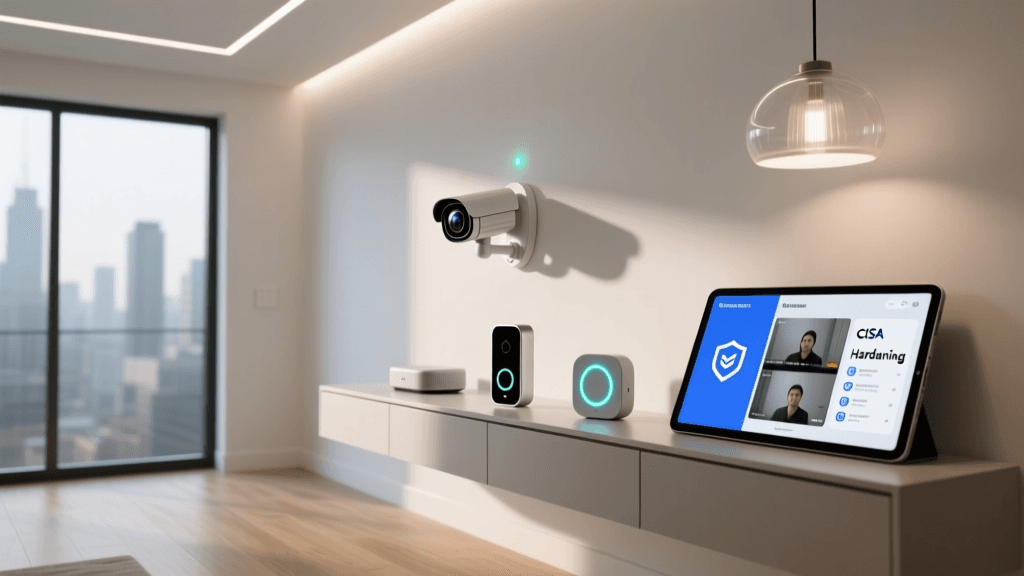
IoT devices are notoriously vulnerable to cyberattacks. Many cheap, off-brand smart plugs and cameras lack basic encryption and receive zero firmware updates after purchase, making them prime targets for botnets. To protect your personal data and your home network, you must implement network segmentation.
The National Institute of Standards and Technology (NIST) Special Publication 800-213 outlines strict guidelines for IoT device cybersecurity, emphasizing the need to isolate IoT traffic from your primary computing devices. You can achieve this by setting up a dedicated 'IoT VLAN' or utilizing the 'Guest Network' feature on your router.
Practical Security Steps:
- Isolate Devices: Place all smart bulbs, plugs, and sensors on a secondary VLAN or Guest Network that does not have access to your primary NAS, personal laptops, or smartphones.
- Block WAN Access: If your router supports it, block internet (WAN) access for local-only devices like smart bulbs and Zigbee hubs. They do not need to communicate with the outside world to function.
- Avoid Cloud-Only Cameras: For security cameras, prioritize systems that record to a local Network Video Recorder (NVR) via RTSP streams (like Reolink or Ubiquiti Protect) rather than relying on cloud subscriptions, ensuring your video feeds never leave your physical property.
Conclusion: Building with Intent
Transitioning from a casual user of smart gadgets to an architect of a smart home requires a shift in perspective. It requires understanding that a $20 smart bulb is only as good as the Zigbee mesh supporting it, and that a voice command is only as fast as the local hub processing it. By investing in local-first hubs, selecting the appropriate low-power mesh protocols for your sensors, and securing your network perimeter, you build a home that is not just 'connected,' but truly intelligent, resilient, and private.