The Shift from Reactive to Proactive Smart Homes
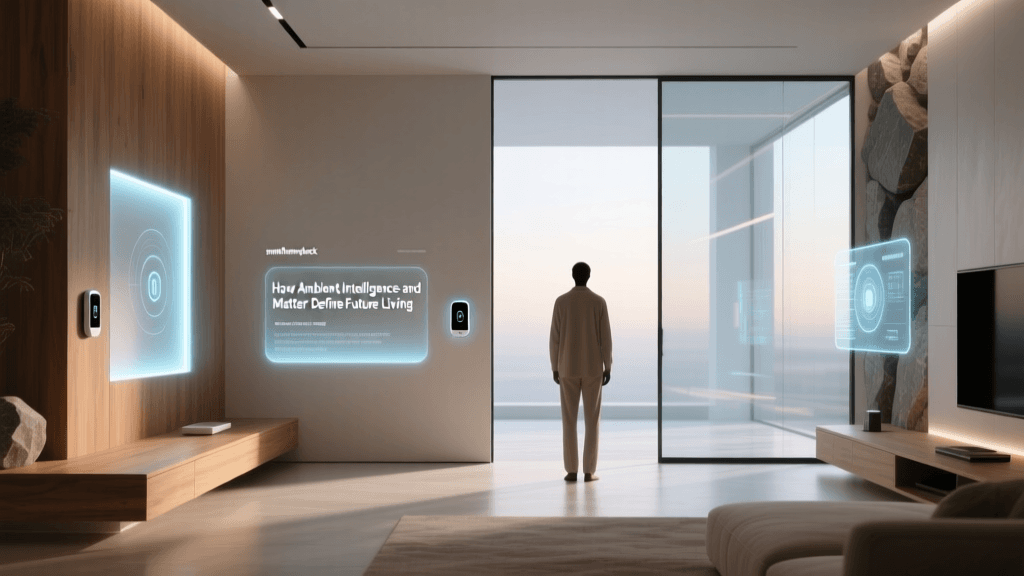
For the past decade, the smart home industry has been defined by reactivity. We have trained ourselves to issue explicit commands—tapping glass screens to adjust thermostats, or shouting into cylindrical speakers to turn off the living room lights. While this era of connected devices introduced unprecedented convenience, it also introduced a hidden layer of friction. True technological integration should not require constant human intervention; it should anticipate our needs. As we look toward the next horizon of residential technology, the paradigm is shifting dramatically from reactive command structures to proactive, predictive ecosystems. This transition is driven by two foundational concepts: Ambient Computing and Predictive Artificial Intelligence (AI). Together, these technologies are erasing the boundary between the physical structure of the home and the digital intelligence that manages it, creating living spaces that think, adapt, and respond before a command is ever issued.
What is Ambient Computing in the Smart Home?
Ambient computing, a concept originally envisioned by computer scientist Mark Weiser as "ubiquitous computing," refers to technology that recedes into the background of our daily lives. In the context of the modern smart home, ambient computing means that the intelligence of the house is woven into its very fabric, utilizing a dense network of invisible or unobtrusive sensors rather than relying on centralized, glowing screens.
The backbone of this ambient future is advanced sensor technology, specifically millimeter-wave (mmWave) radar and LiDAR (Light Detection and Ranging). Traditional Passive Infrared (PIR) motion sensors, which have governed home automation for years, suffer from a critical flaw: they cannot detect presence if a person is sitting still. If you are reading a book on the couch, a PIR sensor assumes the room is empty and turns off the lights. mmWave sensors, however, are sensitive enough to detect the micro-movements of human breathing and heartbeats. This allows the home to build a real-time, highly accurate map of occupancy without relying on invasive optical cameras. By knowing exactly where you are, how many people are in a room, and even their posture, the ambient home can adjust localized lighting, redirect HVAC airflow, and modulate acoustics dynamically and silently.
Predictive AI: The Brain Behind Future Living
If ambient sensors are the nervous system of the future smart home, Predictive AI is the brain. Early smart home automation relied on rigid, rules-based logic (e.g., "If the front door opens, turn on the hallway light"). Predictive AI replaces these brittle rules with machine learning models that analyze vast datasets regarding your daily routines, environmental conditions, and biometric preferences.
Key Predictive AI Features Coming to Your Home
- Thermal Anticipation: AI algorithms analyze the thermal mass of your specific home, combined with hyper-local weather forecasts and historical grid pricing, to pre-cool or pre-heat your home during off-peak hours, ensuring comfort the moment you walk through the door while minimizing energy costs.
- Circadian Lighting Adaptation: Instead of static schedules, AI adjusts color temperature and brightness based on the exact amount of natural sunlight entering the room, the time of year, and your historical sleep-wake patterns to support healthy circadian rhythms.
- Predictive Maintenance: By analyzing the acoustic signatures and power draw of appliances like refrigerators and HVAC compressors, AI can predict mechanical failures weeks before they happen, automatically scheduling maintenance or ordering replacement filters.
Hardware Powering the Ambient Home
To transition from a reactive smart home to a proactive ambient environment, specific hardware upgrades are required. The focus is shifting toward devices that support local processing (Edge AI) and universal interoperability protocols like Matter and Thread. Below is a comparison of the foundational hardware shaping this transition.
| Device | Core Technology | Protocol | Est. Cost | Best Use Case |
|---|---|---|---|---|
| Aqara Presence Sensor FP2 | mmWave Radar & AI Zone Mapping | Wi-Fi / Matter | $70 | Room-level occupancy tracking and fall detection without cameras. |
| Ecobee Smart Thermostat Premium | AI eco+ & Remote Sensor Mesh | Matter / Wi-Fi | $250 | Predictive HVAC load-shifting and personalized room comfort. |
| Apple HomePod (2nd Gen) | Edge AI & Thread Border Router | Thread / Matter | $299 | Localized, private voice processing and ambient sound modulation. |
| SwitchBot Hub 2 | IR Blaster & Matter Bridge | Matter / Wi-Fi | $100 | Integrating legacy, non-smart appliances into predictive AI routines. |
As the Connectivity Standards Alliance (CSA) continues to expand the Matter protocol, devices from disparate ecosystems can finally communicate locally without relying on cloud servers. This local mesh networking, particularly via the Thread protocol, ensures that your ambient sensors remain responsive even if your internet connection drops, a critical requirement for a truly reliable smart home.
Energy Management and Grid Integration
One of the most profound impacts of predictive AI is its ability to transform the home from a passive energy consumer into an active grid participant. With the rise of Virtual Power Plants (VPPs) and dynamic time-of-use utility rates, AI-driven energy management systems (EMS) are becoming essential. According to the EPA's Energy Star program, AI-driven smart thermostats and integrated home energy monitors can reduce HVAC energy consumption by up to 15% annually by learning occupancy patterns and optimizing run-times.
Future homes will seamlessly integrate solar inverters, home battery walls (like the Tesla Powerwall or Enphase IQ), and EV chargers into a single predictive dashboard. The AI will decide whether to store solar energy in the battery, sell it back to the grid during peak pricing, or use it to charge your EV, all based on predictive market algorithms.
Projected Cumulative Energy Savings: Standard Programmable vs. AI Predictive HVAC over 5 Years
Privacy, Security, and the Rise of Edge Computing
An ambient home that knows when you sleep, what rooms you occupy, and your exact thermal preferences generates a massive amount of intimate data. In the early days of IoT, this data was beamed to cloud servers for processing, raising severe privacy concerns and introducing latency. The future of smart home AI relies heavily on Edge Computing—processing data locally on the device or a local hub, rather than in the cloud.
Devices like the Apple HomePod and advanced Hubitat hubs utilize on-device neural engines to process voice commands and sensor data locally. This means your daily routines never leave your home network. As outlined by the National Institute of Standards and Technology (NIST), securing IoT devices requires a fundamental shift toward zero-trust architectures and localized data processing to mitigate the risks of cloud breaches and unauthorized surveillance. When shopping for future-proof smart home gear, prioritizing devices that advertise "local processing," "Edge AI," or "offline capabilities" is paramount for protecting your household's privacy.
Actionable Steps to Prepare Your Home for Ambient AI
Transitioning to an ambient, AI-driven home does not require tearing down walls or rebuilding your electrical system. It requires strategic upgrades and a shift in how you architect your network. Here are actionable steps to future-proof your living space today:
- Segment Your Home Network: Ambient computing requires dozens of low-power sensors. Do not clutter your primary Wi-Fi network with IoT devices. Invest in a router that supports VLANs (Virtual Local Area Networks) or guest networks to isolate your smart home traffic from your personal computers and phones, enhancing both security and bandwidth.
- Adopt Thread and Matter: When purchasing new sensors or smart plugs, look for the Matter logo. Prioritize Thread-enabled devices for low-latency, mesh-networked sensors that do not rely on Wi-Fi. This ensures your ambient sensor network remains robust and scalable.
- Upgrade to mmWave Presence Sensors: Replace aging PIR motion sensors in high-traffic or static-occupancy rooms (like home offices and living rooms) with mmWave alternatives like the Aqara FP2. Configure them to trigger micro-automations, such as adjusting the monitor brightness or changing the HVAC vent direction based on exactly where you are sitting.
- Invest in a Local AI Hub: Move away from cloud-dependent hubs. Transition to local-first controllers like Home Assistant (running on a Raspberry Pi or dedicated mini-PC) or a Hubitat Elevation hub. These platforms allow you to run local machine learning add-ons that learn your patterns without sending data to third-party servers.
- Enable Predictive Energy Features: If you have an AI-enabled thermostat (like Ecobee or Nest), ensure you have opted into "eco+" or "AI Savings" modes. Link your device to your utility provider's demand-response program to allow the AI to participate in grid load-shifting, earning you credits while stabilizing the local power grid.
Conclusion: The Invisible Interface
The ultimate goal of smart home technology is to become invisible. As predictive AI and ambient computing mature, the best technology will be the technology you never actively interact with. By shifting our focus from flashy touchscreens and voice commands to robust sensor meshes, local Edge AI, and universal Matter protocols, we are laying the groundwork for homes that genuinely care for their inhabitants. The future of living is not about commanding your home; it is about your home understanding you.