The Paradigm Shift: From Reactive Commands to Ambient Intelligence
For the past decade, the smart home industry has been defined by reactivity. Homeowners have relied on pulling out a smartphone to toggle a Wi-Fi plug, or shouting a voice command to a cylindrical speaker to dim the lights. While these conveniences represent a significant leap from traditional manual switches, they are merely the infancy of home automation. The true future of smart living lies in a concept known as Ambient Intelligence (AmI)—environments that are inherently sensitive, responsive, and adaptive to the presence and habits of the people within them, requiring zero active user interface.
Ambient Intelligence shifts the smart home from a tool that requires constant instruction to a proactive partner that anticipates needs. Instead of telling your thermostat to lower the temperature when you leave, an AmI-enabled home utilizes spatial awareness, machine learning, and unified communication protocols to adjust the climate, lighting, and security automatically based on your real-time behavior and historical patterns. This transition from reactive control to predictive automation is not science fiction; it is actively being deployed today through the convergence of advanced sensor fusion, Edge AI, and the revolutionary Matter protocol.
"The ultimate smart home is one you never have to think about. It should adapt to you, not the other way around. The friction of apps and voice commands will eventually be replaced by invisible, context-aware automation."
The Matter Protocol: The Bedrock of Future Interoperability
Ambient Intelligence cannot exist in a fragmented ecosystem where devices from different manufacturers are siloed behind proprietary cloud servers. The foundation of the future smart home is the Matter protocol, an open-source, royalty-free connectivity standard developed by the Connectivity Standards Alliance (CSA). Matter operates over IP-based networks, primarily utilizing Wi-Fi for high-bandwidth devices (like cameras and displays) and Thread for low-power, battery-operated sensors and lighting.
Thread is particularly crucial for the future of ambient living. Unlike traditional Zigbee or Z-Wave networks, Thread is an IPv6-based mesh networking protocol (IEEE 802.15.4) that is self-healing and boasts virtually no single point of failure. When you deploy a Matter-over-Thread device, such as the Nanoleaf Shapes smart lighting panels or the Eve MotionBlinds, the device communicates locally with a Thread Border Router (like an Apple TV 4K or Amazon Echo 4th Gen). This local communication ensures that predictive automations execute with sub-100-millisecond latency, which is essential for creating a seamless, invisible user experience.
Visualizing the Ecosystem Transition
The market is rapidly pivoting away from fragmented, cloud-dependent proprietary protocols toward unified, local-first Matter ecosystems. The chart below illustrates the projected shift in device availability and market focus over the next few years.
Market Shift: Matter vs Legacy Protocols
Sensor Fusion and Millimeter-Wave (mmWave) Technology
To achieve true Ambient Intelligence, a home must possess granular spatial awareness. Traditional Passive Infrared (PIR) motion sensors have severe limitations: they can only detect macro-movements and frequently turn off lights if a person is sitting still while reading or watching television. The future relies on sensor fusion, specifically the integration of millimeter-wave (mmWave) radar technology.
Millimeter-wave sensors emit high-frequency radio waves that can detect micro-movements, including the subtle rise and fall of a human chest during breathing. A premier example of this technology available to consumers today is the Aqara Presence Sensor FP2 (retailing around $69.99). The FP2 utilizes mmWave radar to provide a 160-degree field of view and a detection range of up to 20 feet. More importantly, it supports multi-person tracking and zone positioning.
Practical Application of mmWave in AmI
- Zone-Specific Automation: You can divide a living room into virtual zones. If the sensor detects a person sitting in the "reading chair" zone, it can trigger a specific warm-white reading lamp. If they move to the "sofa" zone, the TV backlighting activates while the reading lamp dims.
- Fall Detection and Elder Care: Because mmWave can map spatial positioning in 3D, advanced sensors can detect if a person has fallen and remained on the floor, triggering an automated alert to caregivers without the need for wearable pendants or invasive cameras.
- Sleep Tracking Integration: Mounted above a bed, mmWave sensors can monitor sleep states based on respiration rates, signaling the HVAC system to adjust the temperature as the occupant enters deep sleep cycles.
Reactive vs. Predictive: A Comparative Analysis
To understand the magnitude of the shift toward Ambient Intelligence, it is helpful to compare current reactive setups with future predictive environments across common household scenarios.
| Scenario | Reactive Smart Home (Current Standard) | Ambient Intelligence (Future Standard) |
|---|---|---|
| Lighting | User says "Turn on lights" or relies on a rigid time-based schedule. | mmWave sensors detect occupancy and reading posture, dynamically adjusting color temperature and brightness based on the time of day and activity. |
| Climate Control | Thermostat follows a static 7-day program or requires manual app adjustment. | AI predicts arrival time via geofencing, learns the thermal mass of the home, and pre-conditions rooms based on real-time occupancy. |
| Security | Camera sends a push notification for any motion, causing alert fatigue. | Edge AI distinguishes pets from humans and recognizes familiar faces, only alerting for unrecognized anomalies or package deliveries. |
| Energy Usage | Smart plugs turn off devices on a set timer. | The home monitors real-time grid pricing and automatically shifts heavy loads (like EV charging or water heating) to off-peak hours. |
AI-Driven Energy Management and Grid Responsiveness
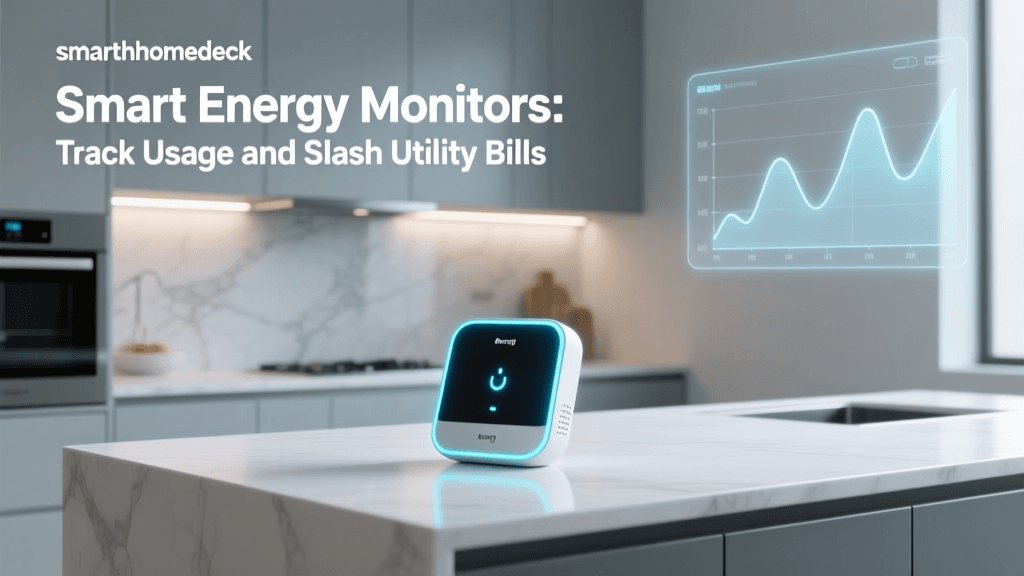
As homes become more intelligent, they also become critical nodes in the broader energy grid. Future living requires homes to be energy-autonomous and responsive to Time-of-Use (TOU) electricity rates. The EPA's Energy Star program has increasingly recognized the role of smart thermostats in reducing peak demand, but the next generation of AI-driven climate control goes far beyond basic scheduling.
Devices like the Ecobee Smart Thermostat Premium (approximately $249) utilize remote SmartSensors to detect which rooms are actually occupied, solving the common problem of heating or cooling empty spaces. Furthermore, when integrated with a robust smart home hub, AI algorithms can analyze the home's thermal envelope—how quickly it retains or loses heat—and cross-reference this with local weather forecasts and utility rate APIs. If electricity prices are set to spike at 5:00 PM, the predictive system will pre-cool the home at 3:00 PM when energy is cheaper, coasting through the peak hours without sacrificing comfort.
Edge Computing: The Privacy Imperative
A major barrier to the adoption of Ambient Intelligence is privacy. A home equipped with dozens of sensors, microphones, and cameras generates an immense amount of intimate data. In the current paradigm, much of this data is sent to cloud servers for processing, introducing latency and severe privacy vulnerabilities. The future of the smart home dictates that data processing must occur locally, a concept known as Edge Computing.
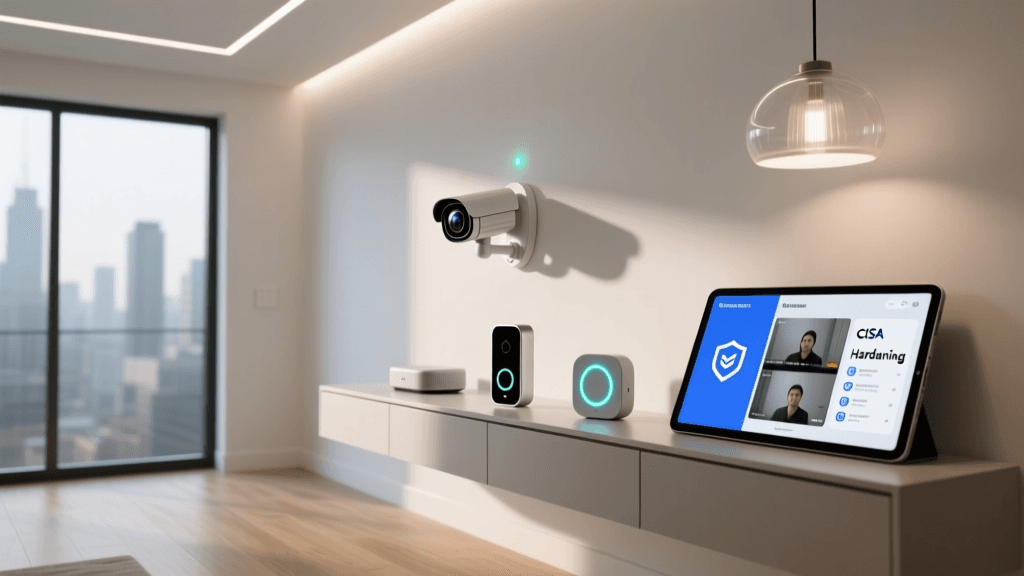
According to guidelines outlined by the National Institute of Standards and Technology (NIST) regarding IoT cybersecurity, minimizing data transmission and processing sensitive information locally are key strategies for securing IoT environments. Modern smart home hubs are now incorporating dedicated Neural Processing Units (NPUs) to handle AI tasks on-premises.
For example, the Apple HomePod (2nd Generation) and the Hubitat Elevation hub ($149.95) process automations and voice requests locally. When a camera detects motion, the video feed is analyzed by the hub's local AI to determine if it is a person, a pet, or a swaying tree. Only the metadata (e.g., "Person detected at front door") is logged, while the raw video footage remains encrypted on local storage. This Edge-first architecture ensures that your home's predictive intelligence remains entirely private, immune to cloud outages, and safe from external data breaches.
Actionable Guide: Building an Ambient-Ready Home Today
Transitioning to an Ambient Intelligence ecosystem does not require rebuilding your home from scratch. By strategically upgrading key components, you can lay the groundwork for a predictive, Matter-compatible future. Here is a step-by-step guide to future-proofing your smart home, including estimated costs.
Step 1: Establish a Thread and Matter Foundation
Before adding advanced sensors, ensure your network can handle local, low-latency communication. Purchase a dedicated Thread Border Router that also acts as a Matter Controller.
- Recommended Product: Apple TV 4K (Wi-Fi + Ethernet model) or Amazon Echo (4th Gen).
- Cost Range: $100 - $150.
- Action: Connect the hub via Ethernet to your primary router to ensure stable mesh network backhaul.
Step 2: Upgrade Presence Detection to mmWave
Replace aging PIR motion sensors in high-traffic, multi-use rooms (living rooms, kitchens, home offices) with millimeter-wave radar sensors.
- Recommended Product: Aqara Presence Sensor FP2 or SONOFF SNZB-06P.
- Cost Range: $40 - $70 per sensor.
- Action: Mount sensors on the ceiling or high on the wall, mapping virtual zones in the manufacturer's app, and expose these zones to your central hub via Matter.
Step 3: Localize Automation Logic
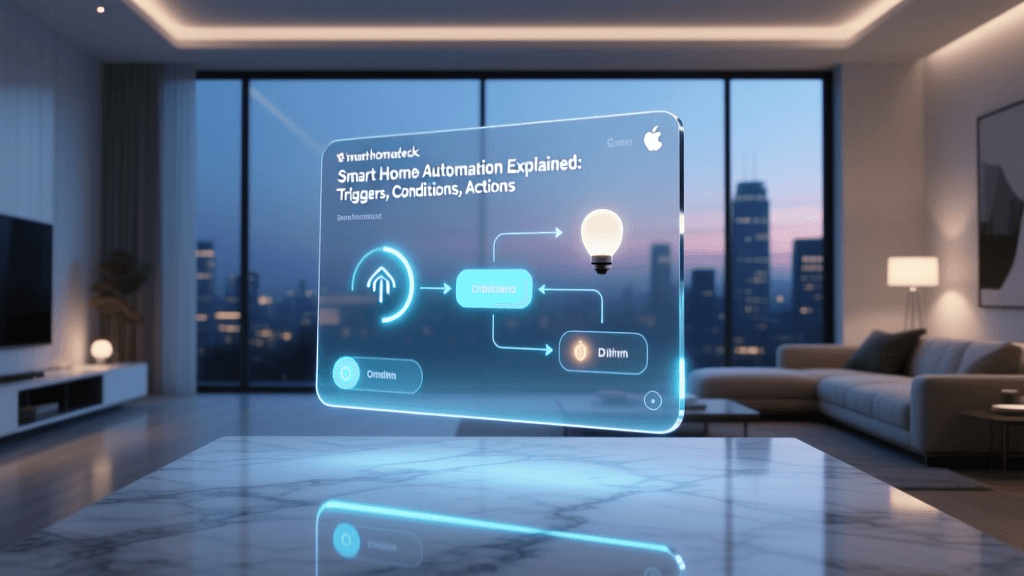
Move away from cloud-dependent IFTTT applets and manufacturer-specific apps. Centralize your automation logic on a local hub that supports complex conditional statements (e.g., "If Zone A is occupied AND lux levels are below 200 AND time is after 6 PM, then set lights to 2700K at 40% brightness").
- Recommended Product: Hubitat Elevation or Home Assistant Green.
- Cost Range: $100 - $150.
- Action: Migrate your Zigbee, Z-Wave, and Matter devices to the local hub, ensuring that internet outages do not disable your home's ambient responses.
Conclusion
The era of the "smart" home as a collection of disparate, app-controlled gadgets is drawing to a close. As the Matter protocol matures and mmWave sensor technology becomes commoditized, we are entering the age of Ambient Intelligence. By embracing local processing, predictive AI, and unified interoperability, homeowners can create living spaces that are not only more energy-efficient and secure but fundamentally more intuitive. The future of smart living is invisible, anticipatory, and entirely centered around the human experience, allowing technology to fade into the background while seamlessly enhancing everyday life.