Smart Home Market Forecast: What’s Driving Growth Beyond 2026?
The smart home industry is transitioning from early adopter novelty to mainstream infrastructure — and the next five years will be defined not by gadget proliferation, but by intelligent integration, energy accountability, and interoperable ecosystems. According to Statista, the global smart home market is projected to reach $338.4 billion by 2030, growing at a CAGR of 12.2% from 2026–2030. But raw revenue figures mask deeper structural shifts: rising consumer demand for contextual awareness, regulatory pressure on energy consumption, and a decisive move away from walled-garden platforms toward open standards.
AI Is No Longer Optional — It’s the Operating System
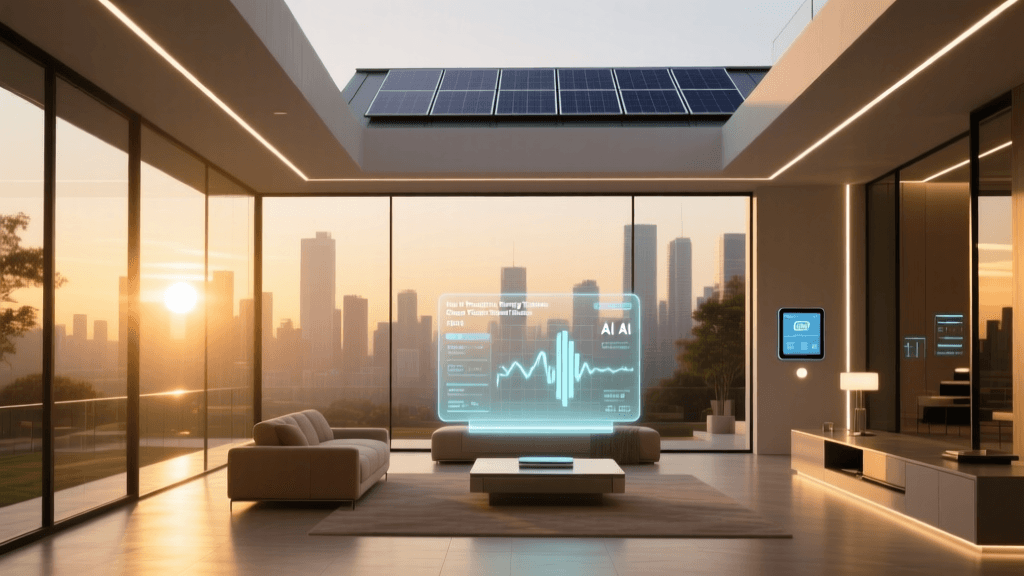
Artificial intelligence has evolved from voice-command assistants to embedded, predictive intelligence that anticipates behavior rather than reacting to it. Modern smart home AI operates across three layers: on-device inference (e.g., local processing in cameras or thermostats), federated learning (privacy-preserving model updates across devices), and cloud-native orchestration (cross-device automation logic).
Consider the Nest Thermostat (2026 Edition): it uses on-device TensorFlow Lite models to detect occupancy patterns with 94% accuracy—without streaming video or audio to the cloud (Google Store). Similarly, the Ecobee SmartThermostat Premium integrates Matter-over-Thread support and runs its Eco+ AI engine locally to adjust heating/cooling based on real-time weather forecasts, utility rate signals, and historical usage—reducing HVAC runtime by up to 23% in independent testing (Ecobee Product Page).
What makes this shift actionable? Consumers should prioritize devices with:
- On-device AI chips (e.g., Google’s Edge TPU, Apple’s A17 Bionic in HomePod mini 2nd gen)
- Federated learning opt-in settings (check privacy menus in Ecobee, Nest, or Samsung SmartThings apps)
- Local execution support (Matter 1.3+ and Thread 1.3 enable sub-100ms local automations without cloud dependency)
Energy Intelligence: From Monitoring to Active Optimization
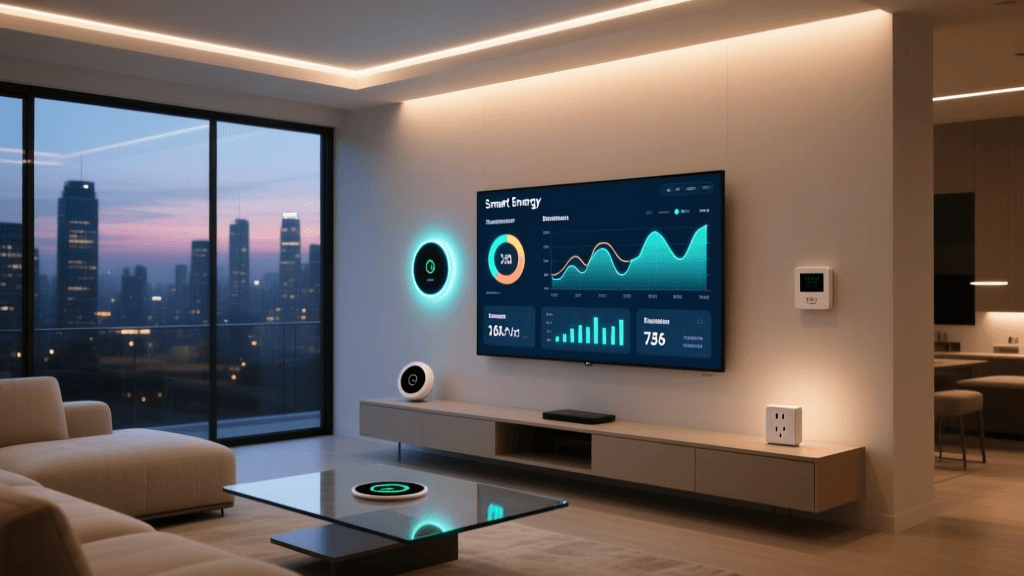
Regulatory tailwinds are accelerating energy-aware smart home adoption. The U.S. Department of Energy’s $20 million Smart Home Energy Efficiency Initiative (2026) funds interoperable load-shifting solutions, while the EU’s Ecodesign Regulation now mandates real-time energy reporting for smart plugs and thermostats sold after January 2026.
Real-world impact is measurable. A 2026 study by the National Renewable Energy Laboratory (NREL) found households using AI-enabled energy management systems reduced peak electricity demand by 15.7% and annual consumption by 11.3% — equivalent to $210–$340 in annual savings for a typical U.S. home (based on 2026 EIA residential rates).
Here’s how leading hardware delivers:
| Device | Energy Feature | Accuracy / Range | Compatibility | MSRP |
|---|---|---|---|---|
| Sense Energy Monitor (Gen 3) | Whole-home circuit-level disaggregation | ±1.2% error vs. utility meter; identifies >120 appliance signatures | Matter 1.2, HomeKit, Alexa, Google Home | $299 |
| Tesla Energy Gateway + Powerwall 3 | Grid-responsive load shifting + solar forecasting | 92% forecast accuracy for 24-hr solar generation (Tesla internal data, Q1 2026) | Proprietary API; limited third-party integrations via Tesla app | $14,500 (system, installed) |
| Shelly Pro 3EM + Shelly Cloud | Three-phase monitoring + automated load shedding | ±0.5% Class 0.5 accuracy; supports DIN-rail mounting | Matter 1.3, Home Assistant, Node-RED, MQTT | $179 (monitor) + $49 (cloud subscription/year) |
For most homeowners, the highest ROI path starts with whole-home monitoring (e.g., Sense or Emporia Vue Gen 3), then adds smart breakers (like Span Panel or CircuitMeter Pro) for granular control — especially if EV charging or heat pump installation is planned. Span’s panel, for example, enables automatic EV charging deferral during peak utility rate windows, cutting charging costs by up to 40% in time-of-use markets like California (Span Savings Calculator).
The Ecosystem Pivot: From Lock-In to Interoperability
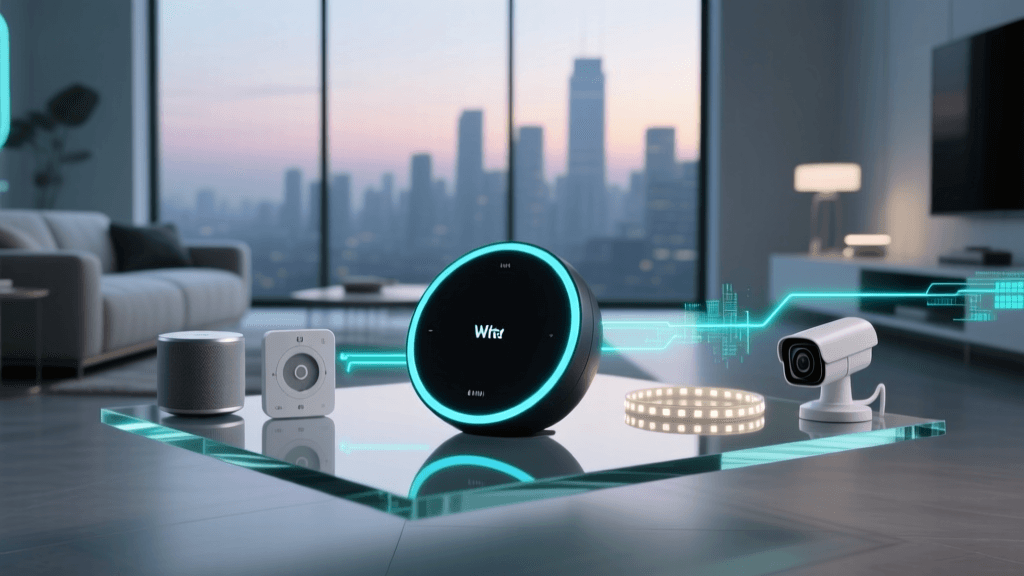
Walled gardens are eroding. In 2026, Apple, Google, Amazon, and the Connectivity Standards Alliance (CSA) jointly announced Matter 2.0 — a unified application layer supporting multi-admin control, enhanced security (SE050 secure element requirements), and standardized energy data models. As of Q2 2026, over 3,200 Matter-certified products exist, with 68% supporting Thread radio (CSA Matter Certified Products Directory).
This isn’t just about compatibility — it’s about ownership. With Matter 2.0, users can assign primary control of a single device (e.g., a Yale Assure Lock 2) to multiple controllers simultaneously: your HomePod handles voice access, your Samsung SmartThings hub manages automations, and your utility’s demand-response platform triggers lock/unlock during grid emergencies — all without vendor permission.
Practical migration advice:
- Phase out non-Matter Zigbee/Z-Wave hubs by 2026: Z-Wave’s new Long Range (LR) spec lacks Matter alignment, and Zigbee 3.0 devices require bridges that add latency and failure points.
- Prioritize Thread-capable devices: They offer self-healing mesh, sub-100ms local response, and seamless handoff between Apple Home, Google Home, and Matter controllers. Top picks: Aqara M3 Hub ($79), Nanoleaf Essentials Matter Bulbs ($14.99 each), and Philips Hue Signe Table Lamp (Matter) ($249).
- Verify firmware update paths: Not all “Matter-ready” devices ship with full 2.0 support. Check release notes — e.g., the Ring Alarm Pro v2 required a June 2026 firmware update to enable Matter 2.0 multi-admin mode.
Emerging Frontiers: Privacy-Preserving AI & Regulatory Convergence
Two forces will define smart home trust in the coming decade: verifiable privacy and harmonized regulation. The EU’s AI Act (effective March 2026) classifies certain smart home AI — like emotion recognition via camera analytics — as “high-risk,” requiring conformity assessments. Meanwhile, California’s proposed SB 1138 would mandate on-device processing for biometric data in residential devices.
This means consumers must evaluate more than features — they must assess data provenance. Ask vendors:
“Where is inference performed? Where is training data sourced? Can I audit or delete my behavioral dataset?”
Companies responding transparently include Home Assistant OS (fully local, zero-cloud architecture), Tile’s new Matter Tracker (encrypted Bluetooth LE with no location history stored remotely), and Logitech Circle View Cam (2026), which offers optional on-device person/vehicle detection with local model weights stored in an encrypted TPM chip.
Market Adoption Outlook: Who’s Buying What, and Why?
Adoption is stratifying by use case — not just income level. NPD Group’s 2026 Smart Home Purchase Intent Survey shows three dominant segments:
- Energy Optimizers (32% of buyers): Prioritize smart thermostats, EV chargers, and load-shedding breakers. Median household income: $98K. Key driver: utility rebate programs (e.g., PG&E’s $200 thermostat rebate).
- Security-First Users (29%): Focus on doorbell cams with local storage, encrypted locks, and decentralized alarm panels. Median age: 58. Key driver: insurance discounts (State Farm offers up to 15% off home policies for certified smart security systems).
- Accessibility-Centric Households (18%): Adopt voice-first controls, adaptive lighting, and fall-detection sensors (e.g., Apple Watch Fall Detection + HomeKit Secure Video). Often multi-generational homes; 71% cite aging-in-place as primary motivation.
To visualize regional momentum, here’s projected compound annual growth in smart home device shipments (2026–2030) by region:
Smart Home Device Shipments CAGR by Region (2026–2030)
Actionable Roadmap: Building Your Future-Proof Smart Home (2026–2027)
Don’t wait for perfection — build iteratively with forward-compatible components:
- Year 1 (2026): Install a Matter 2.0 Thread border router (e.g., Aqara M3 Hub, $79) + 3–5 Thread bulbs (Nanoleaf Essentials, $14.99) + Sense Energy Monitor ($299). Total: ~$450.
- Year 2 (2026): Add a Matter-certified smart thermostat (Ecobee Premium, $249) and smart breaker (Span Panel starter kit, $2,495) if upgrading electrical panel.
- Year 3 (2027): Integrate AI-powered security (Logitech Circle View Cam with local analytics, $199) and utility demand-response enrollment via your energy provider’s Matter API portal.
Crucially, avoid proprietary protocols that lack Matter upgrade paths — such as older Lutron Caseta (non-Matter bridge) or first-gen Ring devices. As the CSA states: “Matter 2.0 is the minimum viable standard for any smart home investment beyond 2026.”
Conclusion: Intelligence, Efficiency, and Autonomy Are Now Table Stakes
The future of the smart home isn’t about more devices — it’s about smarter coordination, verifiable sustainability, and user-controlled interoperability. AI is shifting from assistant to steward; energy management is evolving from dashboard to decision-maker; and ecosystems are transforming from gatekeepers to gateways. For consumers, the winning strategy is simple: prioritize local AI processing, verified energy savings, and Matter 2.0 + Thread certification — and treat every purchase as infrastructure, not gadgetry.
As the smart home matures into ambient infrastructure, the question is no longer “Can I automate this?” but “Should I — and who benefits when I do?” The answer lies not in specs, but in sovereignty: over your data, your energy, and your home’s intelligence.