The Shift from Reactive to Predictive Energy Management
The smart home industry is undergoing a seismic shift, moving away from simple remote-controlled convenience toward autonomous, highly efficient ecosystem management. Nowhere is this evolution more critical—or more financially impactful—than in the realm of home energy management. As global energy grids face increased strain from extreme weather events and the mass adoption of electric vehicles (EVs), the modern smart home is transitioning from a passive consumer of electricity to an active, intelligent participant in the broader energy grid.
Historically, smart home energy management relied on reactive automation. Homeowners set rigid schedules for their smart thermostats or programmed lights to turn off at specific times. While effective for basic conservation, these legacy systems lacked the contextual awareness to adapt to real-time grid conditions, fluctuating utility rates, or unpredictable household behaviors. Today, the integration of Artificial Intelligence (AI), advanced residential microgrids, and bidirectional EV charging is redefining the baseline for what a smart home can achieve.
For homeowners, tech enthusiasts, and industry professionals, understanding these market trends is no longer optional; it is essential for maximizing return on investment (ROI), ensuring energy resilience, and future-proofing residential infrastructure. This comprehensive analysis explores the cutting-edge technologies driving the future of smart home energy, providing actionable insights, specific product evaluations, and cost analyses to help you navigate this rapidly expanding sector.
AI-Driven Load Forecasting and Automation
The core of the next-generation smart home is the Home Energy Management System (HEMS) powered by machine learning. Unlike traditional smart panels that merely monitor total household consumption, AI-driven HEMS utilize granular circuit-level data to identify the unique electrical signatures of individual appliances. By analyzing historical usage patterns, local weather forecasts, and real-time Time-of-Use (TOU) utility rates, these systems can predict energy needs and automatically shift heavy loads to off-peak hours.
Leading the Market: Span and Schneider Electric
The Span Smart Electrical Panel represents the pinnacle of this technology. Priced between $3,000 and $5,000 (including professional installation), the Span panel replaces the traditional breaker box and provides circuit-level visibility and control for every single electrical line in the home. Its proprietary AI learns which circuits are critical (e.g., refrigerators, medical equipment, Wi-Fi routers) and which are non-essential (e.g., guest bedroom outlets, EV chargers). During a grid outage, the Span panel seamlessly pairs with a home battery to automatically shed non-essential loads, extending backup power from a few hours to several days.
Similarly, the Schneider Electric Wiser Home System offers a highly modular approach to AI energy management. Utilizing smart breakers and advanced energy modules, Wiser integrates directly with solar inverters and EV chargers. Its AI algorithms optimize the distribution of solar power, deciding in milliseconds whether to store excess energy in a battery, divert it to an EV charger, or sell it back to the grid based on current feed-in tariffs.
- Granular Visibility: AI can distinguish between a 1500W space heater and a 1500W microwave based on usage duration and time of day.
- Automated Load Shifting: Systems can delay the start of a smart dishwasher or EV charge until utility rates drop below a user-defined threshold (e.g., $0.12/kWh).
- Grid Services Participation: Advanced HEMS can enroll homes in Virtual Power Plant (VPP) programs, allowing utilities to draw微量 power from home batteries during peak demand in exchange for financial credits.
Vehicle-to-Home (V2H) and Vehicle-to-Grid (V2G) Integration
Perhaps the most disruptive trend in residential energy is the rise of bidirectional charging. Electric vehicles are essentially massive batteries on wheels. A standard EV battery holds between 60 kWh and 130 kWh of energy—enough to power the average American home for three to seven days. The industry is rapidly moving toward harnessing this dormant capacity through Vehicle-to-Home (V2H) and Vehicle-to-Grid (V2G) technologies.
According to research by the National Renewable Energy Laboratory (NREL), vehicle-grid integration is a critical component of the future decentralized energy grid. V2H allows an EV to power a home's electrical panel during a blackout, acting as a mobile backup generator. V2G takes this a step further, allowing the EV to discharge power back to the utility grid during peak demand hours, effectively turning the vehicle into a revenue-generating asset.
Hardware and Vehicle Compatibility
To enable V2H, homeowners need a compatible EV and a bidirectional charger. The Ford F-150 Lightning and vehicles built on the Hyundai Motor Group E-GMP platform (such as the Ioniq 5 and Kia EV6) are currently leading the consumer V2H market. On the hardware side, the Wallbox Quasar 2 and the Ford Charge Station Pro (paired with the Sunrun Home Integration System) are the premier solutions. These bidirectional setups typically cost between $4,000 and $7,000 fully installed, a premium over standard Level 2 chargers, but one that offsets the need for a dedicated stationary home battery.
| Feature | Standard EV Charging (V1G) | Vehicle-to-Home (V2H) | Vehicle-to-Grid (V2G) |
|---|---|---|---|
| Power Flow | Grid to Vehicle | Grid to Vehicle / Vehicle to Home | Grid to Vehicle / Vehicle to Grid |
| Primary Use Case | Daily commuting recharge | Backup power during outages | Grid stabilization & utility credits |
| Hardware Required | Level 2 Smart Charger | Bidirectional Charger + Gateway | Bidirectional Charger + Utility Agreement |
| Estimated Hardware Cost | $500 - $1,200 | $3,500 - $6,000 | $4,000 - $7,000+ |
| Vehicle Compatibility | All EVs | CCS/CHAdeMO (Select models) | CCS (Select models w/ utility support) |
The Rise of the Residential Microgrid
The convergence of AI-managed smart panels, solar photovoltaics (PV), and high-capacity battery storage is giving rise to the residential microgrid. A microgrid is a localized, self-sufficient energy system that can operate independently of the main utility grid (island mode) or in tandem with it (grid-tied). In the smart home context, this means achieving near-total energy autonomy.
Next-Generation Battery Storage
The market for home batteries is evolving rapidly, with a distinct shift toward DC-coupled systems and integrated inverters. The Tesla Powerwall 3 has set a new industry benchmark by integrating the solar inverter directly into the battery unit. This eliminates the need for a separate solar inverter, reducing installation complexity and points of failure. Capable of delivering 11.5 kW of continuous power, a single Powerwall 3 can start heavy inductive loads like central air conditioners or well pumps, a historical weak point for older lithium-ion home batteries. Installed costs for a Powerwall 3 system generally range from $10,000 to $15,000, depending on local permitting and electrical upgrades.
Competing in the modular space, the Enphase IQ 5P battery utilizes a distributed architecture. Instead of one massive high-voltage battery, Enphase uses multiple smaller, low-voltage units managed by a central IQ System Controller. This microinverter approach ensures that if one battery module fails, the rest of the system continues to operate seamlessly. Furthermore, Enphase's software ecosystem is highly regarded for its granular TOU rate optimization, allowing AI to charge the batteries from the grid when rates are negative or near-zero, and discharge during peak evening pricing.
Industry Insight: The true value of a residential microgrid is not just in the hardware, but in the software orchestration. A 20 kWh battery managed by a dumb timer is vastly inferior to a 10 kWh battery managed by predictive AI that anticipates a multi-day grid outage based on incoming meteorological data.
Navigating the Matter Standard for Energy Devices
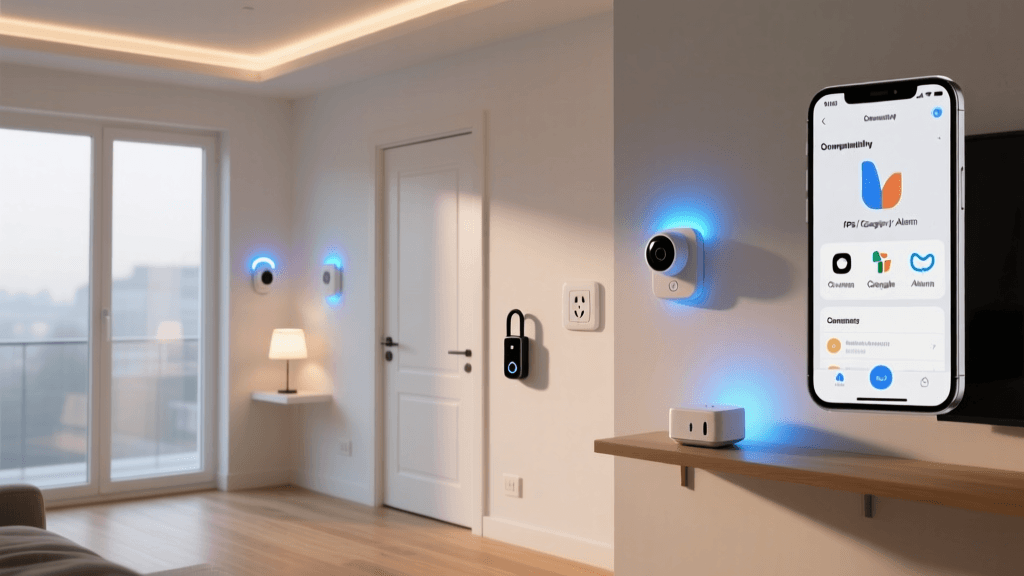
Interoperability has long been the Achilles' heel of the smart home industry. Historically, a homeowner's solar inverter, EV charger, and smart thermostat operated in siloed proprietary ecosystems, unable to communicate directly with one another. The introduction of the Matter protocol has begun to solve this fragmentation, and recent updates are specifically targeting the energy sector.
According to the Connectivity Standards Alliance (CSA), the Matter 1.3 release marked a watershed moment by officially adding support for Electric Vehicle Supply Equipment (EVSE), solar PV inverters, and smart water heaters. This means that in the near future, an Apple HomeKit, Google Home, or Amazon Alexa ecosystem will be able to natively read the real-time energy production of a solar inverter and dynamically adjust the charging speed of an EV charger to ensure the home never pulls excess power from the grid. This unified API layer will drastically lower the barrier to entry for advanced AI energy management, allowing third-party software developers to create sophisticated energy-saving applications without needing to build custom integrations for every hardware manufacturer.
Actionable Steps to Future-Proof Your Home's Energy
Transitioning to an AI-driven, microgrid-capable smart home is a significant capital investment. To maximize ROI and avoid technological dead-ends, homeowners should adopt a phased, strategic approach.
1. Conduct a Comprehensive Energy Audit
Before purchasing hardware, understand your baseline consumption. Utilize the U.S. Department of Energy Home Energy Score framework or hire a certified local auditor. Identifying passive energy leaks (poor insulation, single-pane windows) is vastly more cost-effective than attempting to solve them by buying more solar panels or larger batteries.
2. Upgrade the Electrical Panel and Infrastructure
Most older homes operate on 100-amp or 150-amp electrical services, which are entirely insufficient for the modern electrified home (which requires 200-amp to 400-amp service to support simultaneous EV charging, heat pumps, and induction cooking). Upgrading to a smart panel like the Span IO early in your renovation process lays the foundational data layer required for future AI integrations.
3. Implement Smart Load Management
If a full solar-plus-storage microgrid is currently out of budget, start with intelligent load management. Install smart thermostats (like the Ecobee Smart Thermostat Premium) and smart plugs with energy monitoring (like the TP-Link Kasa Smart Plug with Energy Monitoring). Connect these to a centralized hub and utilize IFTTT or native routines to pause non-essential circuits when the EV charger is actively pulling 40 amps.
4. Plan for Bidirectional EV Integration
If you are in the market for a new electric vehicle, prioritize models that support V2H or V2G protocols via the CCS standard. Even if you do not install a bidirectional charger immediately, ensuring your home's conduit and wiring are prepped for a 60-amp to 80-amp bidirectional circuit will save thousands of dollars in retrofitting costs down the line.
Conclusion
The future of smart home energy is deeply intertwined with the broader macro-trends of grid decentralization, AI proliferation, and the electrification of transport. By moving beyond simple remote-control gimmicks and embracing predictive AI, residential microgrids, and bidirectional EV integration, homeowners can transform their properties from vulnerable energy sinks into resilient, profitable nodes on the smart grid. As the Matter protocol matures and hardware costs continue to decline, the intelligent, self-sustaining smart home will transition from a luxury early-adopter experiment to the standard for modern residential construction.